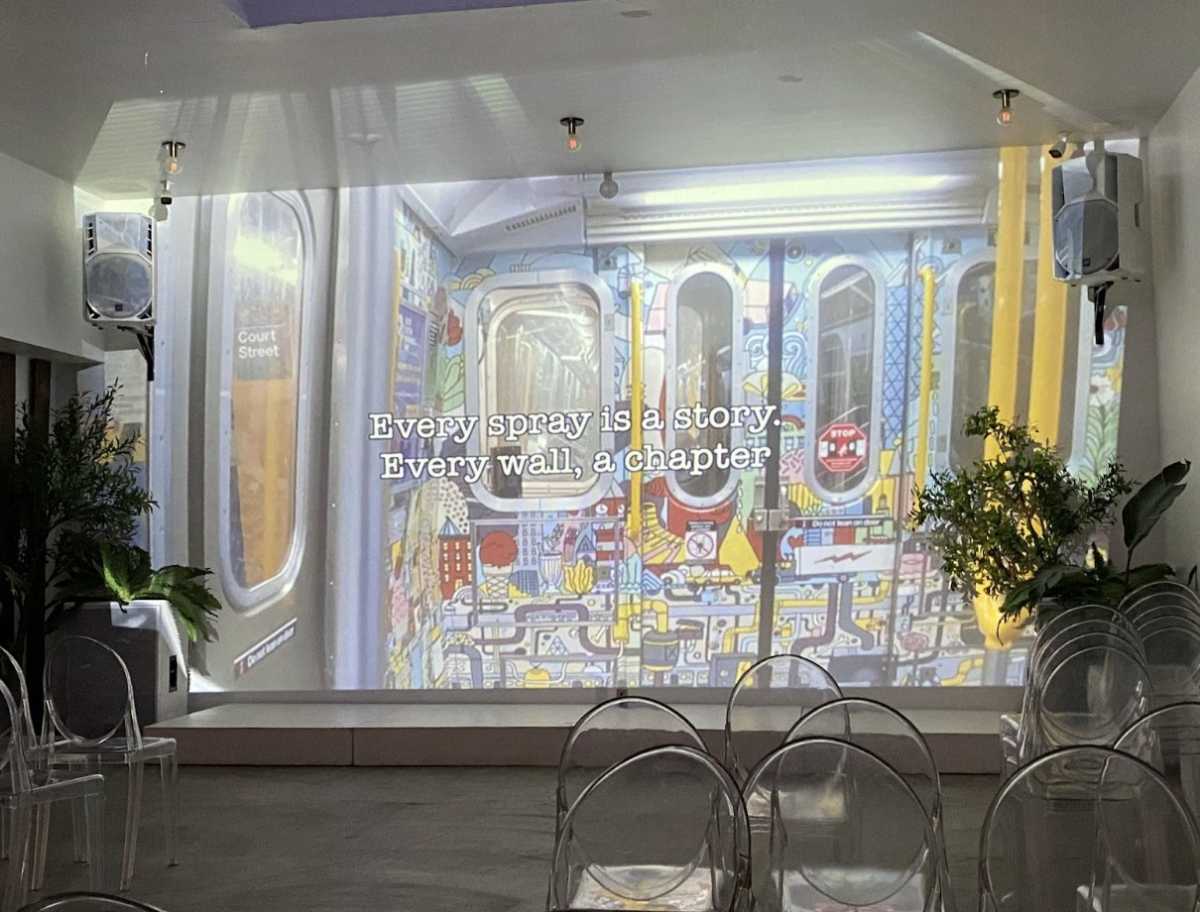



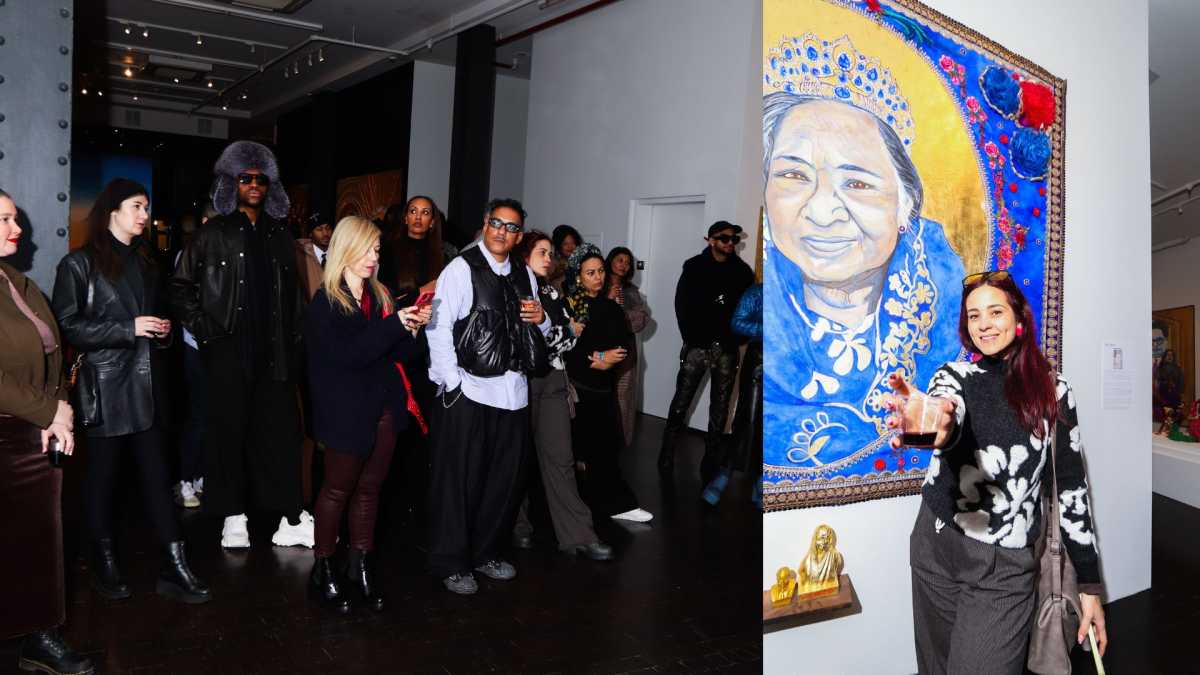
For 131 years, Pen + Brush has done more than maintain a door—it has insisted it remain open. Open to women, non-binary, and trans artists and writers long before inclusion became a fashionable refrain. On December 14, that legacy manifested not as history, but as lived experience through Revolution in Three Acts: A Sip and Tell, held within Pyaari Azaadi’s formidable solo exhibition, Talkin’ Bout a Revolution—now extended through February 14, with its accompanying catalogue forthcoming in January.
This was not revolution as rhetoric. It was revolution as immersion.
Pyaari Azaadi’s exhibition penetrates intellect, spirit, and physical presence with equal force. The work resists aesthetic detachment and demands proximity. Each piece operates as a ritual object—carrying survival, rage, humor, grief, tenderness, and care in calibrated tension. Rooted in South Asian diasporic experience and queer feminist resistance, Talkin’ Bout a Revolution insists that transformation is not abstract or deferred. It is embodied. It is hormonal. It is maternal. It is furious. It is ongoing.
To stand within the exhibition is to stand within an activated consciousness—lucid, unguarded, and unsanitized. The work does not request contemplation; it requires reckoning.
That insistence on embodiment structured the evening in three deliberate movements.

Act I: Image
Guests entered through the gallery, moving attentively through Pyaari’s work. This was the intellectual and emotional grounding—where memory, inheritance, and endurance asserted themselves without mediation. Revolution began in stillness, in sustained looking, in the refusal to turn away.
Act II: Wine
Wine arrived not as indulgence, but as connective ritual. Flying Whale Wine, founded by Maba Ba, was poured as an extension of the exhibition’s cosmology. Born from the Dogon myth of the Nommo—celestial, amphibian beings who traveled to Earth in a whale-like vessel to restore balance—the wine is rooted in story, migration, and remembrance. It is intended for spaces where people gather with deliberateness and care.
Within this context, the wine functioned as a bridge—between bodies, conversations, and interior worlds. Revolution, here, carried weight, warmth, and resonance.
Act III: Sound
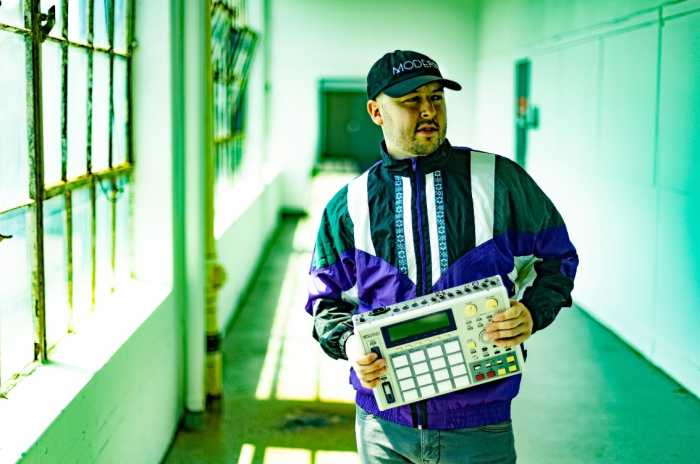
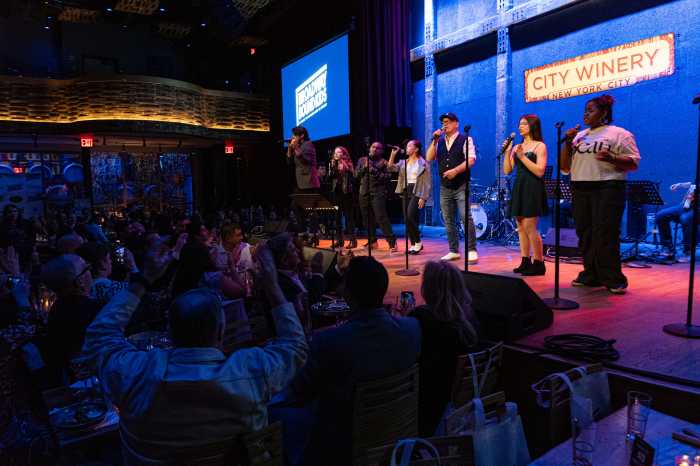
The evening culminated in live music and spoken word led by Maba Ba, whose artistic philosophy quietly unified every element of the night. As both musician and founder of Flying Whale Wine, Maba Ba articulates creation through what he calls the breach philosophy: life as an ocean in which most existence unfolds beneath the surface—in repetition, memory, discomfort, and learning—punctuated by rare moments of emergence, when one surfaces for air and offers what has been gathered in the depths.
“The work is the depth,” he says. “The art is the breath.”
That performance constituted such a breach.
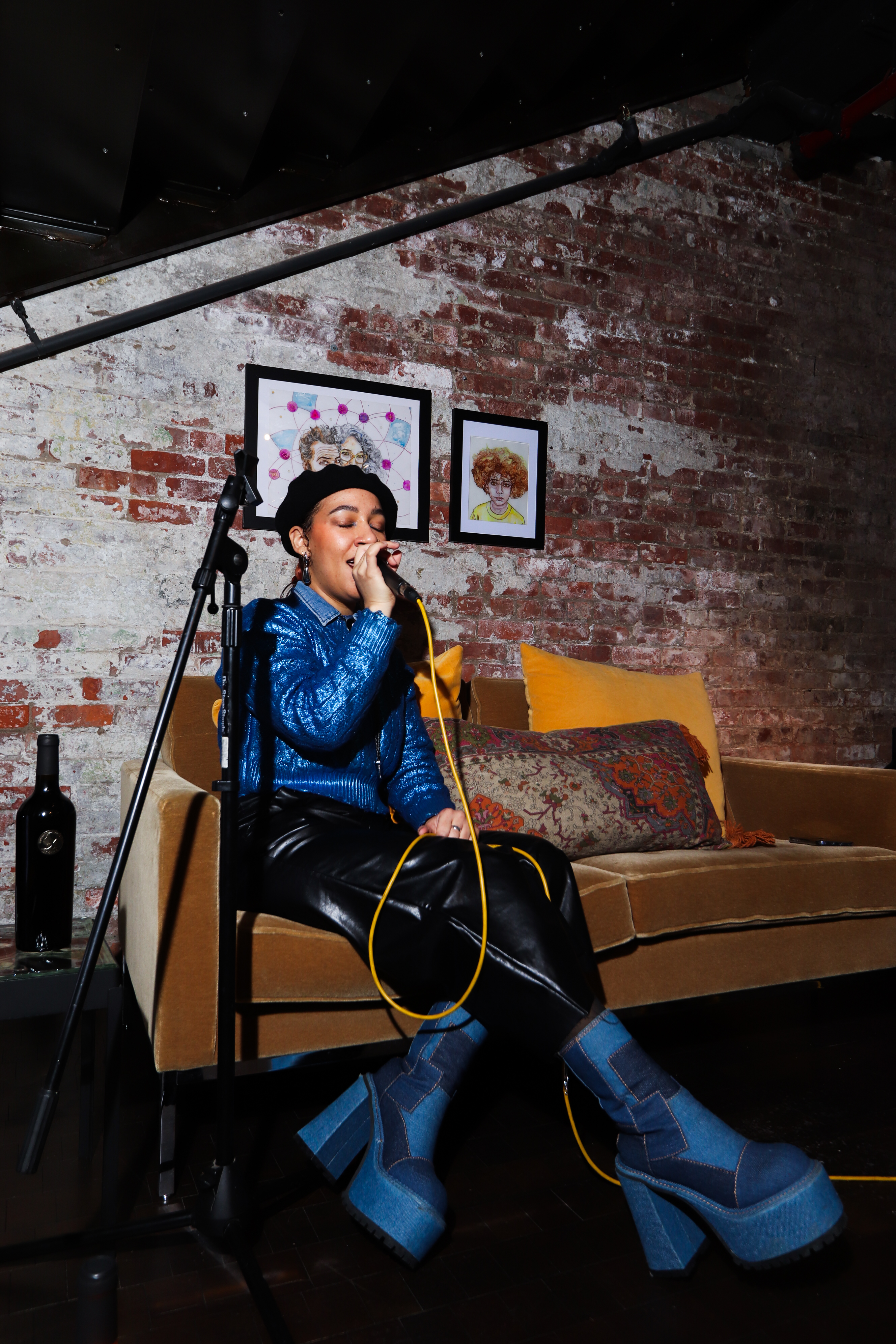
Lyrics bent time and collapsed myth into the present—fire meeting water, celestial lineage intersecting with lived reality. Accompanied by Hass Irv, his protégé, alongside Morgan Wiley of Zombie Music and the vocal tenacity of Casidy, the performance carried precision, vulnerability, and trust. This was collaboration as communion. Chosen family as methodology. Sound as survival practice.
What distinguished the evening was not any singular component, but the totality of the experience. Pyaari Azaadi’s exhibition activated the intellect. Flying Whale Wine grounded the body. Music and spoken word opened the spirit. Revolution moved through all three—quietly, insistently, and without compromise.
This form of interdisciplinary convergence matters profoundly in the present moment. In an era of fractured attention and diluted meaning, Sip and Tell demanded presence. It rewarded slowness. It rejected spectacle in favor of sincerity. It reminded us that transformation does not occur in isolation; it unfolds in rooms, in bodies, and in shared breath.

The forthcoming catalogue for Talkin’ Bout a Revolution, designed by Parker Daley Garcia and edited by London Lorenzo, extends this discourse beyond the gallery. Featuring contributions from Dawn Delikat, Mona Eltahawy, Yashica Dutt, Pamela Sneed, lawrence-minh bùi davis, Hrag Vartanian, Carmen Hermo, and Anuradha Vikram, the publication situates Pyaari’s work within a broader intellectual and cultural lineage—one that understands revolution as both intimate and structural.
Pen + Brush has always served as a sanctuary for artists who refuse erasure. On December 14, that refusal manifested as a living ecosystem—image, wine, and sound operating in deliberate harmony.
Revolution did not announce itself.
It moved—methodically—through the room.

Talkin’ Bout a Revolution by Pyaari Azaadi remains on view at Pen + Brush through February 14.
Catalogue release forthcoming January.
Pen + Brush
29 East 22nd Street, New York, NY
www.penandbrush.org
Flying Whale Wine
www.flyingwhalewine.com