

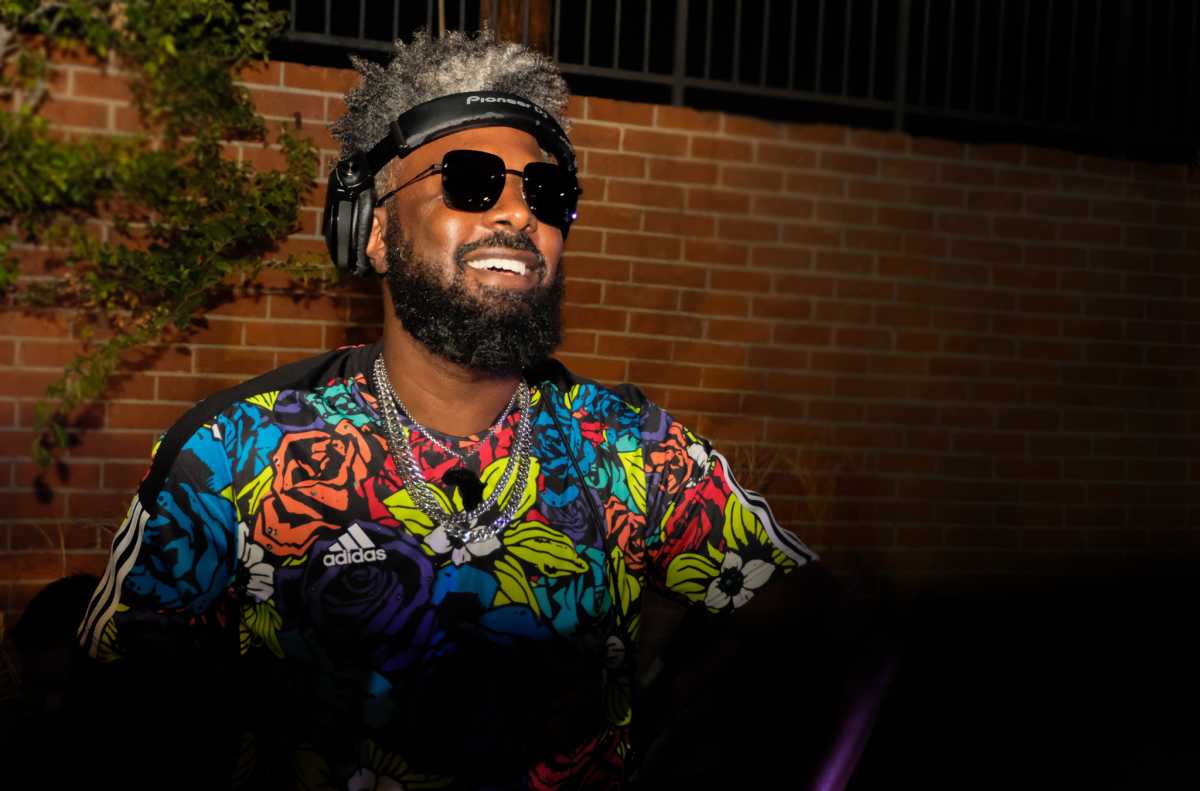
DJ Moma is a name that travels far beyond New York, echoing through dance floors around the world. Long before he became known for his global sound, he was trained as an electrical engineer, building a life rooted in structure and expectation.
Shaped by immigrant parents and the unspoken contract many children of immigrants grow up with; get the degree, secure the career, earn respect from both community and society, Moma did exactly that. He studied engineering at St. John’s University and Manhattan College in Riverdale, built a stable life in New York, and worked on major projects across the city, successful by every conventional measure.
But even while he was checking every box, something else was quietly pulling at him. Despite his success in engineering, there was an energy about him that never quite fit the mold. Music was always there. “It went from a passion to a hobby to a jobby, something I call a jobby, and then ultimately became a career,” Moma says.
That pull toward music was inseparable from the place that shaped him. No matter how much the city has changed, Jamaica, especially Jamaica Estates, always feels like home. Even after two decades of living in Manhattan, stepping off the AirTrain at Jamaica Station, surrounded by the chaos and diversity of Hillside Avenue, still feels grounding in a way nowhere else does.
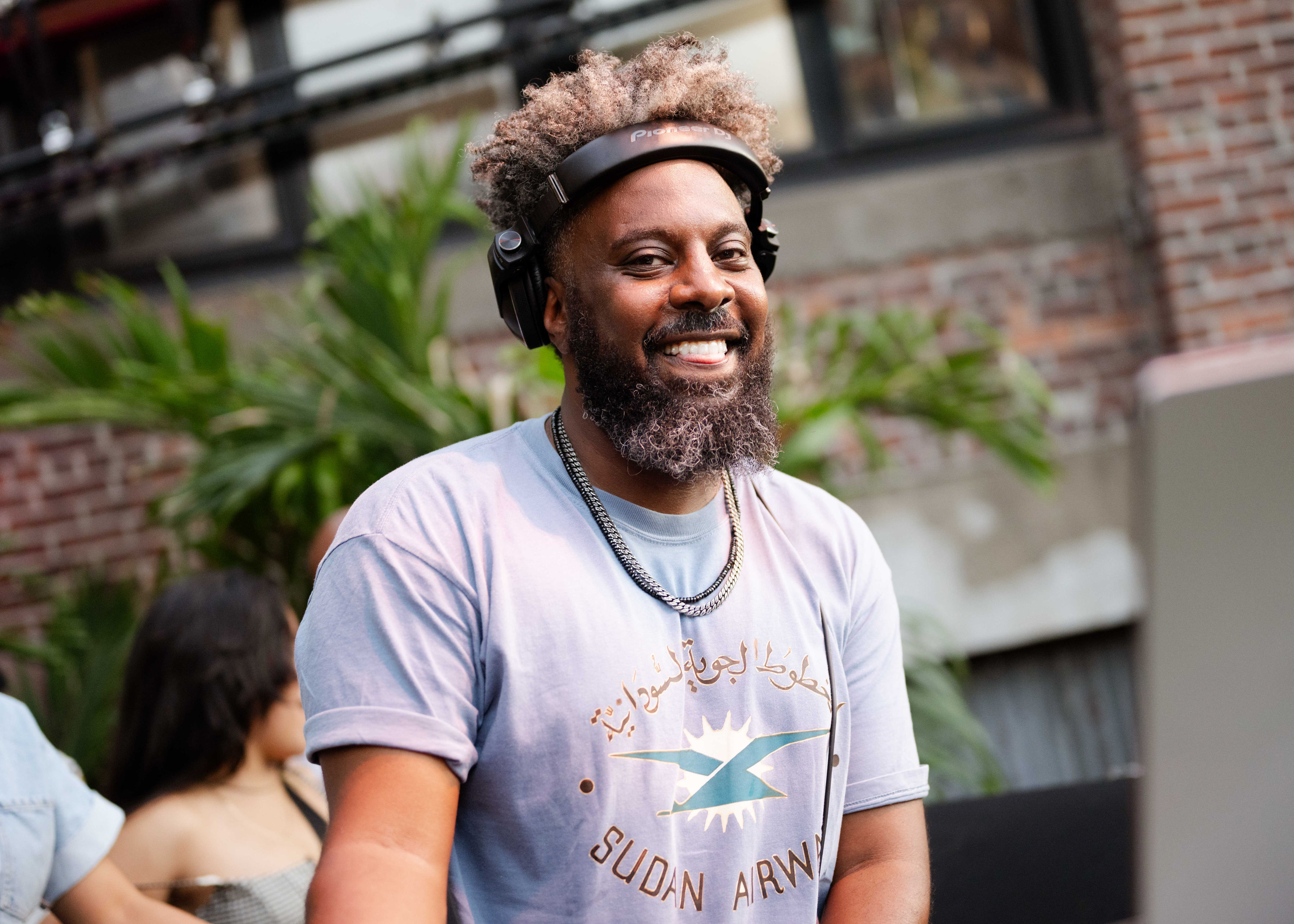
And with that sense of home came a sound. Growing up, the neighborhood was filled with hip-hop blasting out of car speakers: Nas, Wu-Tang, A Tribe Called Quest, Boot Camp Clik. Music that didn’t just fill the streets, but shaped the aspirations of a kid watching legends roll by with the bass booming.
That grounding in place doesn’t just shape where Moma feels at home, it shapes how he plays. Rather than arriving with a fixed plan, he approaches each set by staying present and responding to the room in real time. “The most important thing is the first song,” he says. “DJing, for me, is like streaming, if you try to scroll too far ahead, it has to refresh.”
Instead of mapping out an entire night, Moma keeps his focus narrow and intentional. “I’m really looking at what I should do in the next three to four songs. That’s my immediate concern,” he explains. “If you’re able to do consecutive mini-sets of three to four songs that really capture the energy and put them together, by the end of the session you’ve created a set that was unique for that night, and for that audience.”
That same approach guides how he balances personal taste with universal appeal. “Depending on where I’m at, that depends on the city and the demographic,” Moma says. “But there are always songs that I really love and that the audience is guaranteed to love,” he adds, pointing to timeless staples like Michael Jackson, Earth, Wind & Fire, Crystal Waters, and Robin S.
“I try to get their trust by playing something familiar, or a remix of something familiar,” he explains. “Once I’ve got them grooving, I can give them something not quite as universal but that fits the same energy.” By the third or fourth song, he says, “you’ve established enough trust and enough credit in the bank that you can actually do something no one knows, but that has an undeniable groove.” That’s when the journey really begins.
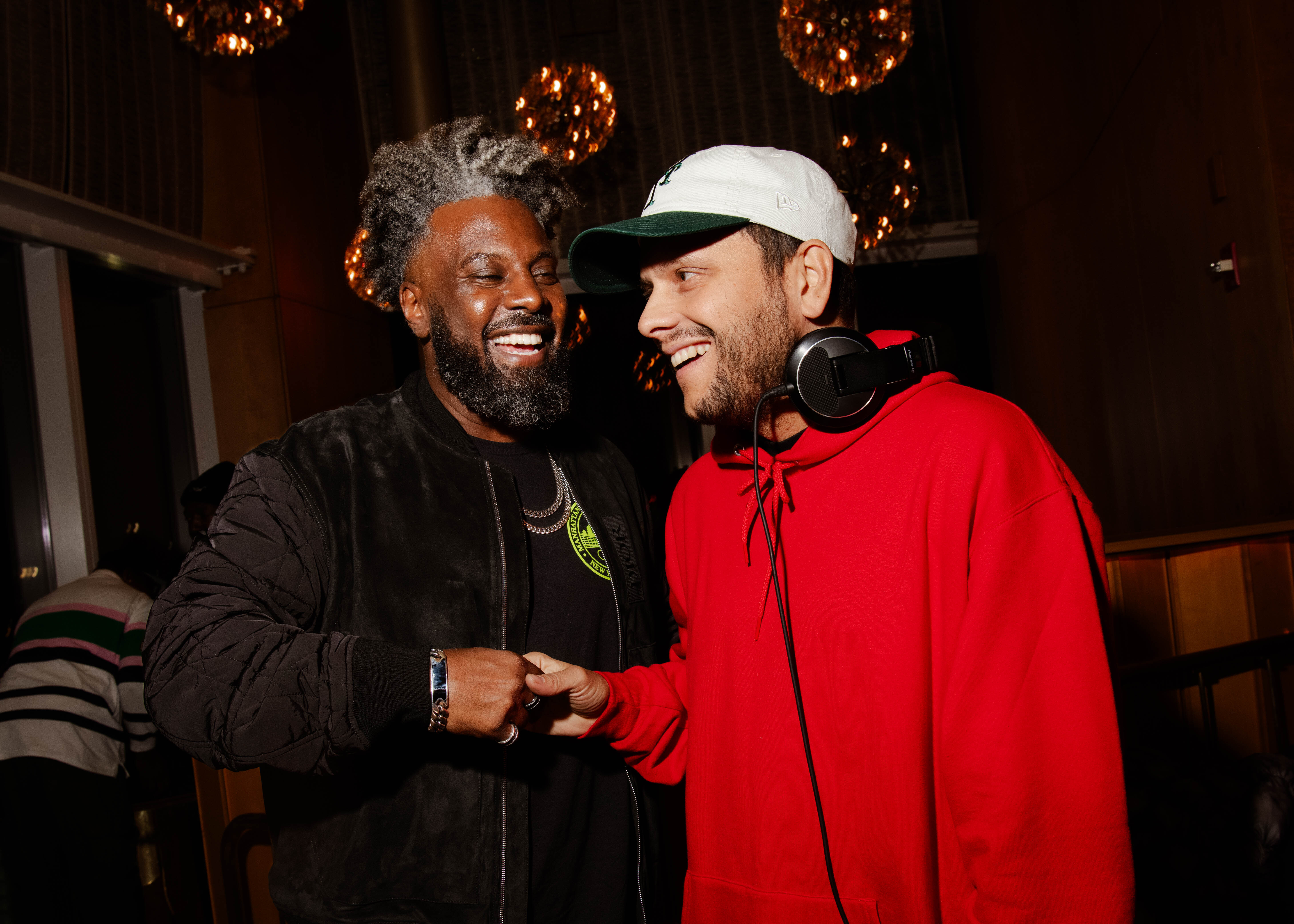
That sensitivity to the audience is especially clear in New York. “It’s one of the most diverse and most discerning audiences,” Moma says, placing the city alongside London, Toronto, and Johannesburg. “People really understand Black American music, Caribbean music, and African music. You’re hitting the main pillars of the African diaspora.”
That same understanding has helped shape his global reach. Moma sees the relationship between New York and the rest of the world as mutual. “It’s kind of reciprocal, or symbiotic,” he says. “The New York co-sign, the New York stamp, is the most valuable stamp in the world.”
In 2012, Moma co-founded Everyday People alongside partners Saada Ahmed and Chef Roblé Ali. The idea, he says, was simple and specific to that moment in New York nightlife. “We wanted to create an alternative to the champagne bottle brunch,” he explains. “It was expensive, the music was kind of electro, and we couldn’t really identify with the clientele.” Instead, they focused on “good vibes, good music, good people, and good food.” The foundation of Everyday People has stayed the same: accessibility, familiarity, and community.
As the parties expanded from New York to cities like LA, Miami, Toronto, and London, that energy traveled with them. “We didn’t start with the intention of creating a global community,” Moma says. What was intentional, he explains, was creating a safe space, for friends first, and for anyone else who felt aligned. Over time, that openness allowed Everyday People to grow into something much bigger.
That sense of responsibility extends beyond nightlife. Over the years, Moma and the Everyday People team have used their platform to support causes they care about through fundraisers, rallies, and advocacy. “We’ve stood up for certain causes at the right time,” he says, mentioning recent fundraising efforts for Sudan and vocal support for Palestine.
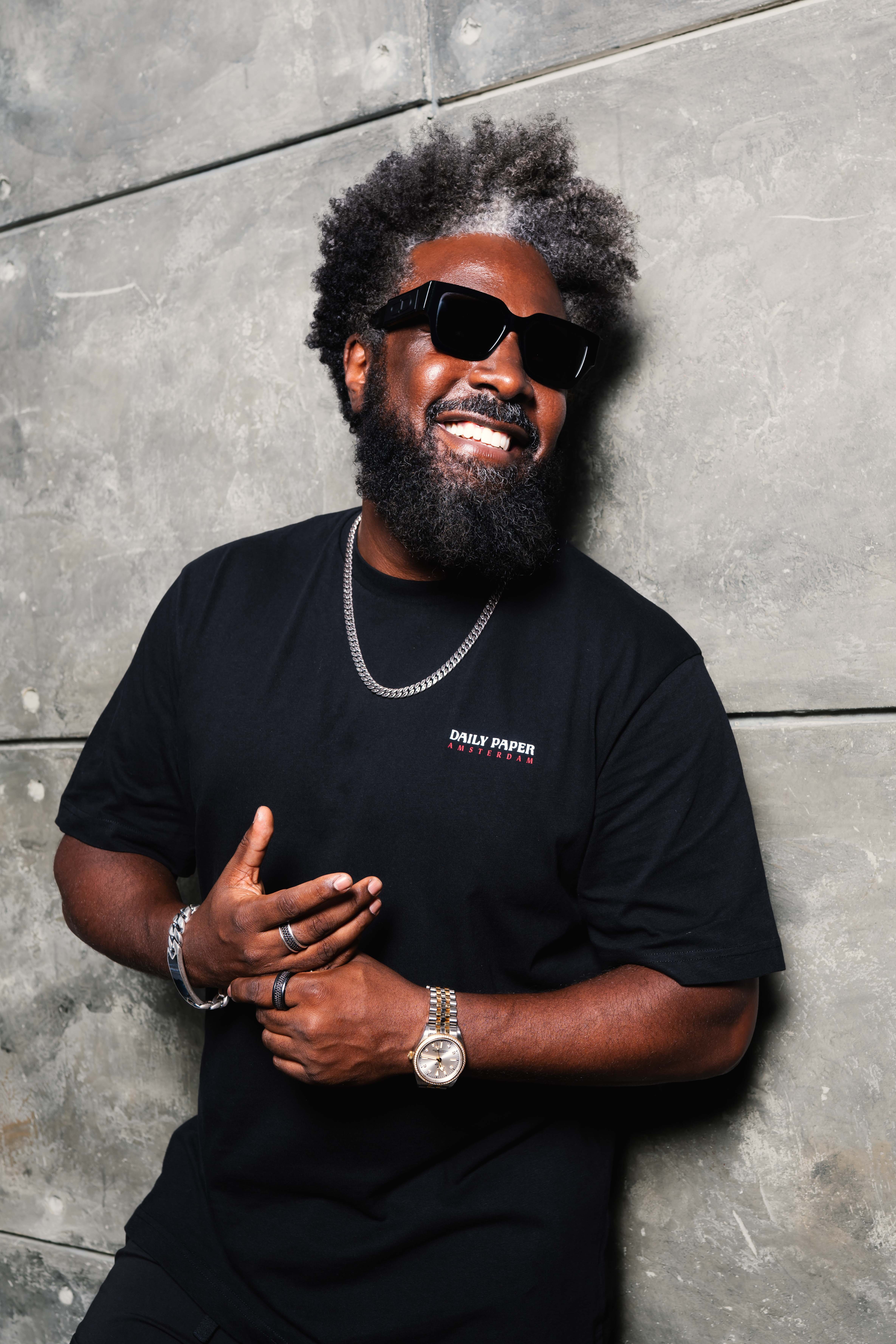
When asked to describe himself in three words, Moma said: “efficient, experimental, and tasteful.” Then he adds a bonus word: “diaspora.” “I love all the sounds of the African diaspora,” he says, “and I’m always trying to connect them, experimenting with taste, and doing it efficiently.”
With his new album Jozi Love Affair out now, Moma says the project came together during downtime in Johannesburg, where he set up a small studio and began recording with local collaborators. What started as informal sessions quickly turned into something more. “By the time those days were done, I was like, ‘I might have an album here,’” he says.
Asked to pick a favorite track, Moma laughs. “It’s tough, it’s like picking my favorite kid,” he says, before landing on Party Starter. “The session was just so magical. The minute we finished it, we knew we had a bop.” Working with DJs in South Africa sharpened the process. “If something’s not right, we change it,” he says. “When it hits, you feel it.”
Moma also highlights tracks like Asilali, Cosign, and Thiba. Across those songs, he leans into a hybrid approach- blending amapiano, Afrobeats, gqom, and 3-step into something that feels both rooted and forward-looking. He intentionally closes the album on an Afro-house note, signaling a direction he’s excited to explore further. “That’s a sound I want to explore more,” he says.
While the response to the album has been overwhelmingly positive, Moma is quick to frame it as a beginning rather than a peak. “I don’t even feel like it’s my best work yet,” he says. Looking ahead, he plans to shift his focus: scaling back on DJing and day-to-day event work to spend more time in the studio.
Jozi Love Affair is out now on all platforms. Follow DJ Moma on Instagram at @djmoma.