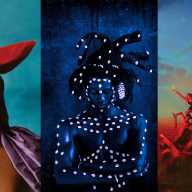



In a city engineered for velocity — where attention is bought, sold, and swallowed whole between subway transfers and headlines — tenderness now registers as an insurgent force. On the Flip Side, presented by Public Art Fund and curated by Jenée-Daria Strand, interrupts the transactional rhythm of urban life by replacing consumer persuasion with reflection, transforming 300 JCDecaux bus shelters across New York, Chicago, and Boston into sites of memory, identity, and diasporic storytelling. Spaces designed to sell instead ask viewers to pause, to look, and to recognize themselves in unfamiliar narratives.
Strand envisioned a “palatable sense of beauty and tenderness,” a curatorial stance that feels especially urgent in a visual culture saturated with spectacle, crisis imagery, and commodified emotion. Softness here signals not retreat but resistance.
Tenderness as Public Intervention
Urban visual culture rewards speed. Advertising depends upon the instant read; attention is measured in fractions of a second. The photographs in On the Flip Side interrupt that velocity by inviting pause rather than acceleration.
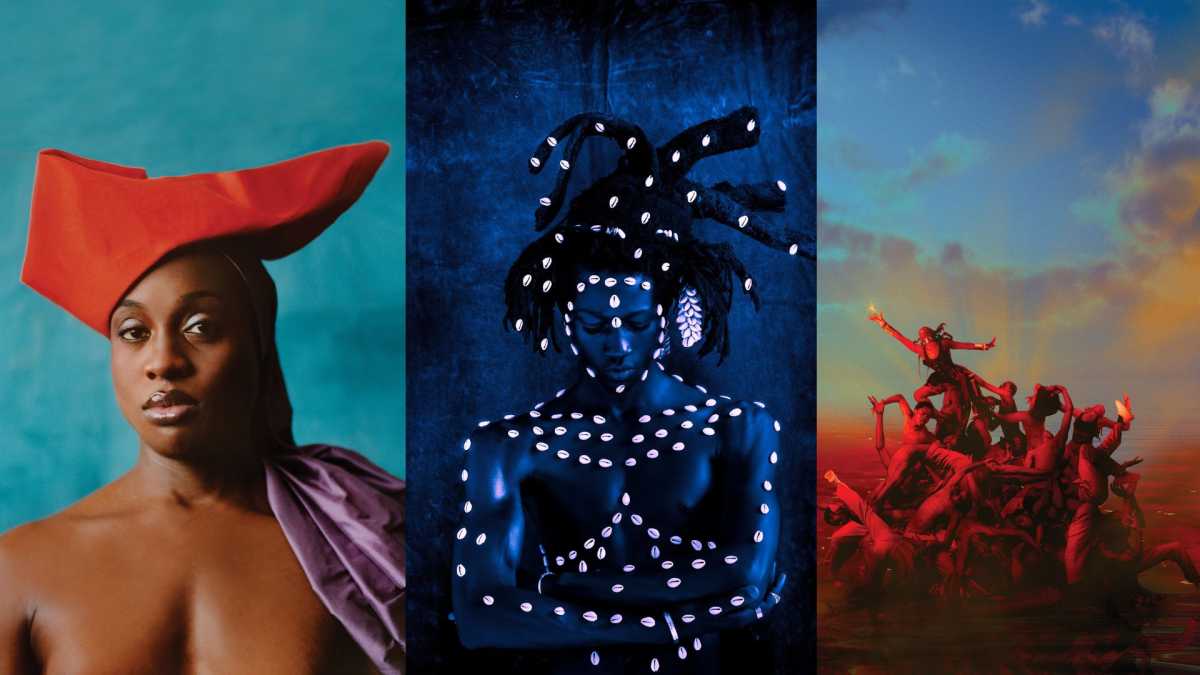
Their power derives from emotional clarity and formal precision: saturated color that commands attention without aggression, central figures rendered with sculptural presence, unexpected objects that disrupt visual habit, and expressions that resist passive consumption. A direct gaze holds the viewer in place. Silk evokes painterly traditions. A chicken cradled like an heirloom destabilizes expectation and invites inquiry.
Tenderness in public space becomes political under these conditions. Black cultural survival has long depended upon preserving intimacy, joy, and communal care within systems structured to erase them. Such gestures function not as decoration but as strategies of endurance. Where advertising packages tenderness as persuasion, this exhibition restores it as inheritance.
Reclaiming Authorship in an Image-Saturated Culture
The six participating photographers — Kennedi Carter, Lougè Delcy, Camila Falquez, Ruby Okoro, Dana Scruggs, and Juan Veloz — move fluidly between commercial commissions and fine art practices, producing widely circulated imagery for global publications and luxury brands. This exhibition shifts the hierarchy typically governing such visibility.
Celebrity recedes while authorship emerges.
Strand invited each artist to create an image reflecting their current practice. The open prompt yielded a quiet visual dialogue grounded in intimacy, diaspora, and self-definition. Freed from commercial briefs, the works speak across geography and heritage while maintaining distinct vantage points, creating a conversation that unfolds across the urban landscape.
Kennedi Carter and the Sacred Continuity of Gullah Geechee Life
Kennedi Carter’s folk hero resonates with profound historical and spiritual depth, drawing from the traditions of the Gullah Geechee people of the Sea Islands and coastal Southeast. Descendants of West and Central Africans, these communities retained extraordinary cultural continuity due to geographic isolation and specialized agricultural expertise.
Rice cultivation knowledge made enslaved Africans indispensable to plantation economies, contributing to family units being kept intact more frequently than elsewhere in the American South. Language patterns, foodways, spiritual practices, and conjure traditions endured with remarkable continuity across generations.
African conjuring traditions — often called rootwork or hoodoo — function as systems of protection, healing, and ancestral connection rather than superstition. The black frizzle chicken held by Carter’s subject echoes this spiritual ecology; within Gullah Geechee communities, such birds were believed to warn families of danger and protect the home.
Carter’s photograph restores a living cosmology rather than presenting folklore. Spirituality, land, and lineage operate as inseparable forces. Protection becomes ancestral memory. Cultural continuity becomes resistance. Beauty becomes a method of survival.
Her broader practice reframes Black life through dignity, intimacy, and quiet authority, challenging reductive narratives while restoring attention to overlooked beauty.
Juan Veloz: Grief, Continuity, and the Architecture of Love
Juan Veloz’s Roots of Glory offers one of the exhibition’s most emotionally resonant encounters. His grandmother sits within her home wearing the suit he wore to his mother’s funeral and adorned with his mother’s jewelry, layering garments that transform the portrait into tribute, archive, and ritual.
Loss is present yet does not dominate the image. Hope resides in posture, presence, and continuity. The portrait recognizes the matriarch as a living repository of memory and an anchor of emotional survival. Inheritance emerges here not as material wealth but as resilience, gesture, and endurance transmitted across generations.
Her gaze conveys self-possession shaped by survival and self-love. Mourning transforms into continuity, while absence becomes presence through remembrance. Veloz’s broader archival practice documents family across the Dominican Republic, Los Angeles, and New York; this portrait distills that mission into a single luminous encounter that is intimate, tender, and monumental.
Diaspora, Futurity, and Collective Presence
Across the exhibition, objects and symbolism operate as living technologies of care rather than ethnographic relics. Cowrie shells reclaim histories of currency, spirituality, and resistance. Silk references global trade networks and portrait traditions. Collective movement suggests Afrofuturist futures grounded in mutual elevation rather than individual ascent.
Media narratives have historically flattened Africa into a singular construct, erasing cultural specificity and complexity. Artists such as Delcy and Carter reassert authorship by restoring narrative control to those who create history rather than those who market it. Each image insists upon presence and self-definition while situating identity within lineage, land, and collective memory.
Public Art and Radical Accessibility
Public art dissolves gatekeeping mechanisms that continue to haunt cultural institutions. Many individuals remain uncertain about entering galleries or museums, unsure of access or belonging. A bus shelter removes that uncertainty. The encounter requires no threshold, no ticket, no permission. The city itself becomes the museum, and the audience becomes whoever pauses long enough to look.
Beauty as Resistance
Commuters may engage these works for only seconds, yet the encounter lingers long after the walk signal changes. Curiosity follows: who made this image, who is depicted, what histories live within its frame. The exhibition proposes tenderness as a form of cultural resistance, offering an alternative visual language to spectacle and crisis.
In a city conditioned for speed, these photographs introduce another tempo — one grounded in recognition, memory, and the possibility of seeing one another with greater care.
Public Art Fund | February 4 – April 5, 2026
@PublicArtFund #OntheFlipSide