


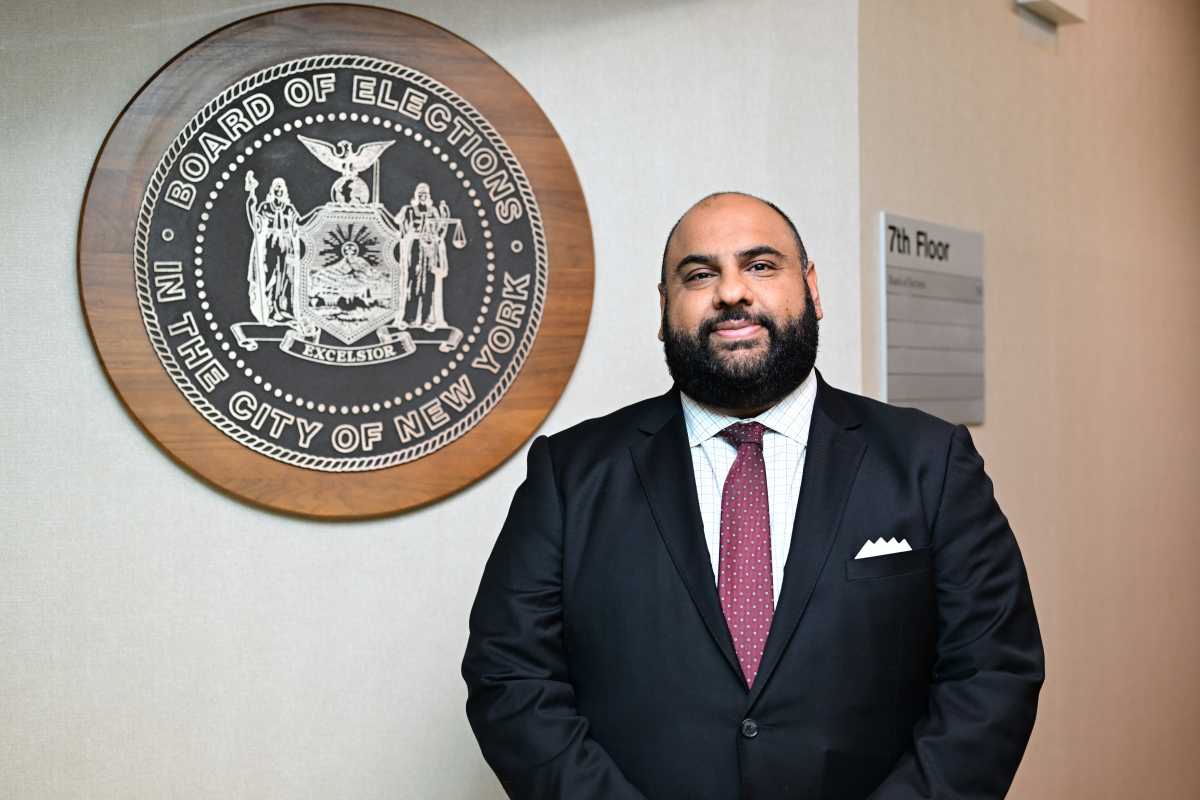
Mayor Zohran Mamdani appointed longtime advisor and election attorney Ali Najmi to chair the Mayor’s Advisory Committee on the Judiciary as it begins a new initiative to engage a wider swath of the city’s legal community in its judge selection responsibilities on Friday.
“My Administration will promote transparency in how we select New York City’s judges and ensure our city’s judicial system reflects the city it serves, applies the rule of law universally, and does so without favor,” Mamdani said. “There is no one better to lead this effort than Ali Najmi, who will bring the same determination and commitment he’s brought to the courtroom for decades to his new role chairing the Advisory Committee on the Judiciary.”
The committee is responsible for evaluating and appointing judges to the city’s family and criminal courts, as well as interim judges to its civil courts.
Najmi is a longtime friend and advisor to Mamdani. A fellow Queens resident, the two met when Mamdani volunteered to knock doors on Najmi’s unsuccessful 2015 bid for a City Council seat in eastern Queens. The men have remained close since — they regularly refer to each other as brothers —with Najmi taking on Mamdani as a client and mentee through the latter’s state Assembly and mayoral races.
Mamdani is one of many insurgent candidates that Najmi has represented in a roughly 15-year legal career centered on ensuring a wide swath of Democratic candidates, particularly anti-establishment ones, can get on the ballot. Just this past June, he represented at least 18 in the primary.
Also a prominent civil rights and defense attorney, Najmi called it an honor to lead the committee and impact the city-wide judiciary. As it stands now, he said he felt not enough people knew about the committee or how to apply to be a judge, creating a perception that only those who are well-connected could sit on a bench — something he believes is broken with the system and is looking to change.
“In this administration, the people who never thought they could be a judge, but deserve to be one, will finally have that chance,” Najmi said. “We will be able to have a system in place that will judge people on the merits of their experience, their qualifications and their commitment to public service.”
“I am committed to making our judicial selection process more transparent and inclusive to ensure that all 8.5 million New Yorkers see themselves reflected on the bench,” he said.
To help accomplish that task, Mamdani signed an executive order requiring Najmi’s committee to engage the wider legal community in the judicial selection process, including public defenders, attorneys who represent parents and children in family court and those working in indigent legal services.
The order aims to increase the committee’s transparency by regularly publishing judicial applicant pool demographic data and creating a searchable database the public can use to monitor upcoming appointments. It also extends committee member terms from two years to four years.
Mamdani said the reforms were necessary to improve the public’s accessibility to the inner workings of the city’s court system, saying that despite playing a “crucial role in our democracy,” it’s often “shrouded in secrecy.”
Public defense firms like The Bronx Defenders and Legal Aid Society commended the mayor’s executive order and Najmi’s appointment. Bronx Defenders Executive Director Juval O. Scott said she believed the action would create a fairer judiciary with the knowledge necessary to ensure justice for all, particularly for those who “are the least prepared or resourced to defend their freedom.”
“We applaud the Mamdani administration for recognizing that public defenders bring an essential, frontline perspective to issues affecting the legal system, and that this perspective must inform who sits on the bench,” Scott said. “In the Bronx, we see every day how a single arrest or court appearance can upend a person’s life, their family, and their future, which is why judicial appointments must be grounded in a clear understanding of the real human stakes of every decision.”
Legal Aid Society CEO Twyla Carter said she believed Najmi would bring a critical perspective to the judicial selection process as a “seasoned” defense and civil rights attorney.
“His experience as a member of the defense bar representing justice-involved New Yorkers will help ensure that the bench reflects a deep understanding of the rights of all New Yorkers, particularly those who rely on robust criminal defense,” Carter said.
Najmi is also the founder and former president of the South Asian and Indo-Caribbean Bar Association of Queens, where he helped diversify his home borough’s judiciary. He’s a member of the Muslim Bar Association and earned his juris doctorate from the City University of New York School of Law.
Adam Daly contributed to this report.