

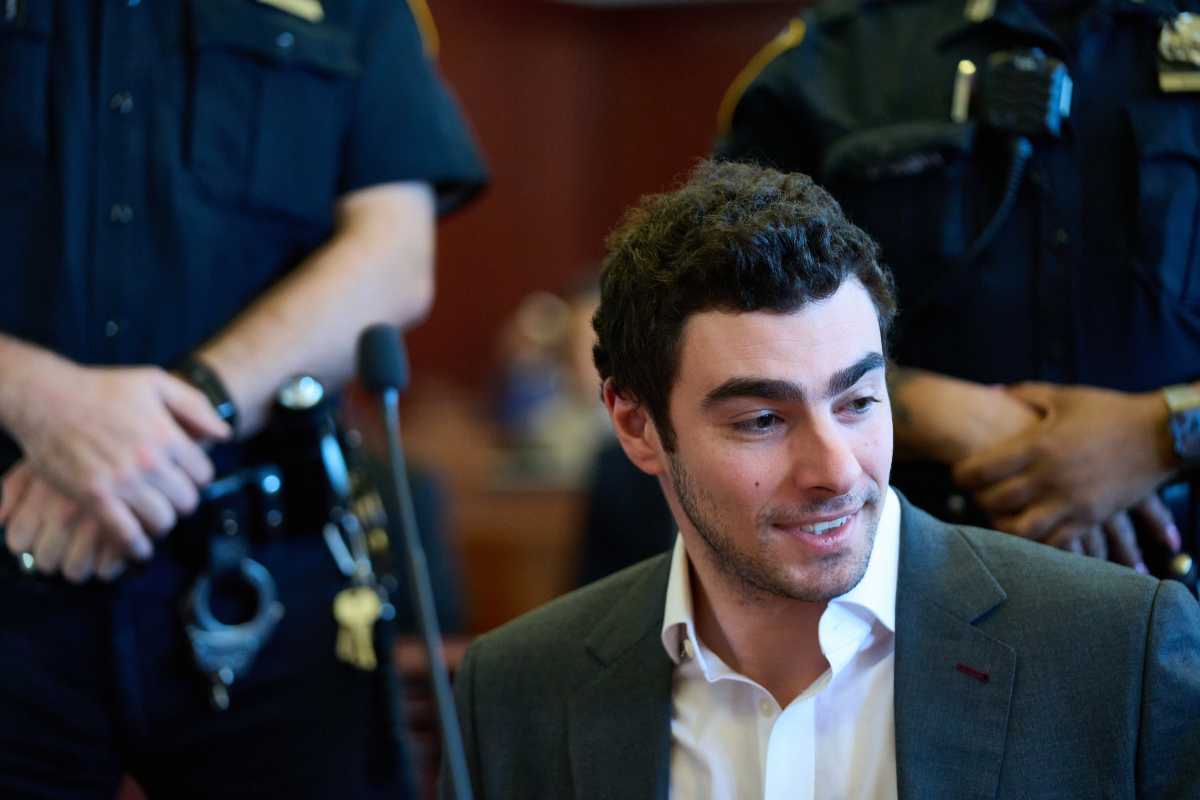
A New York City detective who investigated the Dec. 4, 2024 shooting death of UnitedHealthcare CEO Brian Thompson on Tuesday described the crime scene in a Manhattan courtroom and recounted how police worked to pick up the train of the suspected gunman.
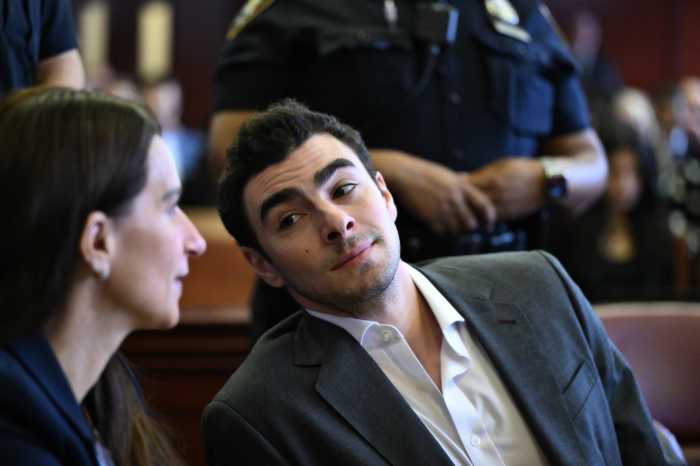
NYPD Det. David Leonardi took the stand for the eighth day of an evidence suppression hearing in the murder case against Luigi Mangione, who is charged with gunning down the 50-year-old Thompson on West 54th Street outside of the New York Midtown Hilton.
So far, the suppression proceedings — held intermittently over a two-week period — have focused on the Altoona, Pennsylvania police officers who arrested Mangione five days after Thompson murder.
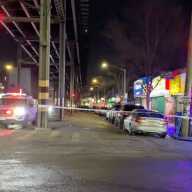
Under questioning by Assistant District Attorney Joel Seidemann, Leonardi recounted what he saw upon arriving at the crime scene.
“There was a puddle of blood that had accumulated next to the wall,” the detective said. He said he also saw a “pile” of brass casings cast about the sidewalk, and that the casings were etched with the words “deny,” “depose” and third term he couldn’t recall.
Leonardi said that police got the investigation rolling by conducting “video canvasses” in the area.
In surveillance footage captured from the scene of Thompson’s killing, a masked and hooded figure can be seen lying in wait near a parked car.
As Thomspon walks into the frame, the hooded figure emerges holding what appears to be a handgun fixed with a silencer and firing several times into Thompson’s back.
Leonardi testified surveillance footage the NYPD retrieved from the day before the shooting captures the same shooter walking past Thompson at the hotel. But for four days after the incident, police weren’t able to track down the whereabouts of their suspect. What they did find out was that he had used a New Jersey driver’s license bearing the name Mark Rosario to book a room in a hostel and to purchase a bus ticket.
Leonardi caught a break in the investigation on Dec. 9, after the Altoona Police Department responded to a 911 call from a local McDonald’s that a man resembling the prime suspect in Thompson’s killing, which had received near-saturation media coverage in the preceding days, was there having breakfast in the dining area.
When officers approached Mangione inside the McDonald’s, he offered up the Rosario driver’s license.
After word of the arrest was reported to the NYPD and to Leonardi, the detective called the supervising officer in Altoona and directed no one to talk to Mangione. Leonardi also advised the department to keep all of Mangione’s property, as it was potential evidence in a murder case.
Upon arriving in Altoona, Leonardi secured a warrant from local authorities to transfer all of Mangione’s property as evidence and set up an interrogation, he said Tuesday on the witness stand.
That’s where Leonardi’s testimony ended once defense began questioning him about the videotaped interrogation of Mangione he conducted during this trip to Pennsylvania.
“Without knowing what the rules were in Pennsylvania, you set up a [scenario] where Mangione is being interrogated on video?” Agnifilo asked Leonardi, who said that the process was guided by the district attorney.
After the prosecution objected to the questioning, Acting Manhattan Supreme Court Justice Gregory Carro called a conference and both parties abruptly cut the rest of the testimony short.
“I understand that the DA is withdrawing these statements, so no further questions,” Agnifilo said.
Throughout the day of hearings, defense honed in on the steps that police took after they took Mangione back to the Altoona police precinct where they say his Fourth Amendment rights were violated.
Earlier in the hearing, when prosecution brought in Officer George Featherstone, the police department’s evidence custodian, for questioning. Mangione’s attorney Karen Agnifilo pressed him on ways in which a warrantless inventory search of his backpack violated the local department’s code of procedure.
Agnifilo pointed out that the police department’s code instructs that inventory searches “shall be completed in the intake area,” the room in the precinct where offices process new detainees. Days before, the arresting officer who first searched Mangione’s bag testified that she took it into a hallway to search it after she found a handgun in a side pocket almost immediately after she began searching.
Featherstone insisted that another reason the police had to take the backpack out into the hallway was that it was so packed full that “simply wasn’t enough room” to take all the items out in the intake room.
“[The general order] doesn’t say, ‘Except when there’s not enough room?’” Agnifilo ask, to which Featherstone agreed.
The hearing is set to continue on Thursday.