

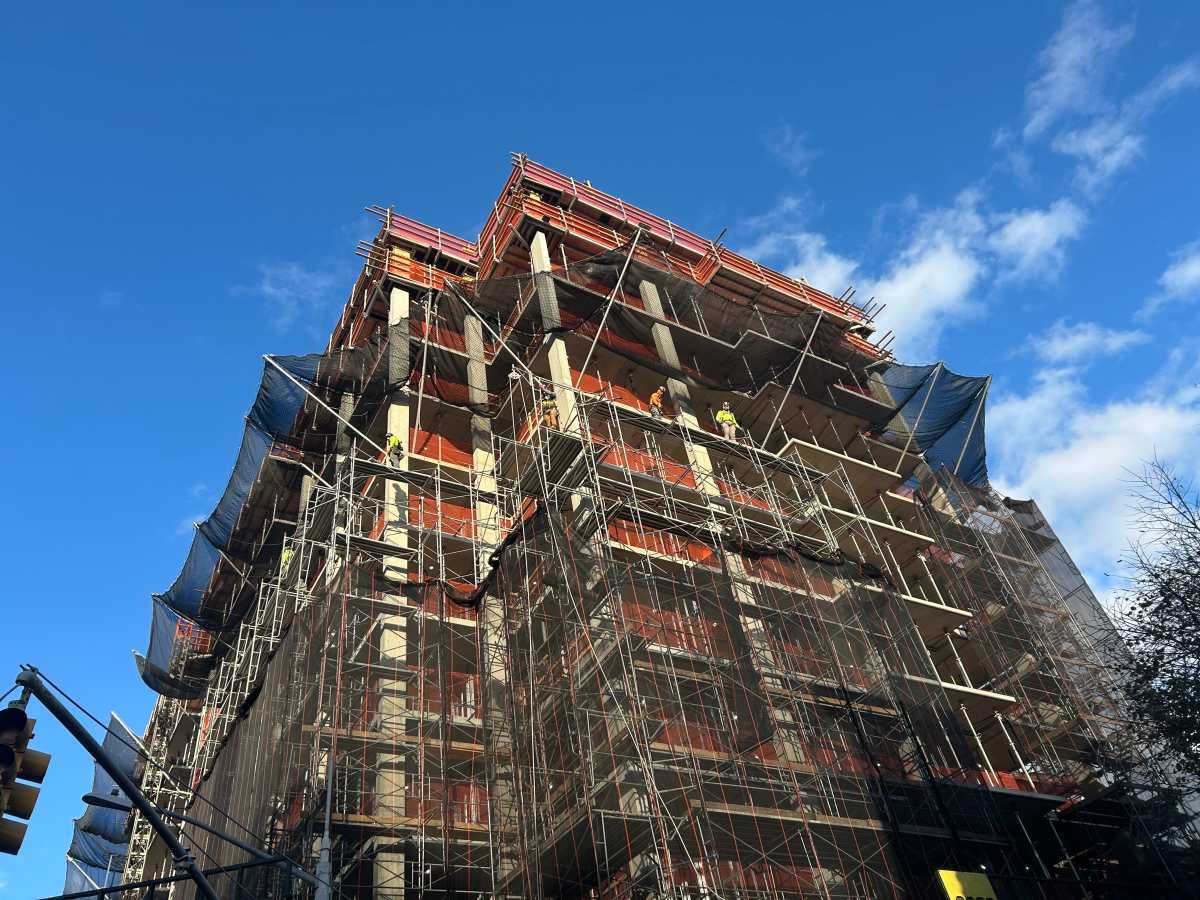
Late in the 19th century, a new era of construction began to boom in New York City. New technology and engineering techniques allowed developers in New York to build higher than ever.
By February 1875, the ten-story Western Union Telegraph Building was completed and became the tallest building in the city, 230 feet high at the top of its clock tower, and the first building to surpass the height of the St. Paul’s Chapel, which was stood 10 feet shorter.
By 1889, the first skyscraper to use a steel frame system of construction was the Tower Building, at 50 Broadway.
However, with new heights came new risks for workers. Workers found themselves exposed to the elements dozens of stories in the air, and a single misstep could lead their demise below. For example, during the construction of the Brooklyn Bridge, “Irish-born mason Neil Mullen, a widower with five children, died three days before Christmas in 1877 when arches supporting the roadway on the Brooklyn anchorage gave way when temporary wooden supports were removed before mortar had properly set.”
Nonetheless, as New York became a world leader in design marvels, it also became a world leader in worker safety. In part due to the multiple deaths and injuries that the new heights construction workers faced in the late 19th century, the New York State legislature passed a law in 1885, known as the scaffold law, to protect workers from height related injuries and death.
The law requires contractors to ensure the safety of laborers above the ground and ensures that contractors and builders are held responsible when height related safety standards are broken. Gary LaBarbera, president of the Building and Construction Trades Council of Greater New York from 2009 to 2021, stated, the labor law “protects both union and nonunion workers and creates a sense of accountability on these job sites.”
Unfortunately, representatives like U.S. Rep. Nick Langworthy, a New York Republican, make efforts to change the law with inaccurate criticism. Much of these criticisms are made by insurance lobbying groups to maintain record profits. It is important to note that Langworthy received much of his PAC money for 2023–24 from insurance companies.
While there will always be opponents of the scaffold law, it is important to understand the protections the law affords to construction workers. It is true that safety regulations can result in more red tape, but a modern society must stand up for the dignity and safety of others, especially when workers risk their lives to build the greatest city in the world. New York has always been on the leading edge of construction and engineering innovation, and since 1885, the scaffold law has ensured that construction workers are safe on that edge.
Jay Gorayeb is an attorney at Gorayeb and Associates, P.C.