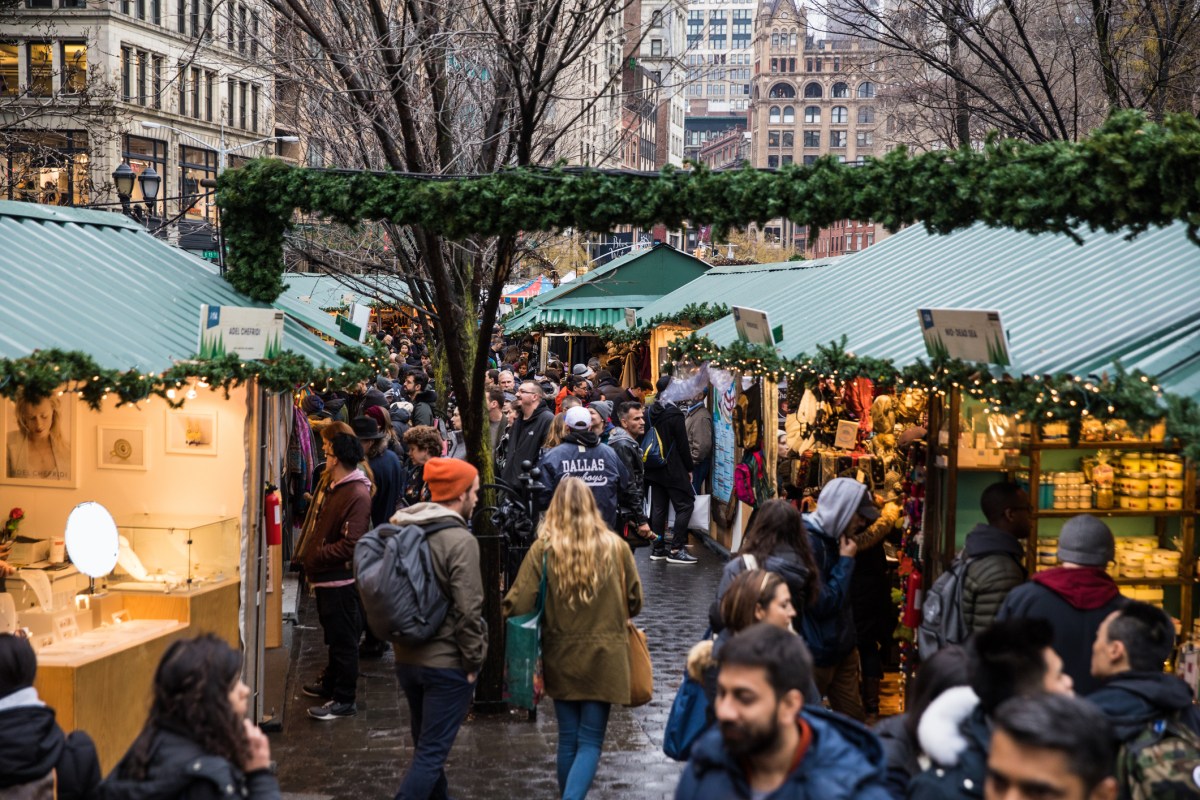


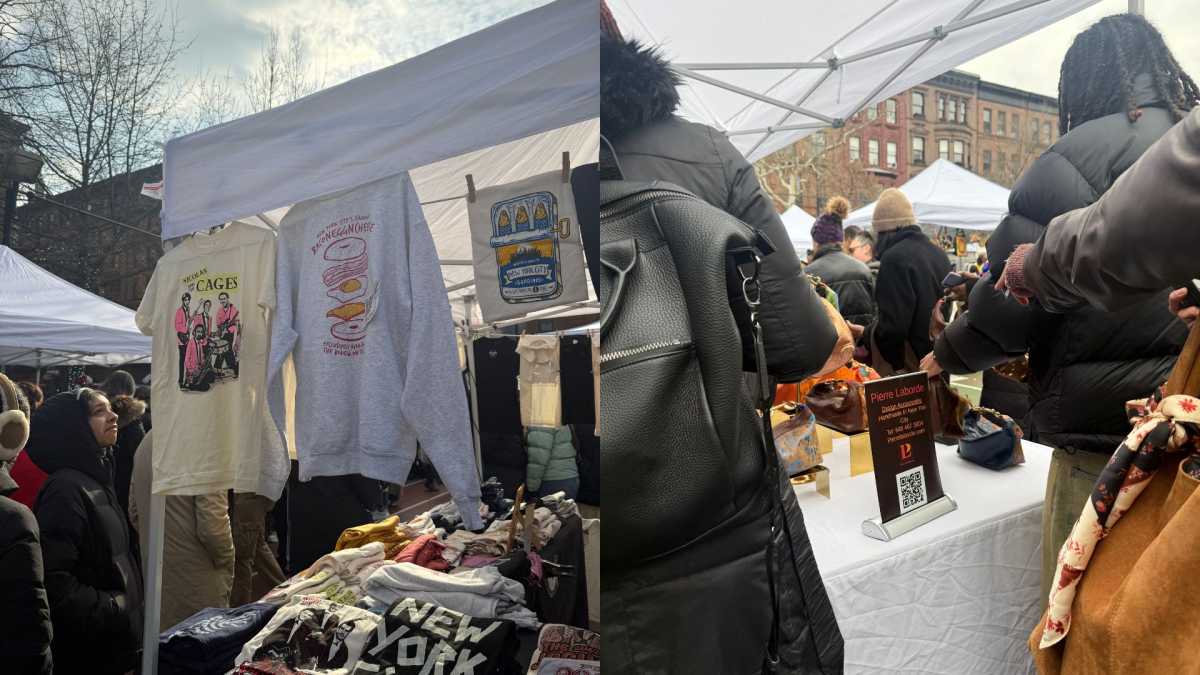
On a stretch of Columbus Avenue between West 76th and 77th Streets, just steps from the American Museum of Natural History, Sunday mornings arrive with a familiar rhythm. Trucks pull up early. Tables unfold. Racks of clothing, jewelry, art and handmade goods appear as if by muscle memory. By the time the Upper West Side fully wakes up, the Grand Bazaar is already alive.
What began decades ago as a modest yard sale organized by parents to raise money for their children’s public schools has grown into a New York City institution. Originally launched around 1979 as the GreenFlea Market, the gathering was reincorporated in 1985 as the Grand Bazaar, marking the start of its next chapter and cementing its place in the city’s cultural landscape.
For four decades, it has quietly outlasted trends, pop-ups and reinventions of the city itself, becoming not just a marketplace, but a ritual.
“We’ve been here for about 40 years, and we’re the longest-running flea market in the city,” said Dara Lehon, executive director of the Grand Bazaar.
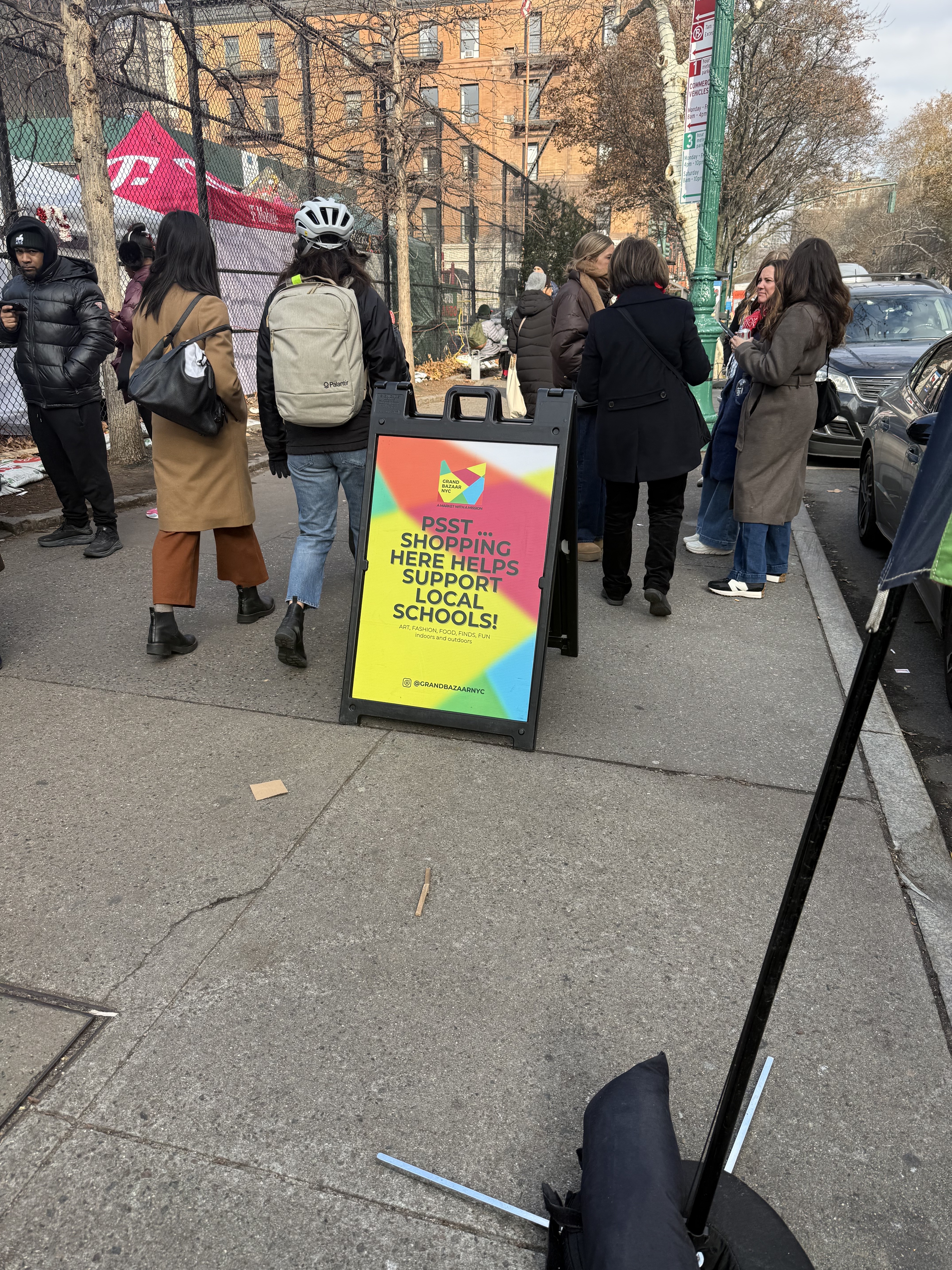
Unlike seasonal markets that come and go, the Grand Bazaar has remained anchored in the neighborhood, evolving without losing its sense of place. The market continues to operate with its original mission intact: proceeds support four Upper West Side public schools, funding arts programs, classroom supplies and enrichment opportunities for more than 2,000 students.
“We’re really proud members of the Upper West Side community,” Lehon said. “At the same time, we welcome people from all over the world every single week.”
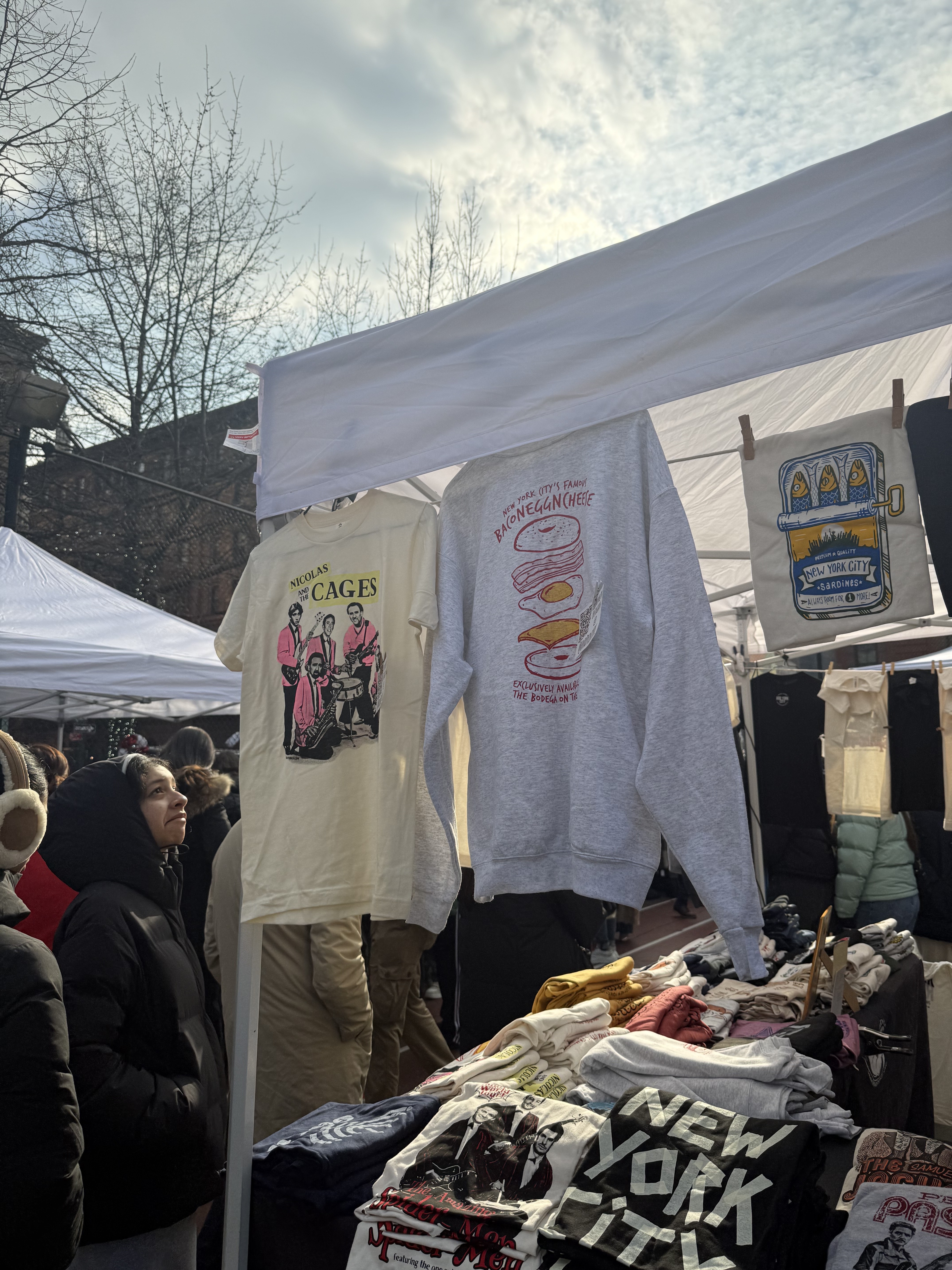
That mix — locals who return Sunday after Sunday and visitors discovering the market for the first time — has defined the bazaar since its earliest days. Some shoppers have been coming for decades. Some vendors, too, have stayed for years. Others arrive new, bringing fresh ideas, aesthetics and stories.
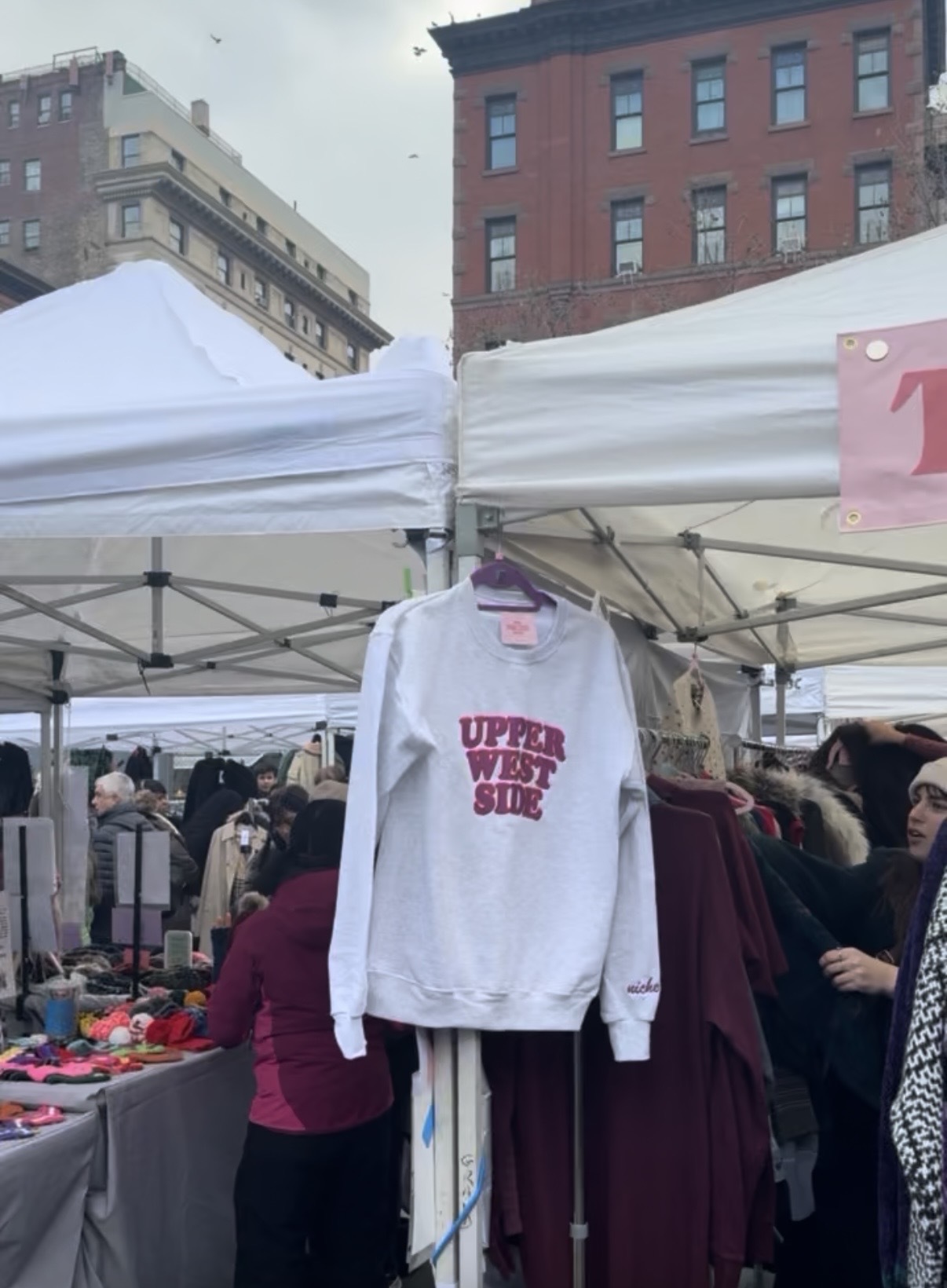
Walk the aisles on any given Sunday and the range is clear. One booth features handcrafted leather bags. Another showcases upcycled quilts transformed into wearable art. Nearby, fantasy illustrations sit beside hand-block-printed garments made using centuries-old techniques.
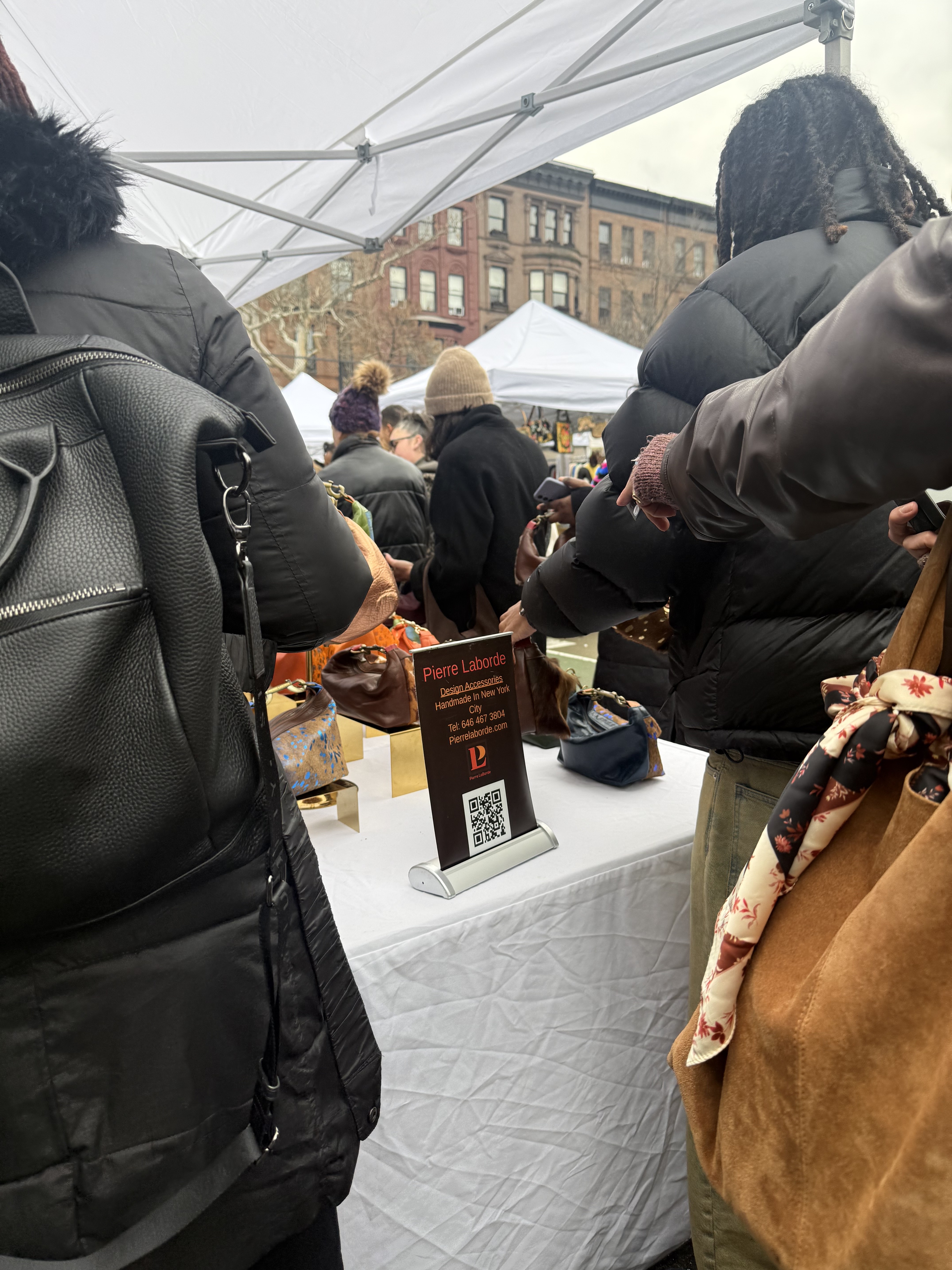
Pierre Laborde, a handbag designer known for customizable pieces, has become one of the market’s standout success stories, as viral videos of happy customers circulate on TikTok. On recent Sundays, lines stretched beyond his booth, wrapping around the block for hours.
“It feels great, but also overwhelming,” Laborde said. “I started here about nine years ago, and there’s really nowhere else I’d rather be.”
The Grand Bazaar was his first market and the place where his work slowly found an audience. “I work hard, but being here has been a huge part of my success,” he said.
Across the market, Priscilla Mimi Lee — who sells fantasy art under the name Bio, meaning art — offers illustrations created the old-fashioned way: ink and watercolor, no AI involved.
“I’ve been at the bazaar for four years,” she said. “I just love the community. Everyone is so welcoming. It feels like one big family.”
For Lee, the bazaar fills a gap many independent artists feel acutely: the absence of coworkers. “When you work for yourself, you don’t usually have coworkers,” she said. “Here, I do.”
Dara Levine, founder of Museum Mile Art, has been vending at the Grand Bazaar for about five years. She creates stoneware using lead-free glazes, with shapes and ergonomics inspired by her world travels.
“It’s a real community,” Levine said. “Every week, it’s a different assortment of people and vendors, and it’s very inspirational. I shop as much as I sell.”
A photographer by training, Levine draws from her trips across Asia, Southeast Asia, Australia, the Middle East and Africa — journeys she took after working in design and development at Coach and at the 1996 Olympic Games.
Kathleen Scully, a hatmaker who has been crafting headwear since 1999, also sees the bazaar as a place where creative lives intersect. Her sculptural cloches, berets and blocked hats trace back to Sceaux, a town just south of Paris where she once lived.
“Scully comes from Sceaux,” she said. “It’s like a seal of approval. Everything I do has my seal on it before it goes out into the world.”
Her limited-edition hats are made in France, in the same workshop that produces pieces for luxury fashion houses like Dior and Chanel. Some designs — including her classic cloche — she’s been making for decades.
“I used to sell hats right off my head,” she said. “People would stop me on the street and ask where I got it, and I’d say, ‘I can make one for you.’”
For many vendors, the Grand Bazaar is not just a place to sell — it’s where values, craft and community align.
That ethos is embodied by Carolyn Ochs, a longtime jewelry vendor whose booth features sterling silver, 14-karat gold and carefully chosen costume pieces. She prides herself on making the shopping experience welcoming and pressure-free. Despite her many years at the market, Ochs — along with her husband, Bobby — still finds joy in showing up.
Food vendors have also become an essential part of the Grand Bazaar experience, turning a shopping trip into a full Sunday outing. From small-batch condiments to sweet and savory treats, the market gives food entrepreneurs space to test flavors, connect directly with customers and grow through word of mouth. One woman-owned business — Umikah Artisanal Products, owned by Luciana Uchi — recently earned national recognition for its crowd favorite, a yuzu lime fruit spread.
Among the food vendors is Taboonia, a family-owned stand serving traditional Druze dishes. On a recent Sunday, Raif, the owner, worked alongside his mother, sharing recipes rooted in family tradition. Raif, who arrived in New York after Oct. 7, 2024, has been an integral part of the Grand Bazaar community since, and his presence reflects the market’s role as a space where personal histories, culture and food intersect. For many visitors, stopping at Taboonia is as much about connection as it is about cuisine.
That sense of community is shared by vendors who travel long distances to be part of the market, even if only for a season. Alexis, founder of Le Minou Chanceux, sells sustainably made handbags and accessories created through a circular production process using materials sourced from New York City’s Garment District. Though based in Asheville, North Carolina, she returns to the Grand Bazaar week after week through the holidays.
“This is our third year here, and it’s our favorite market in the country,” she said. “People show up here. Rain or shine. That’s the culture.”
The conversations, the consistency, the willingness to show up week after week — may be the Grand Bazaar’s most remarkable achievement.
In a city defined by constant change, it has remained steady for 40 years. Every Sunday brings another chance encounter, another small-business milestone, another story exchanged between strangers.
The Grand Bazaar doesn’t chase novelty. It simply shows up — tables unfolding, community intact — rain or shine, year after year.