


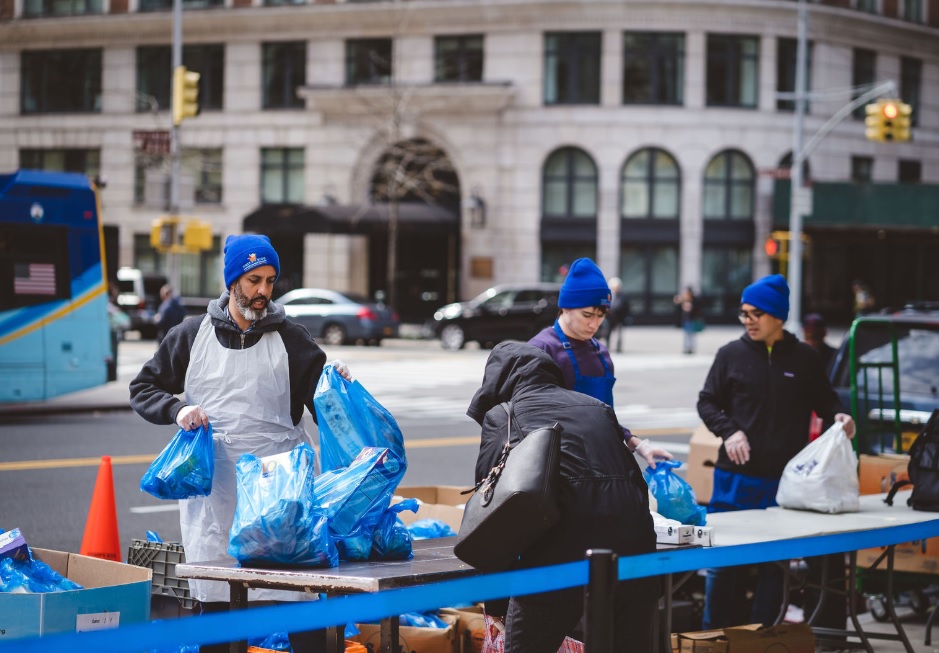
In the wake of the government shutdown that overnight left thousands of Americans struggling to put food on the table, the West Side Campaign Against Hunger (WSCAH), a nonprofit dedicated to the improvement of the emergency food system, sprang into action.
In just 24 hours, on Nov. 4, it increased the amount of food distributed per family by 50% and will keep up this level of assistance until December 20 to account for delays in disbursements. The monthly operation costs of this initiative exceed $150,000; exorbitant fees WSCAH is able to cover thanks to its savings, established infrastructure, and long-standing donor relationships.
When Santos, a low-income Bronx resident from the Dominican Republic, first reluctantly turned to WSCAH at her friend’s urging, she was at one of the lowest points of her 67 years. Depressed and fatigued, she was quickly noticed and approached by the chef whose training program she enrolled in to boost employment prospects. Through comprehensive services that transcended food alone, including a psychiatric referral, WSCAH nurtured her back to life. “They took care of me like a family member,” Santos said.
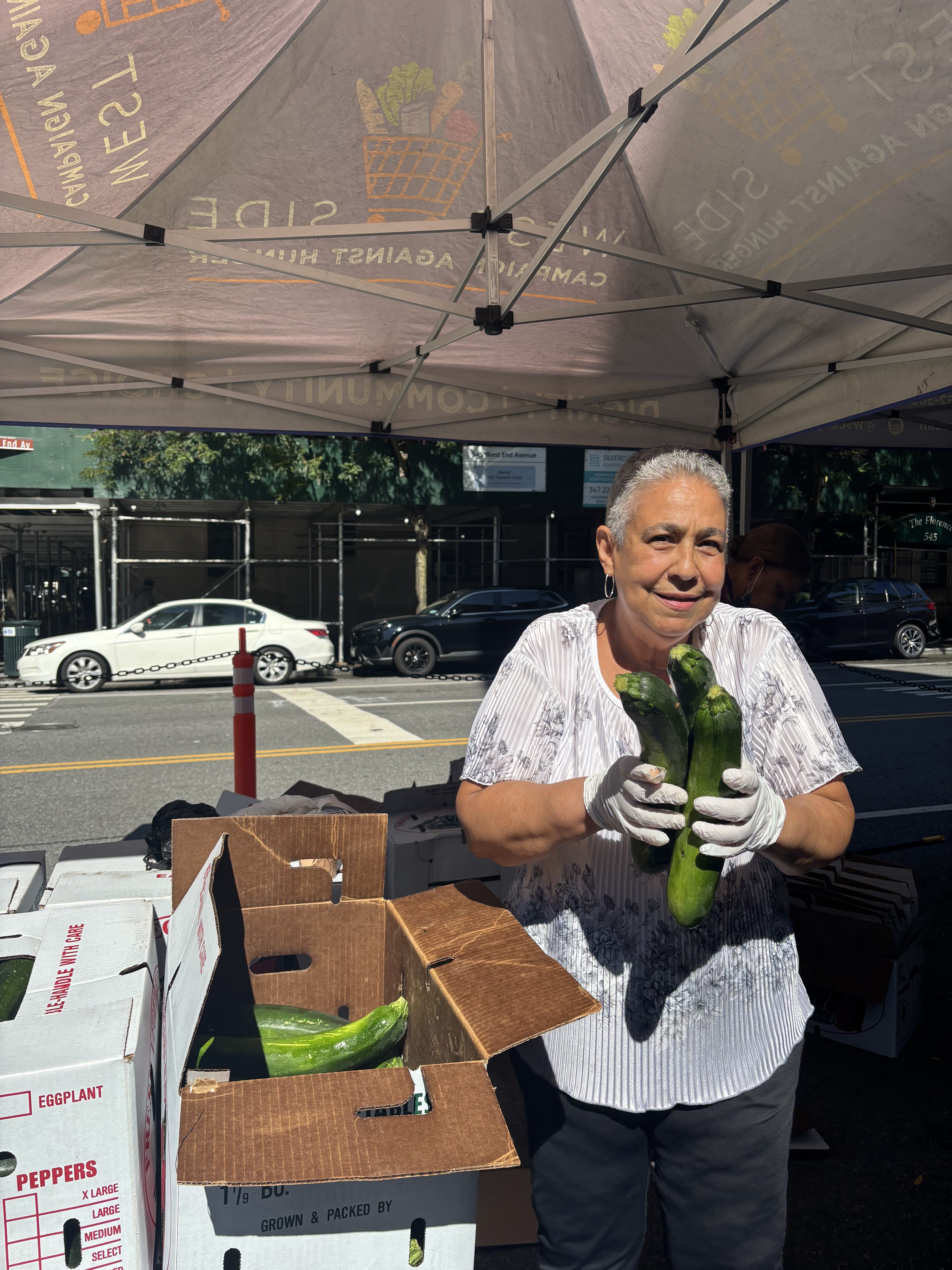
Sixteen years later, she continues to honor her ties to WSCAH. “Whatever I can give, I give it to this place because I owe this place.” As one of the 2,000 volunteers, Santos works alongside 30 staff members to alleviate hunger across New York.
“We’re not hiding away in offices somewhere. We’re just a team trying to feed people,” said CEO and Executive Director Greg Silverman, emphasizing the organization’s culture of hands-on collaboration.
Set up in 1979 with a humble $5,000 grant in the basement of St. Paul & St. Andrew United Methodist Church, WSCAH grew into a powerhouse front-line pantry, tending annually to an upwards of 120,000 customers. Though the headquarters remain on 263 West 86th Street, massive demand necessitated the addition of a 13,000 square foot warehouse on 180th Street capable of holding 170,000 pounds of food.
Having pioneered the customer-choice supermarket style model adopted throughout the country, WSCAH prides itself on the dignity extended to clients through direct influence over available inventory. “70% of what we give out is purchased. We talk to our customer community. We find out what foods they want, whether that’s from diet or cultural sensitivities,” said Silverman.
In response to requests for healthier options, 52-54% of distributed food is fresh produce. With a culinary background as a chef and restaurant owner, Silverman was able to apply his passion for curating quality meals to communities that need them most.
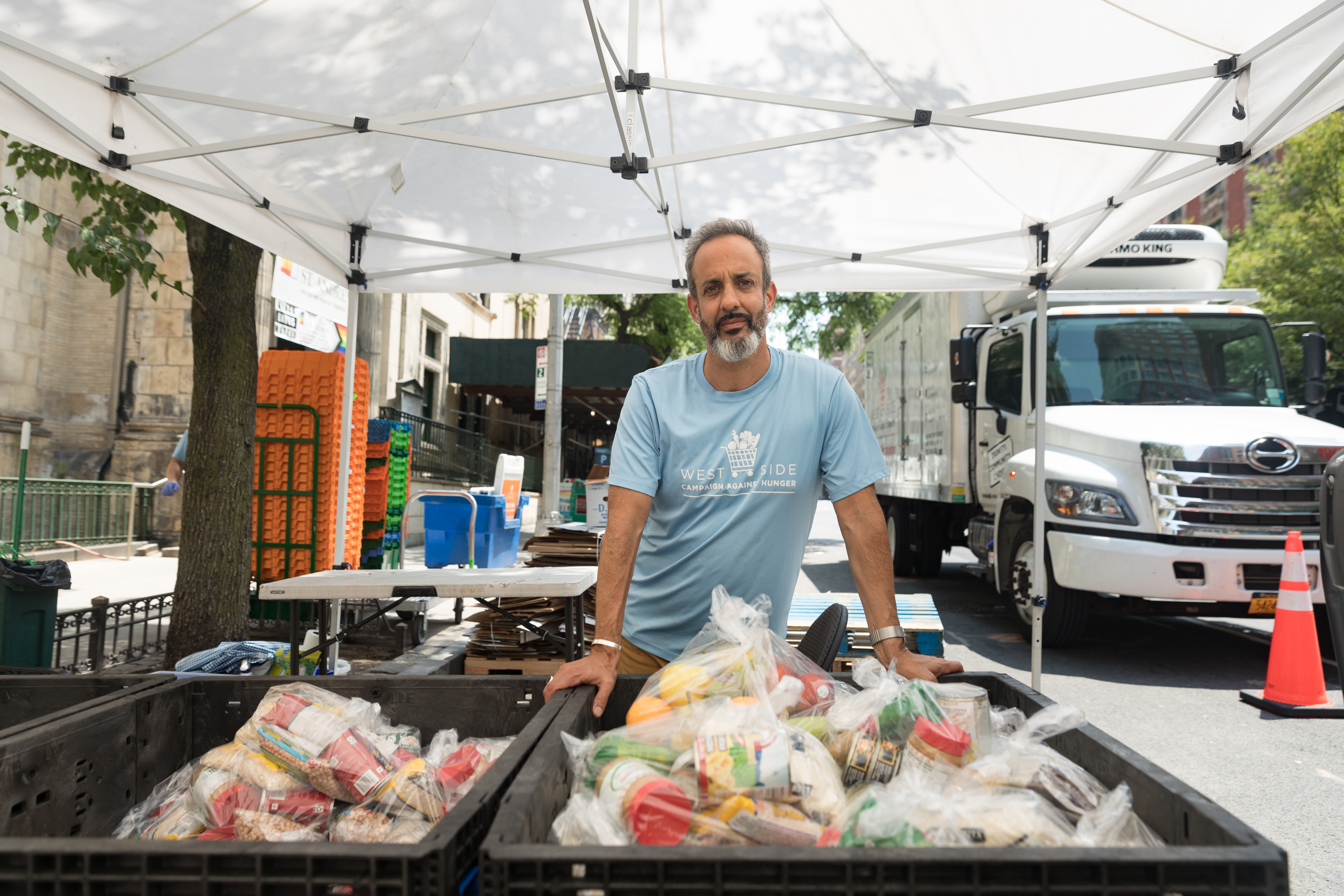
“I sold my restaurants and decided that I would focus solely on fighting hunger, making sure not just customers of my restaurants got food. Everyone should have healthy, tasty food on their plates and the access to that,” he said of his industry pivot.
During his early days at WSCAH, when a large donor delivery arrived, “a truckload of salt, sugar, and fat,” he realized “sometimes folks sacrifice client health and well-being for poundage.” He sent the donation back and, at that moment, made the executive decision to “stop taking junk.” In cooperation with local farmers, they now lean into seasonality and peak harvests.
For consumers like Santos, who suffer from high blood pressure and diabetes, a proper diet is essential for managing medical conditions. Prior to discovering WSCAH and its resources, she would sometimes skip meals to avoid sudden spikes. “I don’t want to go to the hospital because I ate canned food,” she said, referring to ultra-processed foods high in sodium.
Despite many achievements, Silverman is by no means done innovating, saying, “When someone tells me there’s only one or two ways to do these things, I’m going to say ‘you’re completely wrong’, each and every time.” Besides constantly adding new neighborhood distribution sites, WSCAH is implementing outreach strategies, like home deliveries and mobile trucks, to save distant residents’ inconvenience and transit fare.
For Silverman, transforming the emergency feeding system is a challenge requiring economic strategy: “We live in America, an entrepreneurial place,” he said. “We’re going to do what we can to free up the city and state dollars to make sure they get directly to organizations doing great work.”
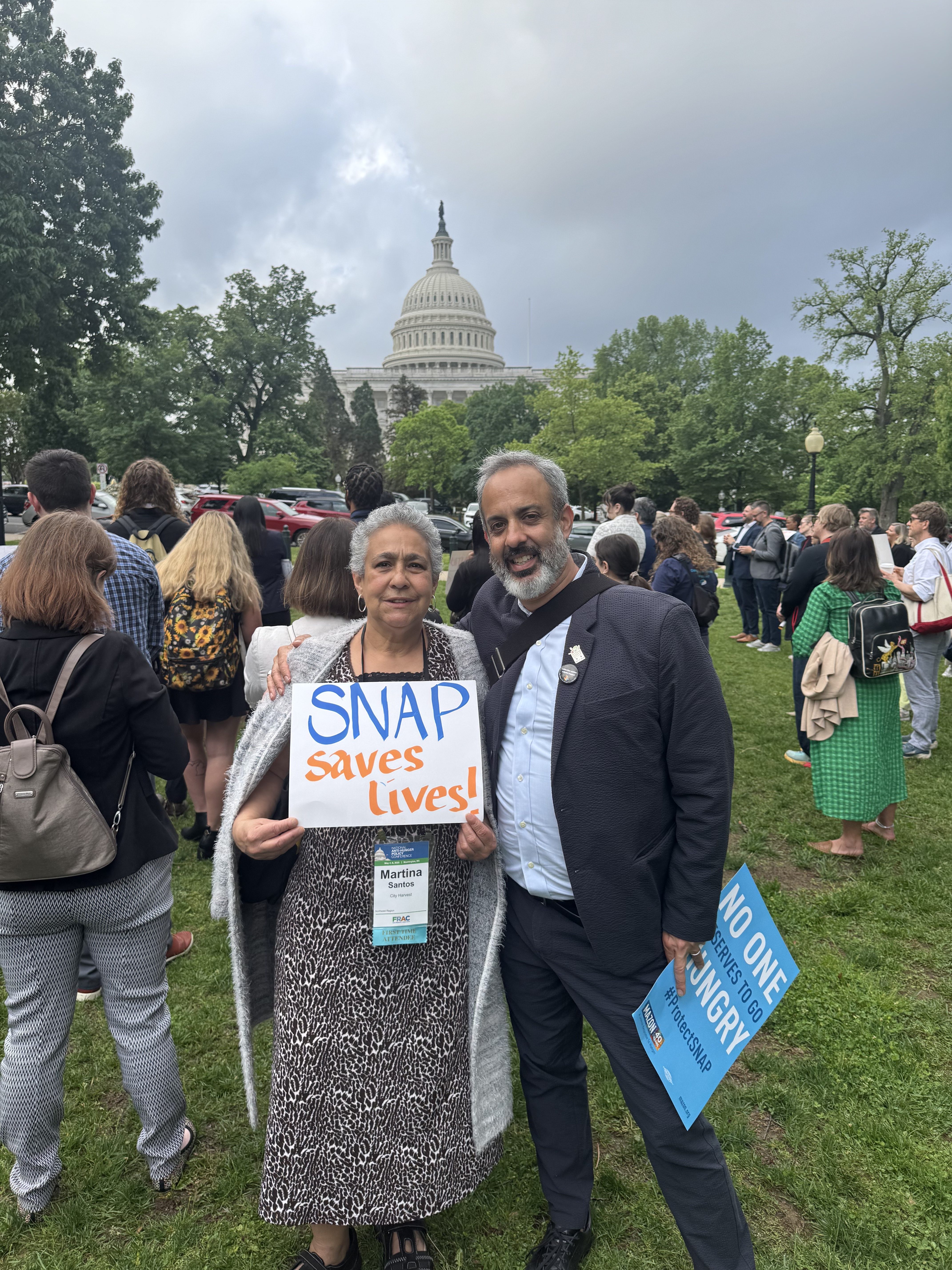
These efforts are especially critical now, at a time when “food insecurity has never been higher.” Cuts to SNAP under the budget reconciliation law, according to Silverman, are likely to strain the lifeline for subsequent years. “Passing on the cost of the program and its administration to the state level,” he said, “will theoretically lead to a $2 billion a year budget hole for New York.” Not only will benefits become increasingly scarce but also devalued in relation to inflation.
Silverman called the food stamp disruption caused by the government shutdown that lasted until November 12, 2025, “a test run of what’s to come.” But for Santos and fellow recipients, this was “not a temporary crisis” but “the worst nightmare”—one they haven’t yet awoken from despite the restoration of SNAP.
“Some people were depressed. Some people experienced domestic violence. Some people drank more than they drank before,” she said, relaying what neighbors had shared about those harrowing weeks.
The administration’s enabling of SNAP suspensions was evidence of disregard for the already underserved communities of Americans. “They forget the people who voted for their promises. They never, never, never fight for those people,” Santos said, adding wryly that, sometimes, she finds herself wondering whether “they have amnesia or selective memory.”
At the same time, Santos “would like to tell people they’re not alone” in their experience of neglect. To those left to fend for themselves, she says, “You’ve got WSCAH here.”
Silverman echoed the same sentiment of solidarity, explaining that “the only way we’re going to truly win in fighting against hunger” is through sharing. With this very principle in mind, WSCAH founded the Roundtable—a network of the city’s biggest emergency food providers who exchange expertise and purchase data to secure better prices and bulk orders.
Ahead of Thanksgiving, WSCAH provided 1866 families with turkeys or vegetarian alternatives. Now, well into the holiday period, the organization is preparing to distribute festive meals to even more vulnerable households. Yet for this seasonal campaign to succeed, all hands and hearts must come together.
“This is the time for people to step up, whether they have the time to volunteer or the means to donate financially,” said Silverman as his final message. “There is no excuse, in this time of need, not to find a place you want to support.”
To learn more about WSCAH and ways to get involved, visit https://www.wscah.org.