


The snow had arrived unannounced earlier that day, the kind that hushes New York just enough to make an evening feel ceremonial. Streets softened, footsteps slowed, and for a fleeting moment staying home seemed reasonable. Then coats were buttoned, gloves pulled on, and I took my girlfriend by the arm and did what New York asks of you when culture calls: we braved what remained of the cold and headed toward Carnegie Hall, where history was waiting to be summoned by drum and bone.
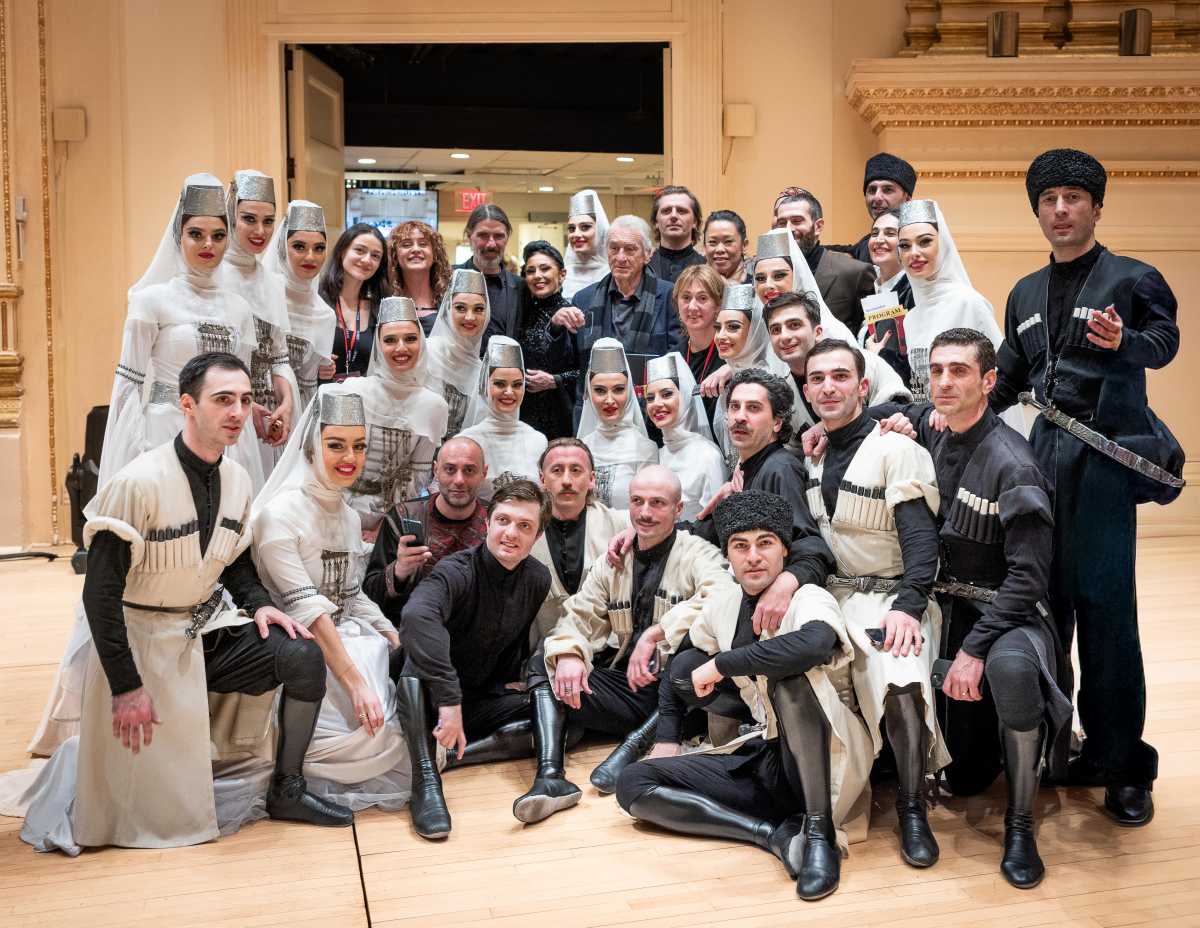
Inside Stern Auditorium, the atmosphere was unmistakable. No screens, no manufactured distraction, no apology for seriousness. Just a stage, an audience ready to be carried, and the arrival of The Georgian National Ballet Sukhishvili, an institution that has spent more than eighty years translating the soul of Georgia into motion, now under the stewardship of Iliko and Nino Sukhishvili Jr. What followed was not simply a performance, but a reckoning with endurance, lineage, and the intelligence of the human body.
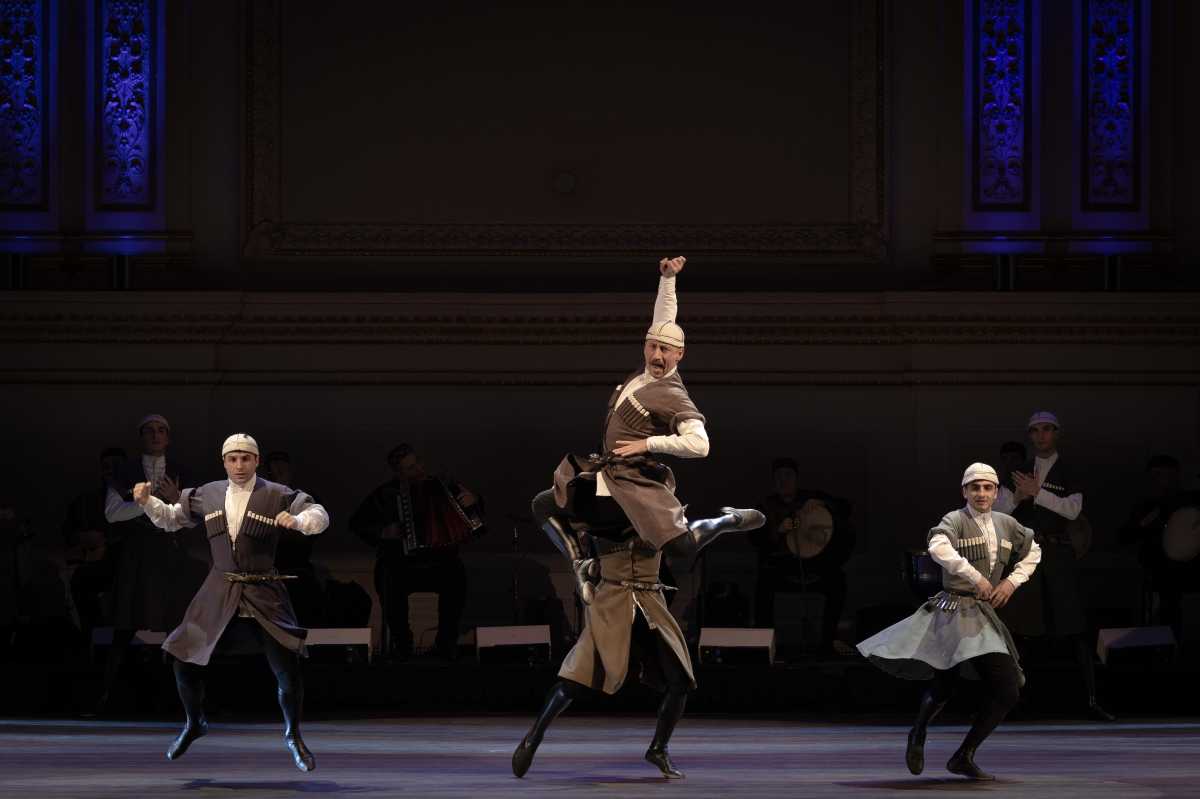
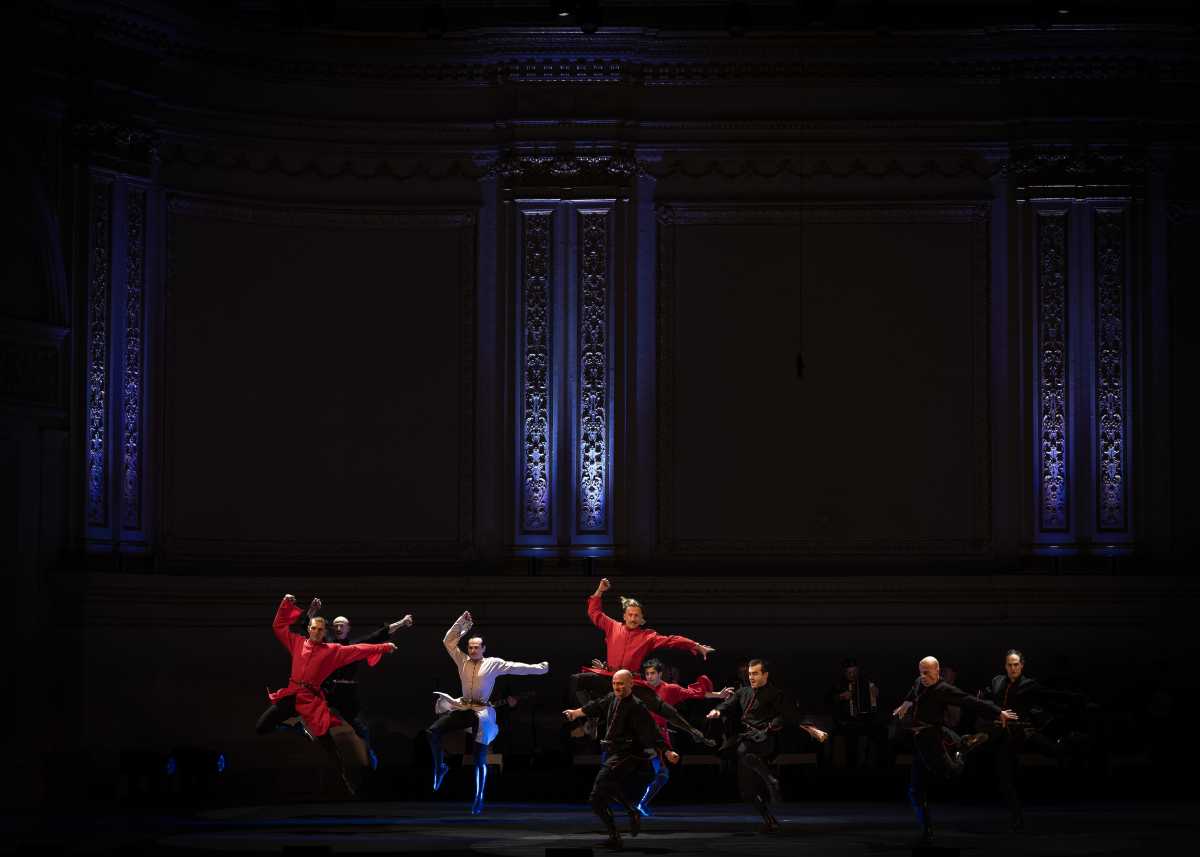
The drums announced themselves immediately—deep, insistent, ancient. They did not decorate the dance; they commanded it. From the first beat, the men entered like figures pulled from another century, leaping impossibly high, suspending themselves midair in sculptural stillness, then slamming down onto their knees with a force that made the audience collectively inhale. Those knees—unyielding, disciplined, seemingly carved from stone—hit the floor and rebounded instantly, the dancers shooting back into the air as if gravity were a suggestion rather than a rule.
This sequence draws from Khorumi, the Georgian war dance originating in the Adjara region, historically performed as preparation rather than entertainment. Every leap reads as strategy. Every frozen pose carries the tension of anticipation. The knee drops are acts of controlled violence against the body, proof of training so exacting it borders on ritual. What looks superhuman is, in fact, deeply human—muscle memory refined across generations.
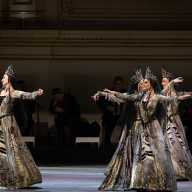
Equally arresting was the Khevsurian dance, often remembered for the long-haired ceremonial headpieces that many mistake for wigs. These are traditional elements of the Khevsureti highland warrior costume, echoing helmets, hair, and symbolic armor worn by mountain fighters. In motion, they amplify the choreography, trailing turns and jumps with a mythic quality, as if the dancers were leaving punctuation in the air.
The Khevsurian sections are tense, almost confrontational. Men face one another in coiled stillness before erupting into explosive sequences of jumps, spins, and grounded strikes. The choreography oscillates between restraint and eruption, mirroring a way of life shaped by vigilance, honor, and survival. These dances are not about dominance alone, but about discipline—power held, then released with precision.
Threaded through the program was also the unmistakable vocabulary of Lezginka, refined here into something razor-sharp and distinctly Georgian. Speed and elevation dominate, the male dancer slicing through space with upright pride, each leap a declaration, each landing a controlled return. Nothing flails. Nothing begs for attention. The body speaks because it knows exactly what it is saying.
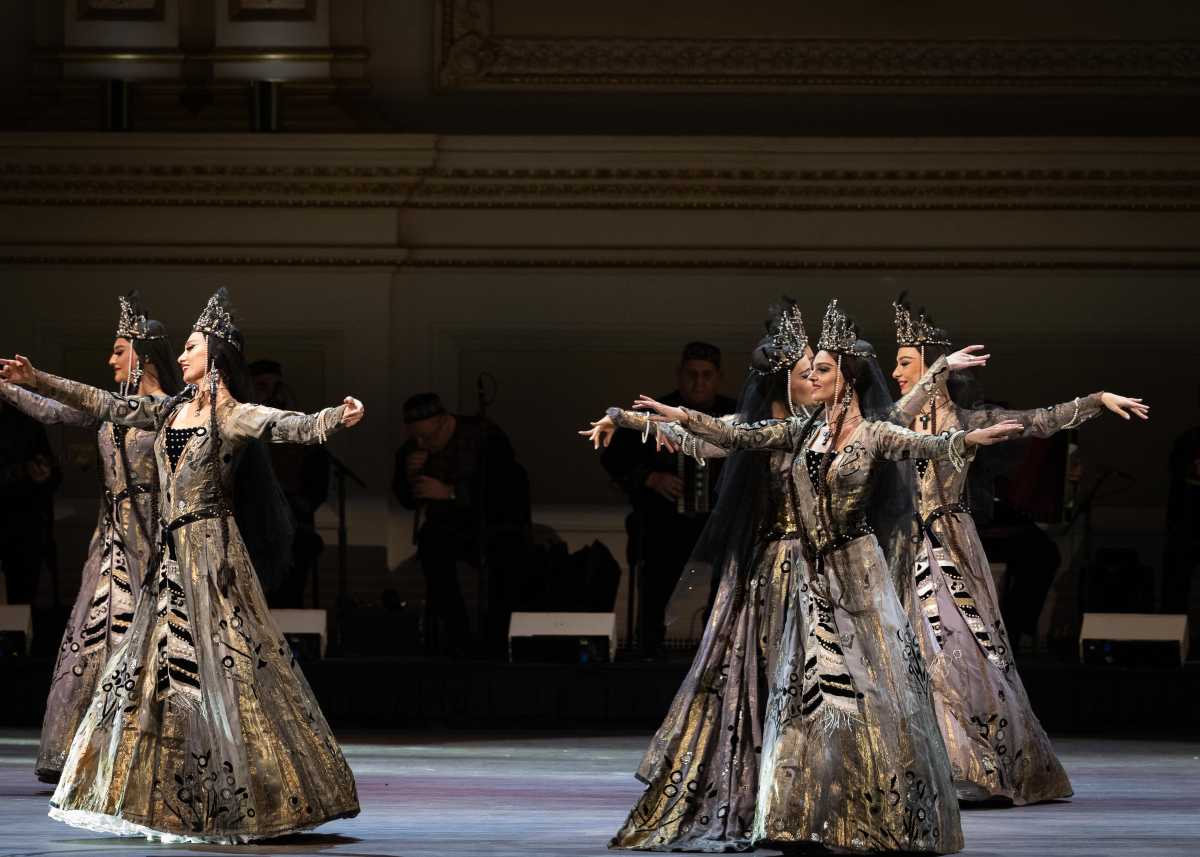
When the women entered, the room shifted entirely. Draped in richly embroidered costumes, they glided rather than stepped, upper bodies serene, feet moving with microscopic precision beneath layers of fabric. Strength disguised as softness. Authority cloaked in grace. Costume functioned as language—color, weight, and texture carrying regional memory and social code.
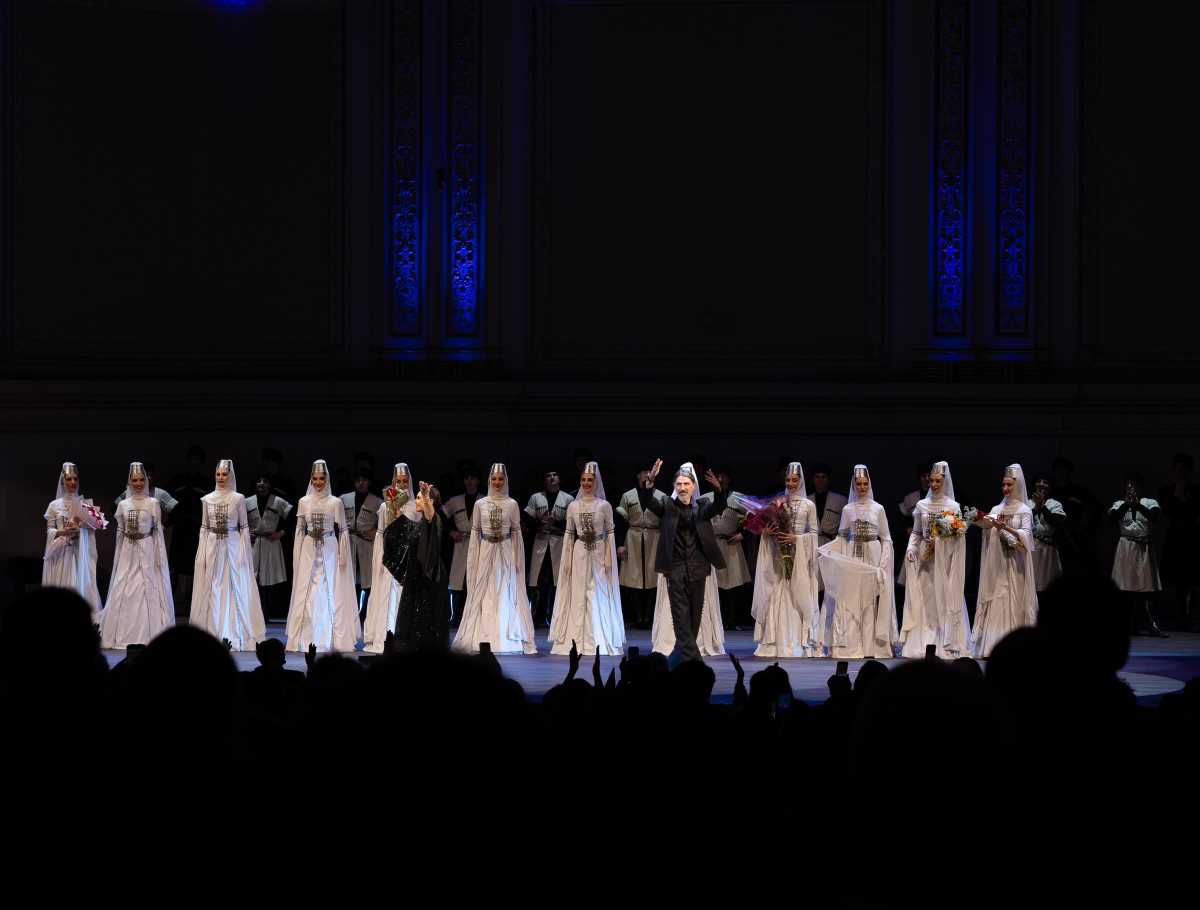
What struck me most was the company’s refusal to dilute. There was no flattening of form for ease, no concession to modern impatience. The trust was complete: in the material, in the audience, in time itself. Applause came in waves, sometimes delayed, as if the room needed a moment to re-enter the present.
By the time we stepped back outside, the snow had stopped entirely. The city felt rinsed, calm, alert. We wandered afterward into the bar at The Central Park Hotel, ordered cold cocktails, and let the night stretch—plush interiors, low light, a hum of conversation, the kind of place that understands how to hold a mood without interrupting it. Highly recommend, especially when your ears are still ringing with drums and your body is still catching up to what it has witnessed.
New York had resumed its pace. Inside us, Georgia was still dancing.