



From the rural farmlands of western New York, to the pristine hills of the Finger Lakes, to the beaches of Long Island: a slate of brand new AI data centers are in the process of connecting to New York’s power grid and awaiting approval while corporate giants and government officials haphazardly push through pesky environmental regulations and build out the infrastructure necessary to power them.
Of the 25 projects added to New York’s power grid interconnection queue this year, over half of them are data centers. These “energy-intensive” projects are in the process of connecting to the grid and will drastically increase power usage; over 7000 megawatts (MW) by 2030. Just 1 MW can power around 1,000 homes for a year in New York, according to NYISO, New York’s electrical grid manager.
As of Nov. 28, 2025, the latest piece of fossil fuel infrastructure needed to keep up with exponential power requirements was officially approved: the controversial North East Supply Enhancement (NESE) pipeline, a massive natural gas pipeline set to pump over 400,000 dekatherms of fracked gas from Pennsylvania to New York. A last-ditch effort by the Natural Resources Defense Council (NRDC) for a rehearing on the decision was dismissed on Dec. 22, and construction will need to begin soon to stay on track with the projected 2027 completion date.
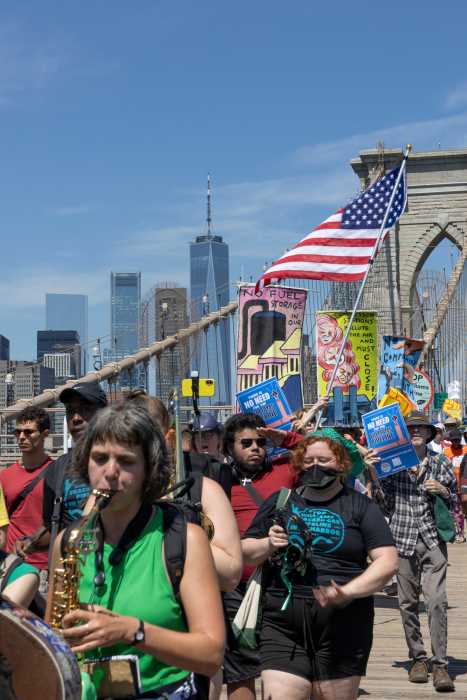
The boom of these “hyperscaled” data centers is largely driven by or intended for use by cryptocurrency mining, speculative A.I., military, or fossil fuel companies. The number of these facilities has doubled over just four years, over 5,400 now in the U.S. Their developers use the promise of jobs and economic growth to get approval, ensnaring local townships and communities in decades-long legal battles.
“It is no secret that expanding gas infrastructure is directly tied to the data center build-out,” said Alli Finn of AINowInstitute. “And that is because these facilities just use an exponential amount of energy.”
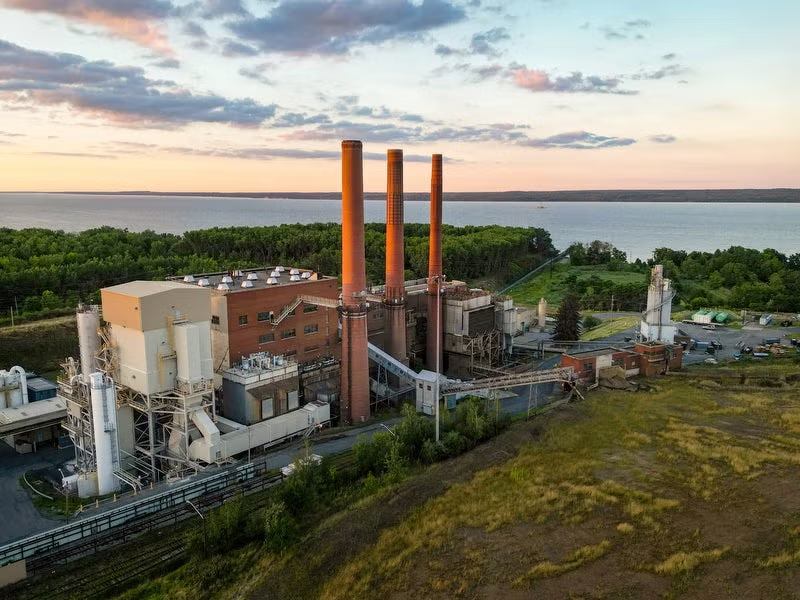
In many cases, energy requirements are fulfilled via restored fossil fuel infrastructure, such as the Greenidge Generation data center in Yates County that currently burns natural gas to mine cryptocurrency, built in a refurbished coal power plant.
Yvonne Taylor, of the Seneca Lake Guardian, has been litigating against the facility since it began mining cryptocurrency in 2019. Despite their efforts, lawyers for the facility continually delayed the process by appealing the lawsuits, which attempted to force the crypto-mining operation to shut down based on its overuse and contamination of water from Seneca Lake, around 139 million gallons used daily as coolant, and the noise pollution, well over 80 decibels that carries on for miles.
During the appeals process, the facility has been permitted to operate, a status that has persisted for the past four years. According to Taylor, the facility will have to renew its land-use license before the decision is seen through. The Seneca Lake Guardian’s latest effort includes an additional law that forces facilities such as Greenridge to cease operation during the procedural appeals process. However, on Nov. 7 Hochul greenlit the center for another five years to continue mining for crypto and eventually make the swap to AI.
“All of a sudden in January, the political winds change,” Taylor said. “It seems like Governor Hochul is telling her department to capitulate in Greenridge. In the court of law, it seemed like the DEC and us were on the same side. But now the DEC is saying ‘We don’t need to rush this,’ and we can let this continue to drag out and let this company continue to operate… Hochul is seeing the need for as much power in the state as possible.”
Greenridge Generation, which previously promised to burn only privately purchased fossil fuels supplied from Canada via Dominion Energy, applied to join New York’s grid in 2024 to draw 270 MW of power and replace the much less profitable crypto-mining operation with AI. When initially pitched, the company promised to supply the township with over 100 jobs, of which less than 20 remain, and sell the surplus power back to the state.
As The New York Times reported in late November, Hochul’s husband is a part of a law firm, Davis Polk & Wardell, representing Greenridge Generation in addition to the Williams company of Tulsa, responsible for NESE. Much to the surprise of activists, Hochul repealed the “100-foot rule” on Dec. 19, which had forced ratepayers to subsidize new gas hookups and will ultimately reduce power bills.
But it may be too little too late, as according to Bloomberg, electricity costs in areas near “significant data center activity” rose by 267% in just five years.
“What the majority of the build-out is doing, which is intimately tied to big tech, is pushing us back to reliance on fossil fuels and harming communities through rising costs, air pollution, sucking up our clean water, destabilizing our energy grid,” said Finn.
NESE and New York’s Grid lock
On Sept. 18, the New York State Public Service Commission (PSC) approved National Grid’s long-term infrastructure plan, which includes the controversial NESE pipeline, by unanimous decision. NESE alone would increase greenhouse gas emissions by 12%, severely undermining the Climate Change Act’s goal of being net-zero by 2040.
The 2.5 million ratepayers in Brooklyn, Queens and Long Island will be on the hook for the pipeline’s around $3 billion construction cost through a +3% increase in their power bills. Though these downstate ratepayers may find those bills climb even higher within the next few years.
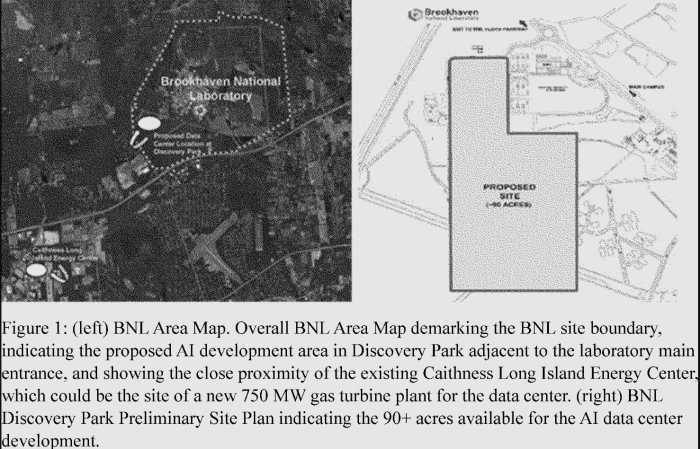
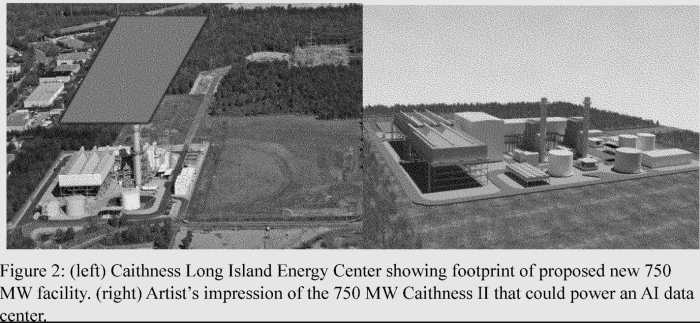
Earlier this year, the Department of Energy (DOE) requested the Brookhaven National Laboratory (BNL), a national research facility in Suffolk, begin looking to build its own AI data center on campus. It would require the construction of a new power plant known as Caithness Long Island II, exclusively powered by natural gas despite its branding as a “new clean energy source.” According to the DOE filings, the data center would encompass over 90 acres of land, equivalent to approximately 16 blocks in Manhattan. Four of the projects included in the filing have already entered the next stage of development.
On Nov. 10, Paul Haering, vice president of capital investment at New York Transco, spoke at a panel titled “From Data to Demand: AI’s Impact on Energy & Communities” at Hofstra University. “Long Island is truly an electrical island. Starting in 2027, there is potential for a reliability concern on Long Island,” he said.
In April of 2025, Williams/Transco revived the NESE pipeline, the DOE filed for the BNL data center and Trump signed an executive order, “Protecting American Energy from State Overreach.” Both NESE and the BNL data center are slated to be operational by 2027, though the center has yet to join the NYISO interconnection queue.
The streamlined NESE permitting process skipped the required public hearings and shortened the window for public comments, of which over 10,000 were submitted in protest of the pipeline, including 137 public officials such as Rep. Alexandria Ocasio-Cortez, Mayor-elect Zohran Mamdani and outgoing City Comptroller Brad Lander.
Director of Sane Energy Kim Fraczek says the failures to follow protocol are indicative of Gov. Kathy Hochul’s alleged agreement to allow the pipeline through in exchange for the offshore wind energy project, Empire Wind 1. The White House announced the agreement over the summer to E&E news, which Hochul denies. Transco’s request for the reissuance of a Certificate of Public Convenience and Necessity (CPCN) cites the executive orders signed by President Trump and, most notably, suggests the urgent need for energy supply in the Northeastern U.S.
In its long-term plan, National Grid cites the 2024 Power Trends report from NYISO, which states that the state’s gas infrastructure could face “deficiencies” as early as the winter of 2027 and claimed NESE would eventually net ratepayers $6 billion in savings.
Due to the extra energy required to heat homes and operate large facilities in the winter, National Grid relies on natural gas to supplement energy needs and claims the city risks blackouts and brownouts during peak hours without the construction of NESE.
“We are grateful to the Public Service Commission for its thoughtful evaluation of our Long Term Gas Plan, and their extensive analysis of the need for reliable energy for New Yorkers. The PSC order today affirms our determination that the NESE pipeline project is needed for enhanced reliability of our gas network,” said Sally Librera, National Grid NY President, after the decision.
However, the 2025 report moved the date back three years to the winter of 2040. In an Institute of Energy Economics and Financial Analysis (IEEFA) report on New York’s energy needs, author Suzanne Mattei says National Grid’s claims of potential blackouts due to a lack of supply are unsubstantiated, later calling them “bogus.” The $6 billion in savings is also a dubious proposition to Mattei, as the cost of constructing the pipeline would negate the $2.75 billion that would go to downstate New Yorkers and gas supply is not the main driver of electricity costs.
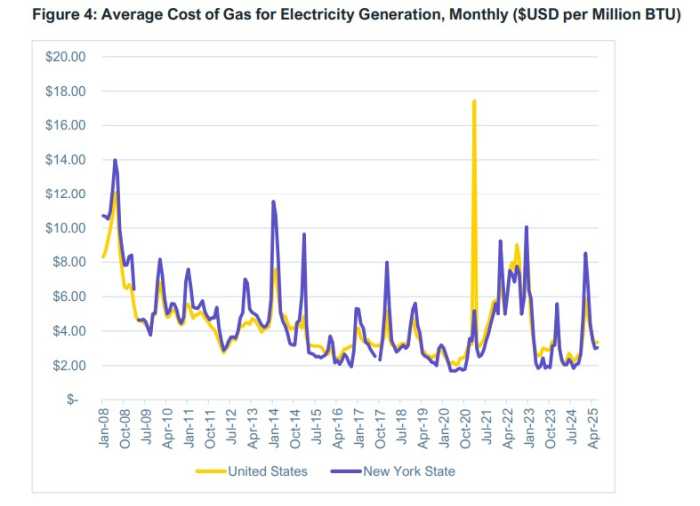
During Winter Storm Elliott in 2022, downstate New Yorkers faced a shortage of natural gas. After an investigation, the Federal Energy Regulatory Commission (FERC) stated that it wasn’t due to an increased demand for fossil fuels or lack of supply, but was caused by the freezing of several “wellheads” and other equipment in Pennsylvania, Ohio, and West Virginia due to the vast 2,000-mile coverage of the storm across the Northeast. The NESE pipeline would connect to wellheads in close proximity.
“It is reasonable to be concerned that the project would be subject to the same vulnerability as the existing gas supply system,” Mattei said.
Just two years later, FERC helped “fast-track” the NESE pipeline by not requiring an update to its environmental impact statement from six years ago — an apparent disregard of protocol that Mattei called “unacceptable.”
The PA Consultant, an independent consulting company hired by the PSC, agreed with Mattei on the state’s future energy requirements and wrote that the 2025 energy report is much more in line with the “historical trend,” and the older report National Grid used to determine NESE’s necessity was “overly optimistic” of New York’s economic growth post-pandemic. In the final draft, the firm concluded that the pipeline would enhance overall system reliability among other positives, but that National Grid would still be able to keep up with projected demand without it.
“The gas planning activities we require National Grid to undertake today will ensure that National Grid continues to provide safe, adequate, and reliable service while striving to meet the state’s greenhouse gas emissions reduction targets,” said Commission Chair Rory M. Christian in a press release. “Because widespread gas outages are a real possibility today, given the narrow margin between available gas supply and demand.”
The older report may have been closer to the truth, as the addition of the data centers will almost double even the inflated 2024 energy demand estimation. The PA Consultant included an asterix: “it is not unreasonable to believe that the load forecast could increase in future iterations, depending on the development of macroeconomic trends.”
NESE will breach in New York Bay
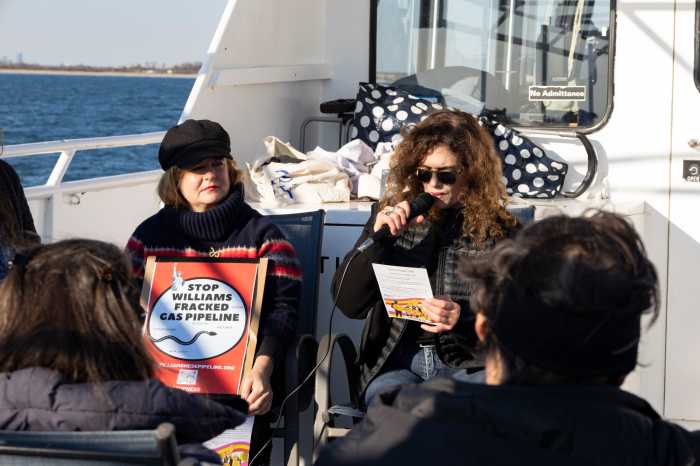
Fraczek and members of the Sane Energy Project, Rockaway Women for Progress, and other environmental advocacy groups met on the deck of the American Princess, a whale watching tour boat, in early November for a guided tour off the shores of Rockaway: exactly where the NESE pipeline will be built.
Though no whales were spotted, tourists and New Yorkers out for the sunny yet frigid fall day were delighted to witness several pods of bottlenose dolphins that breached in and out of the water around the boat.
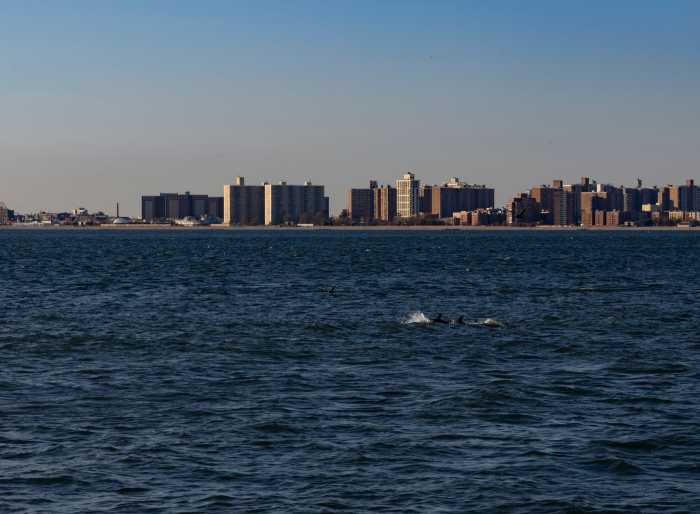
Marine life returned to Rockaway after New York prohibited the dumping of waste in waterways around 30 years ago. Joan Flynn of Rockaway Women for Progress, adorned in winter attire to fend off the cold wind from the sea, gave a small speech to the crowd as it returned to harbor.
Flynn spoke of her experience living in Neponsit for over 50 years, raising her children and witnessing the return of birds, dolphins and whales to the beaches near her home.
“[New Yorkers] have to find out what National Grid is actually building this pipeline for. We didn’t need it the first time, we didn’t need it the second time, and we don’t need it the third time,” Flynn said.
The heavy metals that once stopped animals from safely swimming and feeding so close to shore settled at the bottom of the ocean and were safely covered by layers of sand. Construction of the NESE pipeline would once again reintroduce lead, arsenic, antimony, mercury, chromium and other heavy metals deposited in the sediment from the Raritan Bay Slag Superfund Site in New Jersey, dredging up the ocean floor on its way from Pennsylvania to Rockaway.
Fraczek, who protested the NESE pipeline the two other times Williams/Transco attempted to build it, says National Grid hides behind the fact that the pipeline and the long-term infrastructure plan are classified as a generic proceeding and not a ratepayer case. Rate cases require the process to be overseen by an administrative law judge with much more stringent protocols for public hearings, comments, etc. The generic proceeding allowed the process to be streamlined, cutting the window for public comments in half and eliminating the need for a single public hearing.
“It’s just such an absolute abomination of the entire premise of the long-term gas plan by including Williams’ NESE pipeline as something that’s even legitimate,” Fraczek said. “The fact that [the PSC] is legitimizing this pipeline gives an indication to the DEC that they’re all taking this very seriously, and you should take this seriously, and we even need to start considering cost implications for the electricity market.”
The DEC approved William Transco’s water quality permit a few days after the tour: the same permit it had denied just five years ago. The environmentalists sat in a somber circle aboard the American Princess discussing NESE’s seeming inevitability, and the disappointing lack of whales was an ill omen for the future of New York Bay.
“Just days after an election in which voters across New York and the country made clear that affordability is their top concern, it is simply perverse that New York State will be saddling gas ratepayers with billions of dollars in costs for a dirty fracked gas pipeline that is completely unnecessary and an environmental nightmare,” said State Sen. Liz Krueger in a press release on Nov. 7.
Indigenous nation STAMPs out data center in Batavia
In Batavia, a small town in Genesee County, members of the local indigenous nation and their allies held a press conference in front of City Hall on Nov. 8 to celebrate a legal victory that halted the development one such hyperscaled data center at the Science, Technology, and Advanced Manufacturing (STAMP) site.
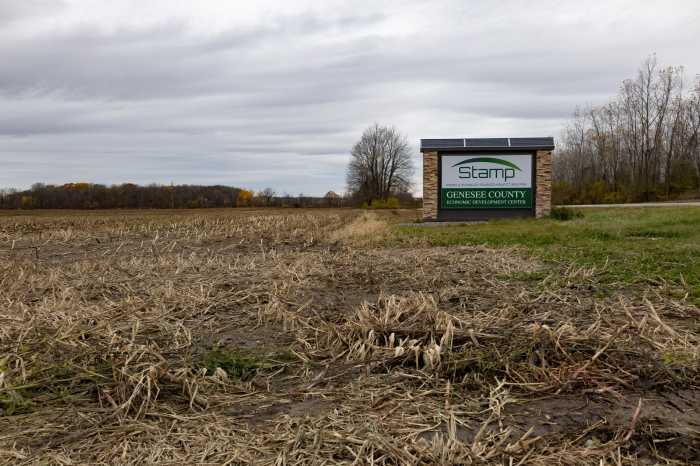
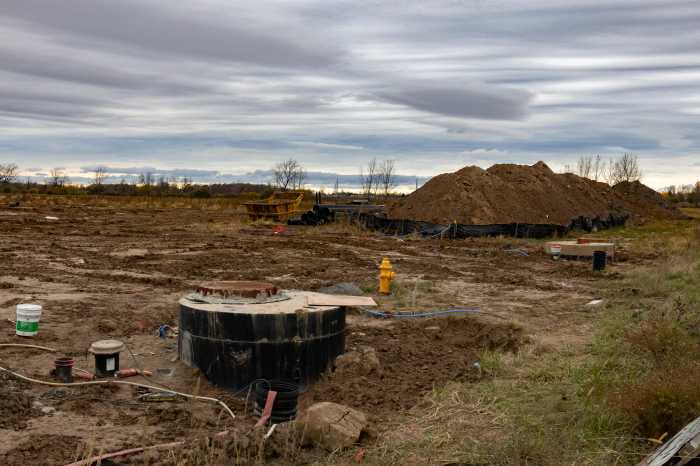
The impracticality of the site, surrounded by farmland and miles away from the nearest source of water, did not dissuade The Genesee County Economic Development Center (GCEDC). However, the lack of both energy and plumbing infrastructure in the surrounding area posed significant challenges to potential developers who spent $426 million of public funds: half of which came from former Gov. Andrew Cuomo’s Buffalo Billion Program.
GCEDC first approached the rural farm town of Alabama 20 years ago with a proposal to build an industrial manufacturing campus on a nearby swathe of land encompassing around 1,200 acres. The township and the nearby Tonawanda-Seneca Nation agreed, unintentionally embroiling themselves in decades of legal battles with GDEDC and the infrastructure required to make STAMP operational. One such lawsuit was against a wastewater pipeline that cut through the Iroquois Wildlife Sanctuary, which was later scrapped when U.S. Fish and Wildlife pulled its permits… only after workers spilled hundreds of gallons of hydraulic fluid into the nearby creek and protected wetlands.
Two years later, the hard-fought victory against the data center came from the Tonawanda-Seneca Nation and their allies, including the Sierra Club and the Allies of Tonawanda-Seneca Nation. The organizations sued the incoming data center alleging Stream U.S. Data Centers, GCEDC and the Town of Alabama violated state environmental law by approving the 270 MW data center that would encompass over 60,000 square feet. The lack of a nearby water source meant the servers would be cooled mostly using industrial AC units, which generated noise levels exceeding 80 decibels and disrupted the local ecosystem that, as subsistence hunters, the Tonawanda-Seneca Nation relies on.
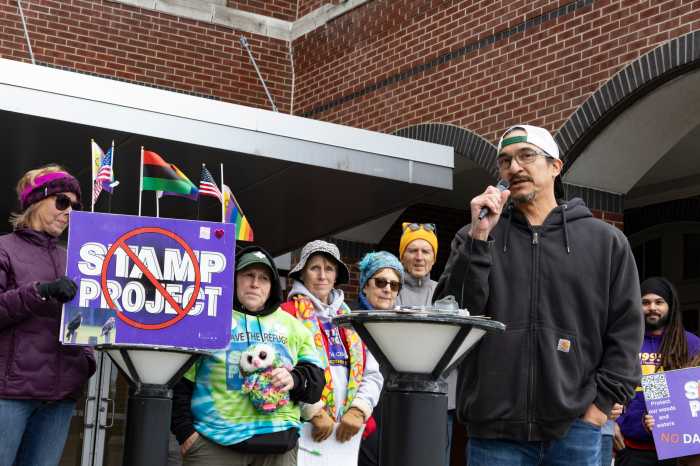
“We knew nothing. They got permits, even crossing county lines without the proper permission, and it was Hochul, Schumer, and the DEC that pushed everything through under the radar for it all to be able to start,” said Chief Scott Logan of the Tonawanda-Seneca Bear Clan.
Much like the NESE pipeline, the litigants alleged a violation in procedure on environmental permits. The Stream U.S. Data Center’s project, which received $427 million in government subsidies, failed to include specific environmental and site plan reviews. Sierra Club and the Tonawanda-Seneca Nation dropped the lawsuit with impunity after Stream pulled the plug on its own plan, but not because of any sudden change of heart.

Apollo Global Management, one of the “Big Four” private equity firms in the country, acquired Stream U.S. Data centers and requested the project be canned as it was not large enough to warrant the investment into the infrastructure required for operation. New plans were drawn up, nearly tripling energy requirements to 650 MW and increasing the data center’s size to 90,000 square feet.
According to Grandell “Bird” Logan, a spokesperson of the Tonawanda-Seneca Nation and son of Chief Scott Logan, Stream U.S. Data Centers representatives who met with the Nation stated the company was originally drawn to the campus because “the S.T.A.M.P site has excess power and infrastructure.”
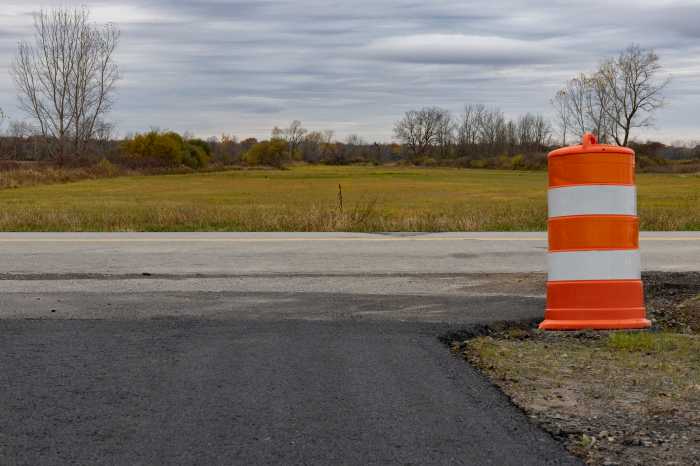
Energy needs were supposedly addressed when Plug Power purchased 30 acres of land to build a hydrogen production facility and funded a substation also located on S.T.A.M.P.’s campus, which could then be used to power other nearby factories, such as Edwards Vacuum, by connecting to nearby high voltage power lines owned by National Grid. But as of Nov. 14, Plug Power attempted to abandon the project and hopes to sell off the over $100 million worth of assets of the property… to an unnamed data center developer, according to the CEO of Stream.
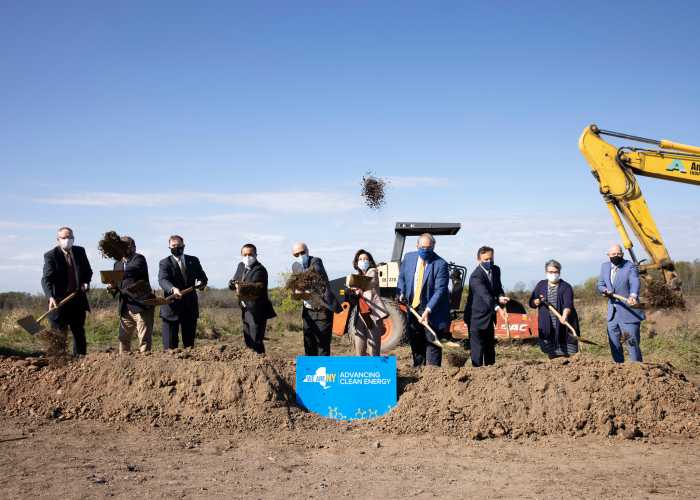
However, Bird Logan, 27, isn’t dissuaded by the thought of upcoming legal battles centered around another data center at the S.T.A.M.P site.
“I can’t even imagine what life would be like if I weren’t in Tonawanda-Seneca,” said Bird Logan. “Our ceremonies throughout the year… they’re ceremonies for the maple, for the seeds, for the corn, for the beans, and for the harvest. I put my full being into protecting these things; continuing these [traditions]. I can’t imagine living any other way, and I’m thankful to live this life.”
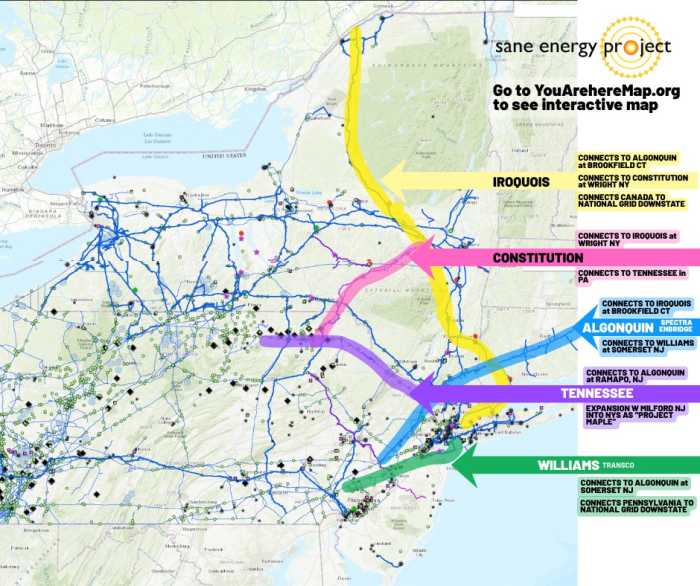
Finn of AiNowInstitute is skeptical that the AI bubble will burst anytime soon, and believes it to be an outdated state and federal policy that allowed data center developers to embroil themselves with communities like the Tonawanda-Seneca Nation, Alabama, and Dresden, where Greenridge Generation is located. And other pipelines, such as the Iroquois expansion and in-works Constitution, will only make powering them easier.
In the coming years, New Yorkers will be on the hook both environmentally and financially for many of Big Tech’s projects with over a dozen, from Niagara to Long Island, already on the way.
“I don’t know how long, but I will say is that Big Tech is rigging the game so that if and when that bubble bursts, they are not going to be holding the bag,” said Finn. “It will be everyday people in our communities… and this infrastructure build-out is such a painful example of it.”