


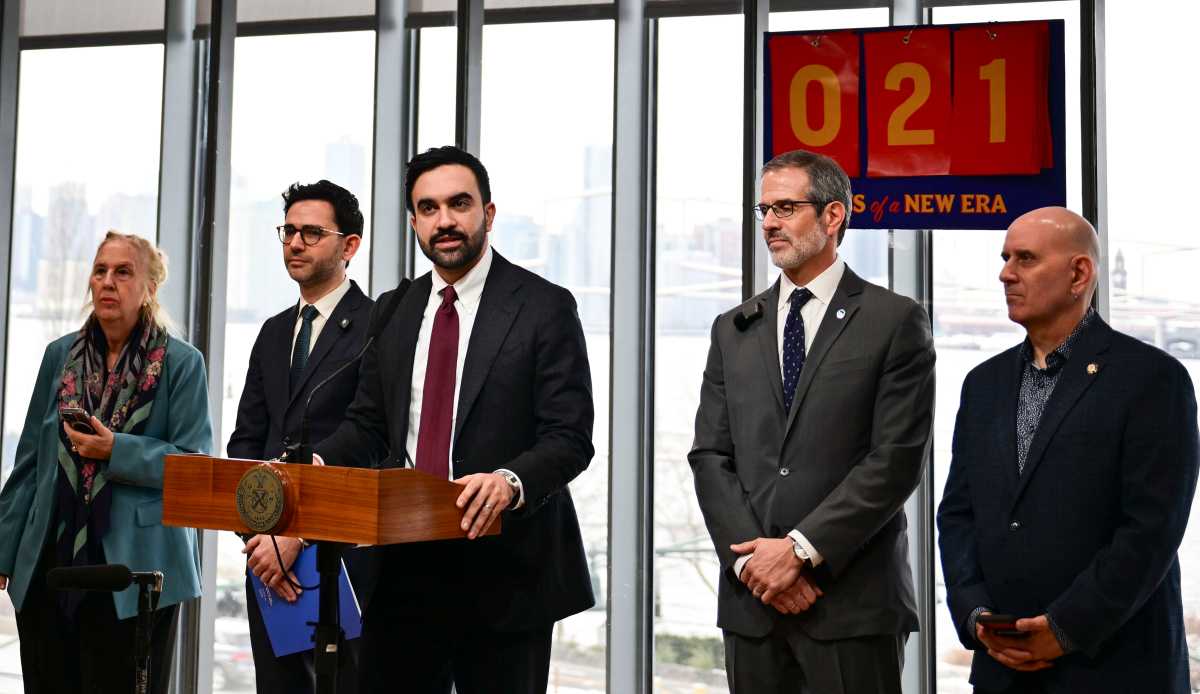
It is no secret that Mayor Zohran Mamdani is focused on worker protections. From his campaign pledge to raise wages to a $30 per hour minimum wage within the five boroughs, to his creation of the new position of deputy mayor for economic justice, there have been clear signs that the next few years are going to be full of strict oversight of employer behavior and aggressive enforcement of the laws that govern it.
The enforcement team
Mamdani appointed Julie Su to the newly created deputy mayor title. Su previously served as the secretary of California’s Labor and Workforce Development Agency. She also served as acting United States Secretary of Labor under President Joe Biden. There she lead the recovery of more than $1 billion in back wages and damages due to worker misclassification enforcement.
For commissioner of the Department of Consumer and Worker Protection (DCPW), the mayor has appointed Sam Levine. Levine is the former director of the Federal Trade Commission’s Bureau of Consumer Protection where, though he did not focus on worker protections per se, he had a reputation for creative and uncompromising compliance actions.
The new position at City Hall, coupled with a DCPW budget proposal for twice the funds it received last year, are not just signs — they are new tools that the new administration has at its disposal. Also in that arsenal are statutory changes that every employer needs to note.
New laws and legal protections
The New York City Department of Consumer and Worker Protection oversees and enforces a wide range of worker protection laws.
One of those laws, taking effect on Feb. 22nd to be exact, requires all employers to provide an additional 32 hours of unpaid time every year to employees who require it for reasons (now expanded) under the New York City Earned Safe and Sick Time Law. Those reasons include time off because the employee or a family member is the victim of workplace violence; to care for a minor child or care recipient; to prepare for legal proceedings or to take actions necessary to secure housing or certain benefits; public disaster closures or directives to remain indoors.
The real issue, however, are the penalties (coupled with the increased enforcement). Employees may be entitled to up to three time lost wages plus attorneys’ fees, and employers may additionally owe penalties to the enforcement agency of up to $15,000 for a pattern of denying employees’ leave.
Another new law — though with much less broad-based application — provides expanded protections for app-based workers who are often seen as the victim of misclassification. The significance, however, is the broader focus on that issue. If their track record is any indicator, the new Administration’s enforcement dream team is going to pursue an enhanced focus on worker misclassification and the penalties that come with them. That won’t be too hard – New York City and State has a recent history of progressively enhancing protections for freelance workers in general – passing laws that provide them with the same rights as workers such as written pay agreements, damages, and attorneys’ fees.
Focus on worker misclassification and freelancer protection
How to classify a worker is not optional. It is a legal standard established by multiple variables. There are both federal and state considerations; and, here in New York, that standard is guarded by worker advocates and aggressively enforced by authorities. Someone cannot choose to be an independent contractor. They are either a separate company, in business for themselves and providing an advertised service, or they are not. Neither an employer nor employee can simply decide that they are not going to be covered by workers’ comp or pay into UI.
To help protect workers in business for themselves, the New York City “Freelance Isn’t Free Act” (FIFA), took effect in May 2017. Amongst its requirements are a written contract with anyone hiring a freelancer. The agreement must include a scope of work and payment schedule. The law also grants many of the same rights as employees, including statutory damages, civil penalties, double damages, injunctive relief, and attorneys’ fees.
On August 28, 2024, a statewide version of FIFA took effect. It was added to the General Business Law and requires anyone that engages an independent contractor to execute a written contract providing terms for payment, and certain record-keeping.
In New York City, both of those laws are enforced by DCPW.
What employers need to know
Employers need to update their handbooks to reflect the additional time and their weekly wage statements to reflect prenatal time banks. They need to learn their posting and record-keeping obligations and make sure everything is properly maintained and up to date. There will be enforcement actions and mistakes and enforcement actions can cost millions. Employers need to spend the time it takes to learn their responsibilities and meet them.