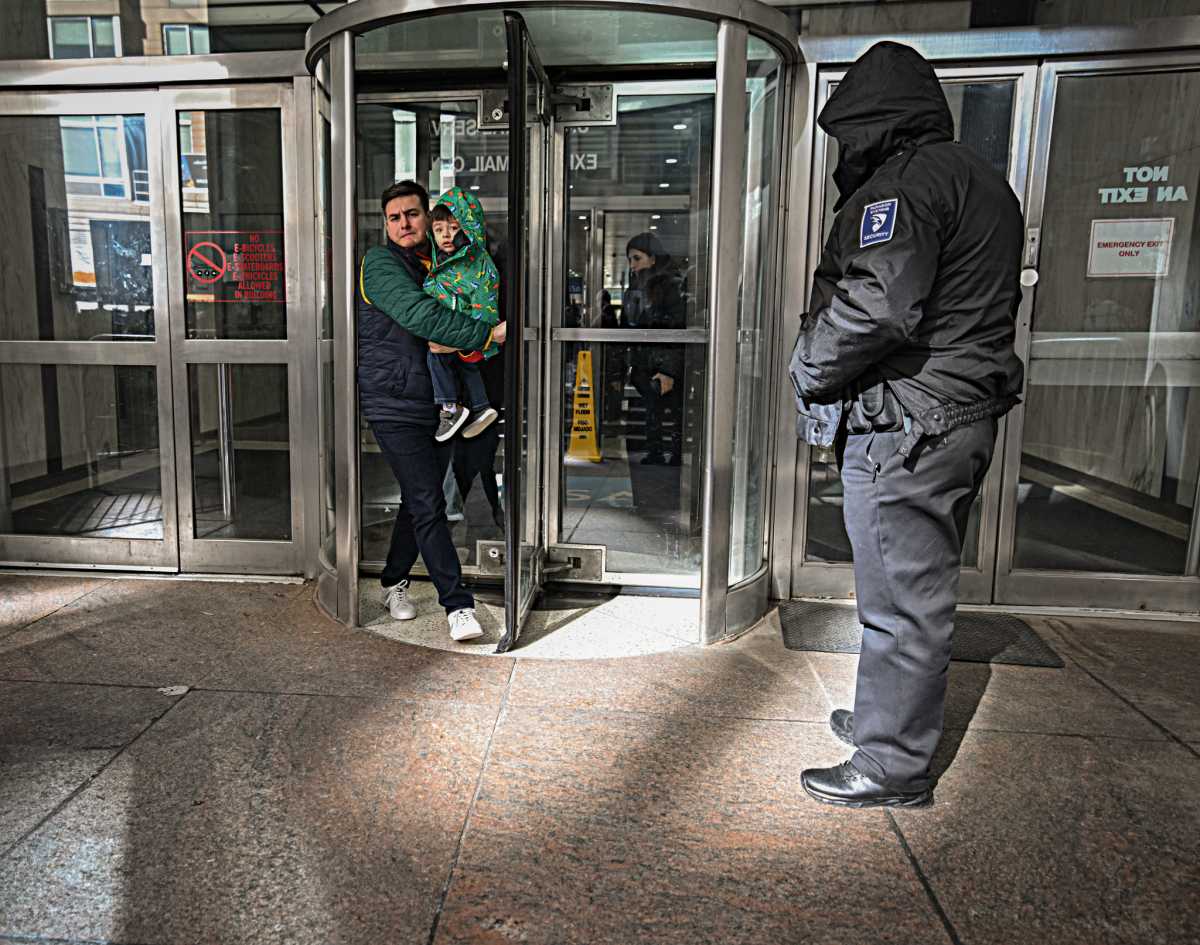


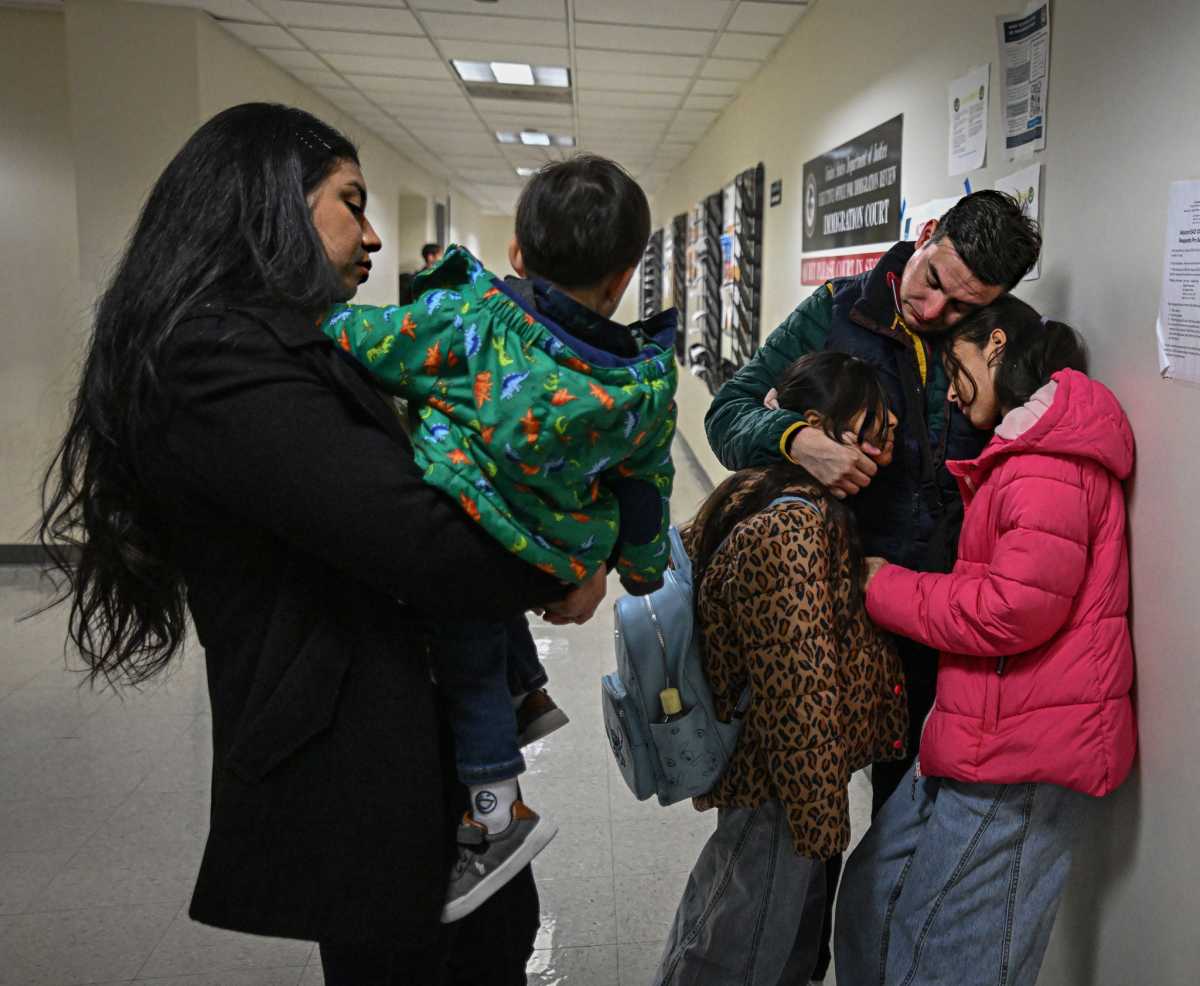
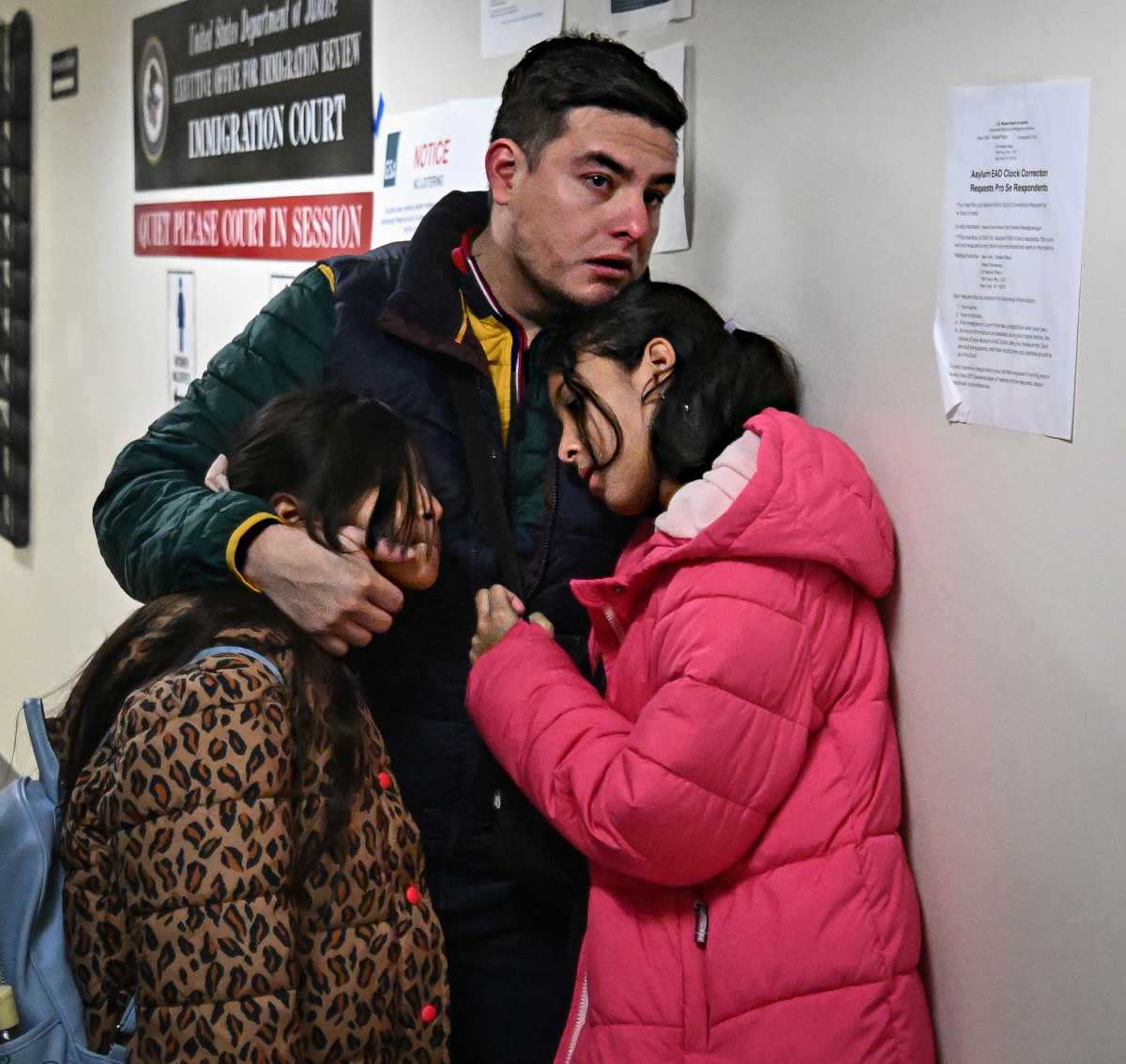
J. Ormaza, a 33-year-old Ecuadorean father of three, stood under the heavy and gloomy fluorescent light in the 12th-floor immigration court hallway at 26 Federal Plaza on Jan. 20. Tears ran down his face as he embraced his two young daughters and rested his head on theirs.
Ormaza and his family moved to the United States two years ago after he said an Ecuadorian gang threatened his family. On Jan. 20, his wife stood beside him, holding their infant baby outside a Federal Plaza courtroom. Together, they prepared to enter an immigration courtroom and have their asylum case heard — a decision that would change their lives.
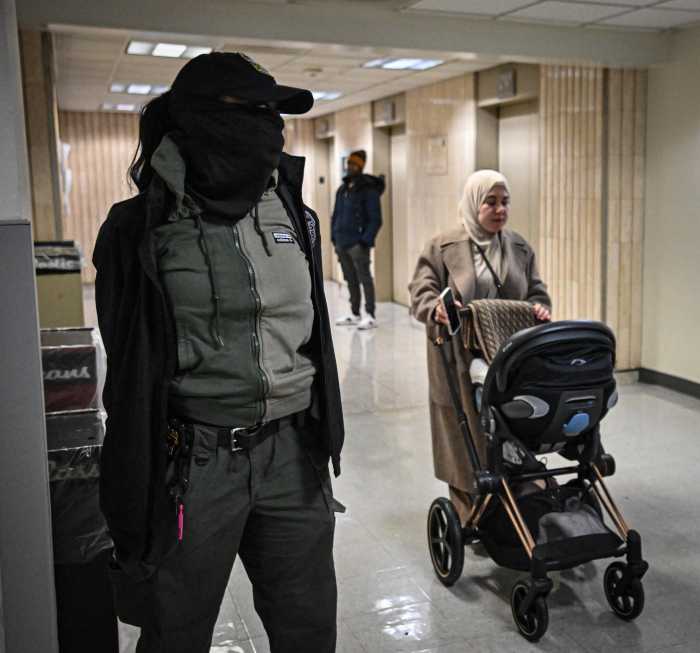
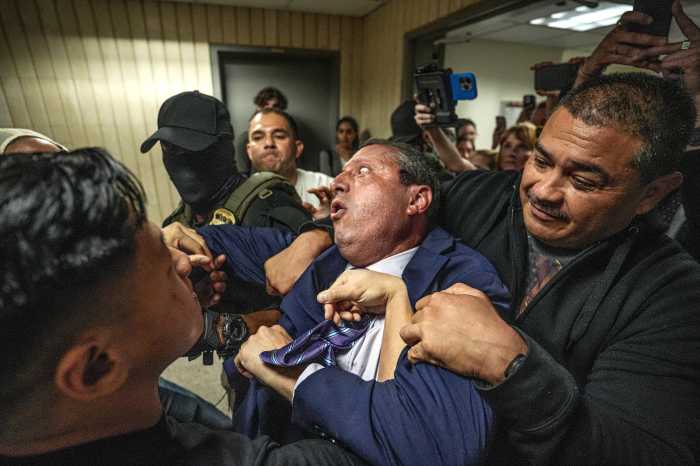
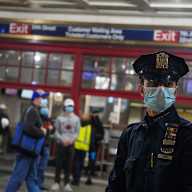
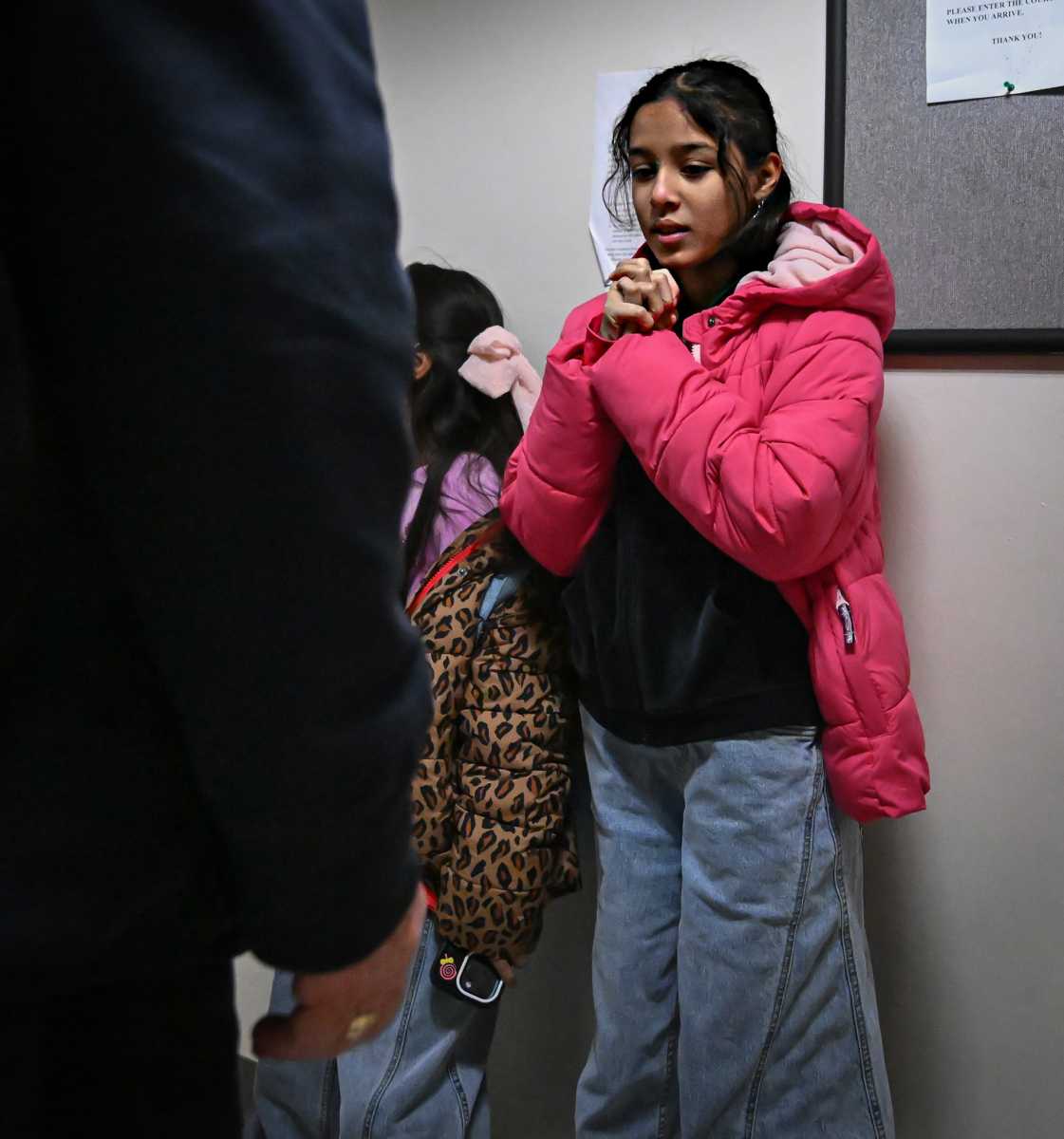
They seemed to brace for the worst possible outcome. Ormaza and his family stood feet from the watchful eyes of masked ICE agents. Like so many who had come before him, he had seen the images and videos that have come out of 26 Federal Plaza for months; he knew that he, or any other member of his family, could be the latest immigrants detained and separated from their families.
“I’m worried about this situation, about being separated by ICE,” he told amNewYork, his eyes red and puffy from tears.
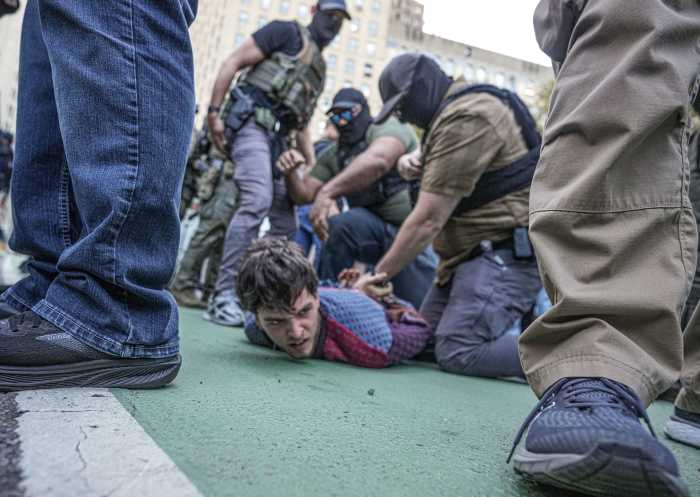
Of late, Ormaza has been the exception rather than the rule in attending court-mandated hearings. For months, masked federal agents have seized immigrants who followed the law and went to 26 Federal Plaza to attend their legally mandated court hearings. In the wake of published reports and accounts of the detentions, immigration advocates say many immigrants have chosen to risk deportation by skipping their appointments out of anxiety that they may be detained immediately.
Despite the fear he felt, Ormaza was determined to follow the legal steps required for their asylum case. The unease seemed to spread to one of his young daughters, who clasped her hands together as if in prayer.
A court clerk met them at the doorway and signed them into the proceedings. For over two long hours, they disappeared inside the courtroom, and when they finally emerged, they revealed that the judge’s decision was not what they had expected.
Family now faces a difficult choice
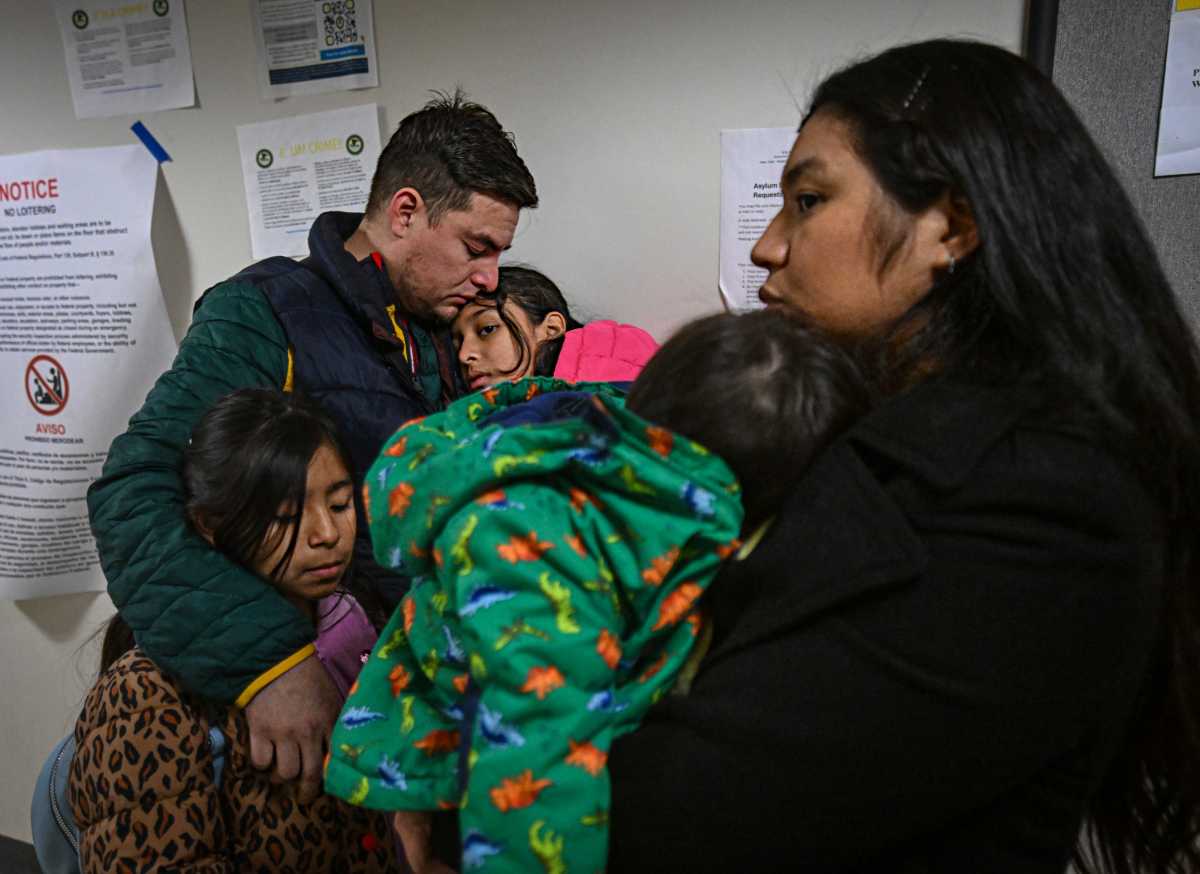
Ormaza would not be deported on this day, but the outcome of his hearing might have been just as difficult for his family. The judge presiding over his case gave the entire family a choice: Leave America voluntarily, or be taken to a country where they’ve never been before.
The answer is now pending an appeal the family filed.
“The judge said we don’t have enough evidence [to prove they cannot return to Ecuador]. They give us the option of voluntary departure from the country or deportation to Honduras,” Ormaza said. “We cannot come back to Ecuador because we are threatened there. I don’t know how things will go for us in Honduras, but I hope with this new opportunity to appeal, we will succeed.”
Deportation to a country other than the country from which they hail is known as pretermission. According to Peter Melck Kuttel, detention coordinator for Father Fabian Arias, it’s a more recent process Homeland Security is using to remove those who can’t return to their own homeland due to the threat of violence.
“It’s a new legal process that the courts have been pushing where they argue that you can end your asylum application in the United States and resume it in another country that is considered safe,” Kuttel explained. “So, they say that you can be pretermitted to Uganda or Honduras or Ecuador, and it has nothing to do with your origin. They’ll pretermit Latino individuals to Uganda, which makes no sense whatsoever, but that is sort of sweeping the entire floor.”
For the family, this choice doesn’t seem like a real choice at all. Ormaza’s wife said the option to be deported to Honduras, a country that is not their own, exists because the United States has an agreement with the Honduran administration to allow migrants from other nations to be sent there instead of their home country.
For her, the judge’s decision has left her riddled with anxiety and the family in shambles.
“We are in a bad situation. Completely bad. We don’t know how the situation is there (Honduras), and we have small kids, so it is very hard,” Ormaza’s wife said.
The dreams she had for her family when they first arrived in the U.S. have now been shattered after their second hearing in immigration court. First, they wept out of fear of ICE; then they cried at the thought of being strangers in a strange land.
“We wanted them to allow us to show that our country is unsafe and to allow us to stay a little bit longer. We don’t ask to stay forever, but at least a little bit more until everything is calm,” she added.