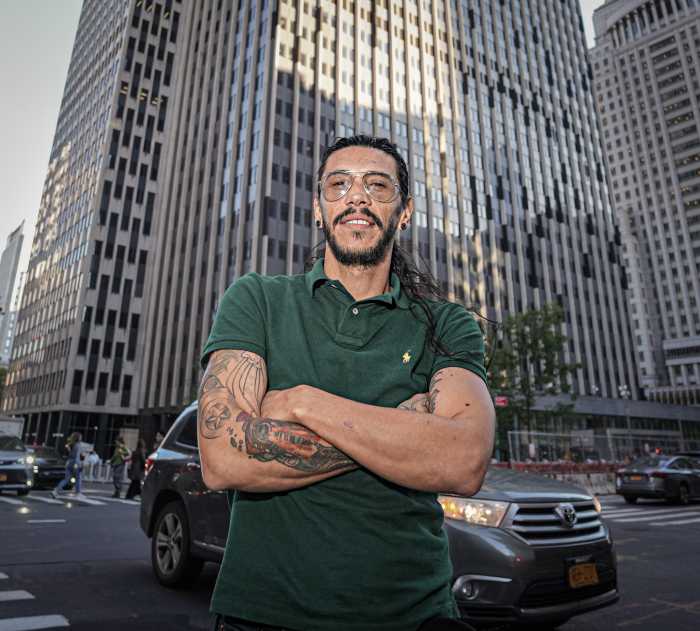


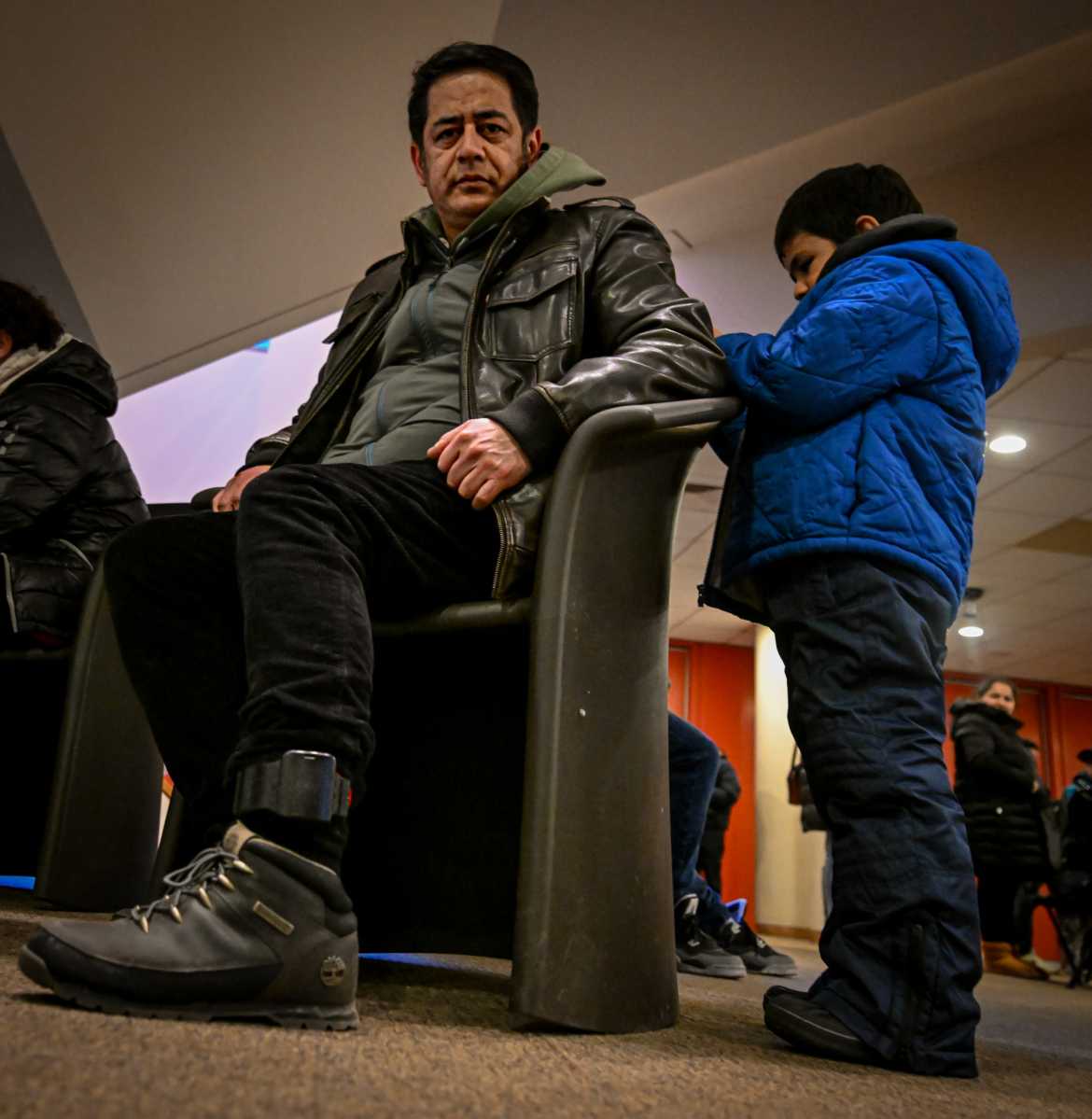
German Galvez stood inside Saint Peter’s Church in Midtown one Sunday morning in early February. Mass had just concluded, and the 47-year-old asylum seeker from Ecuador waited with his seven-year-old son, Sergio, to receive free legal counsel from the church.
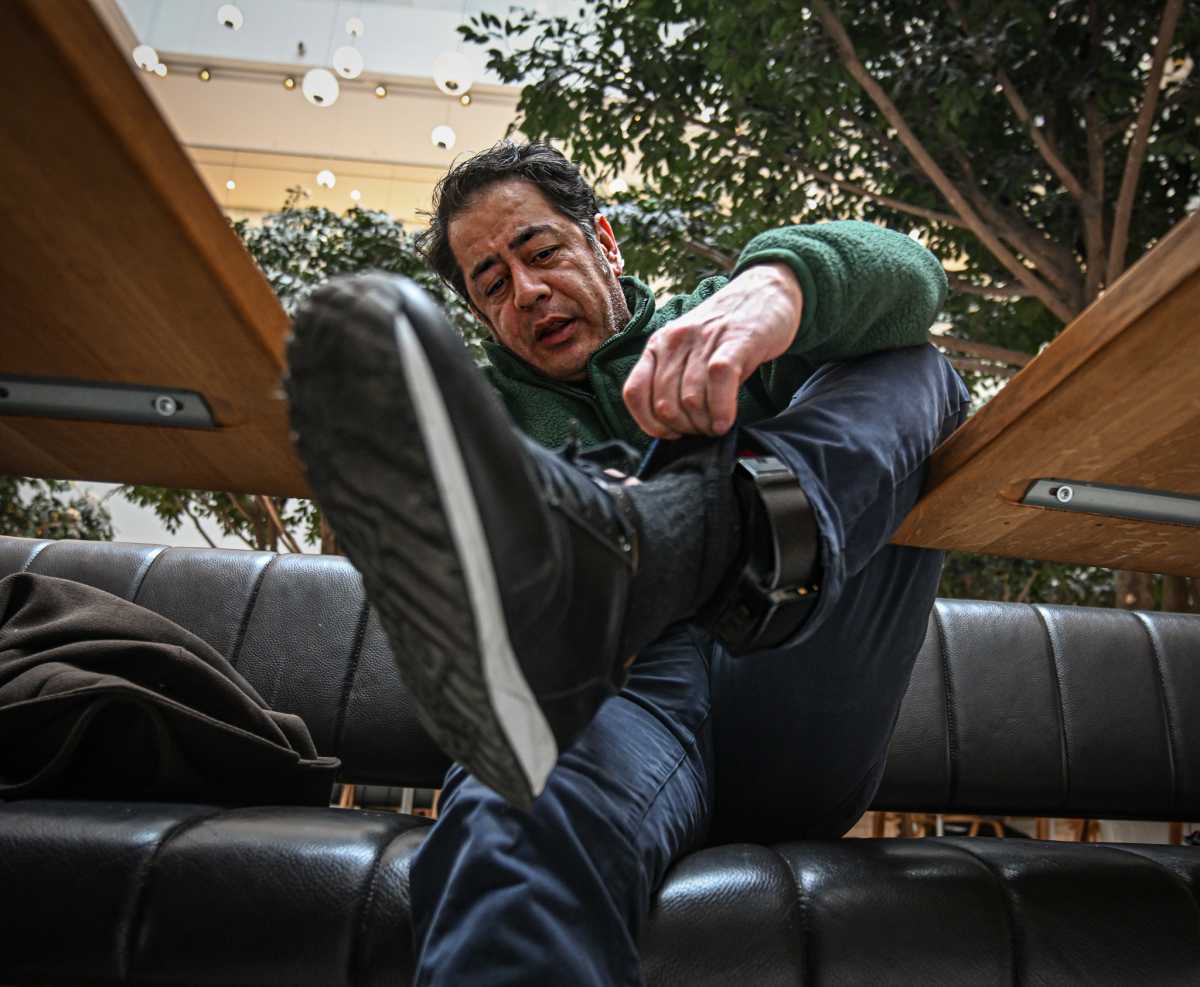
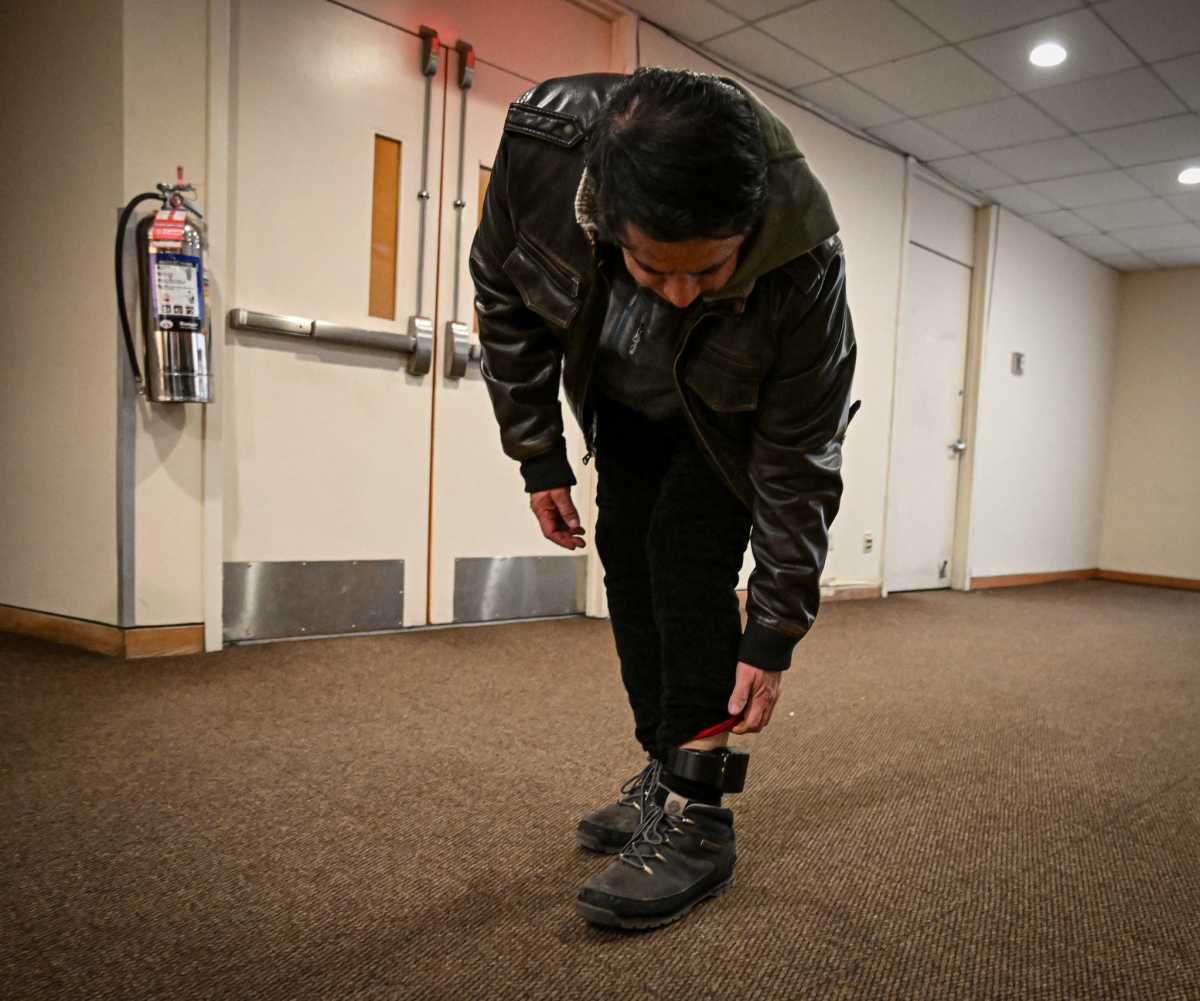
As other families sat around tables poring over their own legal paperwork, their fates in question, Galvez rolled up his pant leg to reveal an ankle monitor — the constant reminder of his detainment earlier this year, and the struggles he now faces to keep his family financially secure.
Earlier this year, Galvez was the first person detained at 26 Federal Plaza in 2026. He was held in detention for four days from Jan. 8 to Jan. 12 after reporting for an ICE check-in with immigration authorities.
“I had never been arrested before in my life,” Galvez told amNewYork. “It was terrible for me, but in the end, I accepted everything because I’ve lived through what no one would ever want to live through. For my family’s sake, I said: ‘I want them to be safe.’”
Manhattan ICE detainee found self in desperate state
The father was kept at the Federal Plaza for two days on the 10th floor, a place deemed by U.S. Rep. Dan Goldman and other immigration advocates as wholly inadequate to keep detainees.
Galvez said he had no access to a shower or a bed — something that was exposed over the summer of 2025 in a leaked video that appeared to expose that detainees had no private sleeping quarters and were forced to share a toilet.
The situation was desperate, and it left Galvez in despair — not so much for his plight, but for his family’s.
“My heart exploded with sadness. I was quite sad,” Galvez said, sharing that his thoughts drifted to his family. “They depend on me a lot, so I didn’t know what to do anymore.”
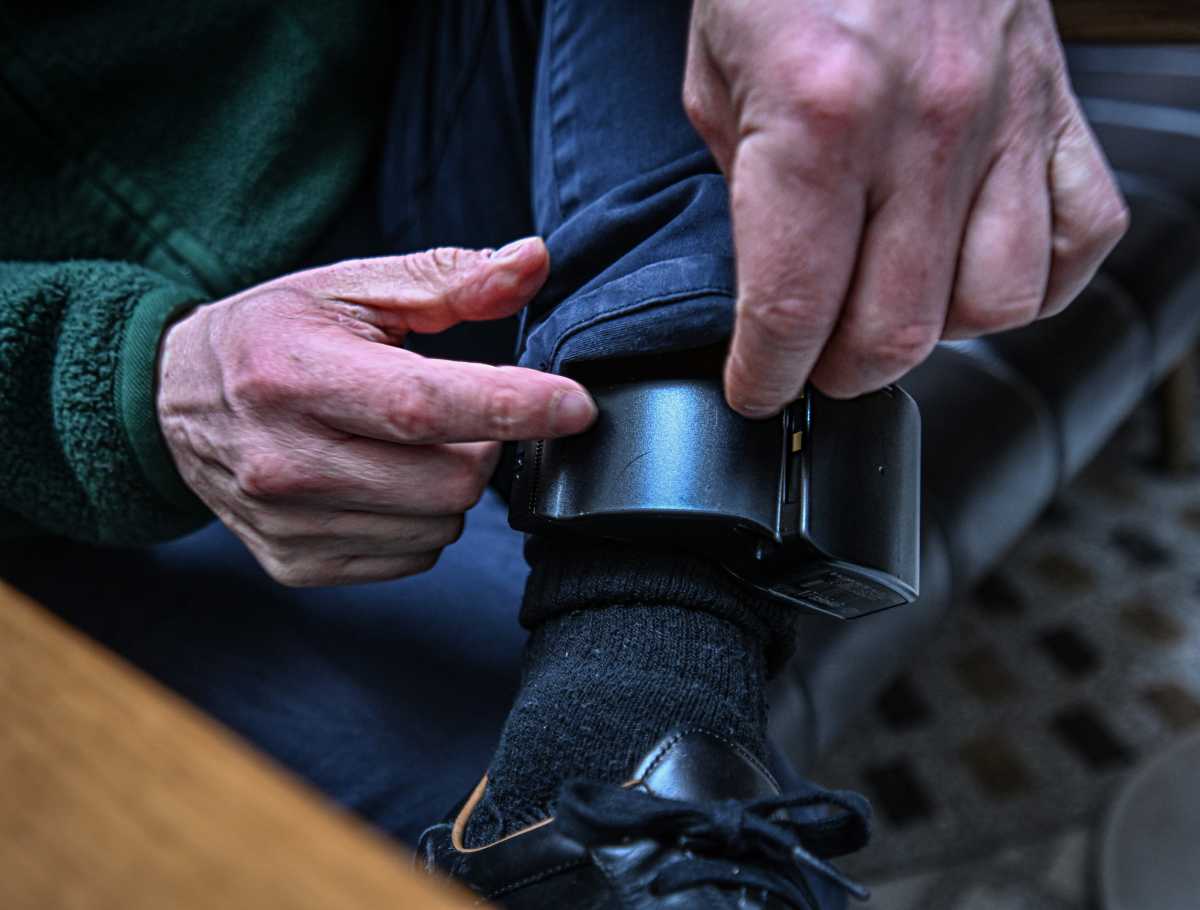
Following his release, Galvez was fitted with an ankle monitor for almost a month and a half, which he described as endless torture.
According to the Ecuadorian native, the discomfort from the ankle monitor caused him to suffer sleepless nights and impeded his ability to care for Sergio, who suffers from polycystic kidney disease, a disorder that sees fluid-filled cysts growing in the kidneys.
In addition to the physical pain, Galvez said the monitor added an additional financial burden, forcing him to choose whether to buy food or to spend the little cash he had to soothe the pain.
“I’d put some of those sports bandages here to cushion the pain, but, unfortunately, there’s no money to buy them. It costs $15 to $20, and that’s very sad because I have to use that money for those bandages when I could use it for a gallon of milk,” Galvez admitted.
Galvez said he had reached a breaking point — until, with the help of a lawyer, he was finally cut free from his bonds once and for all, the ankle monitor removed, and a weight lifted.
Together, the Galvez family now lives in a hotel shelter in Manhattan, where even cooking is not permitted. They say they hope to find a permanent home, though the prospect remains slim as they are currently struggling to buy food.
Back in Ecuador, Galvez had his own home and owned his own business — a pool hall, but he had to give it all up under the threat of death. According to him, due to corruption in the country, local political groups pressured him to allow the sale of drugs inside his business, resulting in him being the victim of several robberies and even a kidnapping.
After fleeing between different Ecuadorian cities trying to escape threats, he and his family finally left the country in November 2022.
“I couldn’t have anything in my name anymore because I was an easy target for them. They told me you have to leave here because they’re going to kill you. We had nowhere, nowhere to report because everything was corrupted by this sect of thugs,” Galvez said.
Galvez and his wife, Maya, who suffers from hypothyroidism, and their children arrived in the United States in December 2022 after an extensive month of travelling through several Latin American countries. They arrived first in Pennsylvania and New Jersey, then moved to New York City in August 2024.
The family now only supports itself through temporary work. His wife cleans houses, while Galvez toils in construction, but he says he still tries to find any job that can take them out of this situation.
While waiting for his next hearing scheduled for July, Galvez fears the U.S government will send his family back to a country that could potentially be deadly for them.
“We’re going to fight to achieve a good life, to take care of my family as best we can, so that my children, who are good people, can help to nurture this nation,” Galvez said.