


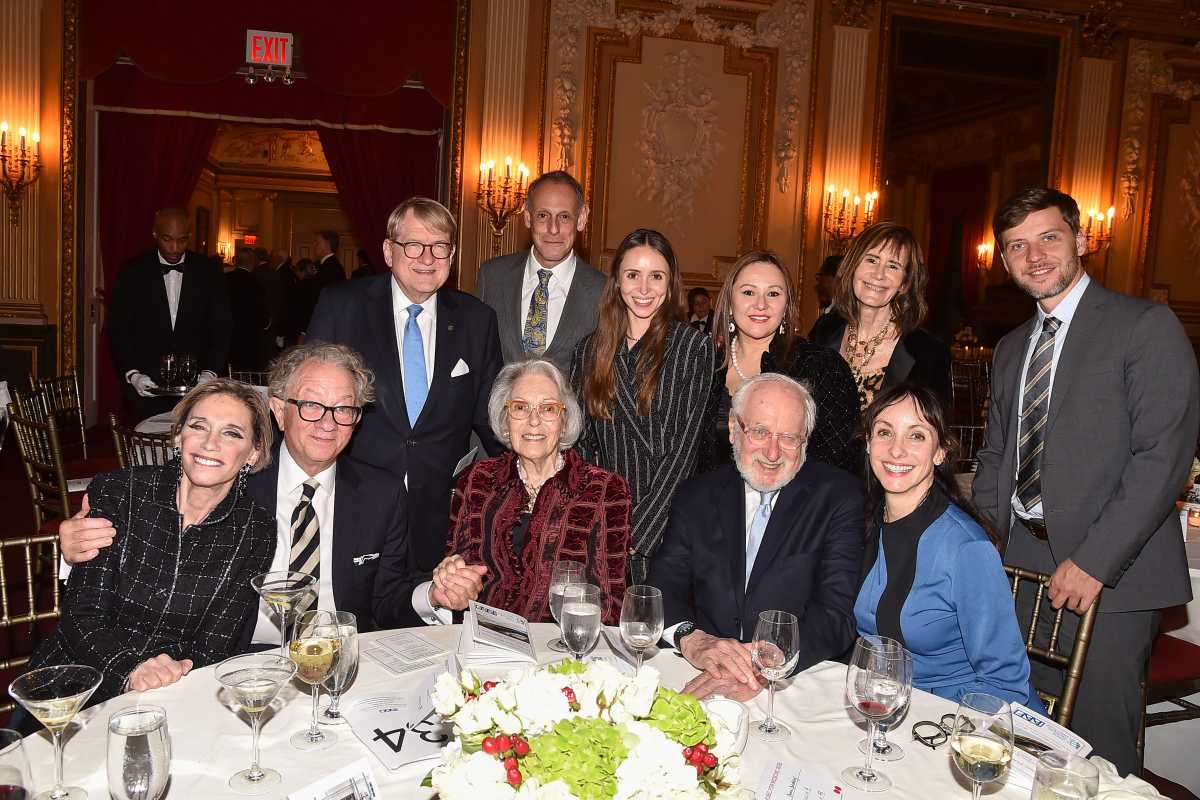
New York entertains many glamorous nights, although only a select few feel both meaningful and beautifully made. Music for Medicine, hosted by The American Austrian Foundation for The Open Medical Institute (OMI), was exactly that kind of evening.
The setting was a private Manhattan club that practically hums with old-world discretion, the type of place where everyone speaks softly yet accomplishes a great deal. The event sold out early, signaling that society was ready to rally around something with gravity.
Robert P. Wessely, President of AAF, opened the night with refreshing candor. “The appreciation for medical expertise is under review and under attack,” he said, a line that drifted across the candlelit room with the weight of reality. He looked at the assembled philanthropists with genuine gratitude. “You have all picked up the slack, and the donations are what these programs depend on.” His tone made it clear that generosity is no longer a luxury. It is the lifeline.
OMI’s mission provided the emotional center of the evening. The organization brings physicians from across the globe to Salzburg for advanced medical training before they return home to uplift entire healthcare systems. CEO Wolfgang Aulitzky illustrated this perfectly.
He recounted the story of a Nigerian doctor who trained in OMI’s otology program, created in 1996 to introduce technologies unavailable to many regions. That doctor now leads the most active cochlear implant team in Nigeria. In a country of more than 240 million people, one surgeon’s evolution becomes the soundscape of a generation. It is the kind of achievement that reminds guests why they showed up in their finest attire on a brisk New York evening.
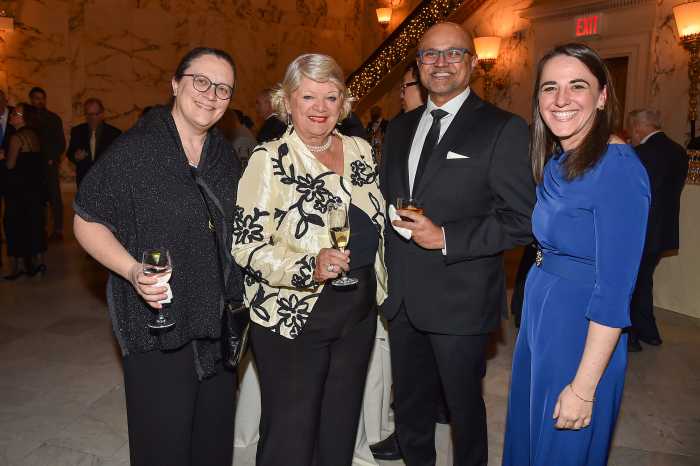
The global reach widened again through OMI’s partnership with Alianza Médica para la Salud (AMDA). AMDA Chairman Pablo Legorreta shared that more than 5,400 doctors have attended OMI seminars in Salzburg over the last decade, with hundreds more now trained through AMDA’s Mexico-based programs. The scale felt staggering, although the delivery was elegant. It was the type of announcement that makes donors sit taller, knowing their contributions participate in a matrix of real-world change.
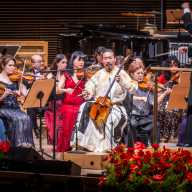
Once the formal remarks concluded, the night shifted into a softer, more luminous register. Members of the Vienna Philharmonic performed Schubert and Beethoven in an intimate setting that felt almost decadent in its rarity. The room fell into a hush, a collective exhale, as if the music itself acknowledged the magnitude of the mission. Dinner followed, polished and warm, before the auction ignited friendly bidding wars over luxurious escapes to Oaxaca and coveted access to the Mozart Festival in Salzburg.
The room itself glittered with accomplished supporters. AAF board members Jeanne Andlinger, Mathias Bostrom, Jonathan Coleman, Margaret Crotty, William Eacho, Antonio M. Gotto, Stephen Harnik, Tom McGrath, Alexander von Perfall, Zev Rosenwaks, Peter Schlegel, Cynthia Sculco, Robert Seber, Michael Stewart, Barbara Tober, and Nancy Wolf stood alongside guests including Skylar Brandt and Vladimir Rumyantsev, Katharine Eltz-Aulitzky, Barbara Friedman, Chiara Gorodesky, Michael and Diane Kellen, Michele Gerber Klein, Lola Abigail Koch, William Ivey Long, Ashley von Perfall, and Samuel H. Selesnick. It was a room full of people who understand that cultural refinement and global responsibility can share the same table.
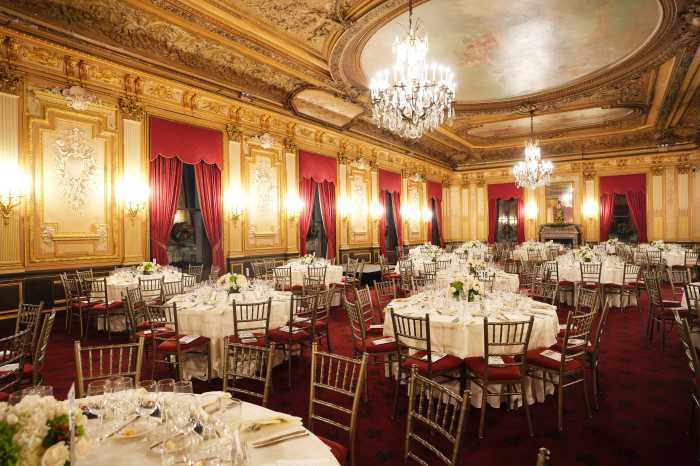
The American Austrian Foundation continues to operate as a rare bridge between nations and disciplines, expanding excellence in medicine, media, and the arts to more than 130 countries. The evening affirmed a truth that high society occasionally forgets. True prestige is not measured in exclusivity. It is measured in impact.
More information is available at americanaustrianfoundation.org