


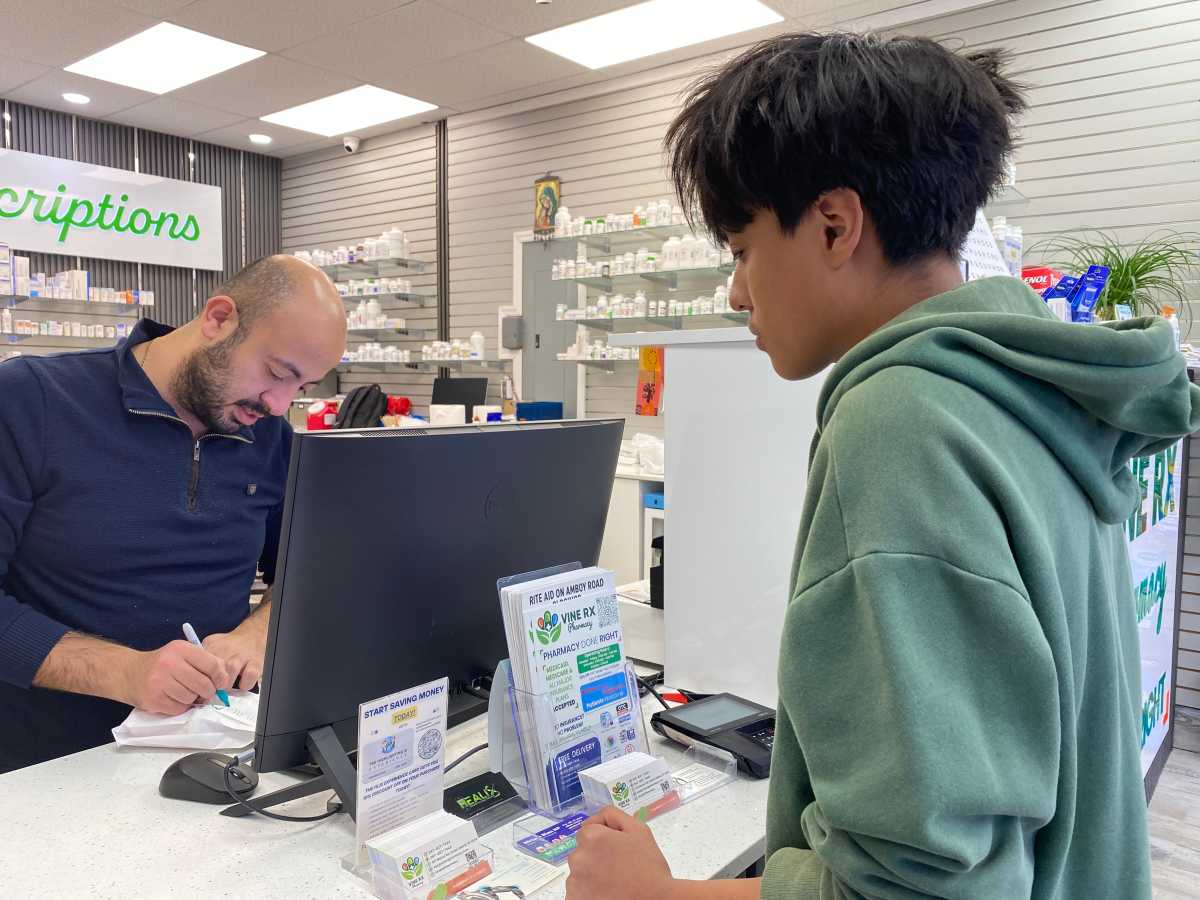
Small-business pharmacies are popping up throughout NYC just as larger chains continue to shutter or close locations. Are the smaller drugstores filling the gap left by shuttered Rite Aid and Duane Reade stores, and if so, how are they thriving?
amNewYork set out to find those answers and more by speaking with economic experts, pharmacy workers and customers throughout the Big Apple.
According to the Center for an Urban Future (CUF), giant retail stores in NYC continued to decline in 2025, and big-box pharmacies were no exception. Rite Aid was one of the most headline-making closures last year. The company closed its remaining New York stores in May due to long-standing financial issues.
Duane Reade, once a thriving NYC drugstore retailer, has closed 143 stores in the city since 2019. The remaining shops are now owned by Walgreens.
But there is a bright spot for New York entrepreneurs and patients who rely on much-needed OTC and prescription medications.
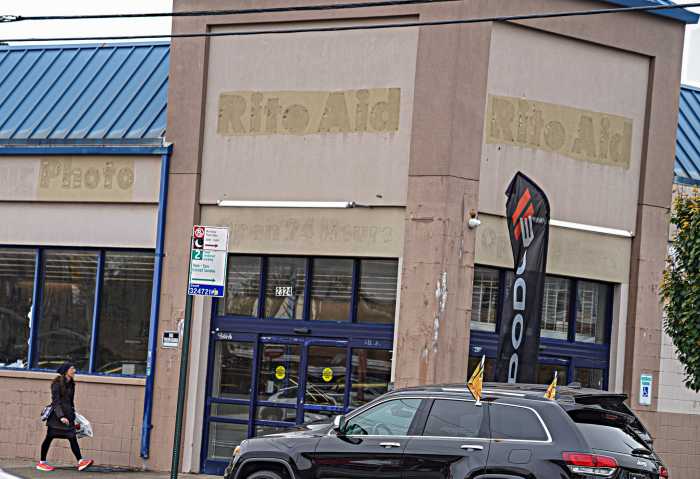
According to Jonathan Bowles, executive director of the CUF, the market void left by closed chains offers an opportunity for small business owners to open new apothecaries. Smaller pharmacies can offer the personalized patient care that large chains often struggle to deliver.
“There are a number of mom-and-pop pharmacies opening,” he said. “There’s no doubt these new pharmacies are responding to a new gap in the marketplace. There used to be hundreds more chain pharmacies in NYC than there are today. We’ve seen those pharmacies go away but we still have an aging population, and the demand for prescriptions is higher than ever.”
He is likely onto something, as small-business drugstores are now on so many streets in NYC.
The sudden growth of small pharmacies in NYC
According to NYC’s Small Business Services (SBS), there are 2,629 pharmacies operating in NYC, slightly more than in the first quarter of 2020. Approximately one in three pharmacies open today were established after the pandemic.
“Although chain pharmacies have decreased in number, New Yorkers have opened neighborhood pharmacies to fill the gap, slightly increasing the overall number of pharmacies operating in New York City,” NYC SBS Commissioner Dynishal Gross explained.
Furthermore, the growth in non-chain pharmacies has occurred despite the growing online pharmacy market, where companies like Express Scripts and Amazon Pharmacy are prevalent.
“This is great news for New Yorkers, as brick and mortar pharmacies provide jobs, prescription access to residents of all income levels, vaccines, and accessible, expert advice on health concerns,” Gross said.
Cherry’s Pharmacy on Manhattan’s East Side is no stranger to niche business and personalized service. Open since 2004, the full-service drugstore specializes in children’s healthcare. A compounding station allows the store to customize medications for the unique prescriptions of youngsters.
Beth Silver Pilchik is a longtime customer at Cherry’s and said she would “be lost” without the pharmacists who regularly fill her son’s prescriptions, which need to be compounded.
“Cherry’s enables so many families to not only get the medication they need but the way they need it,” she said.
The store has a few other unique niches. A fun cheerful ambience is in place, likely to ease kids’ fear of taking medicine. Staff also work with veterinarians to provide compounding meds for dogs, cats, rabbits, birds and other furry or feathered family members.
Offering a more personal approach
Vine Rx on Staten Island, which opened in December 2024, is another relatively new mom-and-pop pharmacy on the scene.
The family-owned drugstore is nestled between two major pharmacy chains — Walgreens and CVS — on the borough’s North Shore. Co-owner Philip George said the drugstore sets itself apart from the chains and over 220 other small-business pharmacies on the island by providing a community-based, hometown feel when customers step into their shop.
Staff will deliver medication to customers at any time of day, whether their store is open or not.
“We get texts and phone calls from the pharmacy phone number around the clock,” George said. “We pretty much answer and deliver to patients at 11 p.m. and 6 a.m., even if the pharmacy is closed. That’s our mission, to provide proper care to people.”
The staff identified various niches that enable their business to support different communities throughout the borough. They offer events for Staten Island seniors to connect, meet and socialize for free, such as craft workshops and yoga.
They also looked into the various needs of the immediate neighborhood surrounding the store.
“Recently we realized that Manor Heights has a big population of Jewish observants who essentially need after-hours care, so we started unofficially staying open till 11 p.m. every day to work around their Sabbath on Friday nights,” George said.
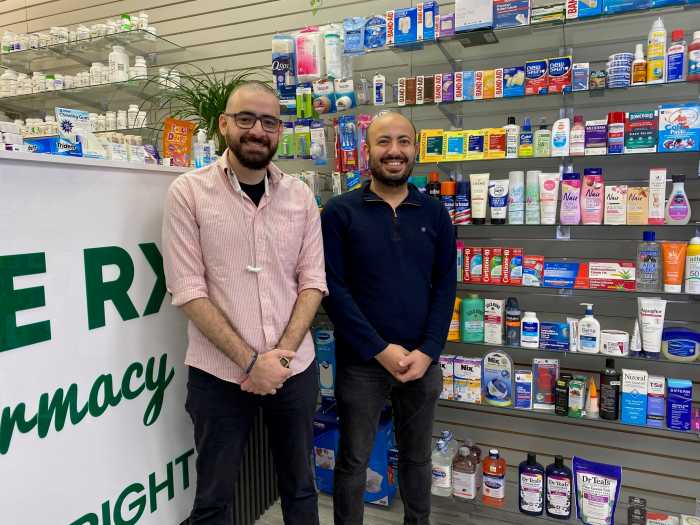
Vine Rx’s two staff pharmacists, Mario Soliman, and George’s wife, Mary Massad, are former Rite Aid workers. Soliman was on his way to a major promotion by the time the chain shut its remaining stores throughout the country by May 2025.
Soliman also built a COVID-19 vaccine hospital at Harlem Hospital in 2021. During the pandemic, he was an intensive care clinical pharmacist.
“We vaccinated many people there, including news anchors,” he said.
Losing the perception of ‘only using chains’
Many customers in NYC are conditioned to rely solely on big-box pharmacies, a trend that largely ended the small-town, independent drug store—until recently, at least. Lifting this perception presents a hurdle for some independents as they return to the retail scene.
“There are plenty of challenges. I’m actually most concerned about changing people’s perception of independents,” George said. “Because, the business side of challenges will always be there, whether it’s reimbursements, chains trying to squeeze you out.”
The piece Vine Rx struggles with the most is convincing people that chains “oversell the fact that you can only use them,” George explained.
“We are contracted with every insurance there is. We have never turned anyone away because of insurance, and 99% of the time, we’re actually cheaper. We price compare all of our OTCs to make sure they are cheaper than Walgreen’s and CVS.”
Independent pharmacies offer advantages, mostly through the personal touch that most chains can not replicate due to high customer volume, George explained.
Too big, too fast: Why drugstore chains are declining
Big-box chains tend to be physically larger stores, something that Bowles of the CUF said likely contributed to their decline. In many larger pharmacy retail locations, customers can purchase a wide range of products, from gloves to appliances and cosmetics, many of which are also available for online purchase.
“I think some of the pharmacy chains got too big,” Bowles said. “Not only did they expand all over the place in NYC, I think they were hurt because they became more than just prescriptions and pharmaceuticals. We call them pharmacies, but they were massive, often taking up three, four, sometimes even five smaller storefronts.”
Bowles added that retail theft also played a role in retail drugstores’ closing, but to a lesser extent. Rent was likely a bigger challenge.
“When a lot fewer people go into those stores, they really lose out because they are paying huge amounts of rent,” he said. “They had massive stores in NYC, and the city’s rents are absurdly high on a good day.”