

We’ve all grown accustomed to criticizing government. It’s practically a civic pastime in New York. From bureaucratic delays to budget overruns, the list of grievances is long and often justified.
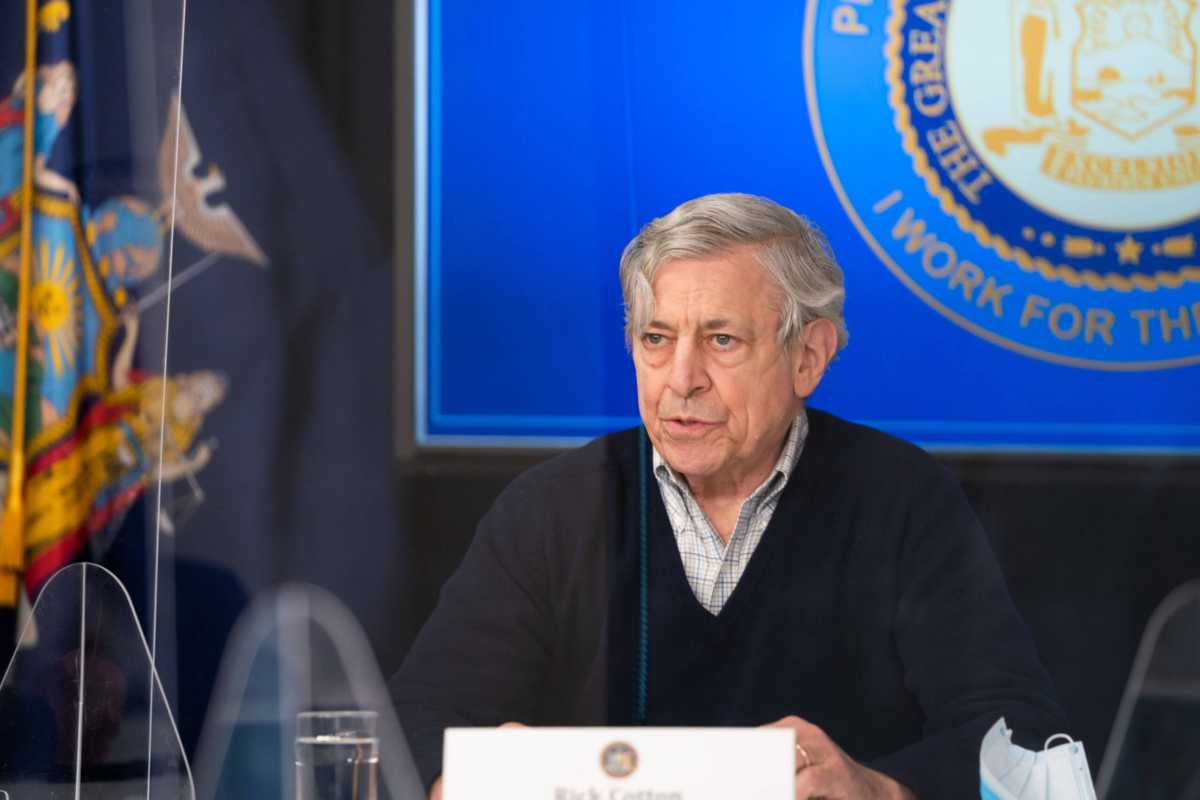
But every so often, government gets something big right — and when that happens, it deserves recognition. One example in a category of its own is the resurgence of the Port Authority of New York and New Jersey under executive director Rick Cotton, who is stepping down in January after holding the position longer than anyone else since the 1980s.
Translation of complex policy challenges into successful initiatives requires the support of many inside and outside government, but the right leader in the right place at the right time in this case was critical.
The Port Authority is a unique public enterprise. Created in 1921 by a bistate compact and act of Congress, its leadership is a dual report to the governors of New Jersey and New York, through a jointly appointed board which generally leaves intrastate decisions to the affected state. Officially, the governors’ power is limited to being able to “veto” the minutes of board meetings, essentially rejecting any action taken at them. In reality, board members are usually close allies of the respective governors, with the chair being from New Jersey and the executive director from New York by tradition.
The Port Authority’s operations include port facilities, bridges, tunnels, airports, mass transit and commercial real estate such as the World Trade Center. It is an economic powerhouse.
Different asset classes received different levels of attention at times as priorities and politics shifted, most notably in the aftermath of the September 11 attacks. One consequence was a lack of focus on the area’s airports, with John F. Kennedy International Airport becoming antiquated compared to the airports of other international financial market cities with which New York competes, and the regional LaGuardia Airport in such a sad condition that then-Vice President Joe Biden characterized it as “Third World.”
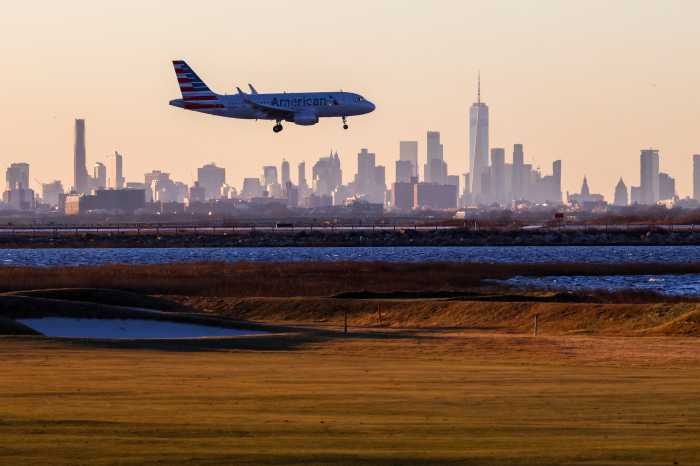
Today, those gateways are being hailed as among the world’s best. Under Cotton, the Port Authority’s executive director since 2017, the agency executed an $8 billion rebuild of LaGuardia and an ongoing $19 billion reconstruction of JFK. Both were done largely without drama, except for the inconvenience to travelers of cramped quarters while the work was underway. The JFK project was largely financed through a public private partnership, with only about $3 billion in public funding.
Simultaneously, improvements were undertaken at Newark airport, port facilities were modernized and planning advanced on the long-stalled replacement for the 42nd Street bus terminal.
Cotton’s success was not preordained. He came in as a close associate of Gov. Andrew Cuomo, whose aggressive infrastructure agenda set the tone for these projects, and inherited an agency still reeling from the aftermath of the “Bridgegate” traffic diversion scandal in New Jersey during Gov. Chris Christie’s administration. When Cuomo abruptly resigned in 2021, Cotton survived housecleaning by Gov. Kathy Hochul. Add to that the Covid-19 pandemic’s devastating impact on travel, freight supply chains and office occupancy and the scale of what was accomplished was clearly remarkable.
Notably, Cotton, 73, came to infrastructure late in his career. A lawyer — and former U.S. Supreme Court clerk — he worked at two federal agencies before embarking on a career as a successful career broadcast executive. His focus on major projects started with his being tapped by Cuomo as a special advisor on infrastructure with a portfolio that included Moynihan Station as well as the airports.
The Port Authority has had a reputation of being a crown jewel of public agencies, benefitting from its being a revenue generator not dependent on the states’ budgets and somewhat insulated from electoral politics by being immediately accountable to its board and not a legislative body. Toll and fare increases have regularly occurred both before and during Cotton’s tenure but without attracting as much acrimony as when done by the MTA. Nonetheless, the complexity of undertaking so many large projects in such a short period rivals anything done under master builder Robert Moses.
That’s not to say that the Port Authority was oblivious to public policy preferences. Under Cotton, it set ambitious goals for minority and women owned business contracting. This program is now under scrutiny as the Trump administration pushes back at publicly funded diversity initiatives.
Overall, the value of the Port Authority’s assets grew from $46 billion when Cotton took office to $63 billion last year. It generates about $7 billion in revenue, including about $2 billion from bridge and tunnel tolls which rose during his tenure.
The 68 million airport passengers in the first half of 2025, the 58.9 million drivers crossing bridges and tunnels and the 29.2 million PATH riders during the same period may not have known why their travel experience seemed to have gotten better over the last few years, but Rick Cotton’s ability to deliver for them without becoming a tabloid target set the standard for public executives who follow.
Ken Fisher is with the law firm of Cozen O’Connor. His practice focuses on the business and state and local government.