


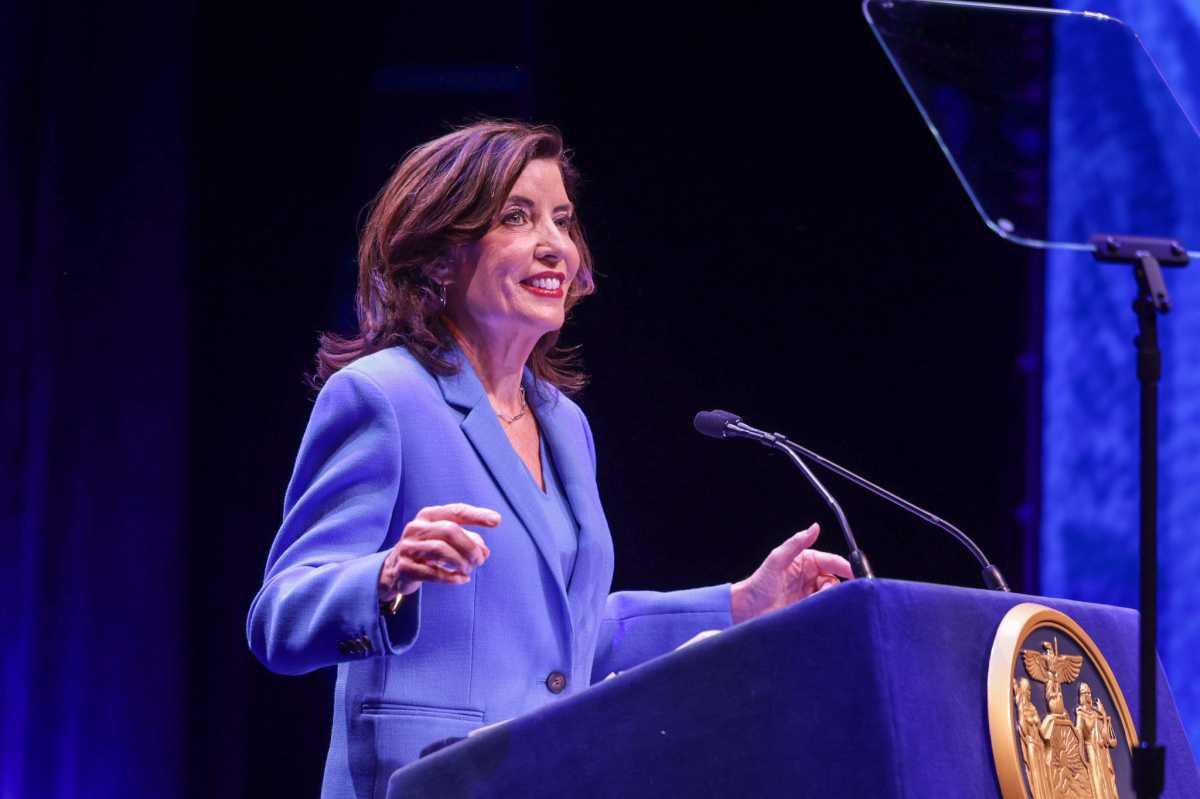
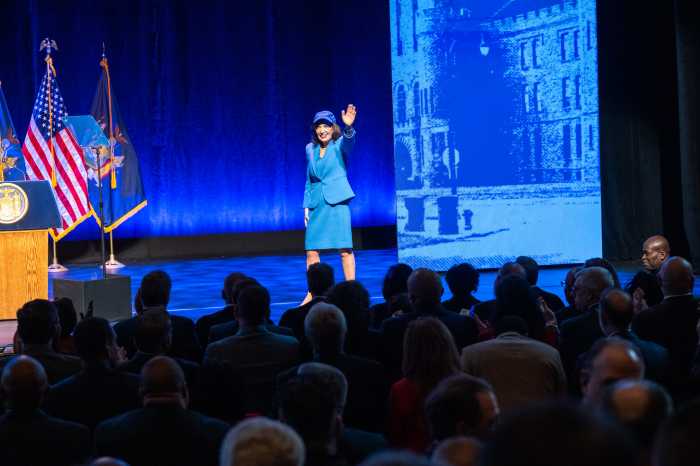
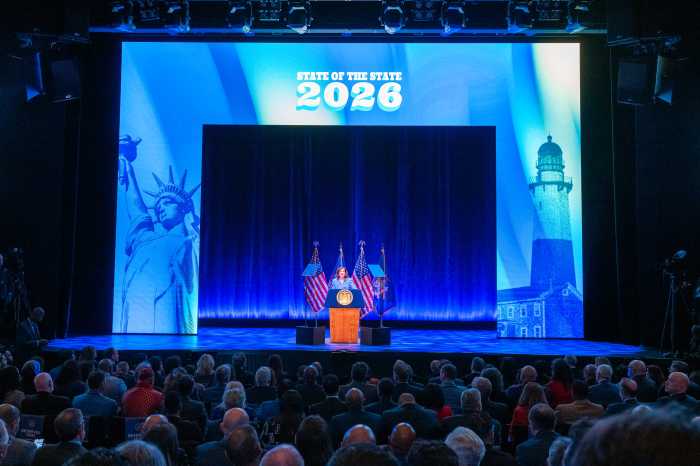
Gov. Kathy Hochul used her fifth State of the State address on Tuesday to lay out an ambitious affordability agenda, expanding transit and housing, and improving public safety while taking aim at what she described as reckless attacks on New Yorkers by the Trump administration
In a re-election year, Hochul repeatedly criticized policies from the current federal government during her speech from Albany, framing many of her proposals as a defensive and proactive response to actions she said threaten New Yorkers’ rights, health, and economic security. Among them is a plan to advance legislation that would authorize individuals to bring state-level civil actions against federal officers who violate their constitutional rights.
“Whether it’s protecting New Yorkers from unprecedented escalations in federal immigration enforcement, ensuring families have access to health care, or supporting small businesses bearing the brunt of Trump’s tariffs, I will continue standing up for New Yorkers no matter what happens at the federal level,” she said.
Public safety and federal overreach
Hochul’s proposals aimed to maintain New York City’s record-low subway crime and enhance statewide law enforcement. She emphasized the need for more police on platforms, expanded SCOUT teams, and platform edge barriers, alongside investments in crime labs and statewide crime analysis centers, including a new center in Westchester.
She also outlined legislation to crack down on 3D-printed guns and DIY machine guns, requiring pistol manufacturers to prevent conversion into fully automatic weapons. In response to a recent protest outside a synagogue in Kew Gardens in Queens on Thursday, Hochul proposed banning protests within 25 feet of houses of worship.
She framed the measure as necessary to combat antisemitism and Islamophobia while preserving the right to protest elsewhere: “No one should have to fear attending their house of worship. We will create a buffer zone so that communities can practice their faith without intimidation.”
A key theme of Hochul’s address was shielding New Yorkers from federal government actions under Trump. Her proposals included establishing a state-level right to sue federal officers for constitutional violations, protecting New Yorkers in sensitive locations from civil immigration enforcement without a warrant, and early planning for the 2030 Census to ensure all residents are counted.
Additional federal defense initiatives included protecting farmers from disruptive tariffs, bolstering student loan support, strengthening the food safety net, and safeguarding access to high-quality, affordable health care, prescription drugs, and immunizations statewide.
In response, Legal Aid praised the Governor for taking a stand against aggressive federal immigration enforcement and for measures to protect vulnerable communities, including increasing access to counsel and reinforcing protections for immigrants in sensitive locations such as schools, hospitals, and places of worship.
Transit expansion and safety
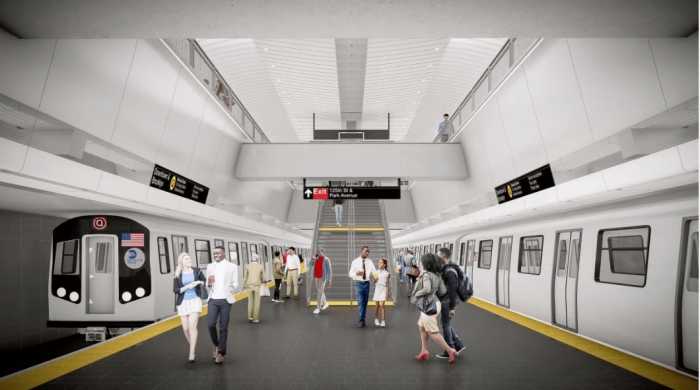
Another centerpiece of Hochul’s address was investment in New York City’s transit infrastructure. As previously reported by amNewYork, the Second Avenue Subway will be extended westward along 125th Street, linking seven major subway lines and enhancing connections to Metro-North and the East Side.
Hochul also highlighted improvements at Jamaica Station, the fourth busiest rail hub in North America. The station will undergo upgrades to enhance ADA accessibility, seating, restrooms, and commuter amenities, complemented by ongoing efforts to eliminate bottlenecks.
Lisa Daglian, executive director of the Permanent Citizens Advisory Committee to the MTA, described the address as “a love letter to transit riders” and called the expansion of the Second Ave. Subway extension “transformative” for tens of thousands of riders
Public safety on transit was also a priority. The governor said she plans to expand SCOUT teams, which pair NYPD officers with social service professionals to assist individuals in mental health crises. The program will grow from 10 to 15 teams, covering more stations across the city. Hochul also proposed platform edge barriers at 85 additional subway stations, a direct safety improvement for commuters.
In addition, Hochul called for SEQR reform, aimed at cutting regulatory delays for transit-oriented housing and infrastructure projects, which advocates say will help tackle both the housing and climate crises.
Hochul proposed measures to make auto insurance more affordable, targeting fraud, limiting payouts for drivers engaging in unlawful behavior, and tightening the serious injury threshold to prevent inflated claims. She also promised increased transparency and incentives for safe driving.
“High car insurance rates don’t just impact drivers, they impact all New Yorkers when businesses pass on increased costs to customers. These reforms will crack down on fraud, help drive costs down and put money back in the pockets of hardworking New Yorkers,” she said.
Child care and youth services
Alongside Mayor Zohran Mamdani, Hochul last week unveiled what she called the most ambitious child care proposal in New York’s history, aiming to make child care universally accessible, affordable, and sustainably funded. In partnership with Mamdani, the scheme will launch free childcare for two-year-olds in New York City this fall before accelerating the broader push toward universal childcare. She made a commitment on Tuesday to implement universal pre-K for all four-year-olds statewide by 2028.
Rebecca Bailin, executive director of New Yorkers United for Child Care, called Governor Hochul’s child care plan “a breakthrough,” but stressed that more work is needed to ensure the program reaches every child across the state. She highlighted several priorities for lawmakers:
The plan must be backed by sustainable revenue, she said, “a progressive source that protects child care from future budget fights and can reach every child from birth to five. Child care is already a tax on parents, and a regressive one. It’s time to change who pays.”
Bailin also emphasized the importance of a universal guarantee, noting that more than 50 school districts across New York still do not offer Pre-K. “Without a requirement that every district participate, tens of thousands of kids will still be locked out,” she said.
She added that while the plan addresses gaps in New York City’s 3-K program, three-year-olds elsewhere in the state remain left behind. “If we’re serious about universal child care, we cannot leave them waiting,” Bailin said.
Meanwhile, the Governor also highlighted initiatives supporting mental health services for LGBTQ+ youth, expanding access to trained crisis counselors through the 988 Lifeline. Kei Williams, Executive Director of NEW Pride Agenda, lauded the proposal as “decisive action” against federal dismantling of queer mental health resources.
Additionally, to protect children online, Hochul backed new restrictions on social media for users under 18, including blocking direct messages from unknown adults, disabling certain AI chatbots, limiting location tracking, and curbing access to online sports gambling.
The Coalition for Children’s Behavioral Health, a statewide advocacy group for youth mental health providers and patients, praised Hochul’s focus on youth mental health but urged lawmakers to invest $200 million in outpatient services to meet crisis-level demand.
In a statement on Tuesday, Coalition President and CEO Kayleigh Zaloga said the governor’s proposals do not address the core issue of a “widespread lack of access to the continuum of community-based services,” and and not include the funding necessary to fulfill the state’s obligations.
Without increased Medicaid reimbursement rates, including targeted inflationary increases, nonprofit providers will continue to face workforce shortages, burnout, and growing waitlists, leaving children without care, Zaloga warned.
What else?
On health care, the Governor pledged to protect access to care, curb drug costs, and safeguard immunization access statewide, citing federal actions as a motivating factor for proactive state protections.
Hochul said she raised the state’s nuclear energy goal from 1 gigawatt to 5 gigawatts, emphasizing that this represents more nuclear power than has been built in the U.S. in decades.
She said nuclear energy is necessary to meet future demand from manufacturing and data centers, which would be required to pay their fair share or generate their own clean power.
Hochul also spotlighted housing in her address, proposing $250 million for affordable housing initiatives and $100 million to expand innovative manufactured housing. She called for updated tax incentives to help repair rent-regulated buildings, stronger penalties for abusive landlords, and expanded rent relief for seniors and people with disabilities. Hochul additionally urged modernization of New York’s decades-old environmental review process, arguing that it now delays housing, infrastructure, and clean energy projects even when communities support them.