

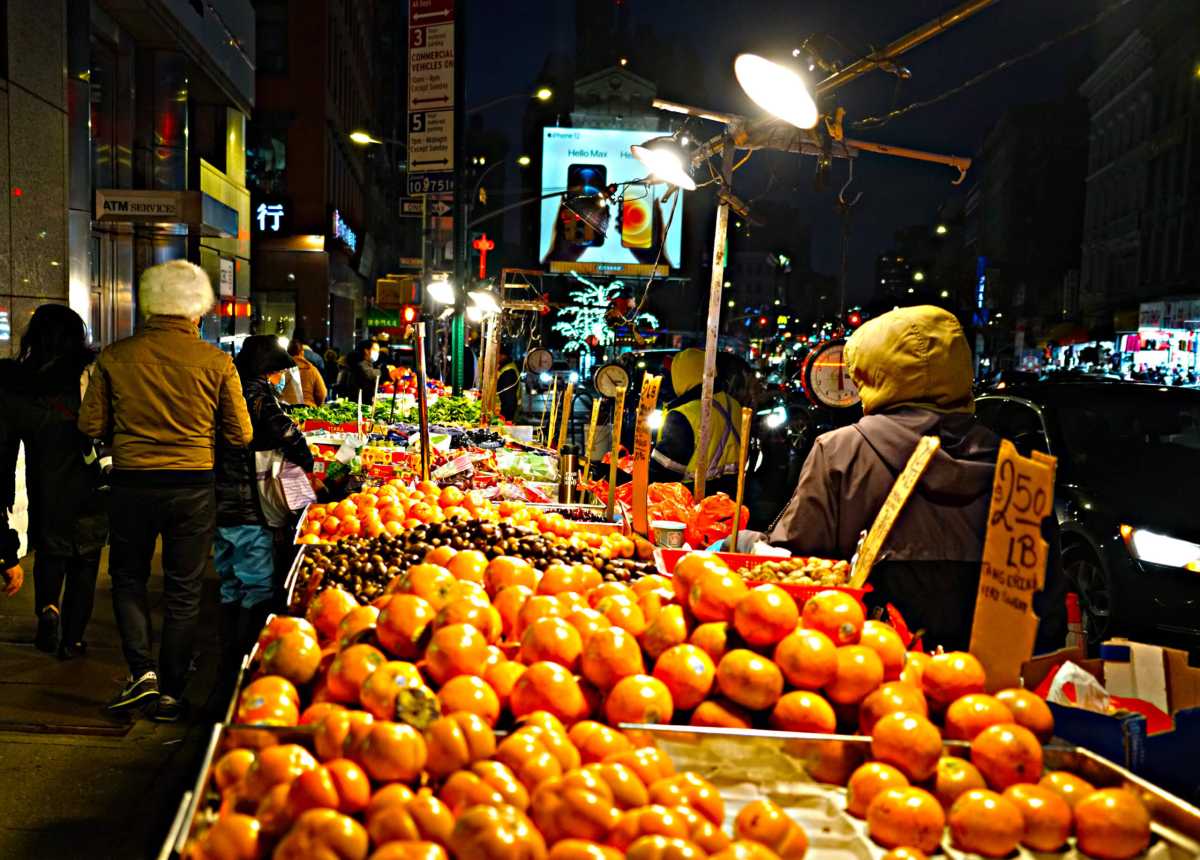
There is no doubt that there is an affordability crisis impacting every aspect of New Yorkers’ lives. Between the cost of groceries, insurances and basic necessities, it is a challenging economic environment for residents, but also for the small businesses serving our communities. It has never been harder to run a mom and pop, local business. From ensuring regulatory compliance, to affording raising rents and insurance costs, complying with minimum wage requirements and retaining staff, business owners are growing frustrated. On behalf of the 1,000+ businesses in the Bronx we represent, we Bronx Business Improvement Districts, find the greatest challenge of all to be the chaotic system of unregulated street and food vending and the patchwork of legislative proposals attempting to reign in over unlicensed street vendors.
Nearly five years ago the City passed Intro 1116, which added more than 400 food licenses a year for up to ten years and created a Street Vendor Advisory Board. The reason given was ensuring compliance. However, we have actually experienced the opposite, with the City issuing over 10,000 tickets and confiscating tons of food. Additionally, and sadly unsurprisingly, the Bronx had no direct representation on the advisory board. The argument that a license will ensure compliance failed. On Fordham Road, which is a restrictive street (no general merchandise vending allowed), licensed food vendors consistently ignore City rules and regulations including sidewalk clearances, use plastic bags, install generators on sidewalks, and many others. On Third Avenue, White Plains Road, and Southern Boulevard the same issues persist. Legally licensed food vendors on business corridors do not care to follow existing rules, knowing they are not consistently enforced. There are approximately 78 business improvement districts in the five boroughs – and only an estimated 35 DSNY staffers dedicated to street vending enforcement. Street vendors, and the organizations that represent them, know this. It is one of the reasons why so much effort is being focused on expanding licenses – because the city’s enforcement budget has struggled to catch up. It is also why some businesses from big box stores to brick and mortars are saying goodbye to Main Street.
Intro 431 A, currently under consideration, would add more than 2,000 licenses per year for up to five years. While the last amended version doesn’t completely lift the cap and does add some enforcement, the bill is still unacceptable, perpetuating existing deficiencies, well known by all City agencies involved with street vending. Just like Intro 1116, the bill allocates most of the licenses to the outer boroughs. There are no geographical considerations in the last amended version beyond the language that focuses enforcement on restrictive streets. Furthermore, and fundamental to the matter, there is no clear financial mechanism, or commitment to how additional enforcement will be funded. As we learned five years ago, adding new licenses isn’t the answer. We would like to see more efforts to increase funding to support all Business Improvement Districts across the City, with a special focus on those in underserved communities. Potential considerations to create a more equitable system must include several key elements.
Firstly, enforcement – it has improved but it must stay robust, responsive and consistently funded. Chronic violations of vending rules must have consequences, up to the withdrawal of license.
Secondly, specially designated commercial corridors, like BIDs, require additional considerations. There are opportunities to use side streets and certain public plazas for licensed street vending, with limitations, and upon direct consultations with BIDs for cleanliness and safety. BIDs should be included in the license renewal process for street vendors that operate in our legal districts. There is precedent for this, as BIDs are explicitly consulted for instance in the City’s Street Activity Permitting Office’s processes.
Finally, licensed street vending was not originally included in the BIDs core budgets (based on an assessment formula on commercial property owners). However, street vending has a very significant impact on our supplemental sanitation efforts, while benefiting from BIDs marketing, events, public safety, and space activation work. If the City is going to expand licenses, then there should be either additional funding allocated to BID services to accommodate street vendors’ impact on BIDs-managed corridors, Or, alternatively, street vendors operating in BID districts should pay a nominal fee for our services that include cleaning, public safety, retail attraction, and public programming.
The deteriorating quality of life experienced recently in relation to chaotic streetscapes already impacted our corridors. Established brands simply decided to leave parts of the Bronx. On Fordham Road, American Eagle left with more than a year remaining on their lease. On Third Avenue, Bank of America and Krispy Kreme closed. On Morris Park Avenue, Rite Aid, a corridor anchor, left after being robbed too many times. We strongly believe that if the City floods the streets with thousands more sidewalk vending licenses, our collective goals to increase public safety and cleanliness, elevate streetscapes and improve quality of life for our neighborhoods, will become further out of reach.
—————————————————-
The authors are executive officers of 5 BIDs in the Bronx: Wilma Alonso, President, Fordham Road BID; Pedro Suarez, Executive Director, Third Avenue BID; Javier Medina, Executive Director, Southern Boulevard BID; Malcolm Gray, Executive Director, White Plains Road BID; Dr. Camelia Tepelus, Executive Director, Morris Park BID