


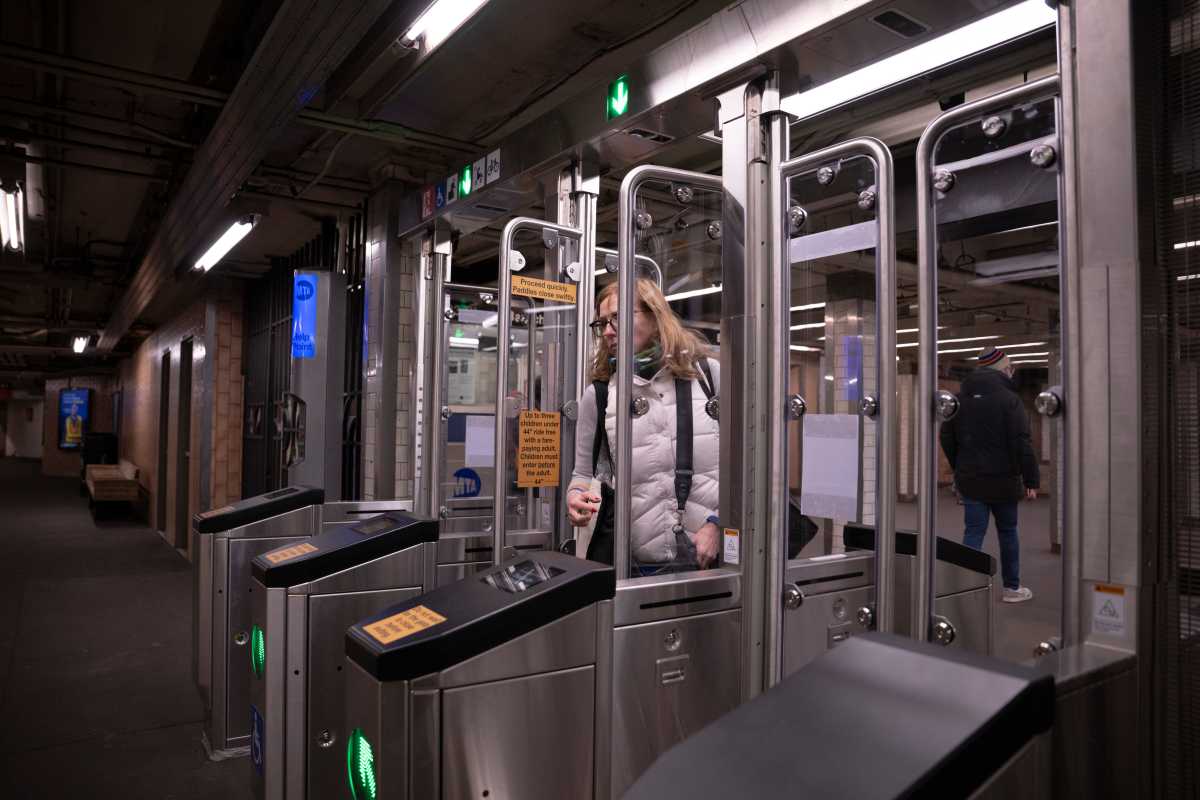
The MTA introduced the third and final model of its potential new subway fare gate designs this week, kicking off its citywide gate remodel at the 23rd Street-Baruch College station, on the 6 train line.
The new gates, aimed at clamping down on fare evasion and turnstile jumping, are part of a pilot program testing new models at 20 subway stations. Korean technology company STraffic, which recently installed the same gates at 50 train stations in San Francisco, brought the third design to New York City.
“I personally like it, I think it’s easier to get in,” Olivia, a 6 train rider, said of the new gates on Friday. “It seems very modern, kind of like what you would see in a European train station.”
Olivia said the old school turnstiles make it hard for people with big bags, like herself, to get through the gate, so the new design, which offers tall glass doors that open down the middle, are a welcome change. And, she expects the design will help with fare evasion.
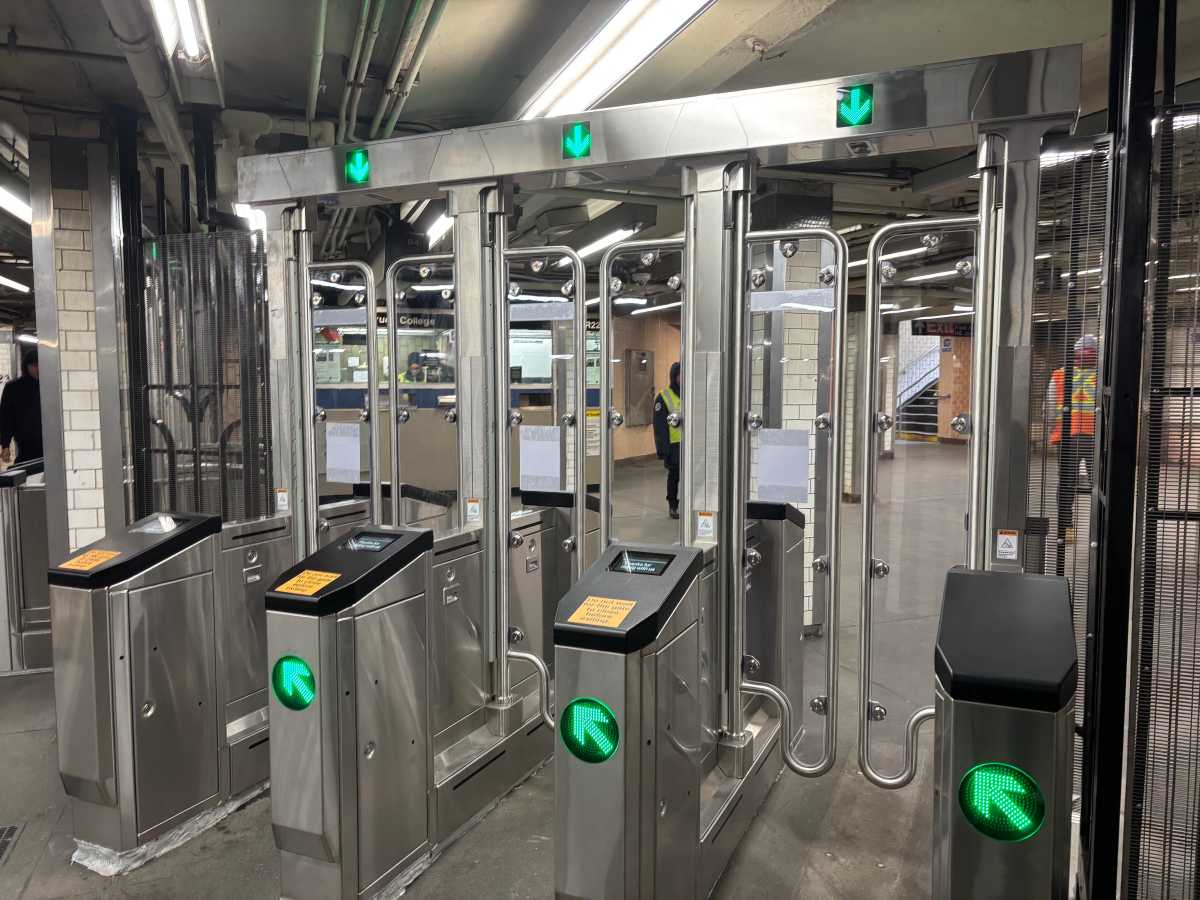
The MTA has contracted three vendors — STraffic, Conduent, and Cubic — to implement designs at 20 stations throughout the city — a process that began last year. The MTA is intermittently closing some station entrances for implementation.
After the MTA selects a vendor, or vendors, it will install the new gates at 150 stations across the five boroughs. The stations will be selected based on ridership, fare evasion rates, accessibility needs, and whether they are deemed a “major transit hub,” according to the MTA’s website. All stations that serve 75% of New York City subway riders will be equipped with the new gate design.
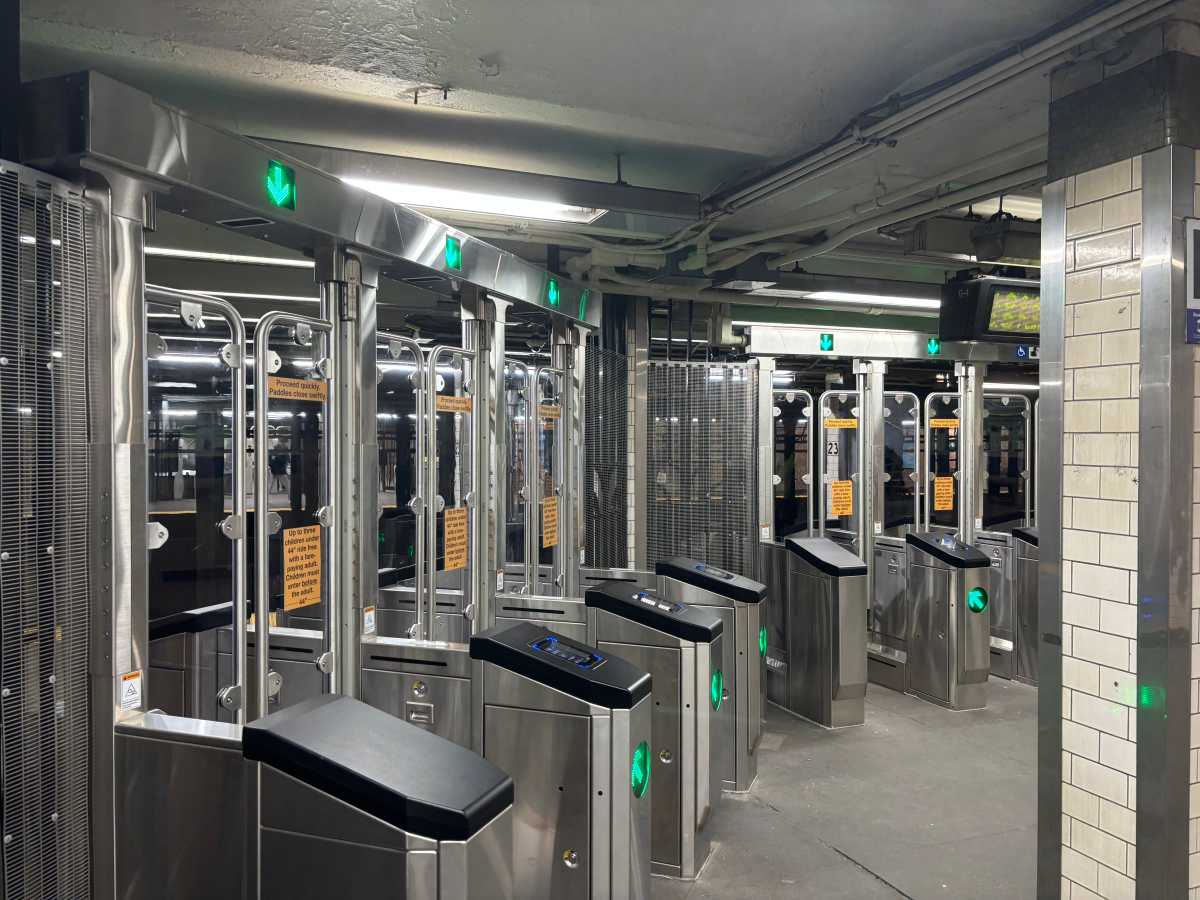
Caio, another 6 train rider, said he hopes the renovations don’t stop at the new gates.
“It looks nice, obviously. I don’t know how much it costs, I just hope that the next investment that I would prefer over this is on the actual quality of the trains and platforms,” Caio said. “It does look a little cleaner here, I don’t know if there was a deep cleaning recently, but I would love for that to not stop here.”
New York State is shouldering the cost of the new gates through the 2025-2029 Capital Plan, fully funded and approved by the state legislature in 2024. The funds are available largely thanks to congestion pricing, the one-year-old program that charges cars to drive through Manhattan below 60th Street during peak hours.
The MTA is also hoping to improve platform accessibility and “passenger flow” with the new gates. Some passengers found the new gates to pose some tech issues.
“Aesthetically, they look nice. Honestly, I think the OMNY system in general has a lot of flaws. Many times, I’m tapping, and it just doesn’t work,” Hector, a 6 train rider, said. “The bar ones just seem to work … these ones look nicer, look more modern, but if they actually worked 100% of the time I would like them more.”
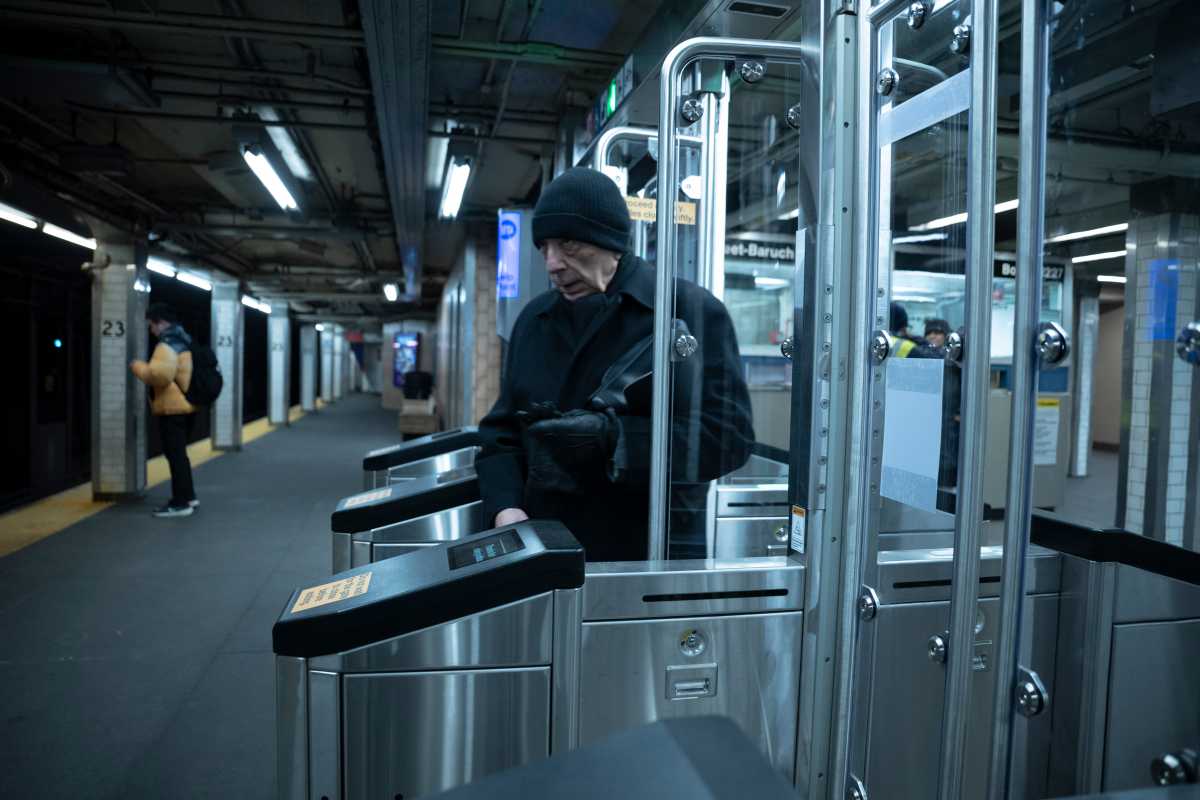
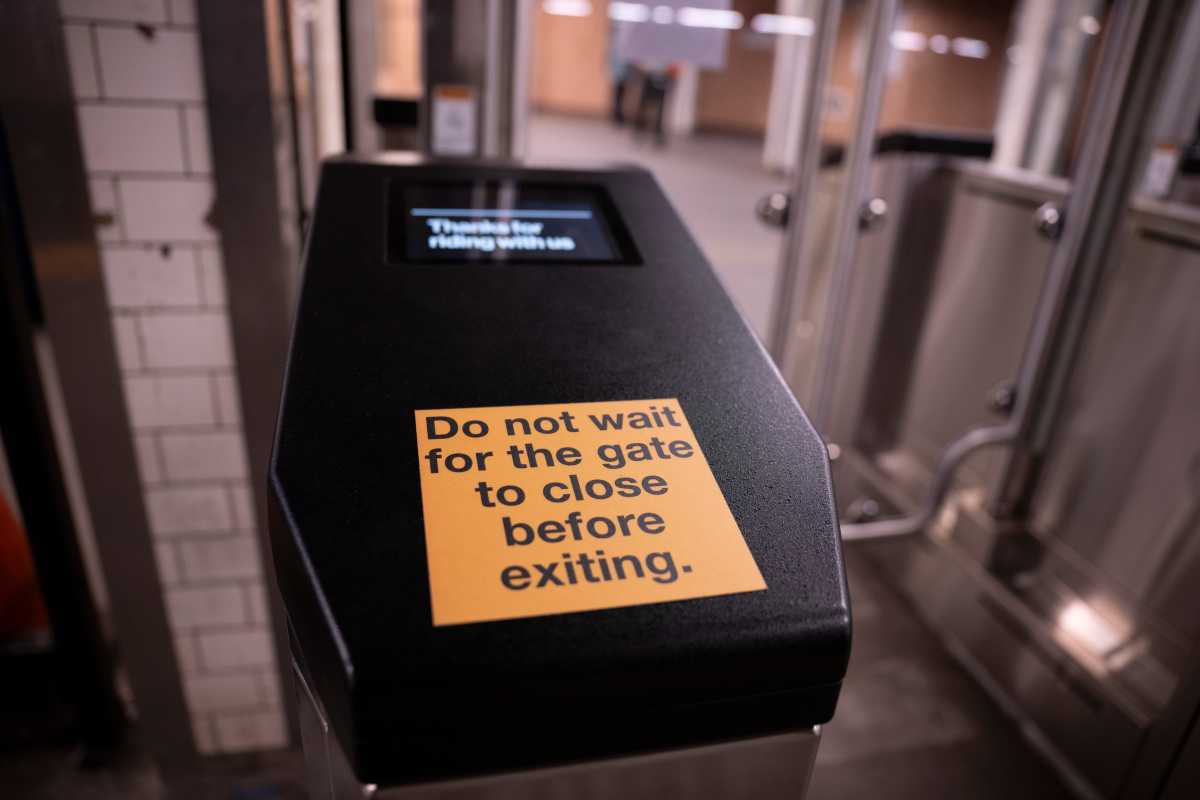
The MTA retired MetroCards at the start of 2026, shifting to a tap-only system through its OMNY card readers.
A July survey of riders by the Permanent Citizens Advisory Council, which worked with the MTA on a report on improving OMNY, found that nearly 75% of riders had encountered some kind of issue with OMNY’s tap-and-go system.
Survey respondents, however, were “generally positive” about the switch, and gave OMNY a 3.43 out of 5 rating overall. Of respondents, 54% gave it a rating of four or five.
Despite the MTA’s efforts, turnstile jumpers are having fun with the new gates. Skilled fare evaders earlier this month held the “Fare Evasion Olympics” at the new gates at Manhattan’s Broadway-Lafayette Street, which were installed in December. The winner received a cartoonishly large $3 check — enough for one subway or bus ride after a recent fare hike.
Megan, who was visiting New York City from her home state Indiana, said she liked the new gates at 23rd Street-Baruch College.
“It’s great, it’s easy, I just couldn’t figure out which way to put my phone,” Megan said. “This is easier because I have my backpack.”
The next installations will be at Crown Heights-Utica Avenue, Jackson Heights-Roosevelt Avenue/74th Street-Broadway, and Delancey Street-Essex-Street, according to the MTA.