


With the Olympics and Super Bowl over, the biggest sports battle may not be on the field, but over tickets and whether resellers, the original ticketing company or bots are behind some sky-high ticket prices.
While resellers attract attention when prices rocket, a new study by a group claiming to speak on behalf of sports fans found sports ticket reselling sites more often lead to savings.
The Sports Fan Coalition, which has 80,000 members, concluded New Yorkers saved $65 million on sports tickets as part of $521 million saved nationwide, based on original price, through resale since 2021.
“When fans have the ability to transfer their tickets, fans find opportunities to save a lot of money,” Sports Fans Coalition Executive Director Brian Hess said. “New York is the gold standard in ticket freedom for fans.”
The study based on millions of sales through Automatiq, a data provider for ticketing companies, found New Yorkers bought tickets to major sporting events below face value 44% of the time, saving $33.87 on average per ticket (including fees). Rangers fans saved the most at $72.93 per ticket, according to the group.
“There’s a narrative being driven by Ticketmaster, venues and artists that all the secondary market does is jack up prices on fans,” Hess said. “That’s not true.”
Ticketmaster, the National Independent Venue Association and many artist advocates support price caps to hold down prices on high-demand events, although original prices sometimes are steep.
“We have no issue with artists charging whatever they want when they put their tickets on sale,” said Brian Berry, executive director of the Ticket Policy Forum, which represents ticket marketplaces. “That’s where they make money.”
Marketplaces believe pricing reflects demand, and as long as people want tickets, prices will rise.
“Ninety-eight percent of events don’t sell out,” Berry said. “Popular events that sell out will be expensive on the secondary market. They reflect, but don’t drive demand.”
Legislating lower prices?
Some believe the best way to stop prices from soaring to Taylor Swift, the World Series and huge events is through price caps.
Legislation introduced this month by State Senator James Skoufis, D-Orange County, would crack down on concert ticket owners turning a profit online.
“The total price at which a ticket reseller may sell or offer to sell a ticket to a live music concert or music performance may not exceed the total price of the initial ticket, inclusive of all fees and taxes,” according to the legislation.
Platforms could charge fees, but people reselling would not be able to turn a profit. The legislation also would require reporting how many tickets have been offered by seven days before a concert.
“Artificial scarcity creates a feeding frenzy among consumers,” Berry said. “They’re told all tickets were sold. They just didn’t sell them all yet.”
The price cap paradox
On its surface, price caps could be great news for consumers, but some worry they would create a big black market.
The National Consumers League and the Sports Fan Coalition, a non-partisan non-profit with a history of benefiting consumers, have both opposed various efforts to impose caps.
The Coalition helped obtain the repeal of the Sports Blackout Rule through the Federal Communications Commission in 2014 and Equal Pay for Team USA Act,
“The consequence of a price cap is dangerous,” Berry said. “People won’t stop selling in New York. They just won’t sell on our platforms.”
Hess said this would drive ticket sales underground to sites without guarantees, likely leading to a surge in counterfeit tickets.
“You can’t legislate away demand,” Hess added. “The customers who still want to buy tickets to Taylor Swift, Bruce Springsteen, or the World Series will go to unregulated marketplaces where there is not protection and transparency.”
He said Ontario, Canada, imposed and abandoned a price cap “because it was unworkable.”
“Fraud will increase in a market like New York,” Hess said. “People will think they’re buying tickets and they won’t get tickets.”
Bot today, gone tomorrow?
Part of the problem at high-demand events may be bots, even though they’re not allowed to be used to buy tickets. When you try to buy tickets, you may be competing with computers as well as consumers.
“There are bots buying the tickets,” Hess said. “Ticketmaster has been ignoring it. As long as they get to double dip, they don’t care. It’s misaligned incentives.”
Ticketmaster blamed “a staggering number of bot attacks” for problems it had selling tickets to the 2022-2023 Taylor Swift Eras tour, fueling billions of requests and overwhelming the system.
“People realized it sucks to have only one place to buy your tickets,” Hess said of that situation where sales shut down.
The Main Event Act in Congress would require ticketing companies to report to the FTC when they catch bots, to see the scale of the problem and enforce penalties.
Litigation
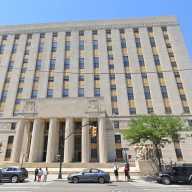
While some think price caps can help, the federal government believes competition can be the cure. The Department of Justice’s antitrust lawsuit against Live Nation is slated to go to trial next week in the Southern District of New York.
“It’s everything,” Hess said. “It’s one of the biggest antitrust lawsuits in recent history.”
If it seems Ticketmaster and Live Nation cooperate, they’ve been one company since merging in 2010, bringing the biggest concert promoter and ticket seller under one roof. Ticketmaster Entertainment today is a wholly owned subsidiary of Live Nation Entertainment.
The Department of Justice in 2010 approved the merger with a consent degree banning Live Nation from retaliating against venues that choose other ticket providers. The DOJ, in 2019, after finding problems, extended that decree, which remains in place.
The DOJ suit refers to Barclays Center in Brooklyn, a Ticketmaster client that signed with SeatGeek. Barclays, according to the DOJ, lost tours and concerts before returning to Ticketmaster.
“We’d like to see an end to mandatory exclusive contracts,” Berry said. “If a venue wants to have a long-term contact with a ticketing company, it should be the decider, not the touring company.”
The DOJ’s Antitrust Division and 39 states are suing in the United States District Court for the Southern District of New York for antitrust violations, unlawful or unfair business practices, and restraint of trade.
“The Company believes it has substantial defenses to the claims asserted in the lawsuit and will vigorously defend itself,” Live Nation wrote as part of a quarterly filing on March 31, 2025.
The case, expected to go to trial next week, seeks possible relief such as the divestiture of Ticketmaster, cancellation of certain ticketing contracts, ending anticompetitive practices, and damages for consumers.
“The government and around 40 states’ attorneys general want structural remedies to the merger,” Berry said. “Behavioral remedies don’t’ work so well. You’re trusting the company will do as it promises.”