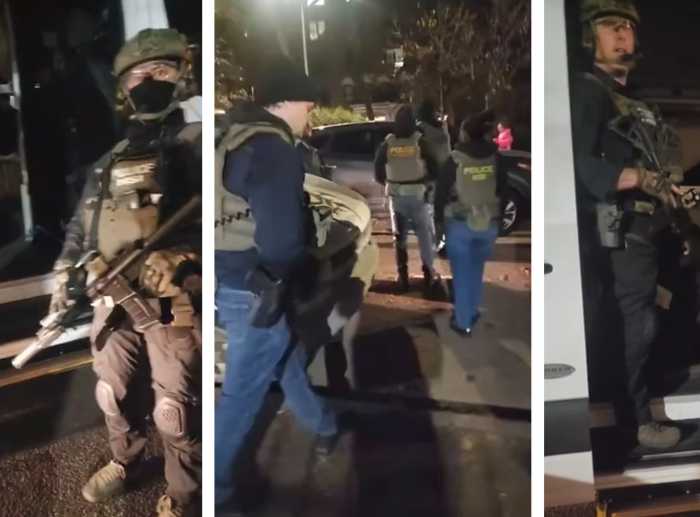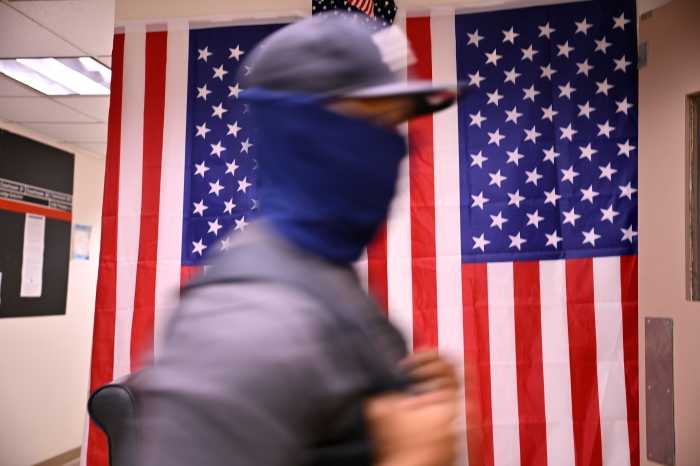



A New York politician has put forth a way to help stop the increase of assaults involving masked ICE agents who refuse to identify themselves: By putting QR codes on their uniforms.
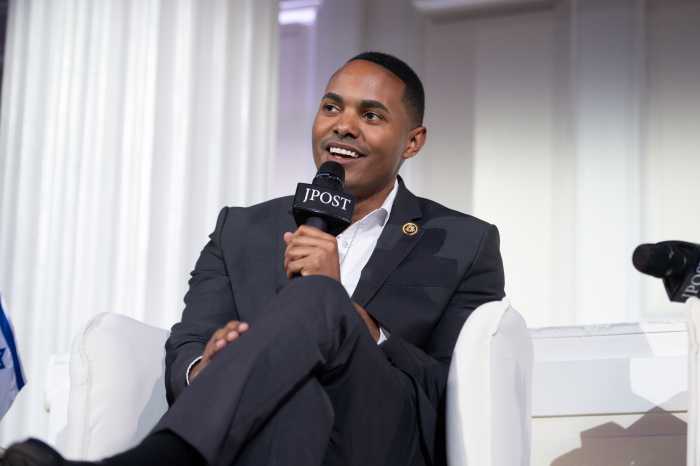
Rep. Ritchie Torres, representing the Bronx, will introduce the Quick Recognition (QR) Act into Congress next week, a bill that would require Immigration and Customs Enforcement agents, as well as Customs and Border Protection (CBP) officers, to have QR codes embedded into their uniforms.
“There is an urgent need to unmask ICE not only physically but digitally. So I have legislation that would require ICE agents to wear uniforms that contain QR codes, which can be scanned by members of the public,” said Torres, a former NYC Council member who was elected to Congress in 2021.
When scanned, the code would generate a digital ID displaying the officer’s name, badge number and law enforcement agency, Torres explained.
The Congress member acknowledged that he is likely to get pushback from law enforcement and advocates on the bill, but explained that scanning a QR code is a much safer alternative than asking an officer to produce a physical ID.
“Keep in mind, officers have a responsibility to identify themselves to the public. And scanning a QR code is much safer than asking for a physical ID,” the representative said. “The act of asking for a physical ID creates an encounter that can escalate into violence.”
Torres reiterated the importance of requiring officers from law enforcement agencies, whether federal or local, to identify themselves, provide their names and not wear masks or coverings.
Rein in ICE with ‘the power of the purse’
As the bill goes through the legislative process, Torres said he is cracking down on ICE assaults by cutting the agency off where it hurts: In the wallet.
“ICE is a systemically corrupt institution. We in Congress should leverage the power of the purse to rein in ICE and rein in Donald Trump’s mass deportation machine,” Torres said. “I, for one, will oppose any and all spending legislation that allocates a dollar to ICE. That’s the best leverage that House Democrats have.”
amNewYork contacted the Department of Homeland Security for comment on the legislation and is awaiting a response.
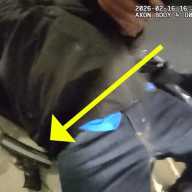
Torres’ bill follows the fatal shooting of Renee Good by ICE agent Jonhathan Ross in Minnesota on Jan. 7. Good was killed after allegedly attempting to drive her car toward the agent. Homeland Security Secretary Kristi Noem has repeatedly defended the officer, stating that he acted in self-defence, fearing he or others would get run over.
According to reports that came out on Jan. 14, Ross suffered internal bleeding following the tragic incident. The extent of the injuries is unclear.
For months, ICE agents at 26 Federal Plaza have snatched up many of those appearing in person for mandatory immigration court.
A NYC Council staffer, 53-year-old Rafael Andres Rubio Bohorquez, was taken into custody by the feds while showing up for a mandatory, routine immigration hearing on Long Island Monday. Council members on Tuesday held a rally in support of Rubio Bohorquez’s release. Many at the rally became emotional as they denounced the staffer’s detainment.
Mayor Zohran Mamdani called the arrest “an assault on our democracy, on our city and our values.”
Torres, whose legislation would soon be going through the legislative process, also doubled down on the importance of ICE agents unmasking themselves. saying federal agents must have their faces unobstructed while on duty.
“I see unmasking as a best practice,” he said. “Transparency is not an option but an obligation.”