


Former federal prosecutor Troy Edwards learned in September that former FBI Director James Comey, his father-in-law, had been indicted by the Department of Justice upon instructions from President Donald Trump that he and others believe were politically motivated.
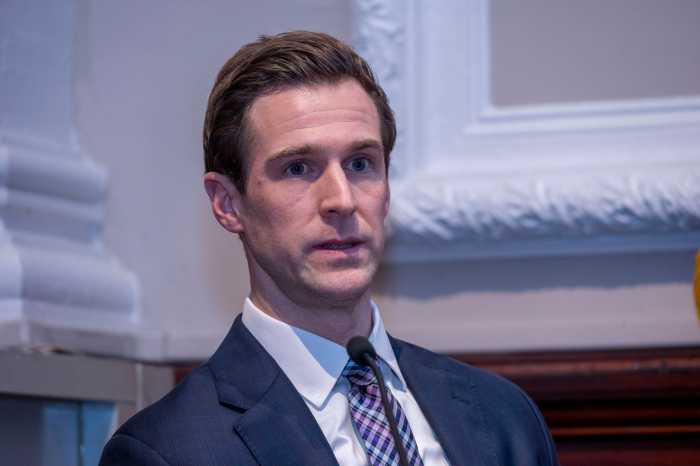
“It became obvious to me in that moment that this was no longer the department that I signed up to serve,” Edwards said Tuesday at a panel hosted by the New York City Bar Association.
“I packed my office … and explained to my children that the president wanted their grandfather to go to prison — and that their father was no longer a prosecutor,” said Edwards, who had been serving in a senior national security role at the DOJ.
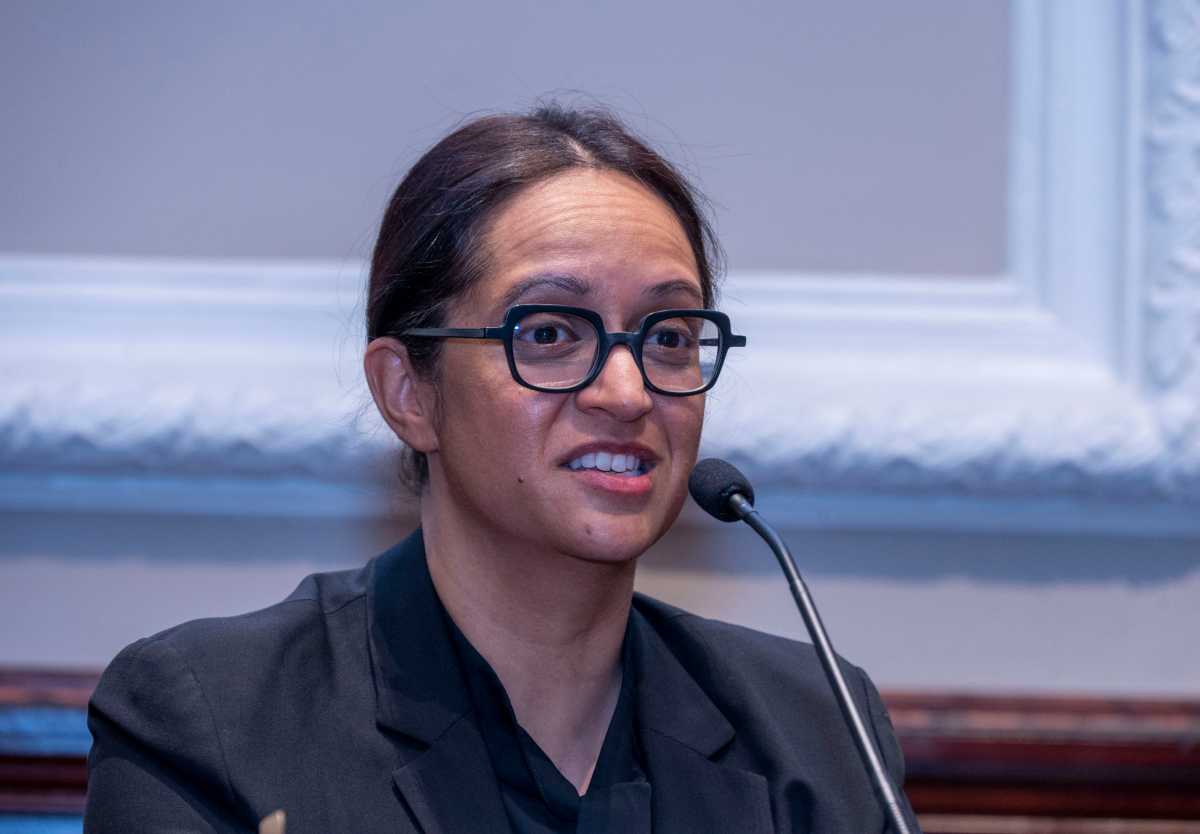
Edwards and Bruce Green, another former federal prosecutor and a chair at Fordham University Law School, joined three others representing the thousands of former federal prosecutors who have been fired or quit in protest since Trump took office. They told the City Bar audience that the DOJ’s credibility and independence have been threatened by the president’s actions — and cautioning freshly graduated law students from jumping at opportunities to join the department.
One of the many fired includes Edward’s wife and Comey’s daughter, Maurene Comey, who was fired in July from her role as an assistant district attorney in the Southern District of New York. She’s filed suit against the Trump administration, arguing wrongful, politically motivated termination due to her connection to her father.
“We’re going back to the idea of an enemies list, and that’s not what you’re supposed to use the country’s criminal justice power for,” Green said.
When asked for a comment on their former employees’ remarks, the DOJ told amNewYork Law it was “restoring law and order [and] cracking down on violent crime.”
“If these former prosecutors take issue with upholding the rule of law, that says more about them than it does the current Administration,” a DOJ spokesperson said in a statement.
Also on the City Bar’s panel was Joseph Tirrell, who worked as the DOJ’s senior ethics attorney until July 2025, when he received notice with little explanation that he had been fired.
“I think the reason why you fire the senior ethics attorney at the Department of Justice is exactly what everyone in this room is thinking: because you want to weaken the ethics process within the Department of Justice,” Tirrell said. “It’s, ‘We want no one to follow the rules. We don’t want anyone to tell us that what we’re doing is wrong.’”
Tirrell helped to lead the prosecution of those who attacked the U.S. Capitol on Jan. 6, 2021, and said DOJ attorneys are now being asked to do things they don’t agree with that inappropriately weaponize the criminal justice system, something they all said once would have been unthinkable.
Edwards said his final few months at the department gave him a front-row seat to the moral dilemma federal prosecutors are facing under Trump.
“Previously, people across the Department of Justice had the chance to focus on higher level thinking, to respond to specific defense strategies,” Edwards said. “We could do that because we knew … the facts we were receiving were true. The instructions we were receiving from our bosses were good ones. We knew there were no agendas in the room.”
“The way that they are trying to change that culture is now we have to question whether the folks who are giving us the [instructions] are giving us good ones,” Edwards said. “That just robbed us of the space to think in those upper-echelon, nuanced spaces. We were now thinking, ‘Why are they bringing these cases to us?’ I think that has a devastating effect on the department.”
The City Bar hosted the panel in honor of the International Day of the Endangered Lawyer, which, for the first time since it started in 2009, named the United States as the country of focus, citing retaliation against government attorneys in a 38-page report the local bar association signed onto.
Previously, the International Coalition for the Day of the Endangered Lawyer has focused on countries like Iran, Belarus and Afghanistan on this day, which officially falls on Jan. 24.
“It really is both shocking and, on the other hand, fully justified and certainly a recognition of the threat and the punishment that has been meted out to lawyers over the past year here in the United States,” said NYC Bar Association President-Nominee Mathew Diller. “It really focuses on the attack on the independence of lawyers in the Department of Justice, a subject that’s a preeminent concern to those of us who savor and cherish American democracy.”
The panelists at the City Bar event told attorneys that it’s up to both federal prosecutors and the legal community at large to prevent the DOJ from slipping too far from a place of respect.
“The DOJ’s culture is changing because people are making the choice to do something that’s inappropriate, or unconstitutional or illegal … because they don’t want to lose their job,” Tirrell said.
“We need to blame the administration for putting folks in that position … but we’ve also got to raise expectations and say, ‘You’ve got to hold the line. You’ve sworn an oath to support and defend as an attorney or as a federal employee, and you can’t go beyond that,’” Tirrell said.
Edwards said federal prosecutors have a duty to speak out publicly and to the press — something DOJ employees typically shy away from.
“The folks who are in the department now are the current carbon monoxide detectors,” Edwards said. “If you don’t resign when your red line is crossed, if you don’t speak out in some way … we won’t know about the carbon monoxide that’s poisoning parts of our department. The folks who will leave have to continue to be that detector, and the folks who have already left have to be outside the house shouting, ‘There’s carbon monoxide in the house.’”
Some ex-DOJ prosecutors, like panelist Mary Dohrmann, joined firms like the Washington Litigation Group, which is mounting court challenges against the Trump administration’s actions. Dohrmann encouraged other federal prosecutors thinking of quitting — and new law school graduates who may have previously wanted to join the DOJ but were now questioning whether it still aligned with their values — to join her.
Green and the final panelist, ex-federal prosecutor Sonia Mittal, are both professors. They said they have been cautioning students against joining the DOJ.
“I’ve spoken to law school classes and told students, ‘Go into state government, go into local government,” Green said. “Now, you have to go in [to the DOJ] prepared to know where your lines are, and to be prepared to say no, and then be prepared to accept the consequences of that. If you’re not ready for that…then you need to go elsewhere before you can go back, hopefully, to a better department in the future.”
Mittal said it’s been “extraordinarily difficult” to advise law students hopeful about entering the DOJ, since it’s next to impossible to tell how the next few years will shake out — and what attorneys may be asked to do.
“They’re at the beginning of their careers, and their careers will be long and their reputation matters more than almost anything else,” Mittal said. “It’s just unrealistic to think that any lawyer who enters the department is not going to be affected by either the spoken directives that they hear directly, or by the indirect changes in the operation of the department as a whole.”
Despite the pessimistic tone the panel cast the majority of the night, all said they were hopeful for the future.
“The department’s burning,” Edwards said. “I don’t think there’s a way to say it differently. But, there are a lot of architects across this country who are getting together and trying to answer the question of how to fix this.”
He said he didn’t see the current moment purely as a problem to be fixed, but also as an opportunity for established attorneys and young lawyers to come together and improve the department after the Trump administration.
“Three years from now, [law students] will apply to the DOJ Honors Program, and they will become part of the department’s new scaffold,” Edwards said. “The department wasn’t perfect … This is a significant opportunity for our country to build a better department, and we’re going to do that.”