


The circus has always been a peculiar cathedral of human ambition. Beneath the striped canopy, gravity becomes a suggestion rather than a rule. Bodies arc through the air. Tightropes vibrate with suspense. Acrobats suspend themselves between terror and elegance while the crowd collectively forgets how to breathe. The spectacle is not merely entertainment. It is choreography with danger as a co-author, structure disguised as delirium.
It is also, perhaps unexpectedly, the birthplace of one of modern art’s most revolutionary ideas.
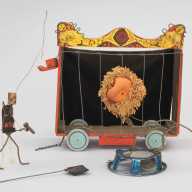
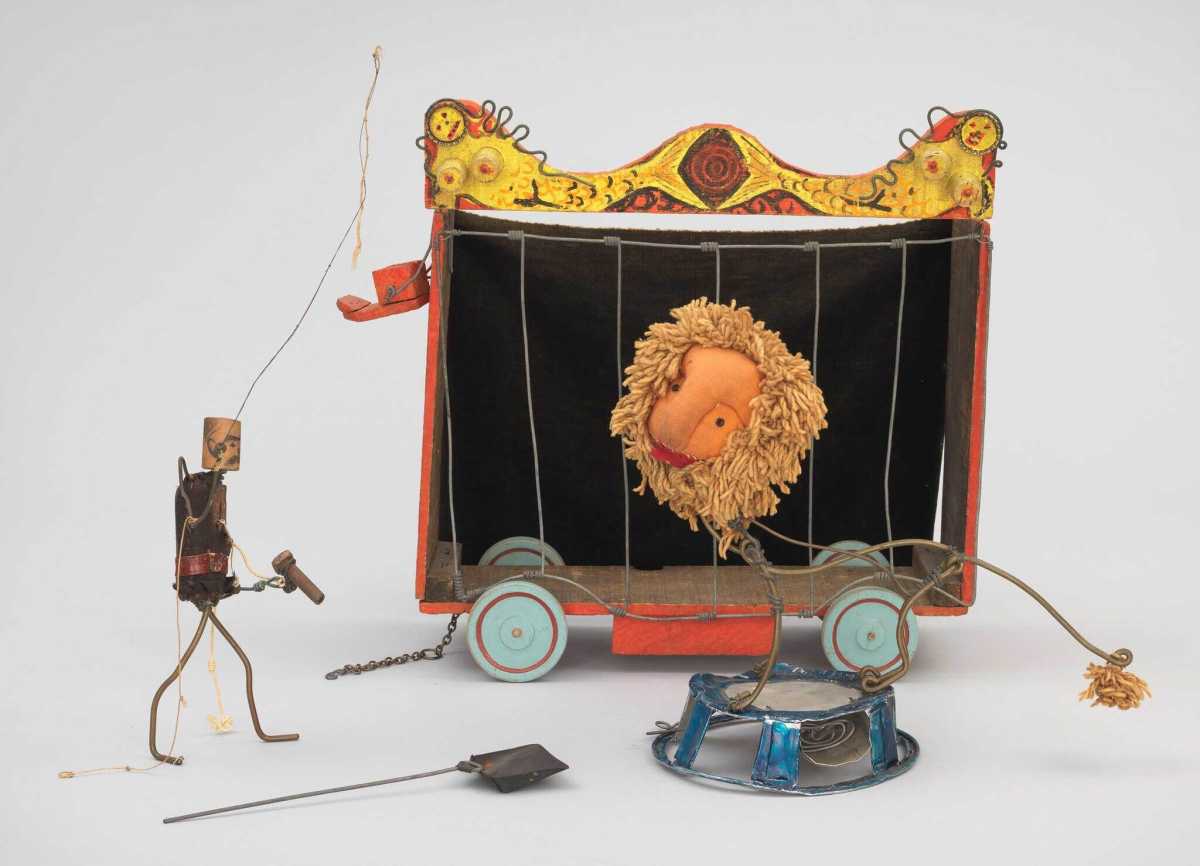
In 1926, a young Alexander Calder—an American artist newly arrived in Paris—began constructing a miniature circus from wire, cork, fabric, wood, and whatever else his restless curiosity could recruit. What began as playful invention quickly evolved into something far more radical. Calder had not simply made sculptures of circus performers. He had created a world he could animate.
The result, now known as Calder’s Circus, would become one of the most formative works of the twentieth century.
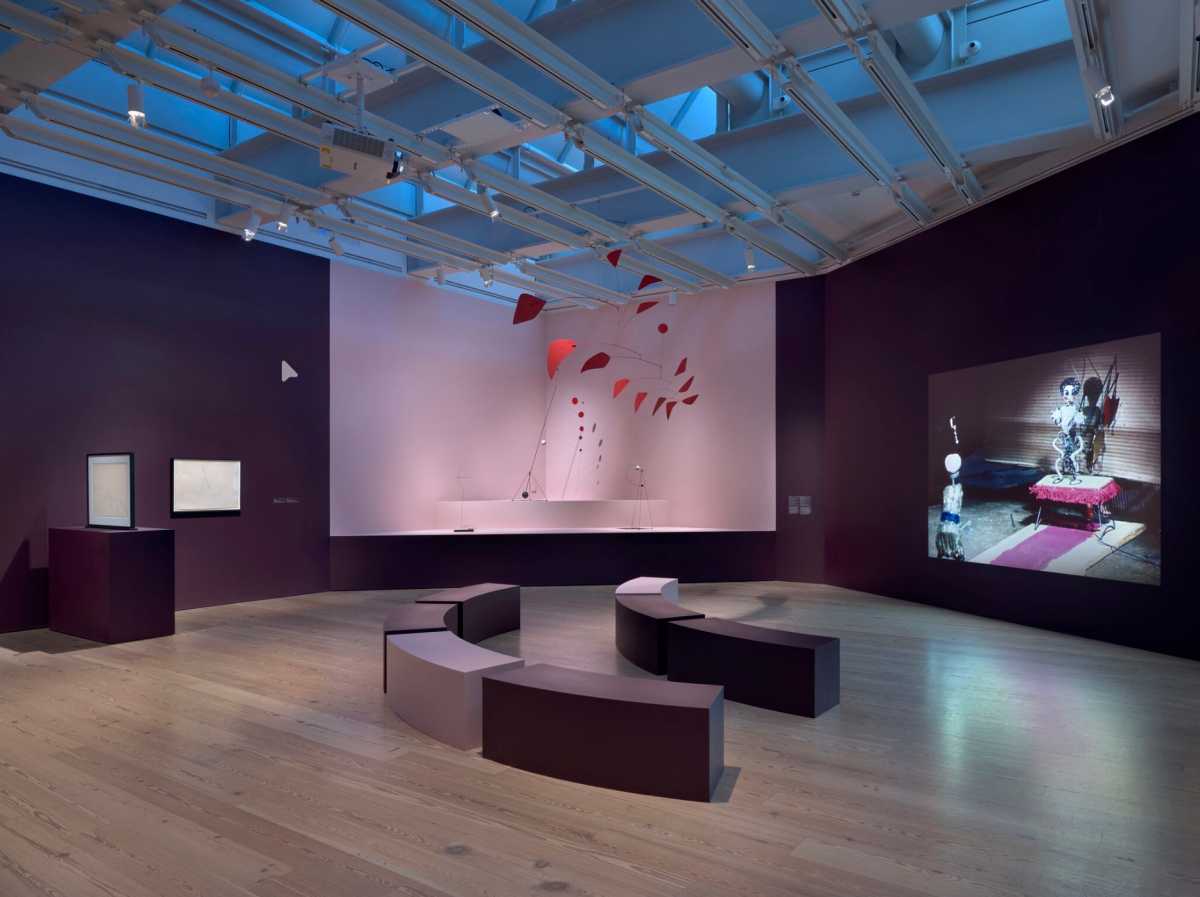
A century later, High Wire: Calder’s Circus at 100, on view now through March 9, 2026, returns to the moment when sculpture first discovered movement as a possibility rather than a metaphor. The exhibition reunites the legendary Cirque Calder with related wire sculptures, drawings, archival materials, and early abstract works that illuminate the origins of Calder’s artistic language—and the intellectual spark that would eventually lead to the invention of the mobile.
Paris in the 1920s was the ideal incubator for such mischief. The avant-garde was thriving, boundaries between disciplines were dissolving, and artists were searching for ways to make art feel less static and more alive. Calder, trained originally as an engineer and blessed with the playful instincts of a performer, approached sculpture with a question that now seems obvious but was revolutionary at the time: what if it moved?
His answer took the form of a circus.
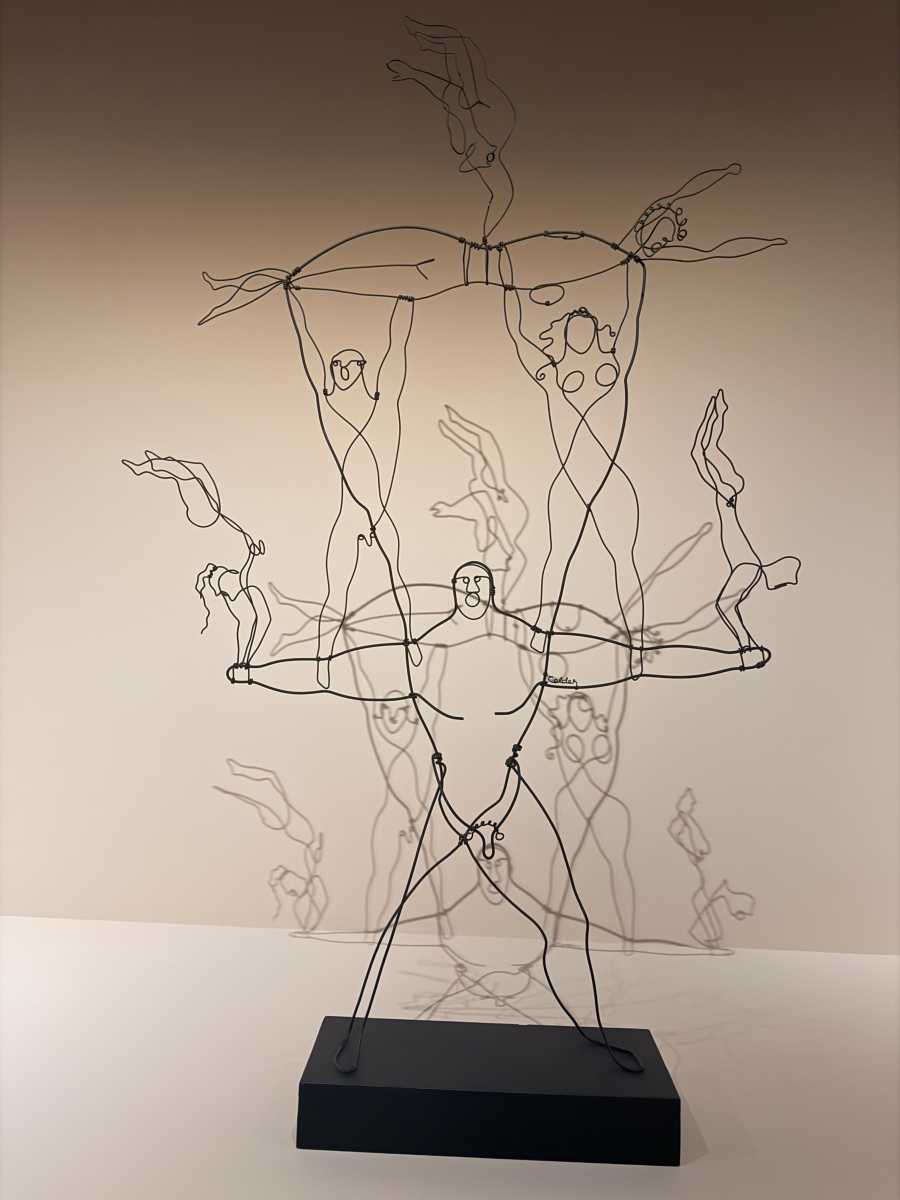
Calder constructed acrobats, lions, horses, ringmasters, and trapeze artists using wire skeletons and cork bodies. Their limbs were engineered with an elasticity that allowed them to bend, swing, and fly through the air. Each figure became part of a performance apparatus. Calder built props, lighting effects, and sound cues. When the spectacle began, he would sit cross-legged on the floor, manipulating the characters while narrating the unfolding acts.
These performances were not brief amusements. They were elaborate multi-act productions that sometimes lasted nearly two hours. The audience gathered around Calder as if attending a private theater. Among the spectators were figures who would define modern art itself: Marcel Duchamp, Joan Miró, Piet Mondrian, and Isamu Noguchi.
They understood immediately that this was not merely charming experimentation. Calder had turned sculpture into an event.
The circus fascinated him for reasons that extended beyond spectacle. It contained the mechanical poetry that would soon dominate his artistic thinking: suspension, tension, counterbalance, velocity, pause. The entire drama of movement unfolding within space.
Calder later summarized the attraction with almost disarming simplicity. He loved “the mechanics of the thing—the vast space—and the spotlight.”
That sentence reads today like a manifesto.
Watching trapeze artists suspend themselves above the ring, watching performers maintain equilibrium on a thin line of wire, Calder began to imagine sculpture operating under similar principles. The circus revealed that balance was not static. Balance was dynamic. It existed in constant negotiation with gravity.
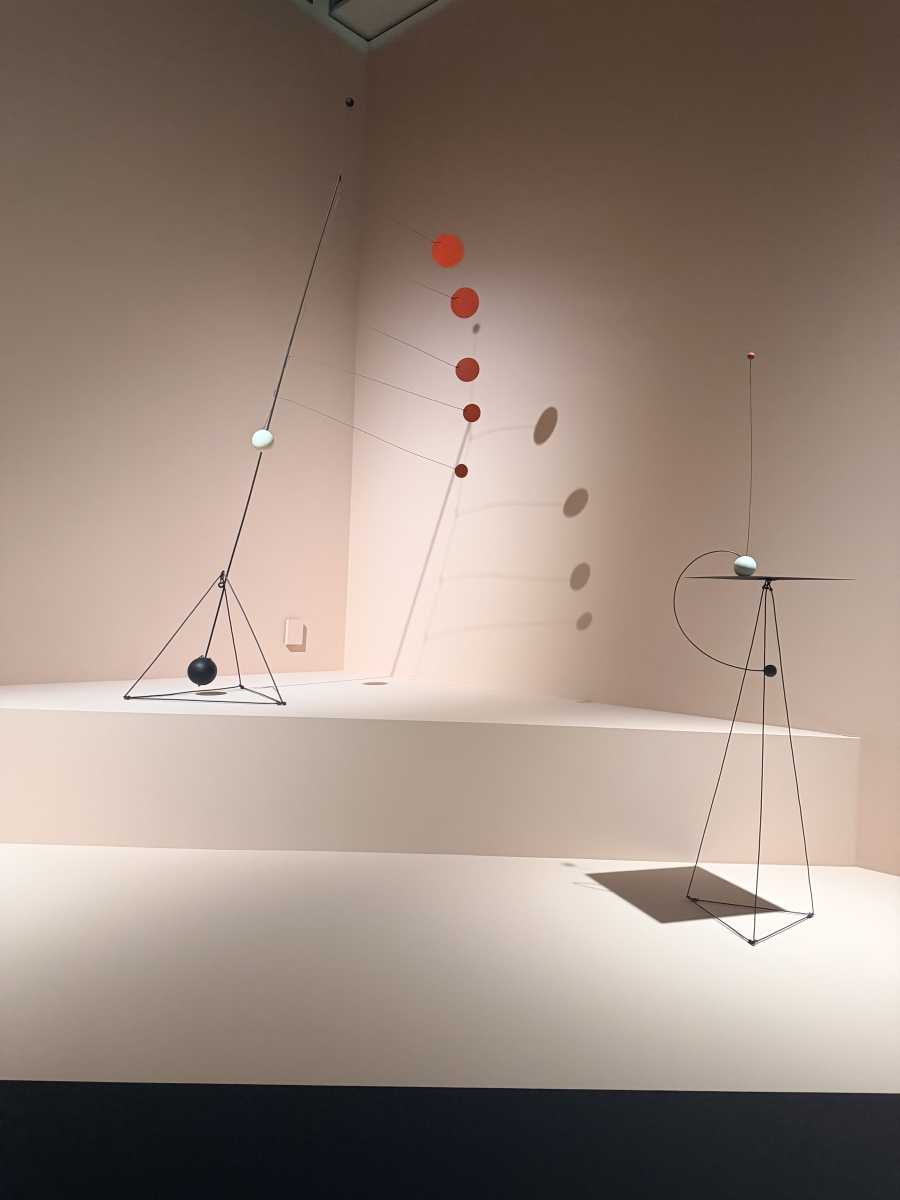
Within a few years, those observations would lead Calder toward the invention that secured his place in the history of modern art: the mobile, a form of sculpture that floats, pivots, and responds to air itself as collaborator.
The circus was the rehearsal.
High Wire: Calder’s Circus at 100 allows viewers to witness that rehearsal in vivid detail. The exhibition places the original circus figures in dialogue with early wire sculptures and drawings that chart Calder’s gradual shift from representational playfulness toward abstraction. One begins to see the transformation happening in real time. The wire bodies of performers evolve into spatial lines. The energy of acrobats becomes the language of suspended forms.
Calder once remarked that he “thought best in wire.” The material allowed him to draw not only shapes but movement itself. Wire bends, loops, and arcs with an elasticity that feels almost alive. In Calder’s hands it becomes a line set loose in three dimensions.
Standing before the circus today, the sensation is strangely electric. The figures may be small—constructed from cork and thread—but their presence is expansive. They lean, tilt, and stretch with an improbable grace. Each one seems to contain the blueprint of the monumental sculptures that would later occupy museums and public plazas around the world.
What emerges most clearly in this centennial exhibition is that Calder’s genius was never merely mechanical. It was philosophical. He recognized that sculpture did not need to imitate motion. It could embody it.
The circus was the proof.
The exhibition, co-curated by Jennie Goldstein, Marion Boulton “Kippy” Stroud Curator of the Collection, and Roxanne Smith, Jennifer Rubio Assistant Curator of the Collection, treats Calder’s Circus as the intellectual ignition point it truly is. The presentation reveals how this miniature spectacle—constructed from humble materials in a Paris studio—quietly altered the trajectory of modern sculpture.
The circus remains the perfect metaphor for Calder’s achievement. Both are acts of balance performed in public view. Both rely on invisible forces—gravity, tension, breath—to sustain their illusion of effortless grace.
A century ago, Calder sat on the floor of his studio, manipulating a troupe of wire performers while the avant-garde looked on with delight. Somewhere between the tightrope walker and the trapeze artist, between cork horses and spinning acrobats, sculpture slipped free from the pedestal.
It has been dancing ever since.
Catch it before it closes! Whitney.org