As I hurried through the cold rain on an autumn day in the Upper East Side, a stranger suddenly approached me and screamed, “Free Palestine. You are all genocidal baby killers. You all need to get the f*** out of Israel!” My only “crime?” Wearing a yarmulke.
No other Jewish identifier or Israel memorabilia was on my person. I was lucky– this encounter ended with words. Earlier this month, an Israeli Jew was beaten so severely outside a Manhattan kosher restaurant that he suffered a brain bleed.
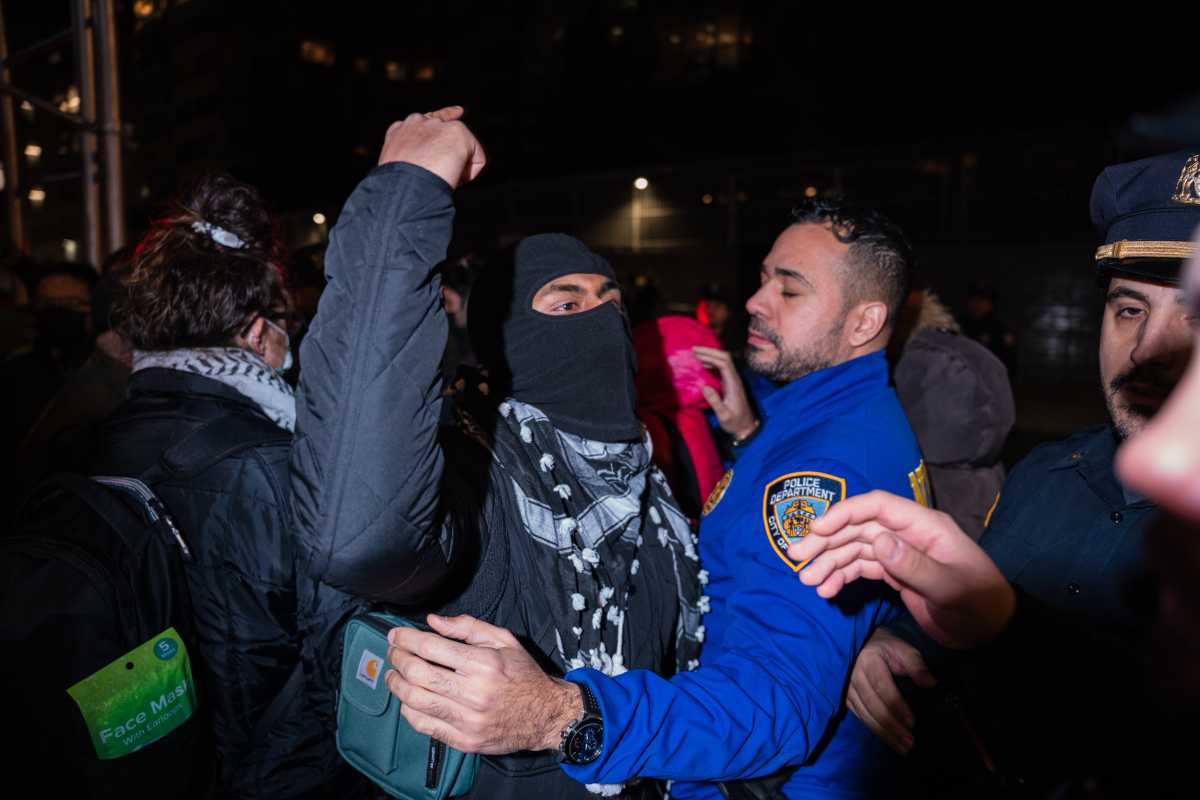
How did we get to a place where Jews in New York City are targeted for a conflict thousands of miles away? Sadly, antisemitism has skyrocketed globally since the Oct. 7, 2023, terrorist attacks. Local Jewish communities have become the punching bag for lashing out on anti-Israel sentiments.
This violence starts with the normalizing of hateful rhetoric. When demonization of Israel occurs – whether through the outrageous claim of “genocide” or through expressions that are a thin veil of calling for violence like “globalize the intifada” –words do not stay abstract, they invite violence.
Tragically, Mayor-Elect Mamdani gone from refusing to condemn “globalize the intifada” to eventually saying he would discourage its use. By refusing to condemn this hateful rhetoric, he has allowed it to enter the political discourse of our city – and with it, a deepening sense of vulnerability for New York’s Jewish community.
It is a painful reality that many Jews are beginning to question their sense of safety in the city with the largest Jewish community outside of Israel. A question I should never have to ask is should I wear my yarmulke? Is it safe to do so? According to AJC’s State of Antisemitism in America 2024 report, 56% of American Jews have felt the need to hide their Jewish identity. That number is alarming in its own right- but it feels even more urgent now, with a mayor-elect who seems increasingly at odds with the mainstream Jewish community.
When the city’s leading Jewish organizations, along with the largest Manhattan synagogues of each of the Reform, Conservative, and Orthodox denominations, express their concerns, it is clear that resetting the relationship and building trust with the mainstream Jewish community must be one of Mamdani’s top priorities.
So what can be done now that the election is over to heal these wounds with the Jewish community? Mamdani’s pledge of an 800% increase in funding for hate crimes reporting and prevention is a good start. In 2024, hate crimes against Jews made up 54% in New York City, with that number rising to 62% last month. Strengthening hate crimes reporting and prevention would further protect the community most affected, the Jewish community.
In fulfilling this campaign promise, Mayor-elect Mamdani can invest in education training about who Jewish New Yorkers are and what antisemitism is — its tropes, codewords, and, perhaps most pointedly, when anti-zionism is antisemitism.
Mamdani should also work to foster relationships between Jewish communities and other communities. One example could be continuing the “Breaking Bread: Building Bonds” program that worked to bring diverse communities together over a government-funded shared meal.
Expanding these efforts would strengthen the diversity that defines New York. Mayor-elect Mamdani himself, as the city’s first-ever Muslim mayor, embodies that diversity. Combating hate crimes would not only help Jews but would also go a long way to supporting other vulnerable communities. In the knowledge that our city is safer when all groups are protected, Mamdani can tackle other forms of hate beyond antisemitism, including fighting Islamophobia and anti-Muslim bigotry, the third biggest victim of hate crimes reported in NYC in 2024.
Mamdani must now act to heal his fractured relationship with the mainstream New York Jewish community. Words alone will not suffice. Action must follow– to make this city one where no Jew fears walking down the street wearing a yarmulke or displaying their Jewish identity.
The true measure of mayoral leadership is making New York safe for all its residents. And for Mayor-elect Mamdani, that test begins now.
Brandon Pinsker is the associate director of the American Jewish Committee office in New York.