

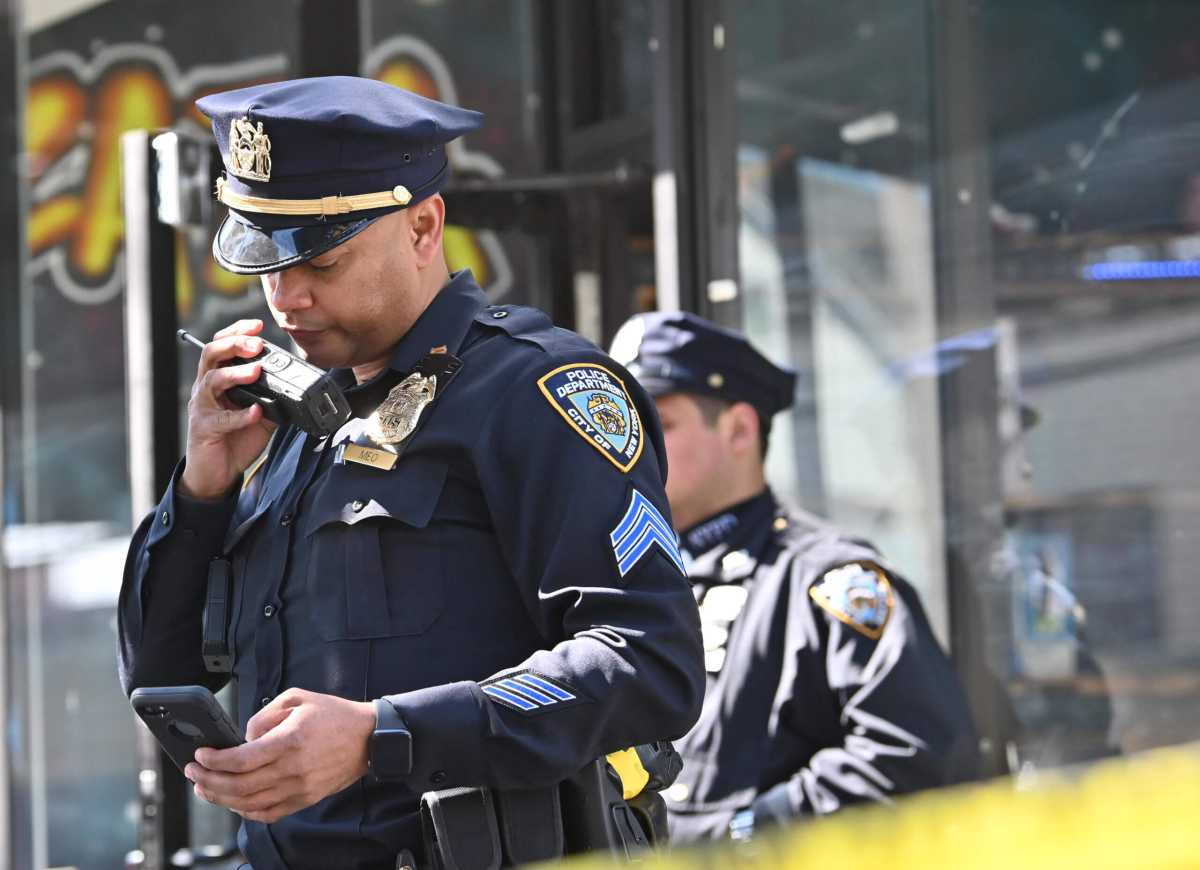
The New York City Council approved a bill Thursday that would require the NYPD to establish and implement a radio encryption policy that will ensure reporters and photographers across the city continue to have access to the emergency feed.
The city council bill, Int. 1460-2025, was passed by the Public Safety Committee by a vote of 9-0. This led to a full council vote of 42-6 for the legislation sponsored by Manhattan City Council Member Gale Brewer, with the support of outgoing Council Speaker Adrienne Adams, who was in her final council leadership session.
Beginning in 2023, the NYPD began transitioning all department radio transmissions to encrypted channels, removing all public access to frequencies. Members of the news media objected arguing that access is vital to the public interest,” Brewer said. “The police were upset with this so this bill restores access to ‘credentialed journalists’ – I trust them impeccably.”
This comes as a New York State bill, entitled “Keep Police Radio Public Act,” passed by both the Assembly (A.3516) and the state Senate (S.416), and now awaits Gov. Kathy Hochul’s signature. She has till Friday to sign or veto the bill. It is unclear what she plans to do, but if she fails to act, the measure will automatically become law.

The city bill mandates that the NYPD develop a policy ensuring that certain police radio communications, excluding those containing sensitive information, are made available in real-time to credentialed journalists.
Additionally, the department will be required to broadcast reports of critical incidents over an unencrypted, citywide channel accessible in real-time to the general public, which is currently in operation. The NYPD transit radios are also unencrypted because underground systems make the radios unreliable.
In 2019, amNewYork first revealed the NYPD’s billion-dollar radio encryption plan. In the years since, the department has been slowly introducing the new radios borough by borough.
But press organizations were shut out of the new encrypted feed, depriving them of the ability to guarantee transparency and accuracy in reporting emergency events and police activity. Department officials say they are providing access to breaking incidents on one channel, Citywide 1, but critics argue many incidents go unreported, are given out late, or never reported at all.
The NYPD maintains that encryption keeps criminals from using their communications against them. While there have been isolated cases of criminals and violent protestors using radio communications to commit crimes, the NYPD was unable to produce any evidence that the press has used the radio to impede police.
Press organizations came together under the umbrella, the New York Media Consortium, to fight and lobby for the re-establishment of radio access for media. Currently, there are 14 organizations, including the New York News Guild and its locals, that have rallied to the cause.
The consortium spurred passage of the state bill, led by Senate Deputy Majority Leader Michael Gianaris of Queens, and in the Assembly by Bronx Assembly-member Karines Reyes. Both democratically led state houses approved the bill that awaits the governor’s signature.

In addition to providing the one public channel, the bill stipulates, “encrypted radio communications transmitted over all precinct-level, borough-level, transit and housing bureau channels and any other department channel that does not routinely transmit sensitive information, shall be available to professional journalists who have received press credentials.”
Additionally, access will be paid for by media organizations at “reasonable costs, not to exceed costs incurred by the department for such access.” Each radio costs several thousand dollars, making it more challenging for underfunded outlets to afford access.
Special “unaffiliated” radios will have to be provided through Motorola, which would make them incapable of transmitting.
The Council bill will now go to outgoing Mayor Eric Adams for his potential signature before leaving office on Dec. 31. Should he veto the bill or neglect to sign it, Brewer has vowed to reintroduce it in a new City Council with Zohran Mamdani as mayor.
The NYPD would have 180 days upon approval of the bill to publish a proposal on how they will implement their policy. The public will then have 45 days to submit comments to Commissioner Jessica Tisch. The department will have one year to implement access to radio communications to the press.
The NYPD did not respond to requests for comment.
Media groups applaud the bill, but seek a state-wide mandate
Media organizations applauded the City Council for approving this long-sought NYPD mandate, but also want the state mandate.
“Journalists help keep New Yorkers safe,” said Susan DeCarava, president of the New York News Guild. “The NewsGuild of New York is pleased to see the New York City Council take action to ensure media and public access to encrypted police radio communications that allow journalists to inform the public about important local events, including fires, public safety dangers and accidents.”
DeCarava added, “Now it’s time for Gov. Hochul to ensure the same level of access to vital information about what is happening in their communities for all New Yorkers across our great state .”
Bruce Cotler, president of the New York Press Photographers Association, a group that relies on radio transmissions to cover breaking news, applauded the council bill.
“We are elated that the bill has passed the city council and hope that Mayor Adams will approve,” Cotler said. “This is a great victory for press freedom and transparency that allows for checks and balances and real time coverage of breaking news events.”
However, some legal and political pundits say there could be many hurdles before any member of the media obtains access to encrypted transmissions, notwithstanding the high cost of a radio.
While the Trump administration has emphasized “state rights” in determining policy, there have already been instances in which the federal government has intervened and could conceivably do so here. For example, states attempting to formulate their own artificial intelligence legislation have found the Trump administration instructing them to “must do what the federal government wants.”
Further, while the FCC has not mandated encryption, it was the Justice Department that sought encryption of police radios nationwide, and experts say they could conceivably intervene by withholding federal funds, a threat that has been used in other instances.
Despite implementation concerns, media organization leaders applauded the council.
David Donovan, president of the NY State Broadcasters Association, said he was pleased that the council passed the bill.
“This legislation requires the NYPD to implement a radio encryption policy ensuring real-time access to credentialed journalists,” Donovan said. “Also, the NYPD will be required to broadcast reports of critical incidents, over an unencrypted, citywide channel accessible in real-time to the general public. We urge the mayor to sign the legislation.”
Diane Kennedy, president of the New York News Publishers Association, also applauded the council.
“The New York News Publishers Association applauds the New York City Council for its vote to preserve the ability of journalists to inform the residents of New York City about events affecting public safety. Journalists have monitored police radio communications for nearly a century without in any way impairing the safety of law enforcement personnel. Access to police radio communications enables journalists to warn members of the public about risks to their safety, enabling them to avoid the scenes of building collapses, major accidents, active shooters and other events.”
David Andelman, president of Deadline Club, the New York City Chapter of Society of Professional Journalists, praised the vote.
Mickey Osterreicher, general counsel of the National Press Photographers Association, expressed caution on implementation.
“The NYPD began encrypting precinct channels more than a year ago, and journalists have already lost real-time access in multiple parts of the city,” Osterreicher said. “Any further delay in implementing a clear, enforceable access policy simply prolongs a situation where the public is less informed and accountability is diminished.”