


Civilization has always revealed itself through what it chooses to preserve. Long before museums, long before fairs and vitrines, culture was measured by manuscripts carried across borders, libraries guarded through wars, and books copied by hand because the ideas inside them were deemed essential to human continuity. Winter in New York, at its most elevated, still understands this instinct. The Winter Show does not merely assemble objects. It convenes history, scholarship, and the quiet authority of intellectual inheritance, reminding us that refinement is not taste alone, but memory made visible.
This year’s edition arrives with a particularly resonant undertone: the 100th anniversary of Winnie-the-Pooh. Framed too casually, Pooh risks being dismissed as sentimental. Read properly, he belongs to a lineage of literary humanism, one that understands imagination as a serious instrument for moral formation. A. A. Milne’s world offered refuge without retreat, whimsy without frivolity, and language capable of holding both wonder and melancholy. That a century later Pooh still endures is not an accident. It is evidence of literature’s capacity to civilize gently and persistently over time.
Within this historical register, the presence of Peter Harrington Rare Books as an exhibitor at The Winter Show feels not only appropriate, but necessary. Their presentation reads as a syllabus rather than a sales offering, advancing a rigorous argument for preservation, scholarship, and the physical book as an intellectual artifact.
Among the most consequential works on view is The Science of Climate Change, a landmark collection assembled by David L. Wenner over more than a decade. Spanning five centuries, the collection traces the incremental emergence of climate science from early observational treatises to foundational texts articulating the greenhouse effect and global warming. Annotated incunabula, handwritten empirical records, and early printed research papers document the long arc of scientific reasoning, revealing how knowledge accrues through discipline rather than immediacy. The collection functions as both historical evidence and epistemological lesson, underscoring the role of preservation in safeguarding truth across generations.
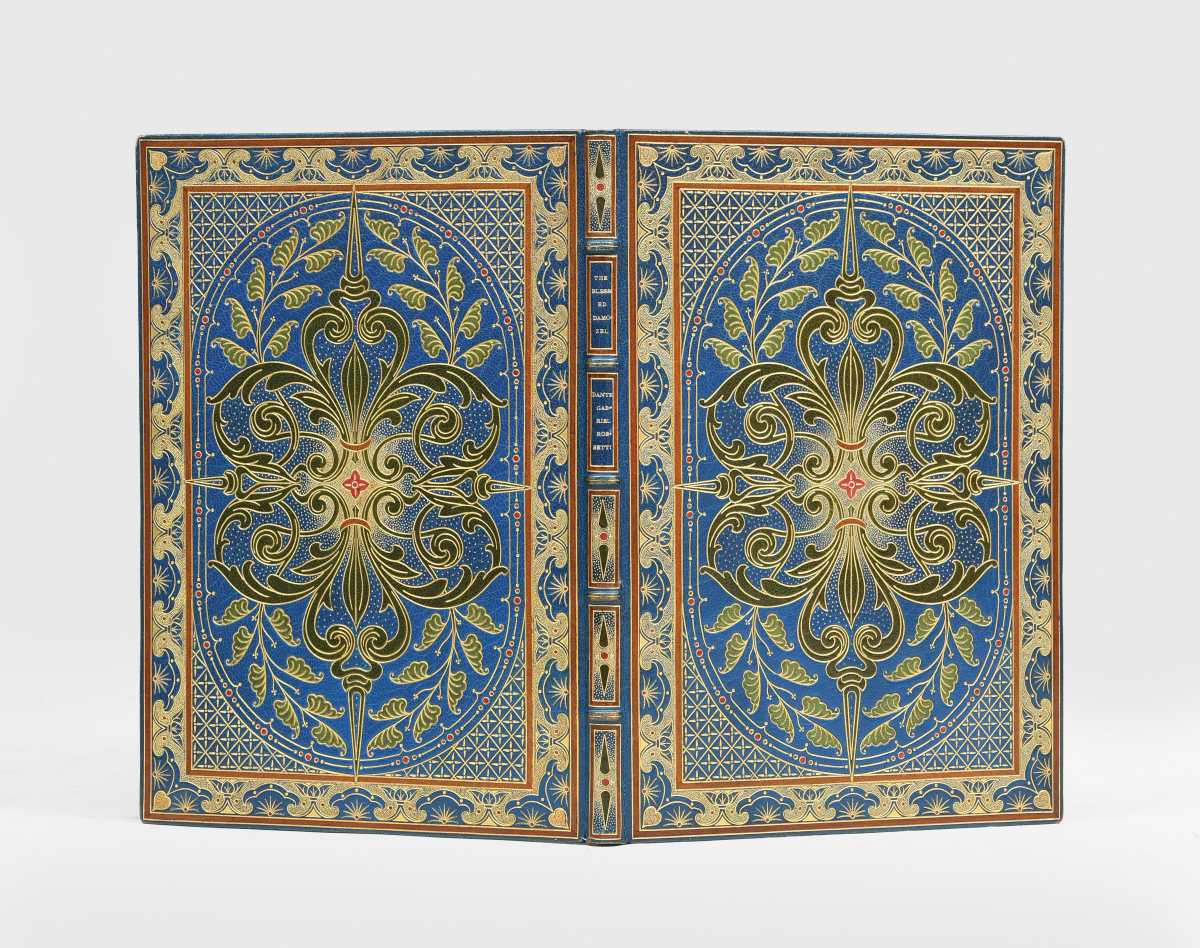
The conversation between literature and craftsmanship deepens with a unique illuminated manuscript of The Blessed Damozel by Dante Gabriel Rossetti, illuminated by Alberto Sangorski between 1910 and 1929. Executed on vellum and bound by Rivière & Son, the manuscript embodies the Arts and Crafts revival at its most reverent. Sangorski’s illumination, paired with a full-page miniature inspired by Rossetti’s own painting, collapses the boundaries between poem, image, and object. The certification leaf confirms that the manuscript “will not be duplicated,” establishing it as a singular expression of Pre-Raphaelite devotion to beauty, labor, and permanence.
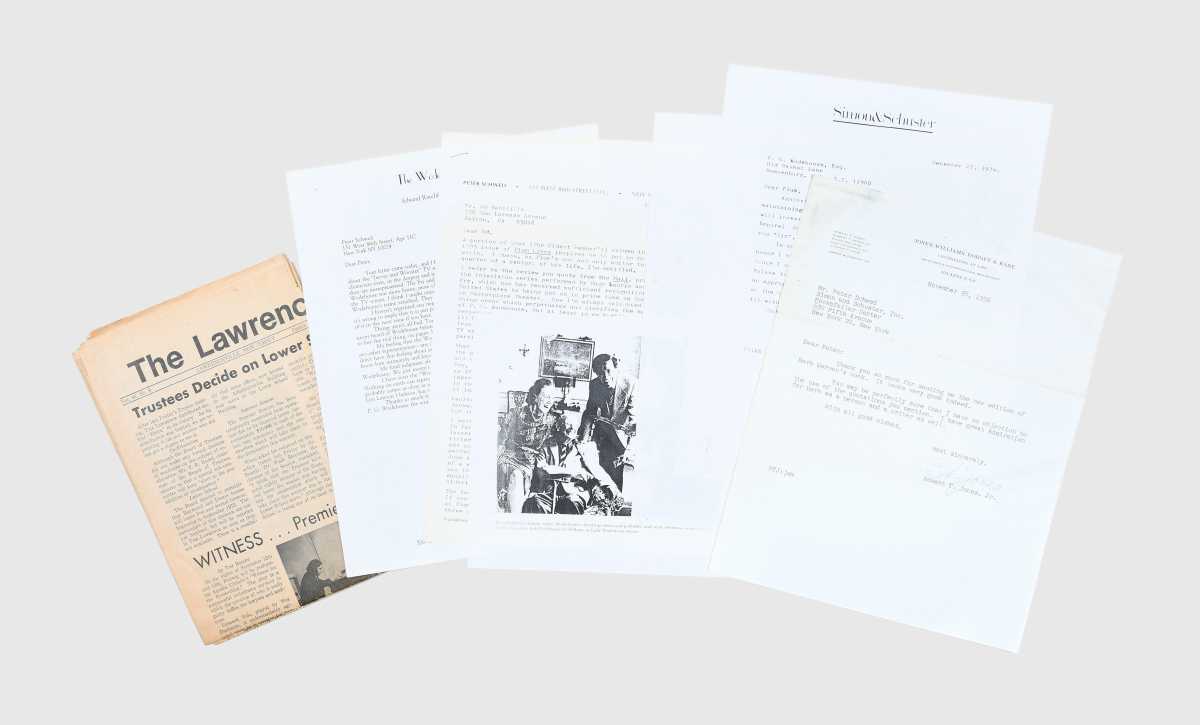
Intellectual intimacy emerges again through an archive of letters by P. G. Wodehouse, addressed to his American editor Peter Schwed between 1956 and 1974. Signed “Plum,” the correspondence dismantles the myth of effortless wit, replacing it with a portrait of sustained craftsmanship. Discussions of royalties, adaptations, creative doubt, and aging reveal the private architecture behind public brilliance. Accompanied by a signed copy of Plum to Peter, the archive affirms that humor, when executed at the highest level, is among the most disciplined literary forms.
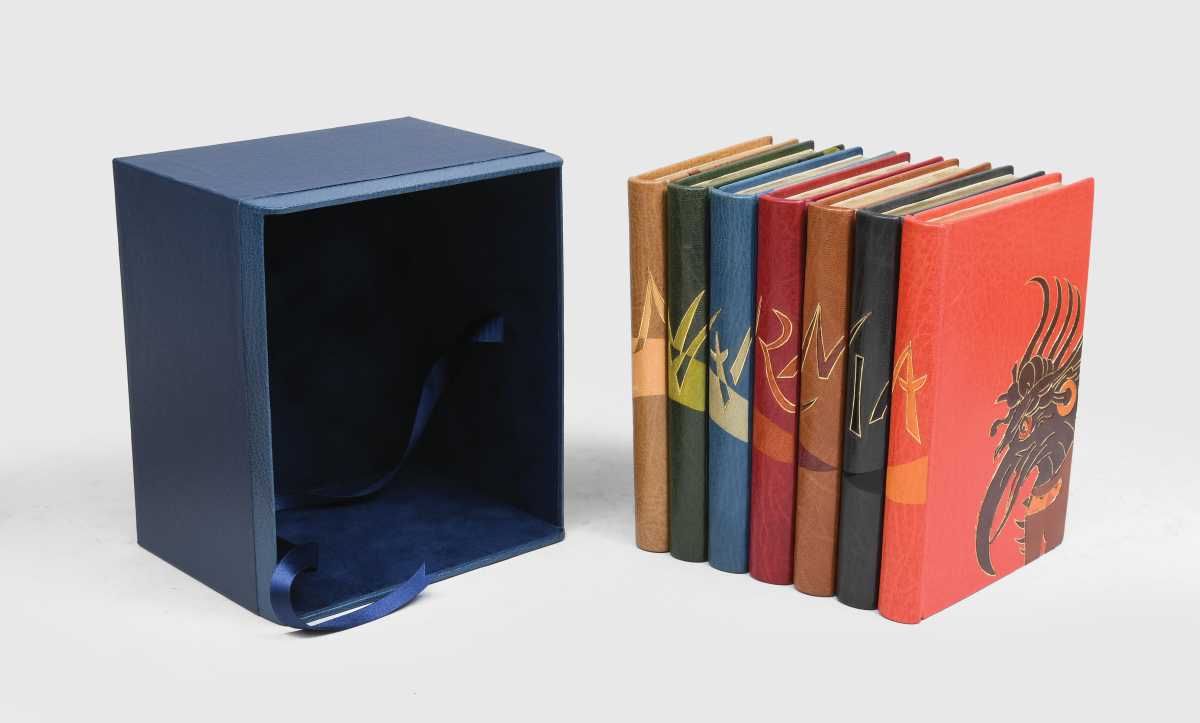
The exhibition’s literary continuum culminates with C. S. Lewis, represented through a complete set of first editions of The Chronicles of Narnia. Each volume has been finely bound in custom morocco by the Chelsea Bindery, its design responding to the themes and moral architecture of the individual texts. Illustrated by Pauline Baynes, the set elevates children’s literature into a sculptural, unified library object, reaffirming fantasy as a serious philosophical mode rather than an escapist diversion.
Placed alongside the centenary of Winnie-the-Pooh, these works clarify a shared proposition. Books are not ancillary to culture. They are its infrastructure. Preservation is not nostalgia. It is an ethical commitment to continuity. Reading is not retreat. It is participation in a lineage of thought that predates us and, if properly stewarded, will outlast us.
The Winter Show, in its most distinguished moments, makes this argument without spectacle. Objects speak. Pages endure. Scholarship asserts itself quietly but irrevocably. One hundred years after a small bear wandered into the canon, the lesson remains intact. Civilization advances not through novelty alone, but through the disciplined preservation of what has already proven its worth.
Thewintershow.org