

A sweeping decision from Suffolk County has exposed what many New Yorkers feel when paying their car insurance bills: fraudsters are exploiting our auto insurance system, and law-abiding drivers are footing the bill.
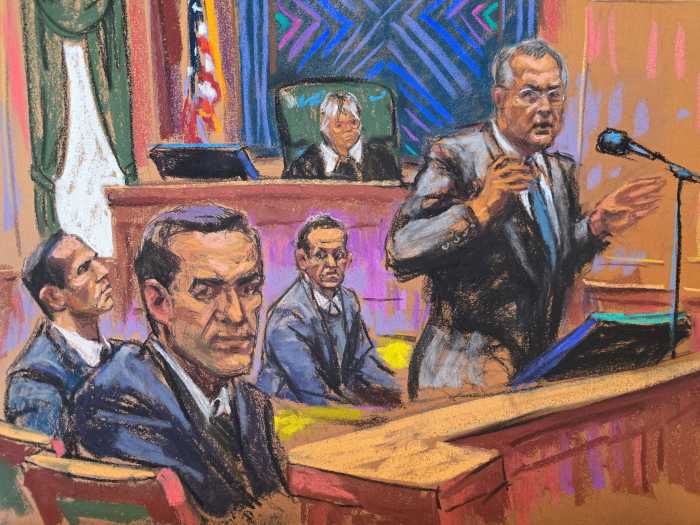
In Integon v. Salazar-Ochoa, Suffolk County Supreme Court Justice Maureen T. Liccione dismissed eight auto accident claims after finding they were part of an organized staged-crash scheme targeting New York’s no-fault insurance system. The court described a coordinated operation involving “junker” vehicles, commercial box trucks, more than 100 medical providers, and a recurring cast of claimants and attorneys. Policies were issued, accidents staged almost immediately, before premiums were even paid, and then canceled for nonpayment.
Liccione’s words resonate statewide: “Insurance fraud is not a victimless crime. Because premium increases partly incorporate fraud costs, insurance fraud hurts all policyholders, not just insurers.”
That is the reality facing New Yorkers who are paying some of the highest insurance costs in the country. The average driver in this state pays roughly $336 per month, or more than $4,000 annually — that’s nearly $1,500 above the national average. Industry estimates suggest that fraud alone adds as much as $300 per driver each year. And the problem keeps getting worse. In 2023, insurers reported over 38,000 suspected auto insurance fraud cases to New York regulators, including over 1,700 staged crashes. In 2025, insurers reported 43,811 suspected incidents of motor vehicle insurance fraud to state regulators — an 80% increase since 2020.
The Suffolk County case reads like a textbook example of how organized fraud rings operate. According to court filings, each of the eight dismissed claims shared striking similarities: three occupants per vehicle, crashes occurring in the same Queens area, and treatment funneled through just two medical offices. Nearly all claimants used the same attorney. More than 100 healthcare providers were named. Vehicles were strategically rear-ended by commercial trucks to maximize potential payouts. The pattern was systemic.
When a single coordinated operation can orchestrate eight staged crashes and involve dozens of medical providers, it underscores how vulnerable New York’s insurance framework has become to increasingly sophisticated fraud networks. Structural reform is required. That is why Gov. Kathy Hochul’s proposed auto insurance reforms deserve serious bipartisan consideration.
The governor’s plan targets the very tactics exposed in the Suffolk County case. It would allow prosecutors to pursue criminal penalties against individuals who organize staged accidents, not just the driver behind the wheel. It would strengthen the state’s ability to disqualify medical providers who participate in fraudulent billing schemes. It would extend the time insurers have to investigate suspected fraud, rather than forcing determinations within an artificially short 30-day window. Taken together, these measures would shift the risk calculus for fraud rings that view New York as fertile ground today.
Beyond fraud enforcement, the proposals address deeper structural issues that fuel excessive litigation and inflated payouts. New York is among a minority of states that allow drivers who are “mostly at fault” for a crash to still recover extensive damages. Comparative negligence reform, or “fair-share liability,” would introduce accountability by limiting full damages to those primarily responsible for an accident and ensuring that defendants less than 50% at fault are responsible only for the damages they caused. This would better align liability with responsibility — a commonsense principle embraced in most states.
Similarly, Hochul proposes tightening New York’s “serious injury” threshold so that non-economic damages are awarded only in cases involving truly serious injuries. This would help prevent temporary conditions from giving rise to unnecessary and protracted litigation, without compromising protections for legitimate accident victims.
Finally, reforms encouraging telematics and safe-driving incentives recognize a simple principle: drivers who follow the rules and operate safely should pay less. Technology now makes that possible in ways that were unthinkable decades ago.
There is also a broader consumer protection safeguard built into the governor’s approach. New York’s Excess Profit Law requires insurers to return profits to policyholders if earnings exceed statutory thresholds. If fraud reduction and targeted liability reforms lower system costs, regulators can ensure that savings are passed through to drivers, and not retained as windfall profits to insurance companies.
Whether one approaches this as a consumer protection matter or a law enforcement priority, the conclusion is the same: organized fraud rings and outdated liability standards drive up premiums for everyone.
This issue highlights something increasingly rare in today’s political climate: broad bipartisan agreement. A new statewide survey from Beacon Research found that New York voters overwhelmingly support reforming this broken system: 86% of voters support the governor’s plan to lower auto insurance premiums. And support for reform cuts across party lines. More than 80 percent of Democrats, Republicans, and independents back changes to the insurance system, with similarly strong support across every region in the state. In an era defined by polarization, this level of consensus is striking, and lawmakers ought to listen.
The time for a comprehensive reset is now. By uniting across party lines to crack down on staged accidents, tighten liability standards, and modernize no-fault rules, state and local leaders can reduce the hidden fraud tax burdening New Yorkers.
Insurance fraud is not a victimless crime. The victims are every family and business owner who opens their renewal notice and wonders why the premium keeps going up. The Suffolk County court has provided the evidence. Lawmakers must provide the solution.
Matthew Daus is the transportation technology chair for the University Transportation Research Center, Region 2 (NY/NJ) at the City University of New York