

Jacqueline Emery, associate professor and chair of SUNY Old Westbury’s English department, and David Lei, a real estate investor, spent New Year’s Eve not in Times Square, a restaurant, or home, but in Central Park equipped with night vision.
A couple who also work as professional nature photographers, they dressed warmly to find and photograph Romeo and Juliet, a couple of coyotes who live in Central Park. Hunkered down with cameras, they found the coyotes, but weren’t alone for long.
“Suddenly, a barn owl swooped in. They looked at the barn owl. The barn owl looked at them,” Emery said. “The owl hissed at them as they stared at her.”
The owl, a formidable creature with talons, seemed to be telling them this park was her territory, but, of course, Central Park isn’t exactly any creature’s private property. And this was a busy night in the park, with runners about to do their midnight run and fireworks about to proclaim freedom.
“The coyotes booked it as fast as we’ve ever seen them run,” Emery said of their reaction to fireworks, noting a few Canadian geese fluttered their wings as the coyotes vanished back into the Central Park dark. “They don’t like fireworks.”
As Valentine’s Day approaches, New York City may have many so-called Romeos and Juliets, but the couple of coyotes in Central Park may be the most famous and Emery and Lei are the couple who have best documented them.
“Romeo and Juliet often sit at the Delacorte Theater, home to Shakespeare in the Park, at night,” said Lei. “That’s why we started calling them Romeo and Juliet.”
He joked about how “they scored these seats without waiting in line” as he showed a picture at that theater at a recent lecture they and Times reporter Dodai Stewart gave at The Explorers Club in Manhattan.
“Jackie’s very good at finding them,” Lei said. “We only see a portion of what they do. Our sense is they’re sticking to the park. There’s enough stuff for them to check out and sniff and enough food. They have plenty of things to occupy them.”
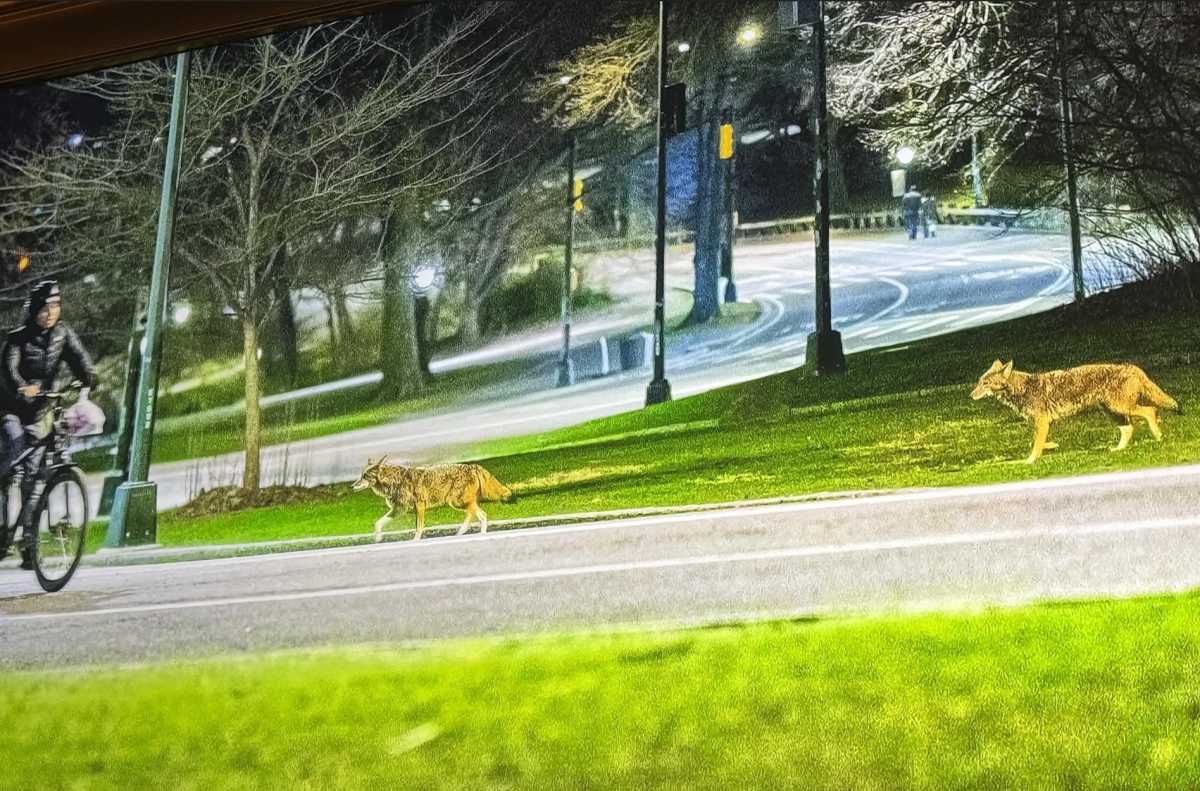
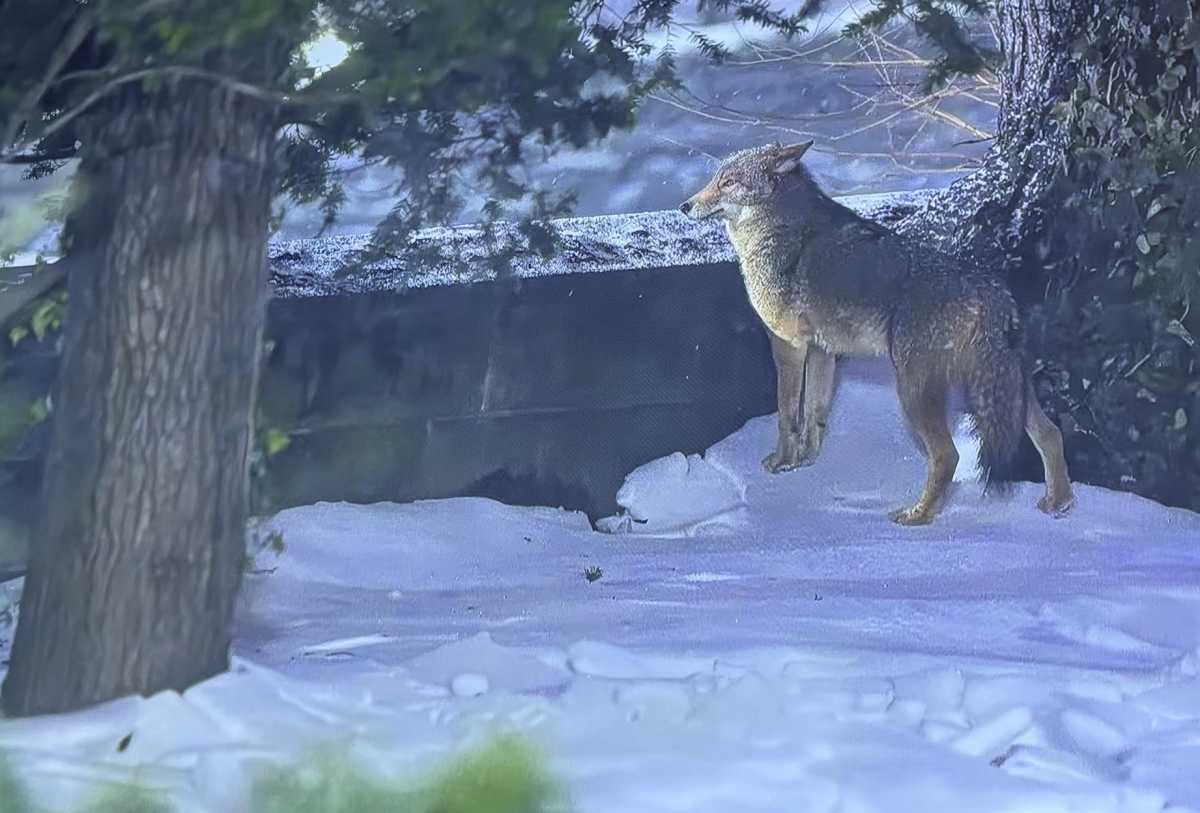
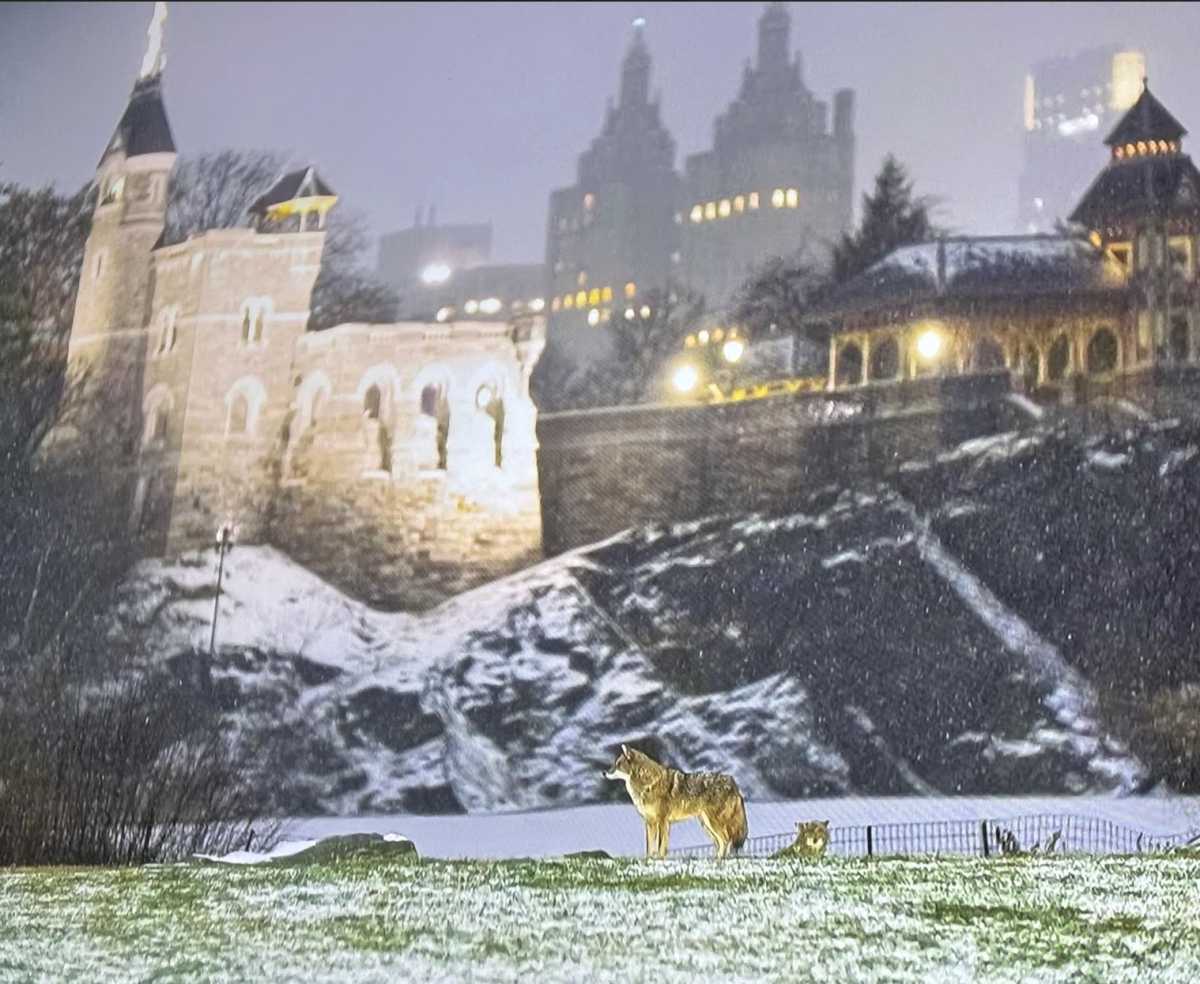
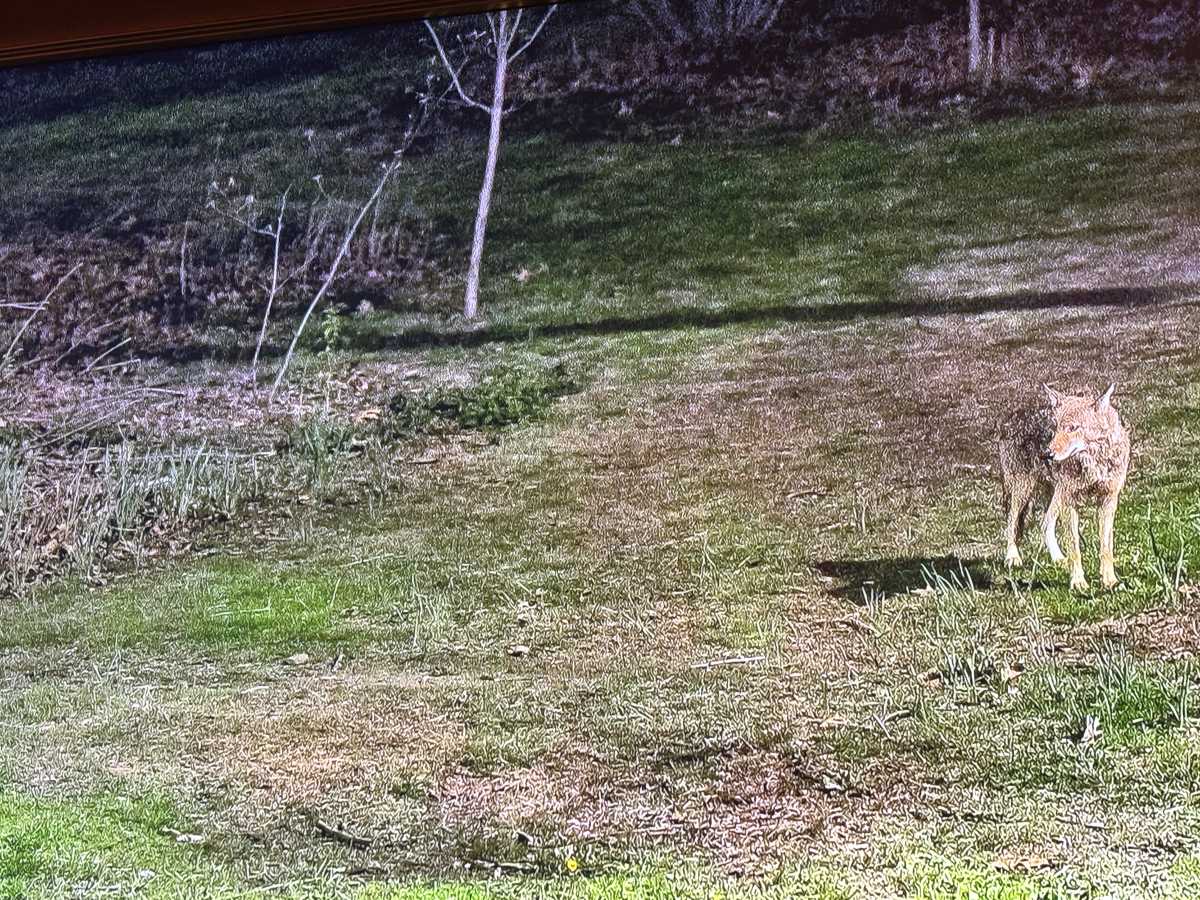
They showed pictures and brief videos of the somewhat canine-looking Central Park coyote couple on bridges, playing, on paths, crossing grass and ice, surrounded by snow and in every season in a kind of coyote calendar.
“There have been some really cool nights where we can follow the whole length of the park,” Emery said of Romeo and Juliet. “They follow the same routes. They pick from a playbook. We’ve accumulated a little bit of that knowledge. That’s how we find them.”
Coyotes in Central Park
Long before Romeo and Juliet made a splash in Manhattan, Coyotes were a species in western and central North America who spread through the continent, sometimes mating with eastern wolves, Lei said.
They reached Westchester and the Bronx by the 1990s and soon began crossing into Manhattan and now also exist (in a smattering ) in Nassau and Suffolk County as well as in some parks in the Bronx, Queens and Brooklyn.
Juliet and Romeo are far from the first coyotes to cross into Central Park, where they found some celebrity.
“Otis” was spotted and captured in Central Park in April 1999 and eventually moved to the Queens Zoo. Hal was spotted in 2006, shot with a tranquilizer gun, and tagged before dying while being prepared for release into the Putnam County woods.
“There were helicopters and police vehicles,” Chris Nagy, co-founder of the Gotham Coyote Project, said. “They chased it down and caught it and it eventually died.”
There used to be stories about coyotes “lurking” and coyotes spotted in Central Park could be captured, relocated or placed in zoos, none, coyote experts say, of which is ideal.
By around 2010, Lei said, “there was more evidence around the country that people could co-exist with coyotes in urban environments.”
New York City policy, he said, changed in 2016 as coyotes were allowed to remain in parks, where Nagy estimates there are around 20, including a bevy in Bronx parks. “That’s been a big change,” Nagy said. “The tolerance factor, the human acceptance, has by and large gone up everywhere.”
Best kept secret
Romeo is believed to have arrived in Central Park in 2019, followed by Juliet in 2023, but for a long time, Emery and Lei photographed but didn’t seek to publicize what would become Central Park’s most famous couple.
“Our initial response was we’re keeping this a secret, but we noticed that people would call the cops. You could see reports,” Lei said. “It worried us, that nobody was advocating for them. They were one misunderstood situation, potentially, away from being removed.”
The coyotes had been in the park for a while before the two photographers worked with The New York Times Metro reporter Dodai Stewart on an article, potentially blowing the coyotes’ cover.
“I felt they’ve been there a while. I can write about it. I won’t be blowing up their spot,” Stewart said. “I knew they were there for months, before I decided to write about it.”
Nagy said it’s better to inform people of coyotes in Central Park, so they won’t be ignorant and potentially afraid of their new neighbors. “Eventually, everybody kind of knows,” he said. “You have to find out where the point is and then get ahead of it.”
Nagy said coyotes’ ability to co-exist is a skill, although they capture geese and squirrels. “Coyotes lived underfoot for centuries with humans, bears and cougars,” Nagy added. “Their job was to be that little guy that could scamper out of the way.”
It’s important for people to understand that coyotes are not violent, but people shouldn’t treat them like domesticated animals.
“The main thing across the city that we preach is appreciate them at a distance,” Nagy said. “They’re cool, but they’re not pets.”
Nature at Night
If Lei and Emery have wonderful photographs, it can be misleading. Most pictures, they said, were taken with night vision, even though they look bright as day.
In 2021, the couple started using night vision while owl watching in Central Park, getting equipment that would come in handy with coyotes.
“We’ve always been interested in seeing our subjects when they’re aware and active,” Lei said. “With owls, we wanted to see them hunting, doing other interesting things.”
They photographed Flaco, a Eurasian eagle owl who escaped the Central Park Zoo and survived about a year, self-publishing a book titled “Finding Flaco.”
They then used night vision with coyotes, although birds remain still, allowing large lenses and tripods.
“That’s OK for birds, but for coyotes it doesn’t make sense,” Lei said of tripods. “They don’t wait for you to set up your camera and tripod.”
Lei said coyotes are “highly nocturnal” in bed by dawn and asleep until dusk, making night vision crucial.
“They don’t want to get active until later, until the park empties out,” Lei said. “Once they get going, their first order of business is to patrol the park and mark their territory.”
They show photographs of the coyotes resting in the Ramble, on a soft pillow of wood chips, swimming, perched on rocks facing the skyline, and trotting past a bronze statue by Frederick Roth of an Alaskan husky and sled dog Balto.
The coyotes in a video share a pork chop sometimes “begrudgingly,” taking turns, and bark repeatedly in a kind of duet as a siren blares.
“They successfully chase the sirens away every time,” Lei said. “From their perspective, they’re defending their territory every single night.”
Future family
There has been speculation as to why the coyote couple hasn’t bred. Lei said they don’t know their ages, although coyotes can have babies late in life.
“We wonder ourselves,” Lei said. “They seem happy without pups. We would certainly love to see it.”
Emery and Lei, last year, during the coyotes’ second year together in the park, joined them on Valentine’s Day as Lei said the coyotes “went at it for 30 minutes.”
“We were very hopeful, but it just didn’t happen for whatever reason,” Lei said. “There are places where maybe it’s possible.”
Nagy believes there are 20,000 to 30,000 coyotes in the United States, including many in the East, if only dozens in New York, including parks with one, a couple or a family. Some migrated to Nassau and even Suffolk County, where they have been tracked by standing cameras.
“We don’t think a thousand years ago or before everything was cleared, there were coyotes. There were eastern wolves here, but not coyotes,” Nagy said. “We have made this environment where anybody bigger than them can’t really hack it, but they can.”
They need a private area in Central Park where they feel comfortable building a den for the babies.
“Get people to stay out of areas where they might den. That’s another potential reason,” Lei said. “Or maybe there’s a health-related reason.”
Emery and Lei recently tracked them as they patrolled the length of the park at night, with the photographers wondering whether they will have offspring.
“Maybe this year will be the year. That would bring a lot of implications,” Lei said. “It’s important to educate people. Now they’re there. So people want them to remain.”
They believe letting the public know more about the couple was the right choice. There had been police calls before the article, but they don’t believe there have been any since.
“It would be very meaningful to have a successful den in a place like Central Park,” Nagy said. Finally, civilized people can figure out how to live around other creatures of the world. It would be very symbolic and beautiful if we could manage it.”
If the coyotes had babies in Central Park, police might have to escort people away from den sites and suspend off-leash rules in certain areas.
“At some point, it would probably be necessary to disclose to the public. You can’t have your dog off leash here, because the coyotes have pups,” Lei said. “I don’t know how that would work. If we could pull it off in terms of what we can control, as far as co-existence goes, that would be a beautiful thing.”