


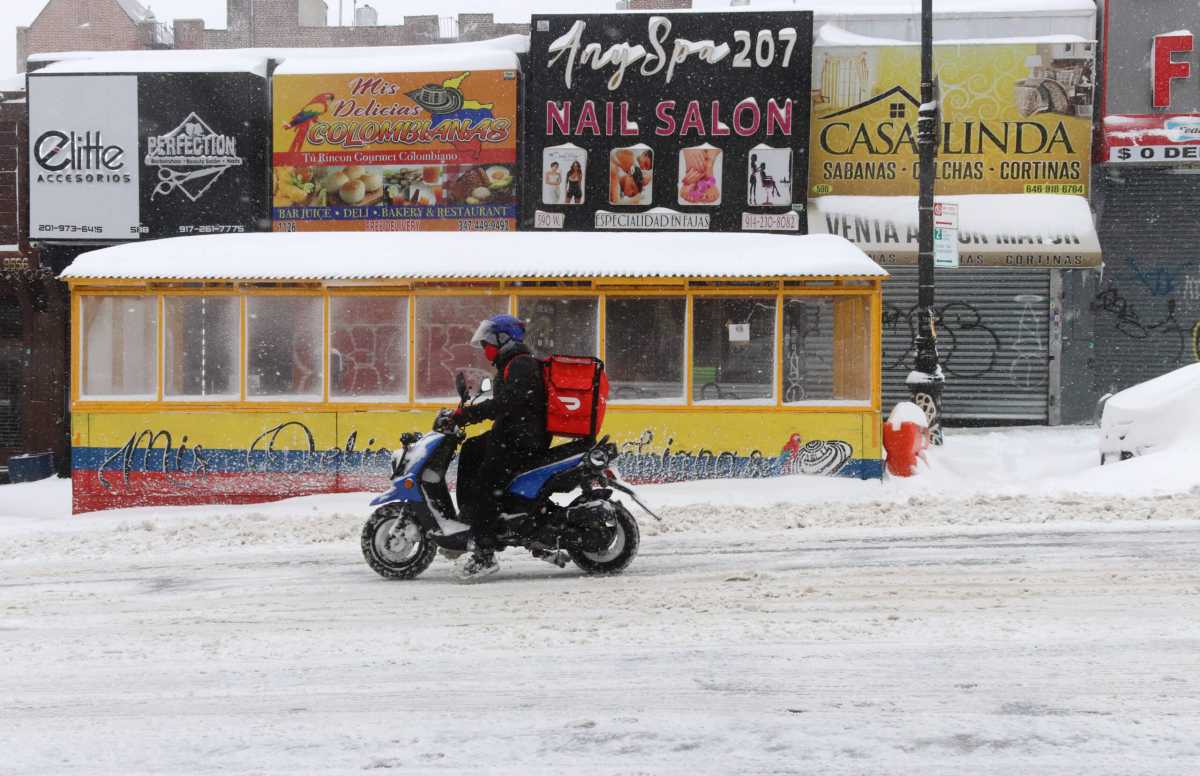
Delivery apps DoorDash and Uber failed to get a federal judge to strike down two local laws that govern tipping on their platforms, set to take effect Monday, while a separate challenge from Instacart focusing on the city’s minimum wage law flopped in the same Manhattan court.
U.S. District Judge George B. Daniels of the Southern District of New York on Friday denied the companies’ motion for a preliminary injunction of Local Laws 107 and 108, which, respectively, require platforms to prompt customers with the option to pay at least a 10% tip, and to do so before or at the same time that a customer places an order.
The companies didn’t make a plausible case that the laws, which were enacted in August 2025, infringe upon their First Amendment rights, Daniels found.
“The government may regulate conduct even where that conduct has expressive components. To the extent the contested regulations implicate speech more than incidentally, however, plaintiffs have not at a minimum shown a likelihood of success on the proposition that the tipping laws compel non-commercial speech subject to strict scrutiny,” he wrote in the 13-page order.
Neither did the plaintiffs establish irreparable harm, Daniels said, dashing an argument that customers may succumb to “tipping fatigue.”
“Plaintiffs concede that tipping delivery workers is not a new development in their industry,” Daniels wrote. “The tipping laws, therefore, are not likely to contribute to the fatigue and consequent alleged loss of reputation and goodwill.”
DoorDash Inc. is represented by the firm Gibson, Dunn & Crutcher, while Hecker Fink LLP represents Uber Technologies Inc. Attorneys for the plaintiffs did not immediately return requests for comment.
The commissioner of the Department of Consumer and Worker Protection, Samuel Levine, said in a press statement that the ruling “affirms that multi-billion-dollar companies need to comply with laws that protect workers and consumers.”
It was after the city passed minimum wage laws for delivery workers in December 2023 that companies like DoorDash and Uber changed their platforms to prompt customers to leave a tip after their order was already complete, instead of before checkout.
That shift meant workers lost out on $554 million in tips over the next year and a quarter, according to studies by the city’s Department of Consumer and Worker Protection.
“Those days are over,” Levine said. “We look forward to enforcing Local Laws 107 and 108 to ensure that workers get paid, and consumers have the option to tip freely.”
The rules are set to go into effect on Monday.
In a separate ruling Friday by U.S. District Judge John Koeltl, Instacart’s parent company, lost its own challenge to local delivery worker wage laws. The plaintiff, Maplebear Inc., wanted to block five local laws, including the tipping laws and the minimum wage law, as being preempted by federal and state law, and also in violation of the dormant commerce clause of the U.S. Constitution.
Koetl nixed the challenge in a 35-page order.
Instacart blasted the order in a statement Friday. The company has taken aim at the minimum wage law, Local Law 124, in particular.
“Today’s decision represents a step in the wrong direction for New York workers and families. This deeply flawed grocery delivery law oversteps federal and state authority and it will hurt shoppers, customers, and local businesses across all five boroughs. We believe the court misunderstood the applicable law and facts, which do not permit the city to impose these onerous and inflexible regulations,” a spokesperson said.
The company said it plans to appeal.
Levine meanwhile said Koeltl’s ruling “affirms that grocery delivery workers are guaranteed the same minimum pay rate and tipping standards as restaurant delivery workers.”
Maplebear Inc. is represented by the firms Littler Mendelson PC and Sidley Austin LLP.