


The court system is heading into budget season with a $3.2 billion request focused on staffing up its workforce and expanding legal services.
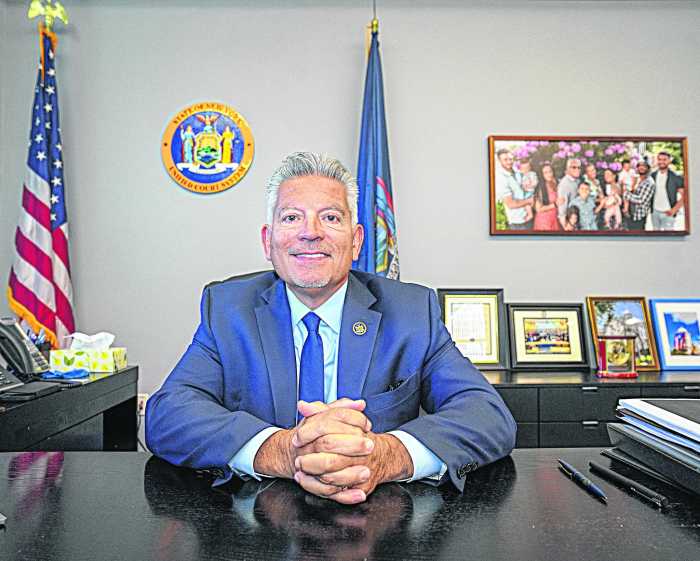
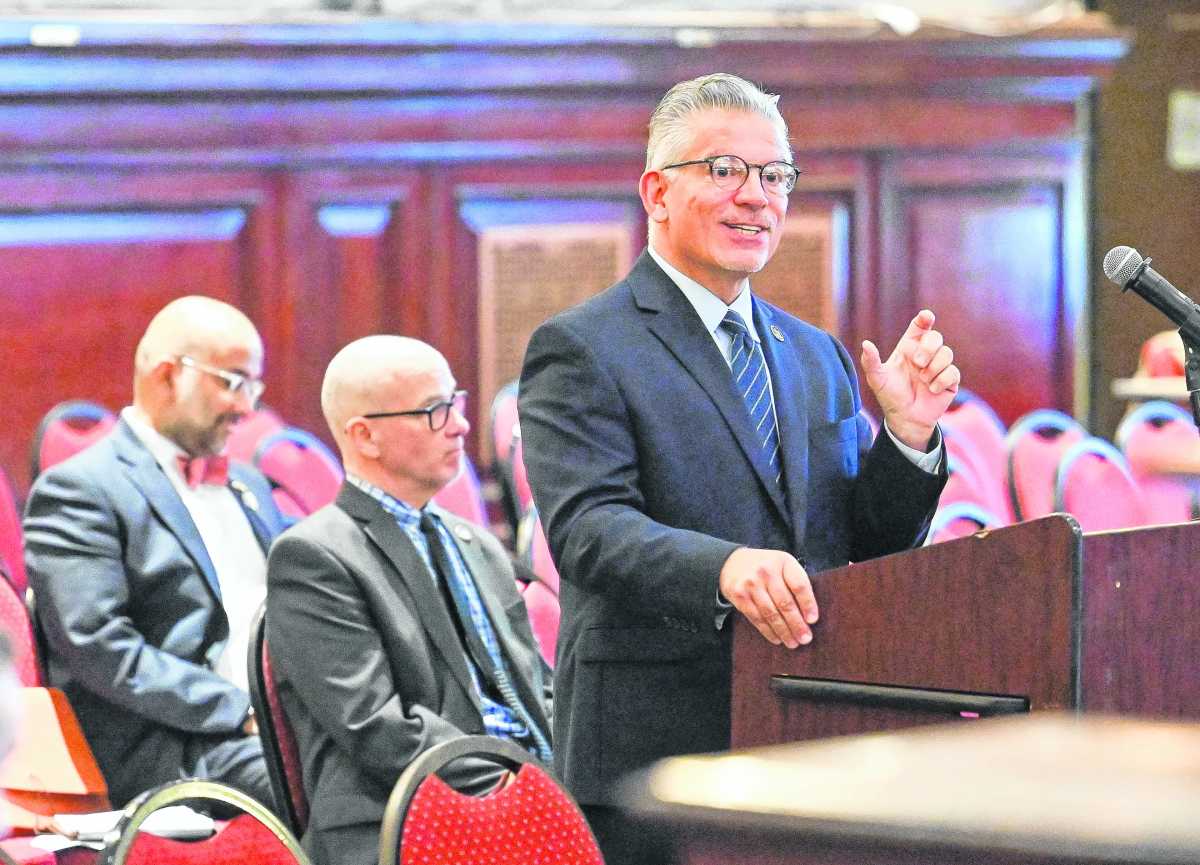
At the beginning of December, Chief Administrative Judge Joseph Zayas formally submitted the state court system’s budget request for fiscal year 2027, which included a nearly $200 million budget bump — a 6.7% increase from the previous year.
Three quarters of that funding — $150 million — would go to existing systems and programs, including a scheduled addition of 15 judicial positions, new technology and a 2% salary increase for all judges.
The remaining $49 million would fund civil legal services and various family court initiatives like mediation services, expanded peer advocacy, mental health pilots and peer advocacy and court navigators programs.
“The additional funding will be directed to help ensure that low-income New Yorkers who are most vulnerable have the access to justice that they deserve and to assist families and court-involved individuals struggling with mental health,” the budget request document says.
Zayas will testify before the Legislature on Feb. 12 about the budget request. Chief Judge Rowan Wilson will hold his 2026 State of the Judiciary earlier that week on Feb. 9.
In New York City, a lack of judges in the criminal courts and Supreme Court, Criminal Term, as well as a lack of non-judicial staffing, has caused a backlog of trials, according to the New York City Bar Association. Over the past year the judicial administration has struggled to attract enough court officers, interpreters or court reporters for the courts to run efficiently.
During the past two budget cycles the judiciary has undertaken an effort to stem understaffing both for judgeships and other positions. The increase in judicial salaries was set out by the 2023 Commission on Legislative, Judicial and Executive Compensation, which concluded that making state Supreme Court judge salaries comparable to U.S. District Court judges’ would improve retention and attraction of talent.
The court is asking for a $28.8 million increase in contractor services like per diem positions for court reporters and language interpreters to ease understaffing. AmNew York Law reported how from 2019 to 2025, the state court system lost 66 staff interpreters in New York City, a 27% decrease in interpreter staffing; and 69 interpreters statewide, a 23% decrease.
Court reporters, the stenographers who are legally required to transcribe all court proceedings, are struggling with their own disruptions in the industry.
“In general, we have more reporters retiring than we do graduating and getting into the field,” Denée Vadell, the president of the New York State Court Reporters Association told amNY last year.
The requested increase of $25 million for civil legal services will bring the total budget for the program to $179.5 million, and support recruitment and retention for these providers. The funding, which will be dispersed across the state, includes a 3% cost-of-living adjustment for staff.
The budget request also addresses mental health and substance abuse programming. It proposed funding for an assisted outpatient treatment pilot, an involuntary civil court process that uses a court order to mandate behavioral health treatment for adults with severe mental illness or substance use disorder.
The Judicial Task Force on Mental Illness recommended the pilot program, which is controversial in criminal justice circles.
“These are cases where the people aren’t doing well. So if you could take some of the lessons that have been learned in mental health courts of the criminal realm, we have an actively involved judge that encourages the individual to stay on medication, to stay in treatment,” task force’s co-chair, state Supreme Court Justice Matthew D’Emic, told amNew York Law.
Another new funding request calls for $6.1 million to create a statewide, lab-based drug testing program that would make drug testing more accurate and speedy as the court monitors a person’s recovery.
The increase in the court’s ask for mental health programs is reflective of Wilson’s mandate to expand problem-solving courts that minimize prison time in favor of community- and treatment-based solutions. The overall problem-solving courts fund budget request is $33.2 million, an increase of $10 million over the current year.