


Despite playing an essential role in our judicial system, New York City’s county clerks are mostly unfamiliar to New Yorkers.
Without them, there are no jury trials or enforcement of supreme court verdicts, and yet they often operate in the shadows of the court system.
With this in mind, for over the past year amNewYork Law took a look behind the stacks of parchment and old leatherbound books of court filings to see how these offices are modernizing how millions of New Yorkers interact with the government.
From the tech upgrades updates in Manhattan and Brooklyn to a “no-fine” policy for jury duty absences in the Bronx, the city’s clerks are balancing centuries of legal tradition with new approaches to serving the people of New York City.
Each borough of New York has a county clerk, who serves as clerk of the Supreme Court, Commissioner of Jurors, Clerk of the County and in the case of Staten Island as the County Register.
“You can go and have a jury find in your favor and render a verdict of $100 million. You’ll never see a dime of it until the county clerk enters the judgment,” Manhattan County Clerk Milton Tingling told amNewYork Law about his role as the custodian of Supreme Court records.
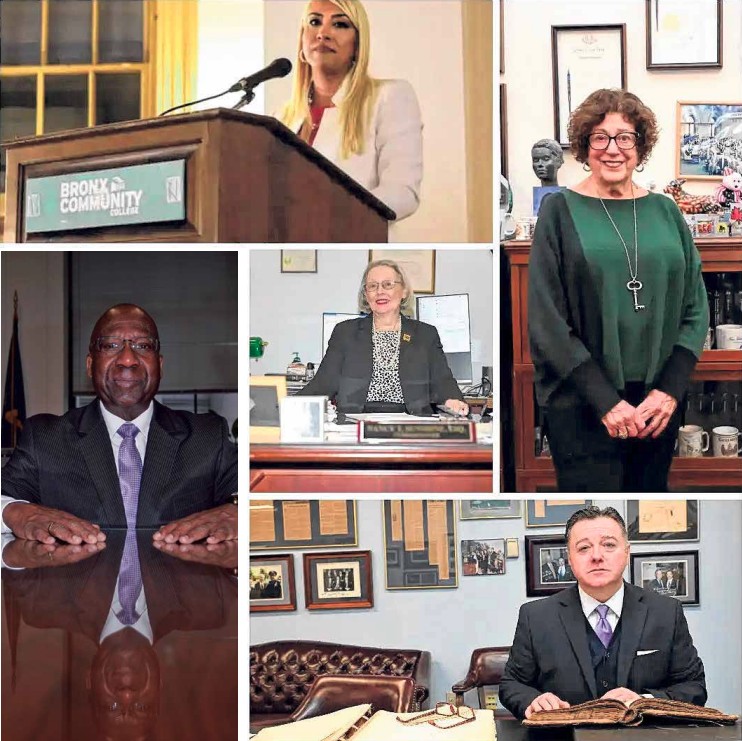
The city’s other county clerks include Nancy Sunshine in Brooklyn, Audrey Pheffer in Queens, Ischia Bravo in the Bronx and Stephen Fiala in Staten Island. While their statutory duties are largely similar, each clerk has brought a distinct philosophy to their respective courthouse.
Among the new practices that this group has undertaken, one policy of Bravo’s, a former community activist who took the job in 2022, stood out for its boldness. She declared not to issue any fines to Bronx-ites who don’t show up for jury duty.
As commissioner of jurors, county clerks manage and oversee jury selection for all courts within their counties, including Supreme Court, Civil Court and Criminal Court, and they lead grand jury selection for criminal cases.
In other counties, residents pay a fine of up to $250 under state law for not responding to jury duty as a way to ensure that there are enough people who show up for the jury pool. Bravo, the first female Latina to serve as the borough’s county clerk, told am New York Law, “I don’t think that we should penalize folks for lack of understanding and lack of civic engagement.”
Bravo decided that she would rely on community outreach to attract jurors. In that decision, Bravo created a test about whether educating Bronx residents on their jury duty obligation would be more effective than a penalty.
Jury responsibilities were top of mind for several county clerks. Tingling, who came from a background as a Supreme Court judge before taking the mantle of county clerk has undertaken some of the most highly publicized jury trials in the country in the past few years.
“We’ve had the Trump trial, we had the Weinstein trial, we have the [Daniel] Penny trial,” Tingling told am New York Law.
Another cornerstone of the office is the responsibility to record the final dispositions of cases, so that they can become enforceable. So when the New York court system began its transition to e-filing in 2015, Tingling followed its steps in transforming his office to the digital age of e-filing. He, like other county clerks, talked about the ongoing process of digitizing the court’s centuries old historical cases.
In the musty upper floors of the state Surrogate’s Court building next to City Hall, the Division of Old Records, which is under Tingling’s purview, archives an indictment against Aaron Burr for dueling against Alexander Hamilton, files from the trial of mafioso Charles “Lucky” Luciano for running a prostitution racket, and a record of the name change of Tin Pan alley songwriter Irving Berlin.
“Every day is fascinating. There are challenges. I get sued, people curse me, but it’s rejuvenated me. It really has. I still love the law,” Tingling said about his job’s challenges.
Fiala, who has a unique position in the city as the official who also maintains the public record of property ownership in his county, said that it’s added an extra level of importance to his record-keeping duties. For this reason, Fiala said his goal is to digitize every historical record held by his office.
“If you transfer a piece of your property, or you consolidate, or you modify a mortgage, or you do an extension or an easement, all of these legal issues have very significant collateral consequences to you and your heirs,” he said. “The only thing that you have as a safeguard is a public record that tells the world. Because where are you gonna wind up? You’re probably gonna wind up in court against somebody saying, ‘No, that corner is mine.’”
Pheffer and Sunshine both said that their focus is on serving the human beings that come into their office for non-litigation documents like new business or religious institution certifications.
In Queens, Peffer has transformed the look of her office into a more accessible comfortable space for residents. She installed long counters lined with computer monitors to invite visitors to search the clerk’s archive at their own pace and swapped fluorescent overhead lights for warm yellow bulbs.
“The beauty of this job is that every day you are here to make life better for those who have business in the county. That’s really what makes it so rewarding,” Sunshine said.