


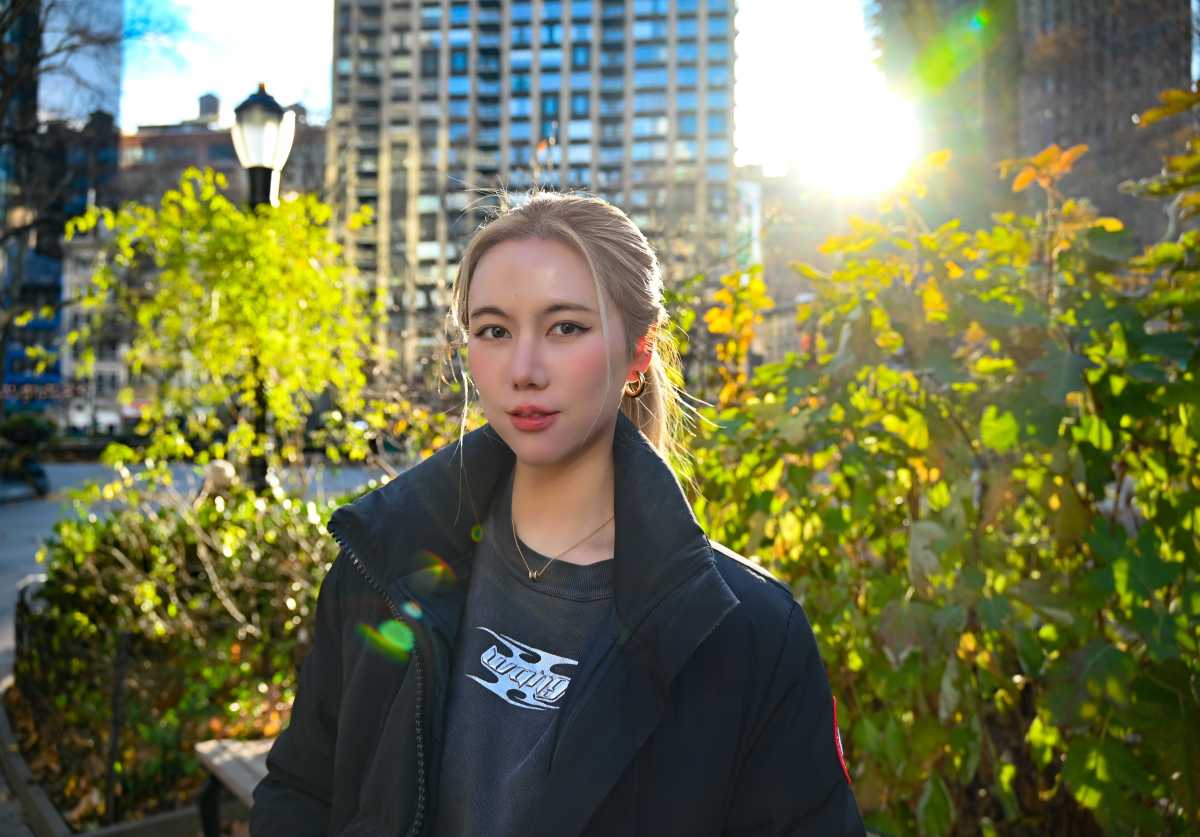
Cherriana Wang came to America alone as a teenager and now uses her role at Sony Music to help Asian artists break into spaces where they have historically been underrepresented. From crossing borders to building pathways, Wang works to amplify Asian voices and create lasting industry access.
Wang was on the edge of 17 when she arrived at Nashville International Airport with her entire life packed into three suitcases and a carry-on. She had traveled all the way from Zhejiang, China, chasing a dream that would ultimately shape her future: studying music business at Belmont University.
Wang now 26 years old and an Artist Development Manager at Sony Music Entertainment, reflects on that memory, stating that it may have laid the foundation for the strength and resilience to reach her current position.
“Some people didn’t know what I endured during that time,” Wang said. “But I still vividly remember how hard that first year in Nashville was. The first two years were the hardest, but they built my resilience and perspective.”
The entertainment industry is not for the faint of heart. Known for its competitiveness and limited representation, Wang still wanted to leap headfirst into her American dream, focused on making a change.
“When I first went to Belmont, I was the only Chinese student on the entire campus,” she recalled. “During orientation, everyone was there with their parents. I was jet-lagged, exhausted, and had just come straight from the airport with three huge suitcases.”
She remembers watching parents help their children settle into dorm rooms while she stood alone.
“I think I blocked out parts of that era because it was so difficult,” Wang said. “When you’re young, you don’t want to sit with that kind of hardship, but I remember feeling very alone.”
Songwriting is “natural version” of Cherriana Wang
Despite the isolation, music had always been at the core of Wang’s identity. Since the age of four, melodies have come naturally to her, and she has gravitated toward country music, a genre far removed from her upbringing in China.
“There was no exact turning point,” she said. “Songwriting was simply the most natural version of me.”
Wang began studying piano early on and reached the highest level by age 12. She then taught herself guitar, which led to composing her own music. At 17, she won a provincial championship in China and was signed by a management team and record label. However, knowing her ultimate goal was to pursue songwriting and study American country music, she signed only a temporary contract while planning her move abroad.
Her parents, however, were hesitant. They viewed music as a hobby rather than a viable career and insisted that any education they supported had to be “realistic.”
“My love has always been cultural music,” Wang explained. “Traditional Chinese folk music, Mongolian music, American country, Celtic music. That connection to culture is what drives me.”
Determined, Wang traveled to Nashville, where she could immerse herself honky-tonk music as the only Asian woman in many of those spaces, all while studying at Belmont.
After gaining a foundation in the music business, Wang sought deeper insight into the industry’s inner workings. She applied to NYU’s Steinhardt School for Music Business program, where she developed a stronger understanding of the mechanics behind artist development and marketing. During that time, she secured an internship with Sony Music.
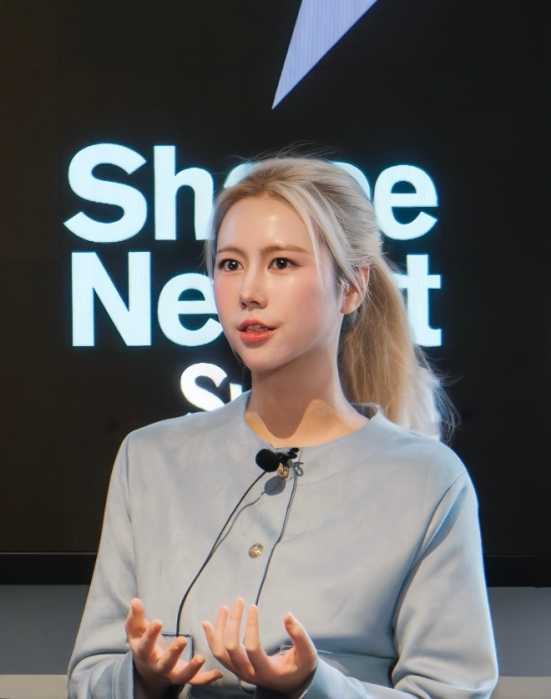
Over three semesters, Wang proved her capabilities, earning a full-time position and learning directly from mentors who shaped her professional outlook.
“Real wisdom comes from talking to people who have more experience than you,” she said.
At Sony, Wang became deeply involved in advancing Asian artists in Western markets, a mission that aligned with her personal journey. She became the go-to person that she wished she had when she arrived in America, eager to songwrite.
“I want to help Asian artists be realistic about global success,” Wang said. “Representation has improved so much recently, especially this year, but there’s still so much potential. There’s so much more ahead.”
She added, “I want to help our community reach the next level, not just creatively, but in the workplace too. More diversity for Asian professionals matters.”
Today, Wang is one of the youngest strategic leads connecting Sony Music’s Asia and Middle East headquarters with the U.S. market. Her work has helped increase visibility, consumption, and cultural presence of Asian pop across North America. She has been instrumental in building pipelines that introduce international artists to the global stage through brand partnerships, marketing strategies, and cross-industry collaborations aligned with A&R and artist management.
“I’m always hungry for knowledge,” Wang said. “I seek out people who are older, wiser, and who share similar backgrounds. That insight is something you don’t usually gain at this age.”
Under 30, Wang has overseen multifaceted artist development, marketing, and branding campaigns for Asian artists such as I.M (Monsta X), cosmosy, KATIE, SKAIISYOURGOD, Sury Su, and LBI’s viral hit “Jumping Machine.” She has led major U.S. initiatives, including cosmosy’s debut U.S. promotion tour and live stage debut, the first Sony Music × Spotify showcase stage, the “Jumping Machine” U.S. digital campaign, and KATIE’s debut U.S. promotion tour and performance.
From three suitcases at an airport to shaping the future of global music, Wang’s journey is a testament to resilience, cultural pride, and the evolving American dream.