


Thursday, March 5, marked the 64th day of Zohran Mamdani’s term as mayor. amNewYork is following Mamdani around his first 100 days in office. We are closely tracking his progress on fulfilling campaign promises, appointing key leaders to government posts, and managing the city’s finances. Here’s a summary of what the mayor did today.
Mayor Zohran Mamdani’s push for state approval of new taxes on wealthy residents and corporations to help close New York City’s budget gap seems to be gaining support among Albany lawmakers, even though Gov. Kathy Hochul has repeatedly said she would never support it.
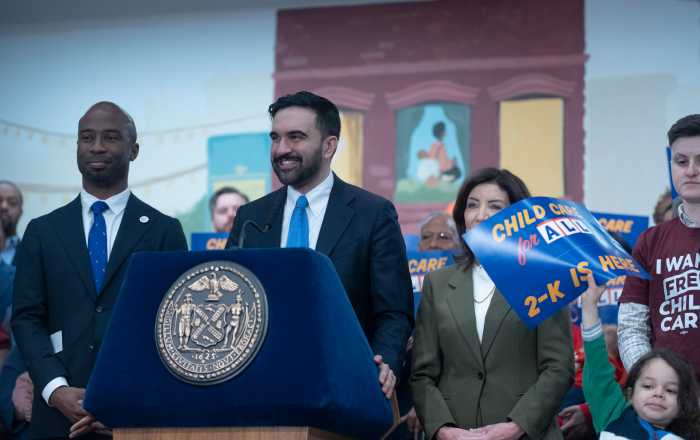
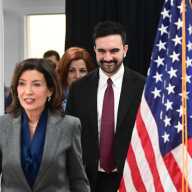
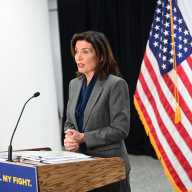
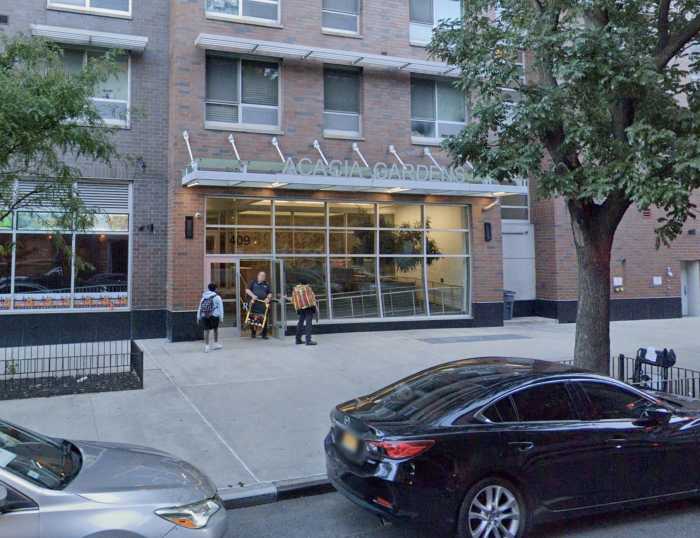
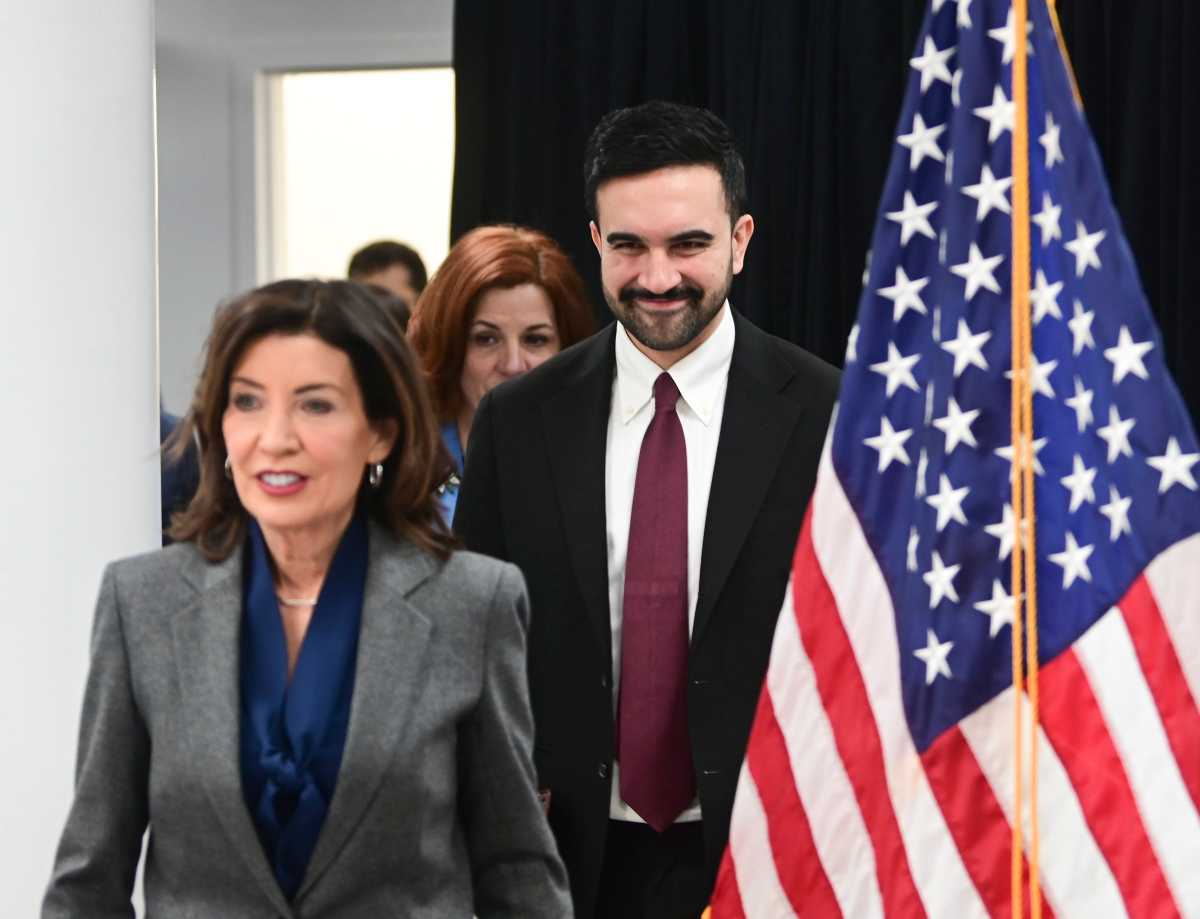
On Thursday, while standing next to Mamdani at an Upper East Side event on recent investments in child care, Hochul denied feeling frustrated with reports coming out of City Hall that negotiations with Albany lawmakers over the proposal are “encouraging.”
“This is not a frustrated face. I’m not frustrated,” Hochul said when asked whether Mamdani was trying to put pressure on her to approve new taxes on high earners by warning the city could otherwise raise property taxes by nearly 10%, as laid out in his preliminary budget.
The governor, who is seeking a second full term in office this November, emphasized that negotiations are ongoing between the state and city as lawmakers work toward a final budget agreement.
“There are ongoing conversations with the mayor’s team, his budget team, my budget team,” Hochul said. “We already put $1.5 billion on the table to help reduce their exposure.”
Herhonor also reminded Hizzoner and the press that the state has also kicked up its funding for New York City over the next two years.
“We put a significant amount of money, as you heard, $1.2 billion this year, $1.7 billion next year, for child care,” Hochul added. “So I think the moral of the story, and the lesson to take away, is that there’s never been this level of cooperation, because I am also invested in the success of the city.”
She also suggested the debate over tax increases is part of Albany’s usual budget dynamics when asked about Democratic lawmakers’ plans to propose raising taxes on high-income residents as part of their one-house budget plans next week.
“The legislature, for example, has put in tax increases every year I’ve been governor,” Hochul said. “I know how to negotiate. I know how to get to the results that I need.”
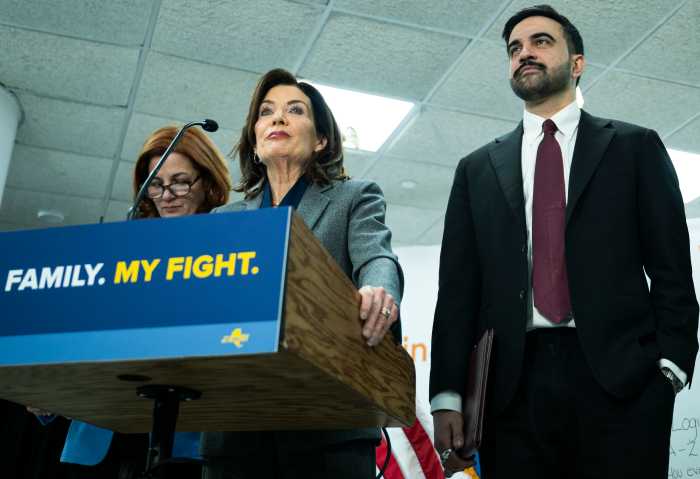
Mamdani emphasized that discussions with the state are moving in a positive direction.
“We have quite some time left in the budget process,” he said. “I’m encouraged by the conversations we’re having.”
Budget: Fuleihan says NYC seeks more ‘structural’ revenue
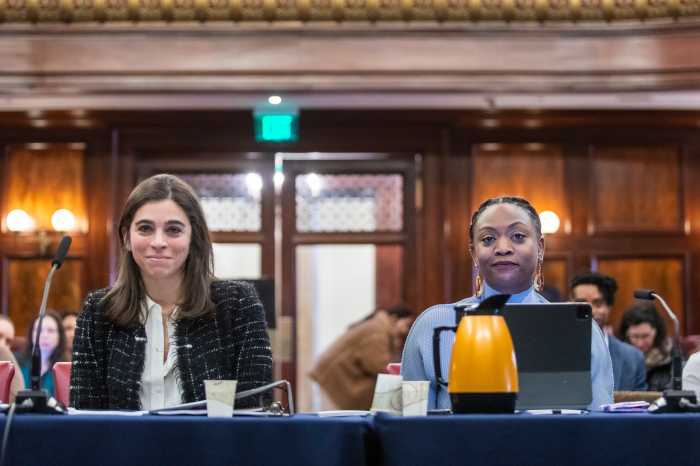
Mamdani’s First Deputy Mayor, Dean Fuleihan, struck a similar tone while speaking about the city’s preliminary budget at an event hosted by the Center for New York City and State Law at New York Law School earlier Thursday morning.
Fuleihan said the administration is seeking new “structural” revenue from Albany and believes negotiations are progressing.
“We hope the state will be much higher … that’s part of the effort that we’re right now, I believe successfully discussing in Albany,” he said.
The administration has asked state leaders to consider a range of tax proposals targeting wealthy residents and corporations, Fuleihan noted during his presentation outlining “How to Build a Budget.”
“We have put out a menu of additional tax options to both houses and the Governor to say there are other ways to also do this that meet our principles, our values, and provide permanent, structural revenue for us,” he said.
City officials say the preliminary budget includes measures they hope to avoid if Albany approves new revenue options.
Fuleihan said those steps — including the potential property tax increase outlined in the preliminary budget — appeared because officials are required to present a balanced spending plan.
“We didn’t want to have to do a property tax. We did not want to … reduce our reserves,” he said. “We have to submit a balanced preliminary budget under generally accepted accounting principles.”
“It is part of a very long process, and one we should really admire that most places don’t have, where there’s a six-month period to put together the New York City budget,” he added.
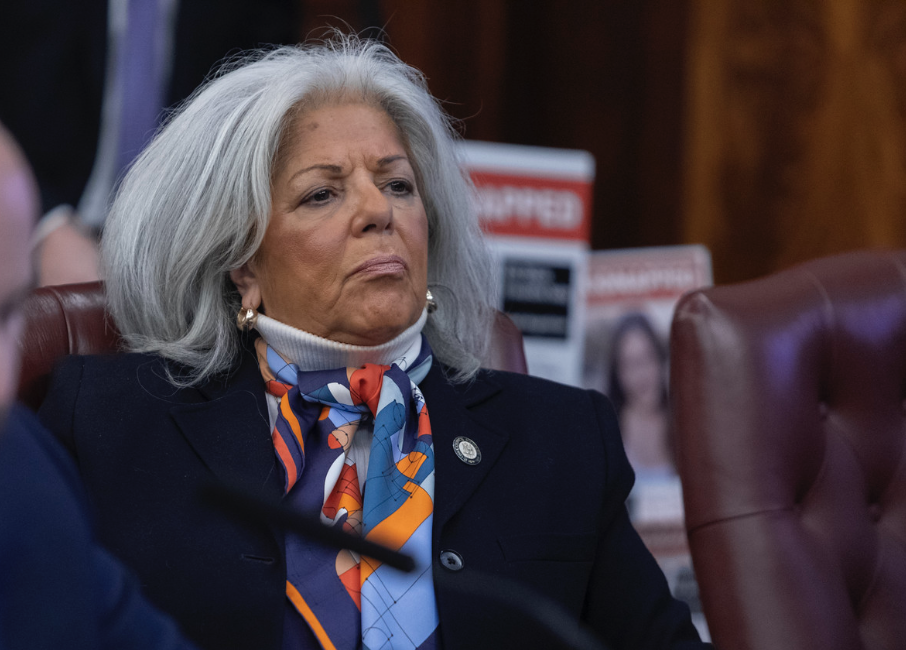
Concerns over the potential property tax increase outlined in Mamdani’s preliminary budget have drawn criticism from elected officials and housing advocates, who warn the move could worsen affordability pressures for homeowners and renters.
Fuleihan said the administration is also working on legislation to reform New York City’s property tax system, which many officials and watchdog groups have long criticized as inequitable.
“We do believe that we have to reform the property tax system,” Fuleihan said. “Everybody’s been talking about it. We will be submitting a bill to Albany, and we will put our effort in so that communities around New York are treated the exact same way.”
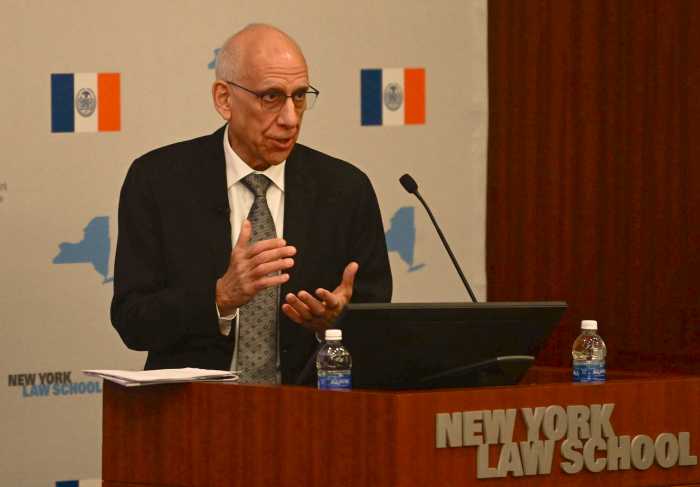
During his presentation, Fuleihan said the administration identified what he described as roughly a $14 billion fiscal problem, including costs tied to housing assistance and other social services that had not been fully addressed in prior financial plans.
Those pressures left the city confronting a multibillion-dollar gap that required immediate action.
The financial strain has also surfaced in the preliminary budget through proposed reductions to funding for parks and the city’s public library systems.
Fuleihan said those reductions should be understood as part of the early stage of the budget process and stressed that the mayor intends to follow through on commitments to both services.
“We understand the mayor’s made commitments on both, and we will live up to those commitments,” he said. “This is the beginning of that process.”
While Hochul has repeatedly resisted new taxes on wealthy New Yorkers, momentum for such measures appears to be building. A recent Siena College poll found that 54% of voters statewide — and 62% of New York City voters — support raising income taxes on city residents earning more than $1 million rather than increasing property taxes.
Advocates and progressive elected officials are also planning to ramp up pressure on Albany. City and state lawmakers are scheduled to announce their support Friday for statewide taxes on wealthy residents and corporations as part of a broader campaign to influence the state’s budget negotiations.
The event, organized by the New York City Democratic Socialists of America and allied advocacy groups, is intended to increase pressure on Hochul and legislative leaders as Albany enters the final stretch of budget negotiations.