


Nearly 2 million people who rely on New York’s publicly funded health coverage, the Essential Plan, are facing an uncertain future as federal budget cuts threaten to destabilize the program. To mitigate potential cuts, Gov. Kathy Hochul is working on a way to protect the coverage.
Federal cuts to New York’s Essential Plan total $7.5 billion, more than half of the program’s annual funding, state officials said. The cuts endanger the program’s continued viability.
“Access to affordable, high-quality health care is essential to New York families,” Hochul said. “While Washington cuts and destabilizes care, New York will continue investing in patients, providers, and protections to ensure health remains accessible across the state.”
According to state officials, an estimated 450,000 people will lose their Essential Plan coverage as early as July.
Although the state is “reviewing options” for these people, Hochul in September directed the Department of Health this year to submit an application to the Centers for Medicare and Medicaid Services (CMS) to return the Essential Plan to a Basic Health Program, a move she said will preserve coverage for 1.3 million New Yorkers for whom the premium-free program is a critical lifeline.
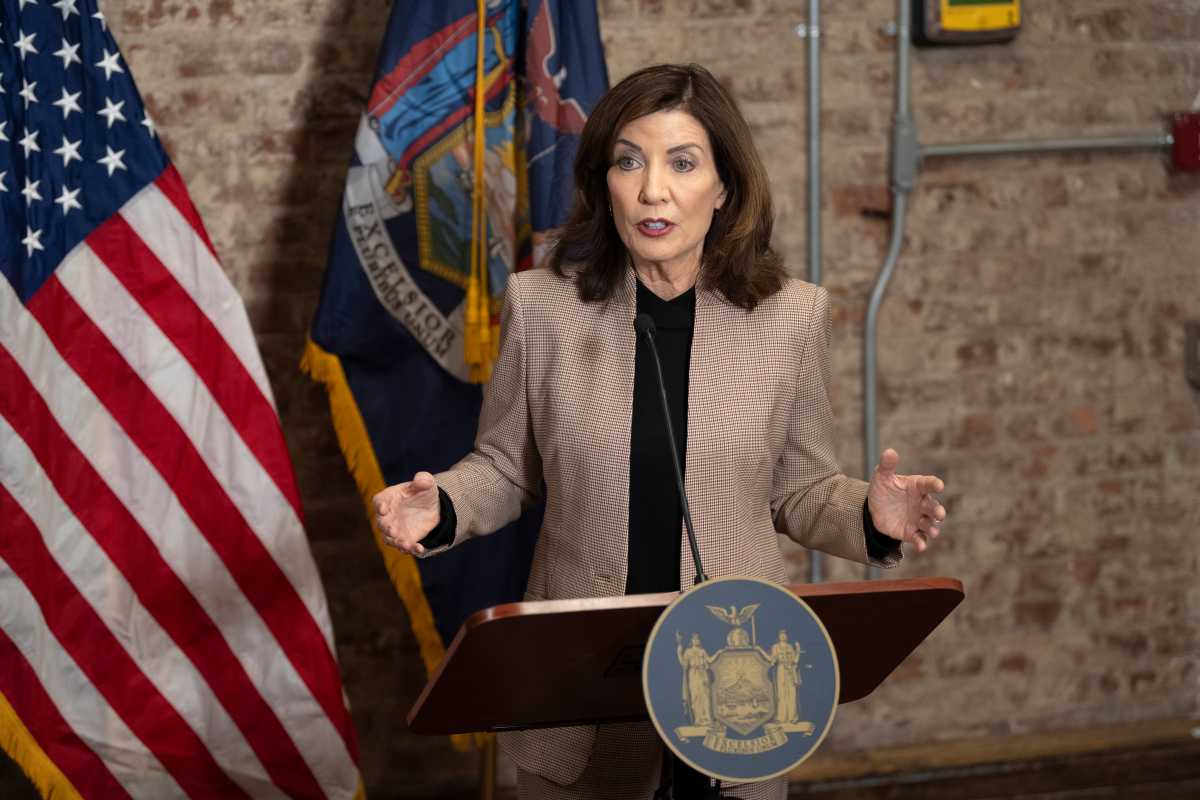
Essentially, the governor wants to lower the income threshold for Essential Plan recipients from 250% to 200% of the federal poverty line — a move that CMS would have to approve. amNewYork contacted CMS for comment on the proposal and is awaiting a response.
The Essential Plan is not Medicaid; however, it is a public health insurance program that provides low-income adults with coverage that has no monthly premiums. It is designed for New Yorkers who do not qualify for Medicaid or Child Health Plus.
The Essential Plan is vulnerable, relying on public funds
Healthcare providers told amNewYork the Essential Plan has been a lifeline for working families and low-income individuals. But the program’s dependence on federal funding streams makes it vulnerable. While Hochul and the state health department look for solutions to protect the program without creating a budget burden, the clock is ticking for patients.
Some health advocates and community organizations are sounding the alarm that funding cuts could negatively impact care.
Michele Quigley, CEO of Metro Community Health Centers in NYC, said her centers provide services for patients with intellectual and developmental disabilities, their families and the community. Most patients have Medicaid, and many will have to re-qualify for care, per legislation in the H.R.1 bill, more commonly known as “The Big Beautiful Bill.”
“Their conditions are not changing,” Quigley said, adding that most Medicaid patients at Metro Community Health Centers have “significant disabilities” with complex needs, such as cerebral palsy, Down syndrome, genetic disorders and other mental and physical health issues.
But the centers also provide primary care for patients’ families, too, many of whom rely on the Essential Plan.
“While most of our patients qualify for Medicaid and won’t necessarily need the Essential Plan, their families, their caregivers, people who work to support them, they qualify for the Essential Plan,” Quigley said, stressing the importance of the program for preventative care.
Ensuring that caregivers have access to the Essential Plan means that Medicaid patients have caregivers,” Quigley explained.
“The ripple effects of this are catastrophic,” she said. “Who takes care of my patients if no one is there to take care of them?”
Ensuring that the Essential Plan is preserved is essential, Quigley added. Metro centers see about 8,000 patients. Roughly 20% of those patients use the Essential Plan. Without the Essential Plan, many of her patients would not be able to access primary, basic care, she said.
As a federally qualified community-based health center, Metro is required to see all patients, regardless of their ability to pay. They also offer sliding fee scales.
“But what happens when families can’t afford even that? Do they not come in for care?,” she said. “If they go to the emergency room, what does that do?”
Publicly funded centers like Metro ultimately reduce costs for both patients and communities. They provide preventive care, keeping people out of expensive, unnecessary emergency rooms, Quigley explained.
Matthew Bernardo, president of Housing Works, an organization that fights for people living with HIV/AIDS to have access to housing, healthcare and other resources, added that emergency rooms see an influx of patients when healthcare is cut.
“For people living with HIV, the Essential Plan is what keeps treatment continuous and people virally suppressed,” he said. “When coverage is cut, care is disrupted, people fall out of treatment, and they come back sicker—often through emergency rooms. That doesn’t save money. It shifts costs onto Medicaid and weakens the safety‑net providers New York depends on.”
Meanwhile, other health industry experts are skeptical of the Essential Plan, at least as it is now, not when it was created out of the Affordable Care Act in 2014.
Mario Soliman, a pharmacist at VineRx pharmacy in Staten Island, said the plan has benefits — such as hospital coverage — but it has become unaffordable for many New Yorkers, who wind up paying hundreds each month in co-pays and prescription costs.
“While you are not paying a premium to the state, you are paying it in the prescriptions and the visits,” he said. “It used to be more affordable. It is not really helping people, but it keeps people insured, just in case you end up in the hospital, it saves the day.”
Quigley, in the meantime, doubled down on the importance of healthcare.
“Preserving and strengthening New York’s Medicaid and Essential Plan coverage is not only sound public health policy; it’s fiscally responsible in providing community-based care,” she said.