

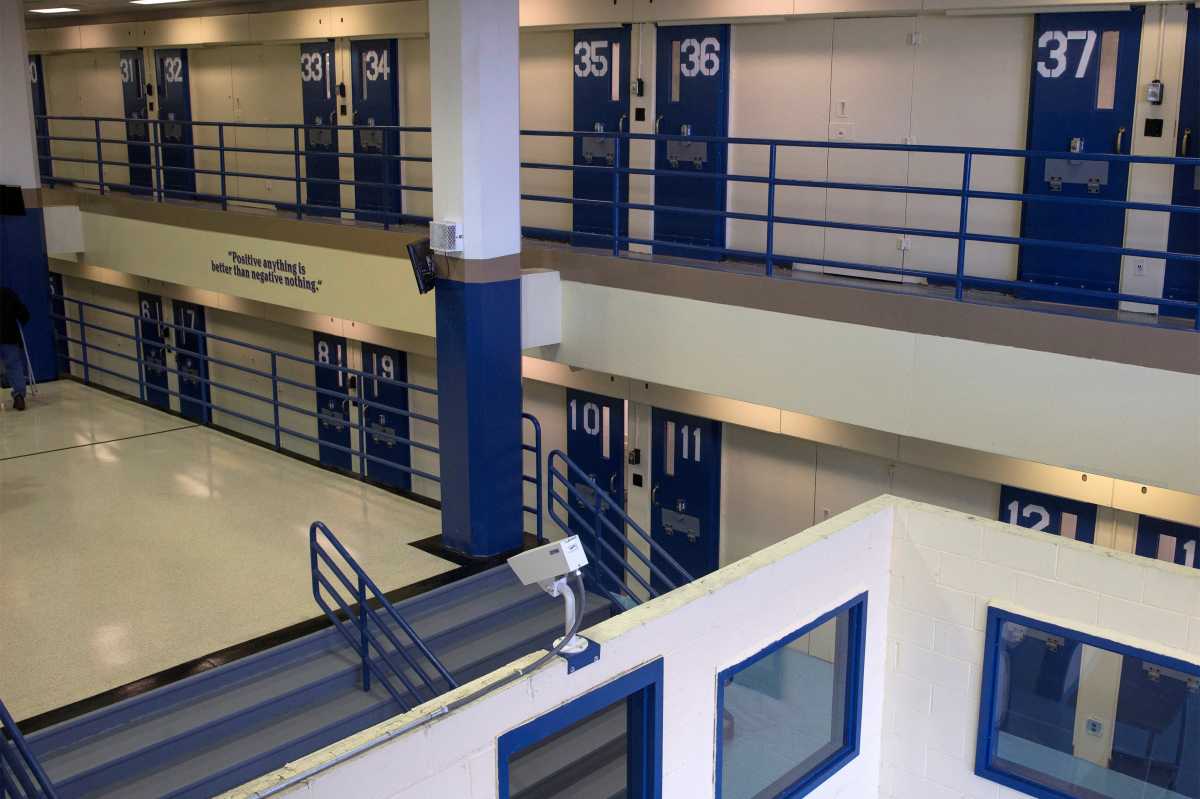
A new report confirms a grim reality: Despite promises of change, Rikers Island continues to be plagued by hazardous living conditions, extreme violence, and poor health care. Last year, more than a dozen people perished in the jail complex.
Mayor Zohran Mamdani just announced some measures to improve conditions at Rikers. And to replace the complex entirely, the city is constructing five smaller jails in each borough. But we need a change that goes far beyond new infrastructure – or we’ll simply repeat the same mistakes in tinier buildings.
We need a new understanding of community safety – one that addresses the root causes of crime and promotes humane, rehabilitative treatment for all New Yorkers. In doing so, we’ll create stronger, more prosperous communities in every corner of our city.
At the end of 2025, nearly 300 interfaith leaders, advocates, formerly incarcerated people, and other local leaders met to discuss and chart out such a vision. As leaders of Union Theological Seminary in NYC, we were grateful to participate and uplift the strong faith community advancing criminal legal reform.
Notably, many of the earliest iterations of incarceration were driven by religious groups and designed with the intention of moral repair and reformation. The word “penitentiary” comes from “penance,” an act of sorrow or regret for wrongdoing, showing one’s commitment to making amends.
But today, prison has become a way to punish and demean human beings – especially human beings who never received the basic support they needed to survive.
Across New York City, there are lengthy waiting lists for housing, mental health services, and other basic needs. But there’s no waiting list for jail. Unsurprisingly – and unfortunately – twenty percent of people detained at Rikers have a diagnosed serious mental illness, and more than 50 percent have some mental health needs. Many are unhoused, poor, or from traditionally marginalized communities.
As a result, people often enter Rikers when they’re already struggling to survive, and then get retraumatized inside the prison. Rikers magnifies and multiplies the root causes of crime – especially poverty, trauma, and racial discrimination.
We need a change – well before the new facilities open. Fortunately, we have momentum on our side. We have a mayor who has expressed a commitment to doing things differently and creating a city where all people can thrive. And the city’s faith leaders and criminal justice advocates are more motivated than ever.
First, we need to re-center penitence and rehabilitation in facilities. All facilities should be designed to improve safety and strengthen people’s connections to families and courts. Crucially, facilities must also provide space for education, health, and therapeutic programming.
At Union Theological Seminary, we’ve seen how powerful such programming can be. We now house a program created by New York Theological Seminary that provides incarcerated New Yorkers the chance to receive a Master’s degree. Since its inception, the program has graduated close to 500 students – most of whom have gone on to become counselors, mentors, mediators, faith leaders, counselors, community organizers, and more.
Our program shows that when people are equipped with the tools to thrive, they do.
Beyond better facilities, we also need to address the root causes of crime. That means reallocating resources away from corrections to building communities – including mental health, education, and opportunities for young people. Fortunately, the Independent Rikers Commission estimates that the borough-based jails will save the City $2 billion per year in operating costs – money that we can then use to invest in our communities.
Ultimately, though, we know that the solution to the issues that drive violence and crime in our city isn’t so-called “better” jails. As faith leaders, we are dedicated to the pursuit of a world that embraces restorative, data-driven responses to harm and support of the community.
When we offer real second chances and give people the tools we need to succeed, we can also build stronger, safer, and more loving communities. That’s something all New Yorkers can get behind.
Rev. Dr. Serene Jones is president and the Johnston Family Professor for Religion & Democracy at Union Theological Seminary, a globally recognized seminary and graduate school of theology where religion, spirituality and scholarship meet to reimagine the work of justice. Rev. Frederick Davie is senior executive vice president for Public Theology and Civic Engagement at Union.