


A new state law banning anonymous reports of child abuse has been hailed by family law attorneys and child welfare advocates as a win for kids and Fourth Amendment rights that will decrease fake calls to abuse hotlines that result in unnecessary, invasive home searches.
As longtime family law attorneys like Dale Margolin Cecka know all too well, anonymous abuse reports are rampant, harmful and frequently inaccurate. Federal data shows 96% of anonymous child abuse reports across the country end up being unsubstantiated and data from the New York City’s Administration for Children’s Services shows that only 6.7% of the city’s 2,211 anonymous reports in 2023 actually resulted in Child Protective Services finding a case of child abuse happening, significantly fewer than the 23.5% that were substantiated from all other reports. However, over 1,700 of those reports resulted in a CPS investigation into a child’s life, home or school.
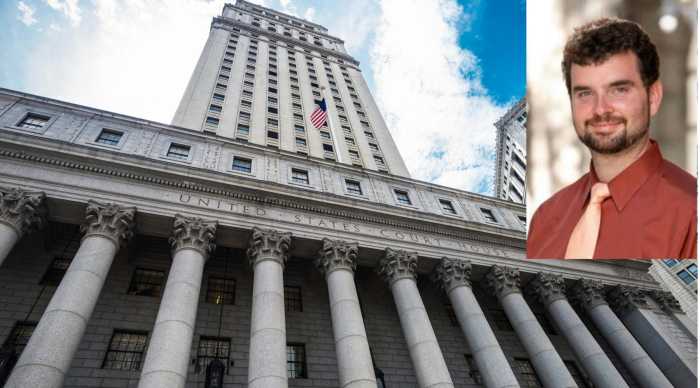
Cecka, who serves as the director of Albany Law School‘s Family Violence Litigation Clinic, has been raising the alarm about the harms of anonymous reports for over a decade. She’s studied the problematic nature of such reports, and said as many as 70% of her child custody cases involving domestic violence include fake, anonymous child abuse reports, typically from abusive spouses.
Under the old law, Cecka said, anyone — like an abusive partner, vindictive neighbor or landlord who wants a tenant out — could call the state’s child abuse hotline, provide no identifying information about themselves or how they came in contact with the child, and make a report saying “whatever they want.” That report, if hotline staff decide it includes the required elements to qualify as abuse or neglect, triggers a visit to the child’s home by Child Protective Services — or, if no one’s home, a visit to the child’s school, where officers can pull a kid from class, interview them, and ask them to strip their clothes to check for physical signs of abuse.
“It just struck me as insane that an anonymous report with no backup, no identifying information, could be made and then trigger this kind of investigation,” Cecka said.
While parents can refuse CPS entry to their homes, doing so can appear suspicious, meaning parents are essentially forced to consent to searches or risk making the situation worse.
“It’s a fundamental thing that we believe in this country: You shouldn’t have the government come to your house demanding to come in,” said Cecka. “But we kind of do it all the time to families.”
Searches can result in CPS officers seeing something else they believe constitutes illegal activity, like drug possession, triggering an unrelated criminal investigation.
Officers also have been known to make mistakes in determining whether abuse is happening, resulting in kids being removed from a home with no due process, even when everything in the home was above board.
The New York Civil Liberties Union raised its own concerns over home searches stemming from anonymous tips.
“The majority of these reports are ultimately deemed to be unfounded…[and] can be disruptive and traumatic for families, subjecting them to months of intrusive and humiliating investigation, including home searches,” the NYCLU wrote in a statement. “No family should be exposed to such intimate invasion by the government as the result of a knowingly baseless call. Yet, each year the [hotline] receives numerous false reports by anonymous callers that are designed to intimidate and harass families.”
Though it’s a civil system, Child Protective Services “acts as a quasi-criminal process,” Cecka said — but one with fewer checks on officers’ power.
“They don’t have to have probable cause. They don’t even have to have a reasonable suspicion to go to someone’s house,” Cecka said. “They just have to have this report.”
“There’s plenty of cases where children have been removed on the spot, and then judges have found that was completely illegal and they shouldn’t have been removed,” she continued. “It takes months, often, to undo the mess. It is a serious trauma that’s been inflicted on the family, and it is a violation, fundamentally, of parents’ rights to have their child just taken away on the spot with no due process.”
Child abuse reports and CPS investigations can also stay on people’s records even if they end up being unfounded, making it difficult for them to get certain jobs or be a foster parent.
Cecka’s point of view is one shared by many family law attorneys, child welfare and policy groups like NYC Family Policy Project, legal authorities and firms, including the New York City Bar Association, Brooklyn Defenders and NYU Law School’s Family Defense Clinic, all of which have put out public statements supporting the anonymous reporting ban for similar reasons.
However, those who have spoken against the law, called the Anti-Harassment in Reporting Act, say people may be deterred from reporting abuse out of fear of retribution if they can’t be anonymous, resulting in cases of abuse going unreported.
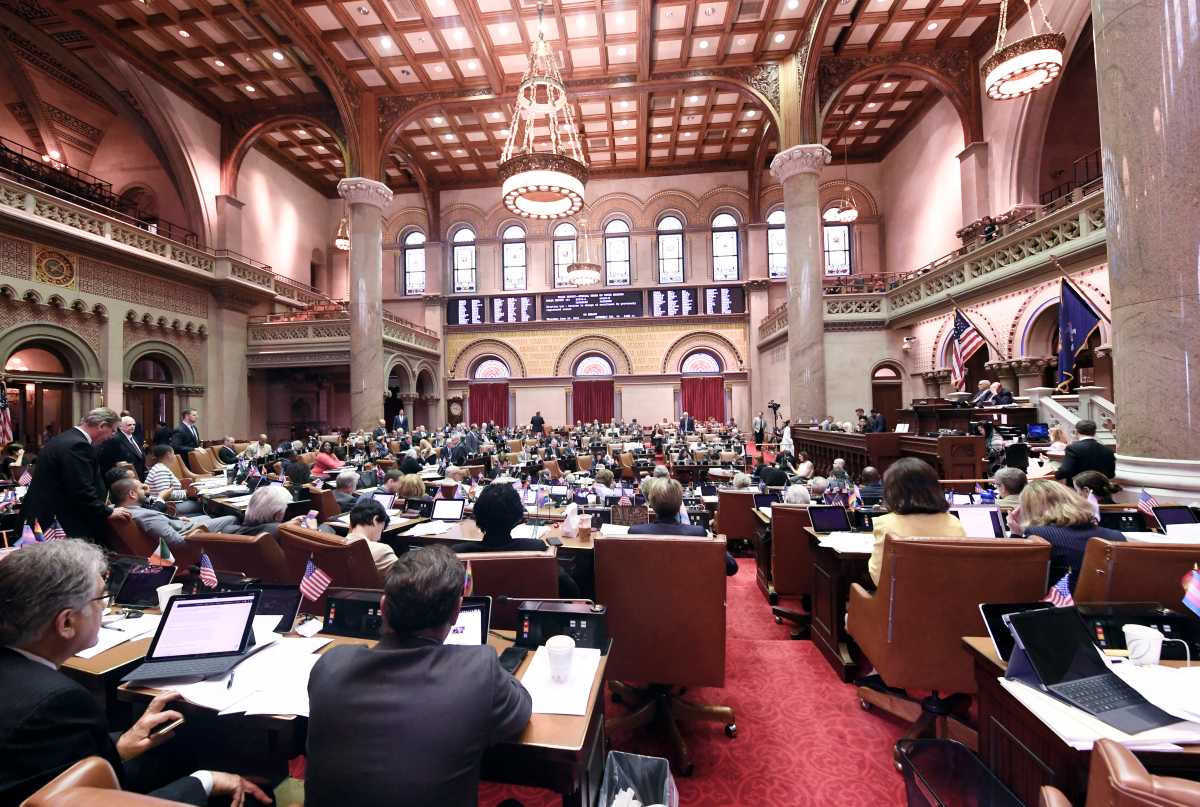
One of the law’s most notable opponents, family law attorney and State Assembly Member Mary Beth Walsh, spoke passionately against the bill on the assembly floor last year. She was one of its few “no” votes and urged Gov. Kathy Hochul to veto it.
Hochul indicated upon signing the bill in late December that a forthcoming amendment will “ensure the bill does not inadvertently loosen confidentiality protections for sources and establish an exception for children, who may be too fearful or unable to provide complete contact information.”
Walsh said she was glad to hear that, but wishes Hochul didn’t sign the bill at all.
As a family law attorney herself, Walsh acknowledged the issue of false anonymous reports. However, she believes a better way to remedy the issue would be giving family courts the power to prosecute or otherwise penalize anonymous reporters when it’s clear to the parties that the reporter is, for example, a vindictive or abusive spouse.
It’s already a crime to make a false report — but one that is essentially impossible to prosecute when the perpetrator is anonymous. Police can’t charge someone whose name they don’t know. Walsh said she’d like to speak with family court judges to determine the best way to create a statute to go after fake anonymous reporters when it’s evident who the phony tipster is.
Under the new law, all reports of child abuse will still be completely confidential, meaning that the person’s identity would be known only to the state agency receiving the report. Now, if someone calls in requesting to make an anonymous report, they’ll be told they must provide accurate identifying information. If they’re still hesitant, they’ll be transferred to a supervisor, who will explain, in detail, how confidentiality works and the reasoning behind not accepting anonymous reports.
If a person still decides that they don’t want to provide their name, the supervisor will remind them making a false report is a crime, and direct them to the state’s Office of Children and Family Services HEARS Family Line or community-based service providers, where they could speak anonymously about their concern and be directed to support services instead of initiating an investigation.
The office told amNewYork Law in an email that it “assures callers who may be fearful” that their identity will be “kept confidential to the fullest extent of the law.” People should call 911 if they believe there is an active emergency.
Attorneys and family law professors familiar with the law said the bill sufficiently addresses privacy concerns. They also noted that anonymous reports are a minority of the state’s reports and that California and Texas have passed similar laws in recent years and haven’t seen any issues.
Going further, Cecka questioned whether any tipster who sincerely has a child’s best interests at heart would be scared to give their name.
“There’s no reason to be anonymous if you have a legitimate concern about a child, because your identity is protected,” Cecka said. “And, if you really cared about a child, you would want your name and some identifying information attached so that the agency could do an accurate report.”
Most founded reports of child abuse come from mandated reporters, like teachers and doctors, who have never been allowed to make anonymous reports, Cecka added. And most children experiencing abuse have multiple people calling in reporting it, making a situation where only one person could possibly make a hotline call and also needed complete anonymity, incredibly unlikely.
Regardless, family law attorneys and child welfare groups say the existing harms of false anonymous reports outweigh any potential drawbacks of the new law, as those harms are real, and they’re happening now, frequently.
Most notably, as Cecka and the NYC Family Policy Project argue, anonymous child abuse reports have been shown to disproportionately Black children and families: In 2023, Black children, who are just 24% of the city’s kids, made up almost 50% of children experiencing involvement from the city’s Administration for Children’s Services, which includes CPS, based on anonymous calls.
Cecka said CPS is more likely to investigate abuse reports in poor, Black and brown neighborhoods — and that reports are more frequently taken from those neighborhoods — than in wealthy, middle-class and white neighborhoods.
“People know, in certain communities, that CPS is something they can use as a weapon,” Cecka said. “There’s different oversight into families of different means and different ethnicities.”
When asked how the new law will change her family law practice, Cecka said that mostly, it will be a relief for both herself and her clients.
“The best thing that can happen is we have to deal with fighting off fewer of these baseless reports,” she said. “It will be a relief if I cannot worry that every day I’m going to come in and a client’s going to be calling and saying that CPS is coming to their house.”
“This is important especially in domestic violence cases, where one of the biggest fears survivors have about leaving is they’re going to lose their children,” Cecka said. “If we can lessen that fear, then we can hopefully enable survival, enable people to make plans to leave and be able to stay separated without fear they’ll lose their children.”