


Monday, Feb. 2, marked the 33rd day of Zohran Mamdani’s term as mayor. amNewYork is following Mamdani around his first 100 days in office as we closely track his progress on fulfilling campaign promises, appointing key leaders to government posts, and managing the city’s finances. Here’s a summary of what the mayor did today.
A Trump administration threat to strip federal funding from states and cities with sanctuary policies has so far failed to materialize, Mayor Zohran Mamdani reported on Monday — days after the president’s self-imposed Feb. 1 deadline came and went with no action from the White House.
Mamdani said his office has received no notice of funding cuts following President Donald Trump’s January announcement that states that house sanctuary cities would lose federal dollars if they did not cooperate with immigration enforcement.
“The date had come and gone,” Hizzoner said Monday, adding that the city has heard nothing further from the administration. “We will continue to stand up for this city and continue to make clear that our values and our laws are not bargaining chips.”
Trump announced the funding threat on Jan. 14 as part of a broader push to pressure local governments to work more closely with federal immigration authorities. New York State and New York City — both long designated sanctuary jurisdictions — would be among those affected, though the administration has not released details on which funds would be targeted or how cuts would be implemented.
The White House did not respond to repeated requests for comment from amNewYork. A Trump administration spokesperson, however, told NewsNation that the Office of Management and Budget is working with federal agencies to implement the president’s plan and is compiling what officials described as “a complete report of funds being spent in each state that has a history of fraud.”
The president has repeatedly criticized sanctuary jurisdictions, claiming they “protect criminals at the expense of American citizens,” an argument city officials and immigrant advocates strongly dispute. Last month, he called on Congress to “immediately” pass legislation to “end Sanctuary Cities, which is the root cause of all of these problems.”
“American cities should be safe sanctuaries for law-abiding American citizens only, not illegal alien criminals who broke our nation’s laws,” Trump wrote on Truth Social on Jan. 25.
New York’s sanctuary laws limit when city agencies and the NYPD can honor ICE detainer requests, generally restricting cooperation to cases involving serious crimes or judicial warrants. The policies do not prevent federal agents from making arrests independently or block immigrants from being prosecuted for local crimes.
Trump has attempted similar funding cutoffs before. Most recently, in July 2025, the Trump administration took the city to court over its sanctuary laws in the wake of a U.S. Customs and Border Patrol agent getting shot. That lawsuit is still ongoing.
Last year, the U.S. Department of Justice identified 11 jurisdictions it considers sanctuaries for immigration enforcement, including New York State and New York City, citing policies that limit cooperation with federal authorities or restrict information-sharing.
Black History Month: David Dinkins Municipal Building rooftop to open to the public
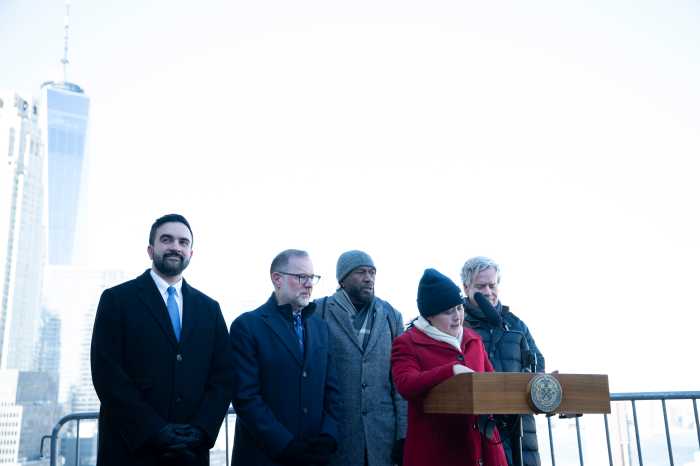
After addressing the weather emergency, Mayor Mamdani announced that the city will open the rooftop of the David Dinkins Municipal Building to the public, marking the start of Black History Month.
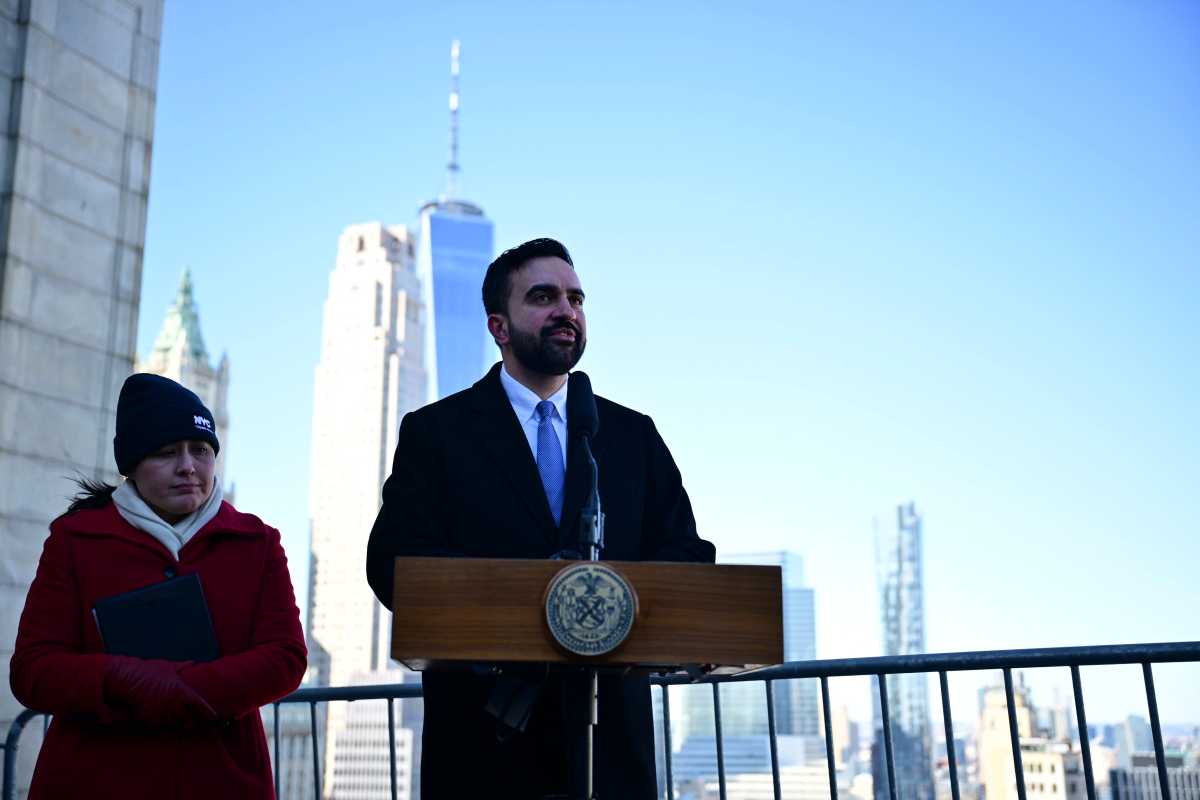
“For too long, New Yorkers haven’t been able to access this view,” Mamdani said. “That’s coming to an end.”
Beginning in June, the city will offer free guided tours of the building’s rooftop and cupola, with tickets available through an online reservation system. The space offers panoramic views of the city and has been closed to the public for decades.
The city will also invest $6 million in renovations to the building at One Centre Street, including repainting the cupola, repairing the rotunda, installing safety glass and ceiling netting, and completing other interior and exterior upgrades.
Yume Kitasei, commissioner of the Department of Citywide Administrative Services, said the David Dinkins Municipal Building is the “heart and soul of municipal government,” housing elected officials and numerous city agencies. She said the renovation work is intended to both preserve the historic tower, which was constructed more than a century ago, and ensure it remains functional for decades to come.
Kitasei said the most significant change is the expansion of public access, calling the reopening of the previously closed rooftop and cupola “perhaps most exciting.” She said DCAS staff will lead the guided tours and described the building as a future “must-see bucket item” for New Yorkers.
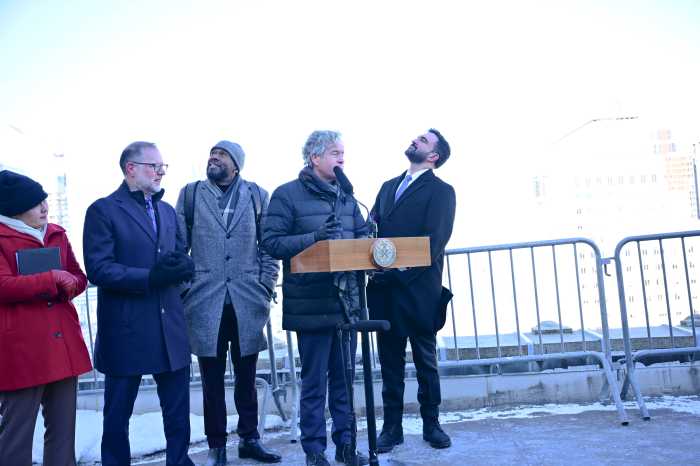
Mamdani said reopening the rooftop honors the legacy of former Mayor David Dinkins, the city’s first Black mayor, and reflects a broader effort to expand public access to civic spaces that historically belonged to New Yorkers. “This building belongs to the people of this city,” he said.
Dinkins was elected mayor in 1989 after defeating then three-term incumbent Mayor Ed Koch in the Democratic primary and besting then-U.S. Attorney Rudy Giuliani that November.
The next four years would be among the toughest in city history. Dinkins often referred to New York as the “beautiful mosaic” and labored to end the long-simmering racial tension across the city. He championed equality and welcomed Nelson Mandela to New York in 1990, just weeks after the South African civil rights icon had been released from prison.
“He spoke famously of the gorgeous mosaic, but he recognized that speaking of it wasn’t enough. The tile still had to be placed. The image carefully aligned,” Mamdani said of Dinkins.