


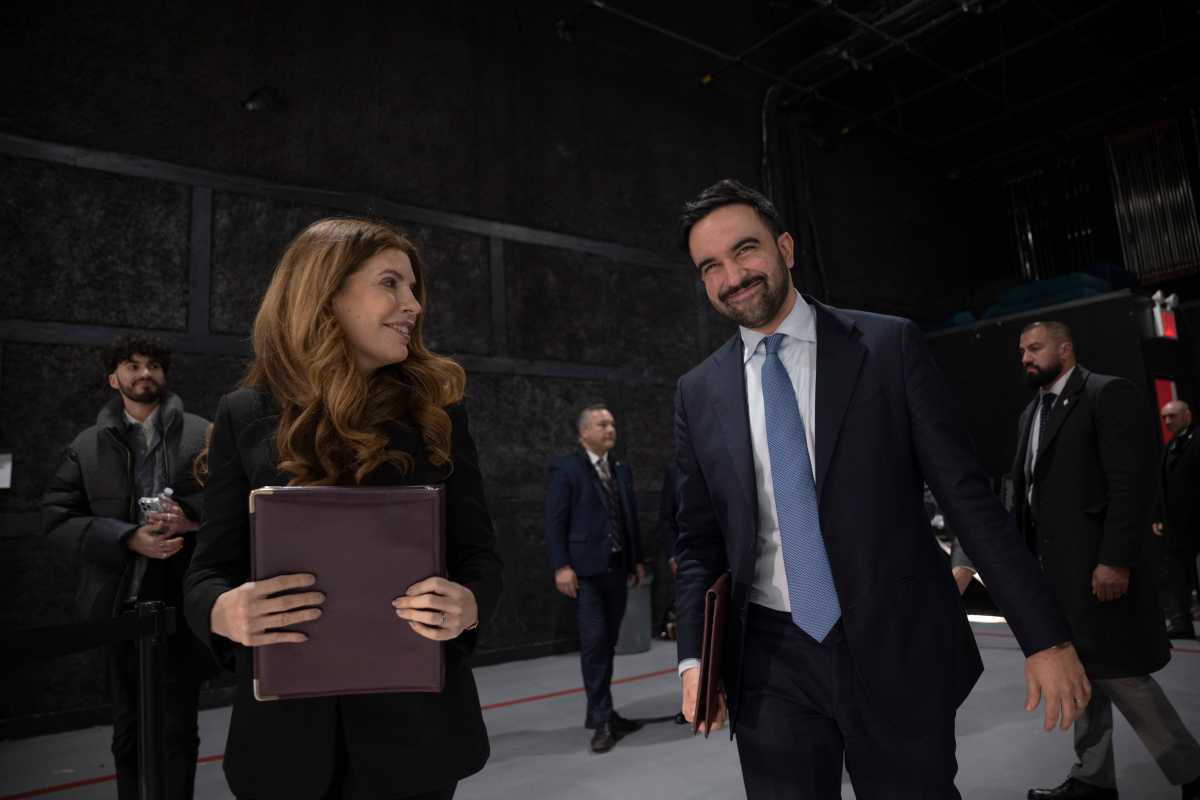
Monday, Jan. 12, marks the 12th day of Zohran Mamdani’s term as mayor. amNewYork is following Mamdani around his first 100 days in office as we closely track his progress on fulfilling campaign promises, appointing key leaders to government posts, and managing the city’s finances. Here’s a summary of what the mayor did today.
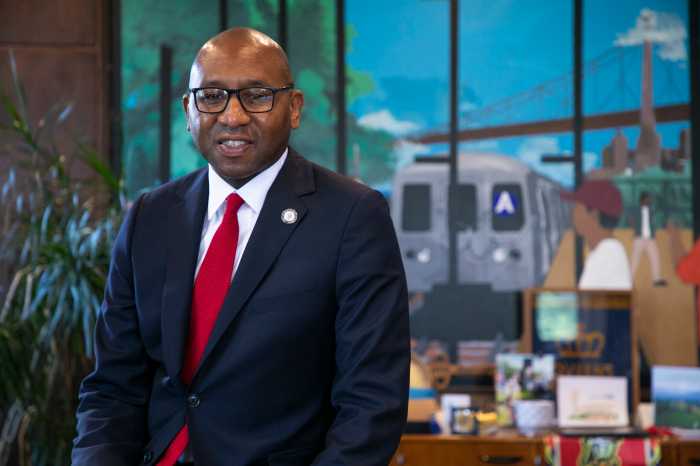
Mayor Zohran Mamdani on Monday announced Rafael Espinal as the new commissioner of the Mayor’s Office of Media and Entertainment, and signaled another break with the previous administration by withdrawing proposed “hostile” press credential rules that his predecessor, Eric Adams, introduced.
The announcement came during a press conference at Samson Stages in Red Hook, Brooklyn, where Mamdani framed the creative industries as central to New York City’s identity, economy, and labor future, while responding directly to reporters’ questions about the Adams administration’s final-hour proposal to overhaul City Hall press badge regulations.
The MOME has been responsible for issuing valid credentials for reporters, editors, and photographers to cross police and fire lines to cover breaking news since a 2021 council bill pulled the responsibility from the NYPD. The proposed rules, released on Dec. 31 under Adams, would have tightened credentialing standards and expanded the city’s authority to suspend or revoke press badges.
On his last day in office, former mayor Adams proposed new rules that would have tightened credentialing standards and expanded the city’s authority to suspend or revoke press badges, making it more difficult for independent journalists to obtain a press pass with one of the proposed rules seeking to “require applicants to be either employed by or affiliated with a ‘media platform’ or be a member of a journalism association.”
Mayor Mamdani, who has widely embraced new media and held his first Blue Room press conference with them last week, said Monday that his administration “will be withdrawing those proposed rules.”
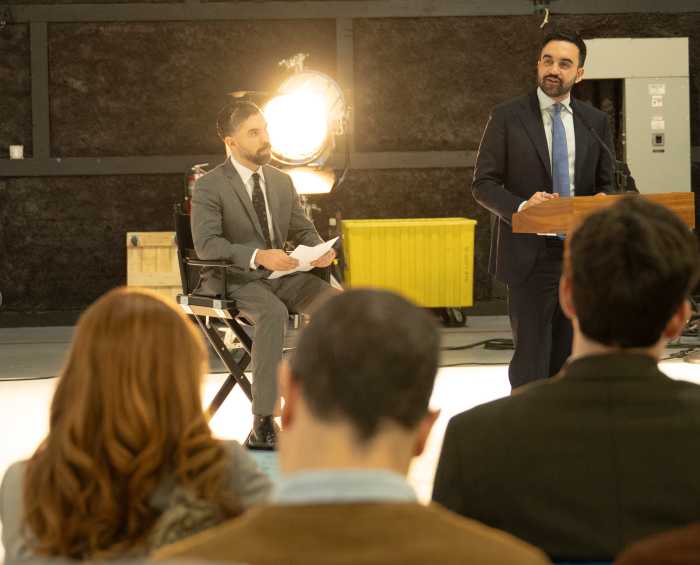
He added that the administration viewed the regulations as fundamentally hostile to press access. “Much of the reason for that, we view a number of these proposals being an attack on the press,” Mamdani said.
Pressed by a reporter to explain what specifically the administration found objectionable, Mamdani said, “When going through a number of the different specific proposals, we just see time and again that the intent is not to strengthen whether the public’s accessible information or even the way in which we work with the press corps.”
“More felt as if it was an intent to tighten and restrict the press’s ability to engage with the mayor’s office,” he added, “and that is not something that we want to do.”
Former mayor Adams was back in NYC Monday to launch a new digital coin that he says will help fund education and awareness programs on anti-Americanism and anti-Semitism.
Mamdani said he would not be purchasing Adams’ crypto token in response to a reporter’s question, and also declined to engage directly with Adams’ public criticism of the new administration, saying he would “leave the former mayor to answer…that question.’
Appointments: Espinal back in city government
The policy reversal came alongside the appointment of Rafael Espinal, the executive director of the Freelancers Union and a former Brooklyn City Council member, to head the agency that oversees film, television, and commercial production in the city.
In his opening remarks, Mamdani emphasized the cultural and economic significance of the industry, describing New York as a city whose global image has been shaped by what is created on its streets and stages. He repeatedly highlighted the role of union labor, describing actors, writers, stagehands, camera operators, makeup artists, and technicians as central to the city’s identity.
“This city that treasures the arts, that invests in the arts, that makes it possible for artists and all who contribute to making New York’s entertainment industry to live lives of creativity,” Mamdani said.
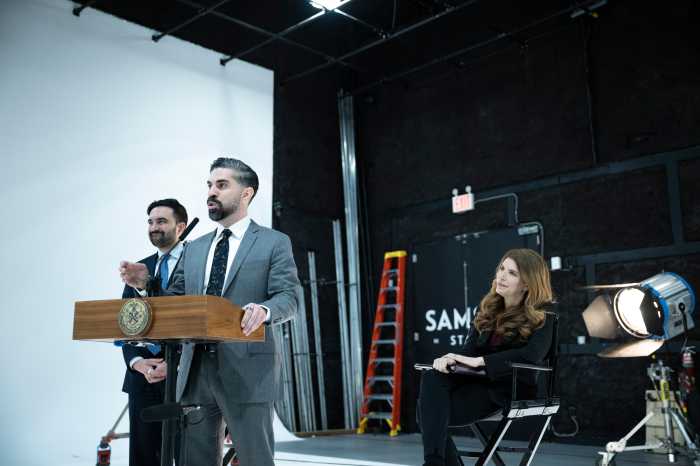
He tied the administration’s arts agenda directly to affordability, saying City Hall was confronting the cost-of-living crisis so that creative workers could “raise their children here,” “afford studios and homes here,” and “take fast and free buses to shoots here.”
“But we don’t want our efforts to be limited solely to making New York affordable for those making the arts,” Mamdani said. “We also want to make New York affordable to make the arts as well.”
Mamdani said Rafael’s background made him uniquely suited for the role, citing his experience in elected office and his leadership at the Freelancers Union, as well as his role in advancing the city’s Freelance Isn’t Free Act, which strengthened protections for independent workers.
“For many New Yorkers… Rafael’s name is synonymous with fierce advocacy for the love of this city and with a commitment of uplifting those too often forgotten by our politics,” Mamdani said.
Espinal, who grew up in East New York, used his remarks to describe how film and television shaped his childhood and inspired him to start making short films at the age of 13 — even as he struggled to see a clear pathway into a creative career.
“Growing up on the edges of our city, I didn’t see a clear pipeline into a real career in the creative industries,” he said, adding that he repeatedly heard the message that artists needed a backup plan.
He framed his appointment as an opportunity to close that gap for future generations.
“I’ll work to keep New York the creative capital of the world,” Espinal said, “not just a place where great work gets made, but a place where the people who make that work can actually live it.”
Espinal, aligning his agenda closely with the mayor’s affordability platform, emphasized labor partnerships, union jobs, and access to training and benefits as central priorities of the office.
“I wanted to join the administration because it’s all a government approach to affordability,” he said. “Because if New York is unaffordable, we don’t just lose residents, we lose our culture.”
City Council Speaker Julie Menin, who previously served as commissioner of the MOME under Mayor Bill de Blasio, also spoke in support of Espinal’s appointment, underscoring the industry’s economic importance.
“It’s a $104 billion industry with over 305,000 jobs,” Menin said, adding that there are “actually more jobs in New York City in media and entertainment than there are in the financial center.”
Menin pointed to Espinal’s work on the Freelance Isn’t Free Act, the city’s Freelancers Hub, and the creation of the Office of Nightlife as evidence of his ability to bridge labor policy and creative industries.