


It’s Friday, Jan. 2, the second day of Zohran Mamdani’s term as mayor. amNewYork is following Mamdani around his first 100 days in office as we closely track his progress on fulfilling campaign promises, appointing key leaders to government posts, and managing the city’s finances. Here’s a summary of what the mayor did today.
On the second day of his administration, Mayor Zohran Mamdani took steps to formalize the movement-style organizing inside City Hall that helped propel him to victory in November.
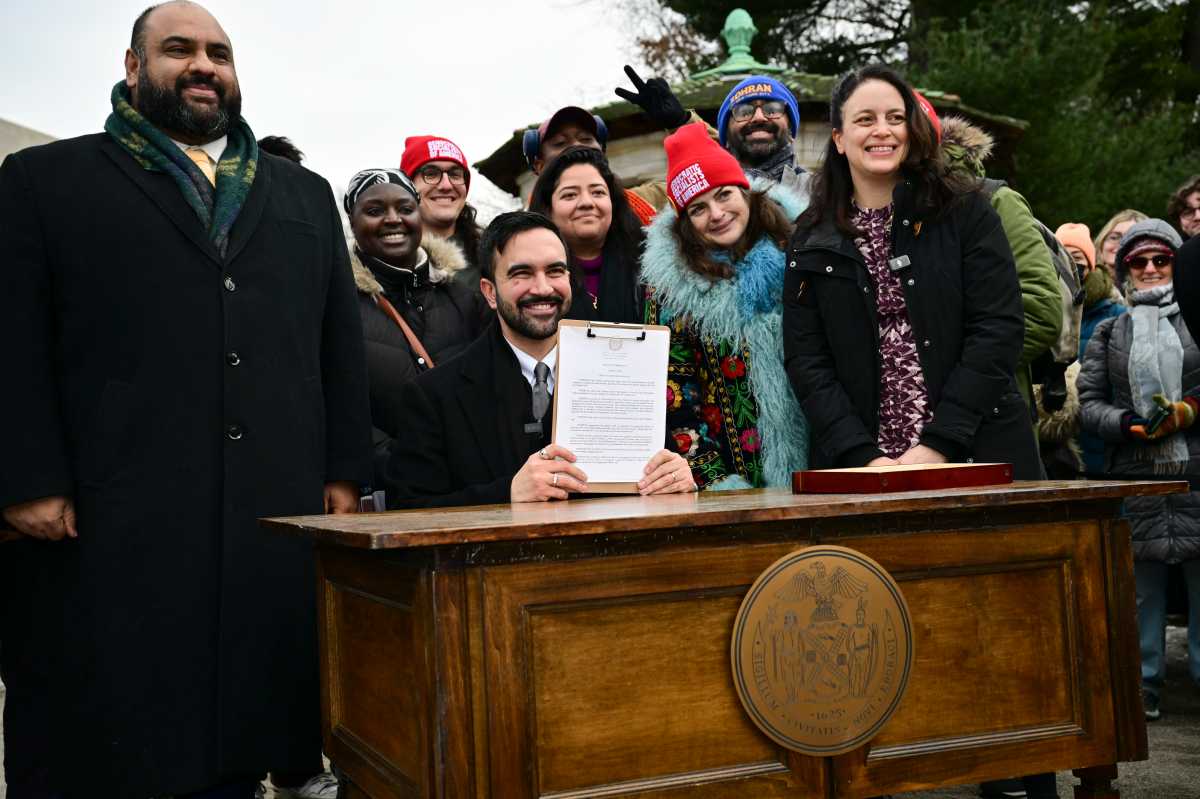
At a press conference on Friday at Grand Army Plaza, surrounded by campaign volunteers, Mamdani signed an executive order establishing the Mayor’s Office of Mass Engagement, a new executive-level office intended to centralize and expand opportunities for New Yorkers to participate in city government.
Mamdani named Tascha Van Auken, a longtime Democratic Socialists of America organizer and veteran progressive campaign operative, as the office’s inaugural commissioner.
“She also spent many years working at the Blue Man Group, which means she brings both organizing discipline and an unusual tolerance for chaos,” Mamdani quipped.
The new office, Mamdani said, is not a continuation of the campaign apparatus but a restructuring of existing civic engagement functions within city government.
“Too often engagement is fragmented or symbolic,” Mamdani said. “Too often people are asked for input, but never see how it shapes outcomes.”
“Oftentimes, the outreach and engagement of city government is done with an intention to justify a decision that’s already been taken,” Mamdani continued. He said the new office is intended to ensure public feedback is embedded earlier in policy design and decision-making.
Administration: What is the Mayor’s Office of Mass Engagement?
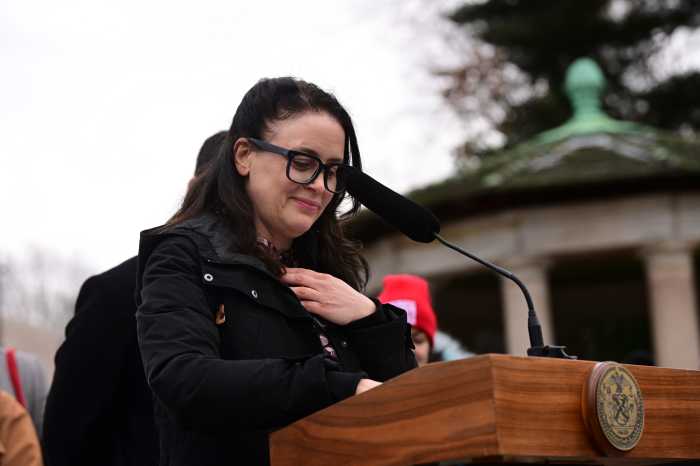
According to the mayor, the Office of Mass Engagement will combine existing community affairs and public engagement units under a single umbrella and immediately change how City Hall coordinates outreach. While details on staffing and budget were still being finalized, Mamdani said employees currently working in engagement roles would be folded into the new office, with additional information to be released later.
Asked whether the office would be used to mobilize volunteers to pressure state officials in support of the mayor’s legislative priorities, including higher taxes on the wealthy, Mamdani said his administration would not pursue its agenda “behind closed doors” alone.
“Our agenda is not one that is going to be fought for simply behind the closed doors of city and state government,” he said, adding that residents would be involved both in shaping and advocating for policy goals.
Van Auken, who led Mamdani’s field operation that mobilized more than 100,000 volunteers and knocked on more than 3 million doors, said the office is meant to turn campaign-style participation into a lasting feature of governance.
“The Office of Mass Engagement is about taking that ethos and making it part of how government works,” Van Auken said. She said the office will focus on “organizing participation at scale, strengthening feedback loops so public input shapes policy, and building the relationships and systems — human and digital — that make long-term co-governance possible.”
Van Auken, who also previously served in city government as chief of staff to Assemblymember Phara Souffrant Forrest, said the goal is not simply to solicit feedback but to ensure residents see how their participation influences outcomes.
“A government that doesn’t just ask for input, but acts on it,” Van Auken said, adding that New Yorkers should see themselves “not as spectators, but as co-creators of our shared future.”
Mamdani said the success of the office would not be measured by the number of meetings or surveys it produces, but by whether engagement leads to tangible changes in policy and service delivery.
“Judge us by whether engagement changes outcomes,” Mamdani said.
Governance: All rise
On Friday, Mamdani also named his election attorney Ali Najmi as chair of the Mayor’s Advisory Committee on the Judiciary, which is launching a new effort to involve a broader segment of the city’s legal community in selecting judges.
The committee evaluates and appoints judges to the city’s family and criminal courts, as well as interim judges for civil courts.
Najmi, a longtime friend and advisor to Mamdani, is also a fellow Queens resident. The two first connected when Mamdani volunteered on Najmi’s unsuccessful 2015 City Council campaign in eastern Queens. They have stayed close since, with Najmi serving as Mamdani’s lawyer and mentor during his Assembly and mayoral campaigns.
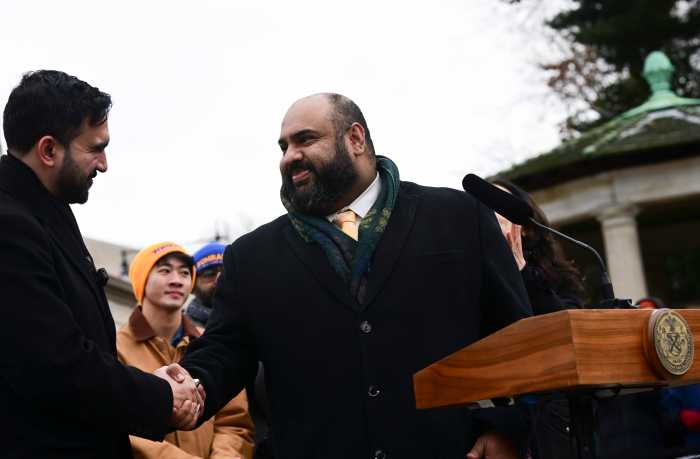
Najmi has spent roughly 15 years representing insurgent Democratic candidates, helping ensure a wide range of voices can get on the ballot. In the June primaries alone, he represented at least 18 candidates.
To support this initiative, Mamdani signed an executive order directing Najmi’s committee to engage the broader legal community in the judicial selection process, including public defenders, family court attorneys, and those in indigent legal services.
The order also aims to make the committee more transparent by regularly releasing demographic data on judicial applicants and creating a searchable public database of upcoming appointments. Additionally, it extends committee member terms from two to four years.
Mamdani said these changes are meant to make the court system more accessible and accountable to the public.
Executive order fallout: Mayor stands by order changing definition of antisemitism
One executive order Mamdani signed on his first day in office revoked a series of mayoral executive orders issued on or after Sept. 26, 2024 — the date former Mayor Eric Adams was indicted on federal fraud charges related to alleged campaign finance violations.
Among the revoked orders issued during the final 16 months of Adams’ administration were measures barring city officials and appointees from discriminating against Israel and a June directive adopting the International Holocaust Remembrance Alliance’s working definition of antisemitism.
Israeli Consul General in New York Ofir Akunis was among those who criticized the move Friday, saying it contradicted Mamdani’s pledge to govern inclusively.
“The mayor of New York said he would be a mayor for everyone, yet he is taking dangerous steps in the exact opposite direction,” Akunis said in a statement. Revoking the IHRA definition of antisemitism and allowing boycotts of Israel, he said, “pose an immediate threat to the safety of Jewish communities in New York City” and could lead to increased antisemitic violence.
Several civil rights organizations and progressive Jewish groups oppose the IHRA definition, arguing it has been used to suppress criticism of Israel — a position Mamdani has publicly supported.
Mamdani’s Thursday order did preserve an Adams-era directive that established the city’s Office to Combat Antisemitism. Speaking at a news conference Friday, Mamdani said the revocation of orders related to Israel was not intentional but a standard procedural step for a new administration.
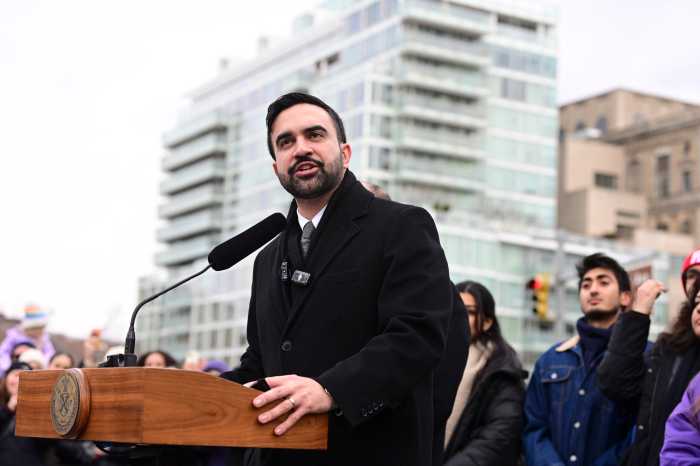
He said the executive order was intended to give his administration a “clean slate” while reaffirming a commitment to combat hate, including antisemitism, through funding hate crime prevention, community engagement and what he described as a “politics of universality.”
Mamdani also noted that some Jewish organizations have raised concerns about the IHRA definition and said his administration would focus on protecting Jewish New Yorkers in ways that address those concerns.
Asked whether the revocations were deliberate, Mamdani did not provide a direct answer. Instead, he said new mayors must either continue, revoke or amend existing executive orders. He said his administration chose to preserve orders issued before Adams’ indictment.
“I was proud yesterday to sign a number of executive orders that will give my administration a clean slate to get to work on delivering a new era for New Yorkers, one where they can envision living an affordable and dignified life,” he said.
“We will now showcase a new era,” Mamdani continued, “one that protects every New Yorker and delivers for them in ways they have not seen under prior administrations.”