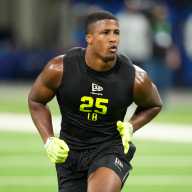



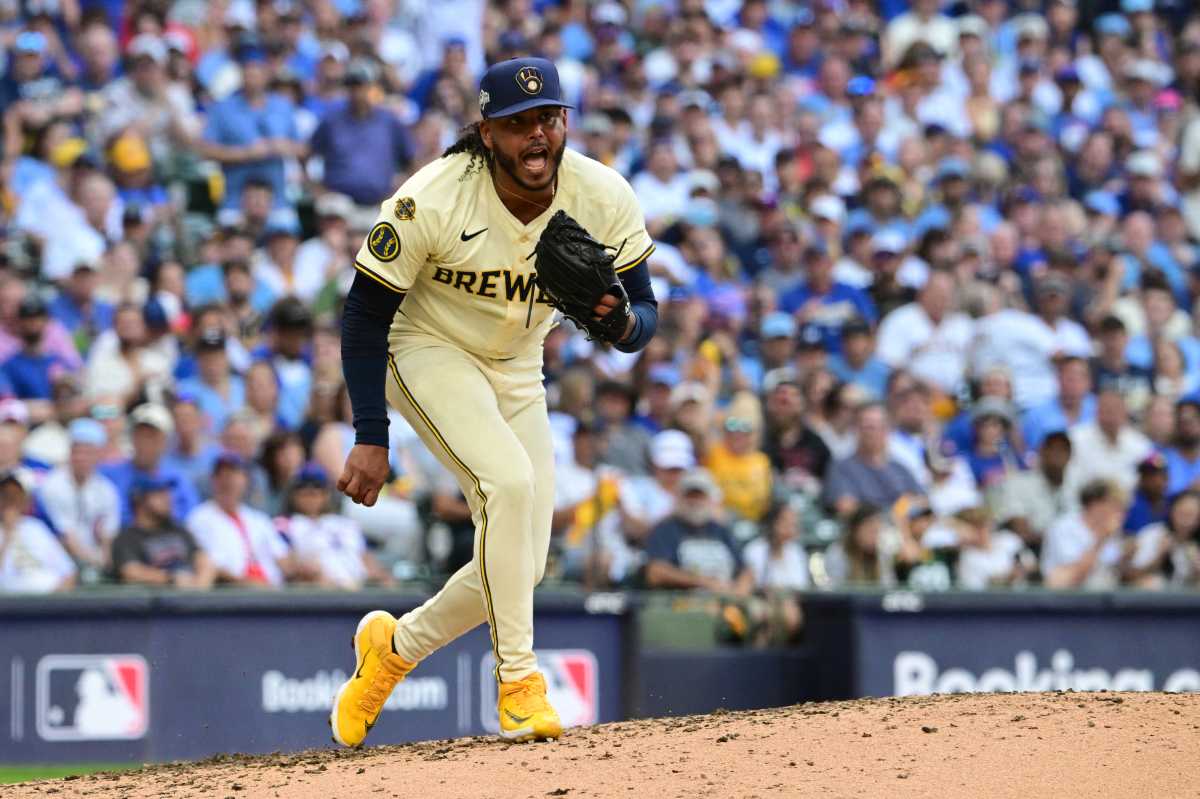
Freddy Peralta was the No. 1-caiber arm that David Stearns and the Mets so desperately needed this winter.
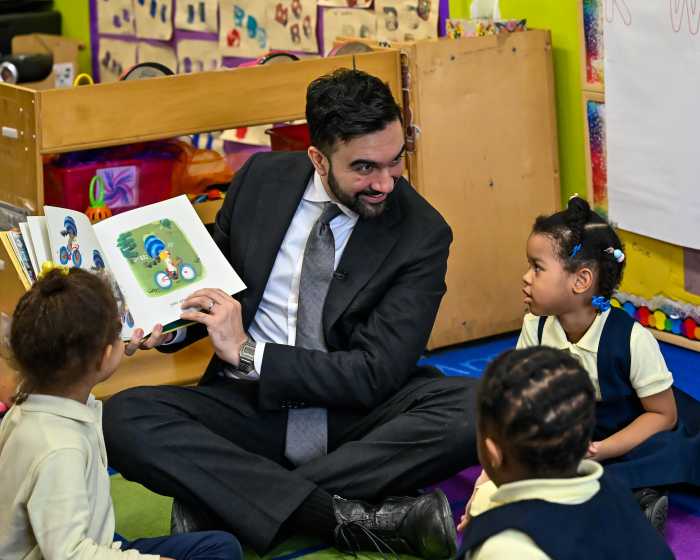
Stearns hooked up with his old team, the Milwaukee Brewers, to land the star right-hander on Wednesday night, sending top prospects in pitcher Brandon Sproat and infielder Jett Williams to the NL Central club — departures that he admitted “hurt.”
But you have to give to get, and Peralta was a necessity.
“Freddy has clearly established himself as one of the top starters in baseball, one of the most consistent starters in baseball over the last few years,” Stearns said of the 29-year-old, who he acquired from the Seattle Mariners for the Brewers back in 2015. “He’s a player I know well, a player I trust, and a player who I think is going to mesh very well with our organization.”
Peralta’s numbers are undeniable. He went 17-6 with a 2.70 ERA and 204 strikeouts last season. He and Dylan Cease are the only starters in Major League Baseball who have amassed 200 or more strikeouts in each of the last three years, and he ranks second with 40 wins.
That steady production is what Stearns described as a “stabilizing force” to lengthen a starting rotation that is still filled with legitimate question marks and allow some younger options some more seasoning in Triple-A if necessary.
But is he a bona fide ace? According to Stearns, he is one of the potential few who could adopt that role in 2026, though he is the overwhelming favorite to assume those duties from Opening Day on.
“I think we have multiple starters in our rotation who, at various points in their career, have pitched as No. 1 starters,” Stearns said. “Freddy qualifies as that. We saw [Nolan McLean] flash potential as a No. 1 starter last year. We saw Sean Manaea pitch as an ace before I got here, we saw Kodai Senga pitch as an ace.”
Of course, Stearns is dealing in considerable and lofty hypotheticals.
McLean was the closest thing the Mets had to an ace after a brilliant eight-start MLB debut last season. He went 5-1 with a 2.06 ERA with 57 strikeouts in 48 innings pitched, but the question of sustaining that sort of remarkable production over, say, 30 starts, looms large.
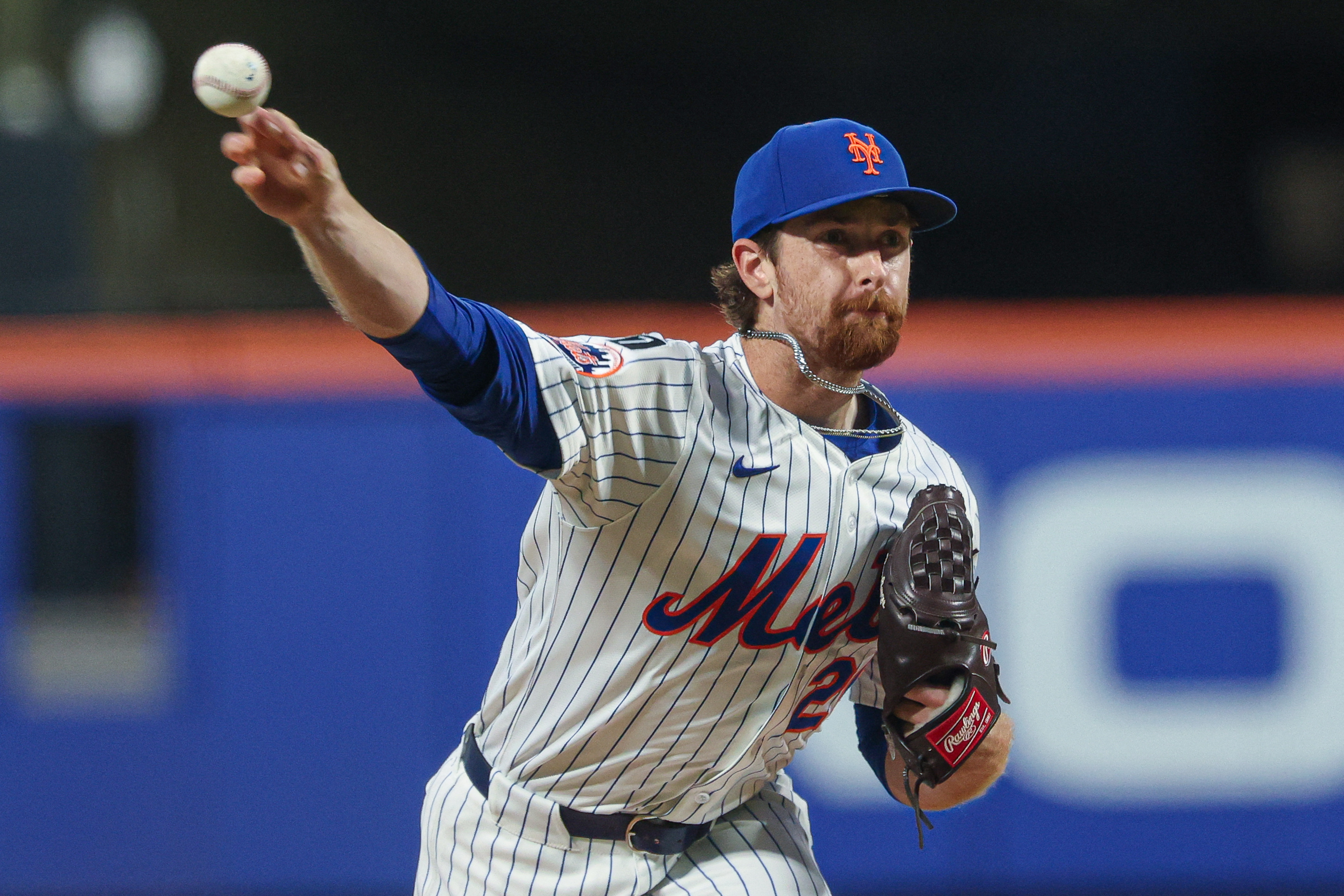
Manaea was the Mets’ hero in the second half and the postseason in 2024, pitching a career-high 181.2 innings with 184 strikeouts. While he posted a 3.02 ERA over his final 18 outings of that regular season, an oblique injury forced him to start last year late, and he was nothing like his former self. He had a 5.64 ERA across 15 appearances, which included a demotion to the bullpen.
That was a smaller drop than what Senga experienced, though. When healthy, he is one of the best pitchers in baseball, as seen by a barnstorming rookie season in 2023 when he had a 2.98 ERA with 202 strikeouts in just 166.1 innings pitched.
But injuries have stopped the Japanese righty in his tracks. He threw just 5.1 regular-season innings in 2024 and then posted a 1.47 ERA in the first half last year, only to have that season destroyed by a hamstring injury. He ultimately ended the season in Triple-A after an inability to rediscover proper mechanics.
Should they have normal offseasons and be at 100%, the outlook of the Mets’ rotation changes considerably. But those are big ifs.
“We like our rotation,” Stearns said. “Being able to add Freddy as somewhat of a stabilizing force to help lead our rotation probably gives us a little bit of space for some of our younger pitchers and keeps the opportunity for real bounce back seasons from guys like Sean Manaea and Kodai Senga, who we still are going to rely upon and still believe are going to give us some real quality innings… It has a nice combination of youth and established major-league veterans.”
For more on Freddy Peralta, David Stearns, and the Mets, visit AMNY.com