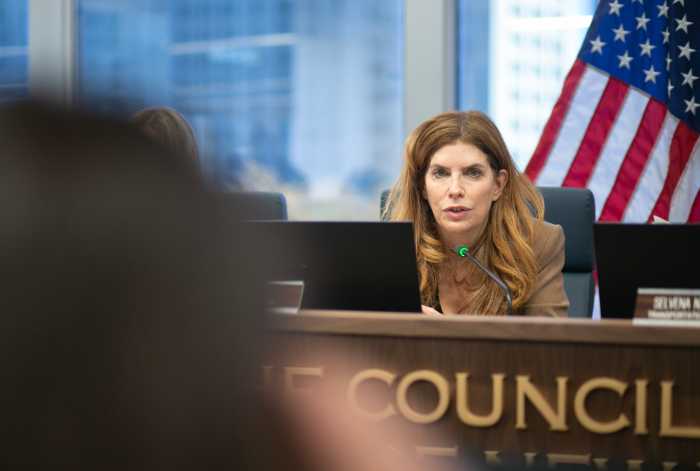



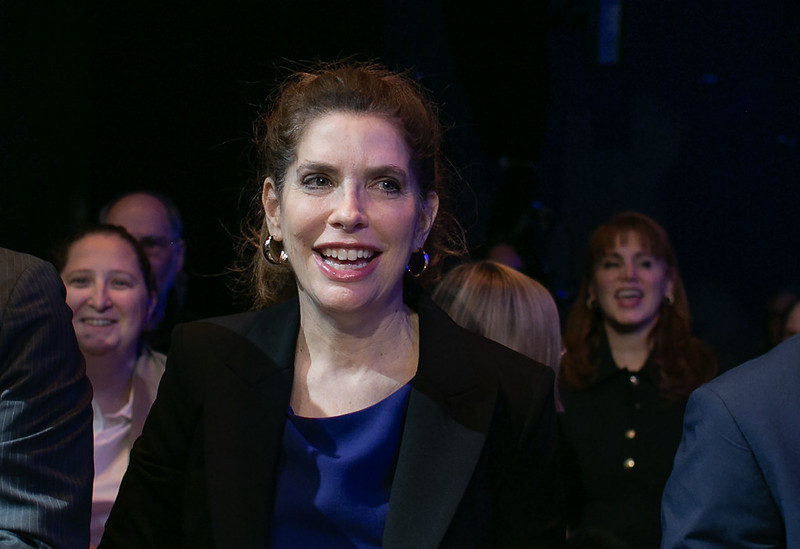
Julie Menin is poised to become the next speaker of the New York City Council on Jan. 7, the most prominent position to date in a career rooted in public service — and one where she promises to seek common ground with incoming Mayor Zohran Mamdani to get things done.
Menin secured a supermajority of support from returning and incoming council members across the ideological spectrum following a campaign that emphasized her long record in city government and a promise of being a proactive leader.
A moderate Democrat representing Manhattan’s Upper East Side, Menin is expected to take the gavel from the outgoing speaker, term-limited Adrienne Adams. She will do so just a week after the progressive Mamdani takes office as the city’s 111th mayor.
So how will the new mayor and speaker, often cast as ideological opposites, work together?
During the race for speaker, some progressive members had tried to frame Menin as a potential obstacle to Mamdani’s agenda. But Menin said the relationship is already productive and grounded in shared priorities.
“I’ve already met with the mayor-elect, and we are very aligned on affordability,” she said in an interview with amNewYork. “I think we can work extremely well together.”
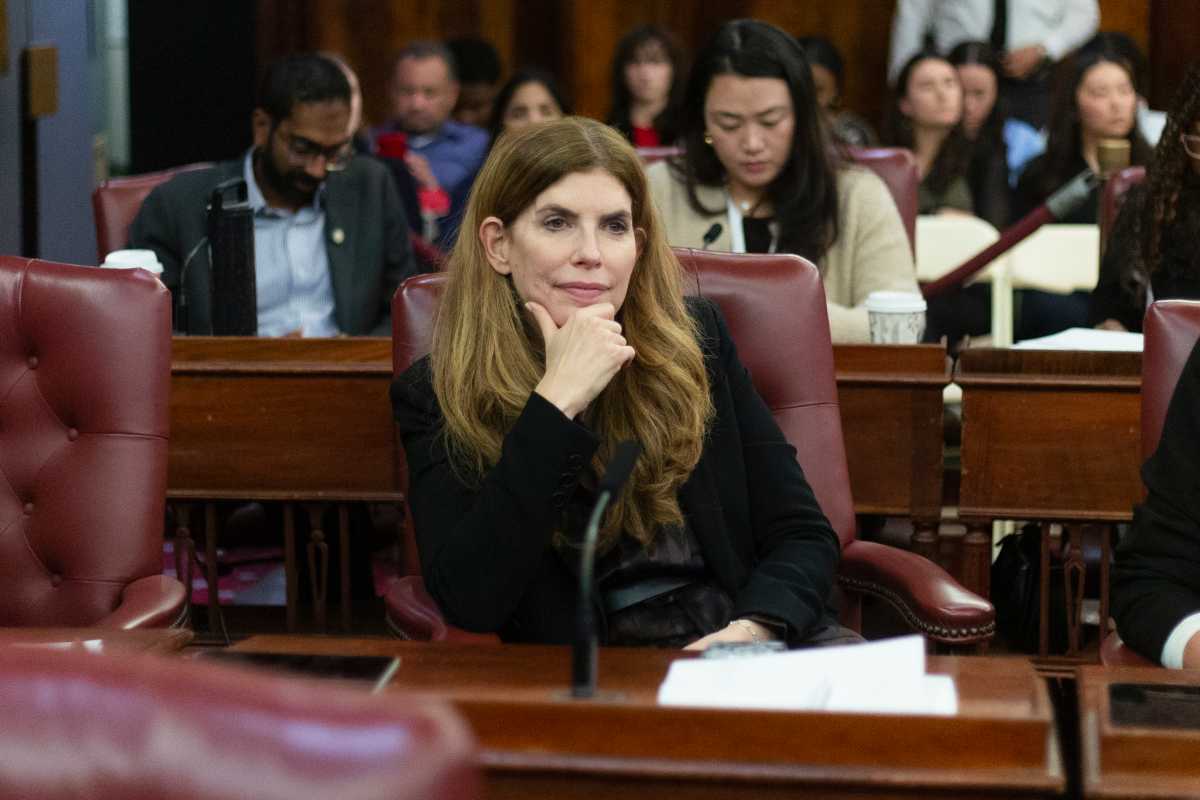
In a sign that Menin is committed to her vow of collaboration with the new mayor, former mayor Bill de Blasio, widely viewed as a key adviser and mentor to Mamdani, publicly signaled support for Menin’s coming speakership last week after meeting with her to discuss how her leadership can help to advance the mayor-elect’s affordability agenda.
“I know firsthand how effective a public servant she is,” de Blasio posted on Dec. 5. “She will be a great partner in the fight for universal childcare, free buses, and a city that puts working people first.”
De Blasio, admired by Mamdani for what he viewed as a successful mayoralty, seems to be playing a very prominent, if indirect, role in the transition phase.
Many senior officials from his administration hold top roles on Mamdani’s transition team. Incoming First Deputy Mayor Dean Fuleihan is a vet of de Blasio’s City Hall, where he served as budget director and first deputy mayor. Menin herself served in several roles under de Blasio.
Julie Menin’s career built on administration and crisis management
Menin joined the Council only in 2022 after decades of government experience and has led three major city entities: the Department of Consumer Affairs, the Mayor’s Office of Media and Entertainment and the city’s 2020 Census operation.
“I’ve run three city agencies during tumultuous times,” she said in a recent interview with this paper. “I’ve always been incredibly solution-driven, trying to reach consensus and a solution.”
At Consumer Affairs, she launched reforms to reduce unnecessary fines on small businesses, expanded enforcement against fraud, implemented the city’s paid sick-leave law and oversaw an Earned Income Tax Credit initiative that returned hundreds of millions of dollars to New Yorkers.
As media commissioner, she worked to expand film and television production, negotiated the return of the Grammy Awards ceremony in 2018, and created training pipelines to increase women’s participation in TV, film, theater, and music.
She later led the city’s 2020 Census effort, opposing the Trump administration’s proposed citizenship question and overseeing outreach that resulted in the highest self-response rate of any major U.S. city. On Thursday, the Council passed Menin’s legislation to establish a permanent Office of the Census, which, if signed into law, would require the Mayor to create an Office of the Census and appoint a director at least two and a half years before each federal census.
The bill comes as New York is projected to lose at least two congressional seats in the upcoming census, a shift that Menin warned could cost the city billions in federal funding. Establishing a fully operational Census Office by 2028, she says, would strengthen New York’s position and help ensure that every resident is counted and represented.
“Establishing a permanent city Office of the Census ensures New York City will receive its fair share of resources and representation and that every New Yorker will be counted,” said Menin.
First Jewish Speaker and Muslim Mayor
Menin’s public life was shaped in the aftermath of the Sept. 11 attacks, when she chaired Manhattan Community Board 1 and helped steer Lower Manhattan’s recovery. She founded Wall Street Rising to support displaced residents and small businesses and later served on boards overseeing redevelopment of the World Trade Center site. She also pushed for the creation of the World Trade Center Health Registry and helped consolidate oversight of Ground Zero construction.
One of the most charged issues to come before the board during her tenure was the proposal for an Islamic community center and mosque near the World Trade Center site, later known as Park51. The plan ignited a national firestorm, with critics objecting to building an Islamic institution so close to Ground Zero.
Menin guided the board through the debate, leading to a 29-1 vote in support of the project. She also urged planners to incorporate an interfaith component, arguing the center should promote deeper understanding among faith communities. She later received death threats for her role.
Menin said her experience defending Park51 after 9/11 remains central to her belief in coalition-building.
“I stood up for that project because it was about freedom of religion,” she said. “I wrote the resolution and got it through my community board. Even after receiving death threats, I stood by it. I’ve always believed we have much more in common than apart.”
That message has surfaced often in recent months. She described meeting a Muslim student in her district who, after Oct. 7, co-founded a Muslim-Jewish club with her Jewish best friend.
“That’s what we need in the city — people coming together even when they don’t agree on everything,” Menin said.
The topic also came up in her conversations with Mayor-elect Zohran Mamdani. “When we met in August, we talked about the Islamic cultural center because he knew I had supported it,” she said. “I look forward to continuing that conversation. I really think there’s an opportunity here to bring the city together.”
Menin declined to endorse in the mayoral race, which she said was intentional.
“I knew I would need to work with whoever had won,” she said. “Affordability is front and center, and that’s where I see the most alignment with the new administration.”
Menin will now become the city’s first Jewish Council speaker at the same moment New York inaugurates its first Muslim mayor, a pairing she views as both historic and necessary in a period of rising tension.
“I think it’s incredibly exciting to have the first Muslim mayor and the first Jewish speaker, both of which are historic,” she said. “I’m the daughter of a Holocaust survivor. To be in this role at this pivotal time is deeply important to me.”
Public service rooted in family
Menin often cites her family’s story as the foundation of her public service.
Her mother and grandmother survived the Holocaust in Hungary before fleeing Soviet rule, eventually resettling in Australia and later in Yorkville, the neighborhood Menin now represents.
“They rebuilt their lives here,” she said. “The Hungarian Jewish community welcomed them with open arms. It is the deepest honor to represent the community that gave my family a better life.”
That history has informed her work in office. Last year, she helped establish a citywide partnership with the Museum of Jewish Heritage to ensure every eighth-grade public school student visits the Holocaust exhibition.
“Studies show more than a third of young people believe the Holocaust is a myth or exaggerated,” she said. “We need to reach students before their hearts are hardened.”
Plans for speakership
During her campaign for City Council speaker, the New York Daily News reported that Menin had privately floated using the chamber’s subpoena power as a potential check on the incoming Mamdani administration. Menin told amNewYork, however, that any subpoenas would target “bad actor” corporations, not city officials.
She said the tool would be used against companies that flagrantly violate city laws, drawing on her experience as commissioner of Consumer Affairs, when her office investigated debt collectors and other businesses engaged in predatory practices.
“I believe that we should do what no Council has ever done,” Menin said, describing subpoenas as a way to hold corporations accountable. She emphasized that council oversight is designed to strengthen government, noting that, as a former commissioner, she found hearings to be valuable for uncovering issues and enhancing city services.
Since joining the Council, Menin has passed more than a dozen bills, including the Healthcare Accountability Act, which requires hospitals to publish procedure prices. She has also advanced legislation on child care access, small business permitting, reproductive health, and domestic violence legal services. She currently chairs the Committee on Consumer and Worker Protection and co-chairs the Women’s Caucus.
Her speakership, she said, will focus on stronger oversight and a proactive legislative agenda, particularly on housing and affordability.
“I think the Council has been far too reactive in recent years,” she said. “We haven’t really put out our own proactive vision for how we’re going to build more affordable housing.”
Menin plans to have the Council conduct a citywide inventory of publicly owned land and underused buildings to identify potential housing sites. She also cited staffing vacancies in city agencies as a key obstacle to service delivery.
“Some agencies have up to one-third vacancies. That means the slowing down of city services,” she said. “When you have that kind of attrition, it’s incredibly problematic.”
On health care, Menin said her price-transparency push is a step toward lowering costs in a system under growing fiscal strain. On childcare, an area where she and Mamdani appear closely aligned, she said she wants to explore a “baby bond” or similar early-investment program, citing her earlier work on creating NYC Kids RISE, a universal college-savings initiative.
Seeking ‘wholesome oversight’
Menin is also making improving City Council oversight a priority, citing frequent instances of agency officials failing to appear at hearings.
“Many times, we had so many oversight hearings where no one from the administration would even show up at our hearing, and you’d have five empty chairs,” she said. “That is not wholesome oversight. And so then we can’t really perform our oversight function.”
Just this past week, the Council’s Committee on Immigration held a hearing on four bills aimed at strengthening sanctuary city protections, but officials from the Mayor’s Office of Immigrant Affairs and city law enforcement agencies initially declined to testify.
Only after Council Member Tiffany Cabán personally requested it did MOIA Commissioner Manny Castro appear in his personal capacity to support the bills, breaking from the mayor’s public opposition.
Menin said such absences undermine the Council’s role in holding city agencies accountable and stressed that she plans to ensure future hearings are productive. As a former commissioner, Menin said she found council hearings to be a valuable tool for improving city services, with council members serving as the eyes and ears of their communities.
“Oversight is one of the most valuable tools because it uncovers issues agencies might not otherwise see,” she said. She added that she expects a more collaborative approach under the new administration, allowing the Council to perform its co-equal legislative and oversight functions effectively.
Menin said she expects a different approach under the incoming administration, emphasizing collaboration and responsiveness. “We’re going to have a collaborative working relationship,” she said. “That’s how government should function — agencies moving forward, the council performing its role, and a healthy dialogue between both branches.
Menin said a central focus of her speakership will be strengthening the City Council’s oversight role, particularly after a pattern of agency officials failing to attend hearings under the previous administration.
“Many times, we had so many oversight hearings where no one from the administration would even show up at our hearing, and you’d have five empty chairs,” she said. “That is not wholesome oversight. And so then we can’t really perform our oversight function.”
As a former commissioner, Menin said she found council hearings to be a valuable tool for improving city services, with council members serving as the eyes and ears of their communities.
“It helps government function better,” she said. “Oversight is one of the most valuable tools because it uncovers issues agencies might not otherwise see.”
Menin said she expects a different approach under the incoming administration, emphasizing collaboration and responsiveness.
“We’re going to have a collaborative working relationship,” she said. “That’s how government should function — agencies moving forward, the council performing its role, and a healthy dialogue between both branches.”
“No matter where one falls on an ideological spectrum, every New Yorker should want a strong council that is focused on negotiating the budget, having a proactive vision for land use, having strong and fair, and transparent oversight, because that oversight helps the agency.”