


Last year was one of the safest for New York City streets on record, street safety advocates reported on Tuesday.
The groups, Transportation Alternatives and Families for Safe Streets, found that last year was tied with 2018 for the least traffic deaths in the five boroughs since 1910. Both organizations credited street safety improvements made in recent years that they now want Mayor Zohran Mamdani‘s administration to build upon.
According to the report released on Jan. 28, the city saw 206 deaths on its roads last year, 46 less than the previous year — an 18% drop from the prior year. The 206 people killed on the city’s streets last year included 112 pedestrians, 73 drivers, and 21 bike riders.
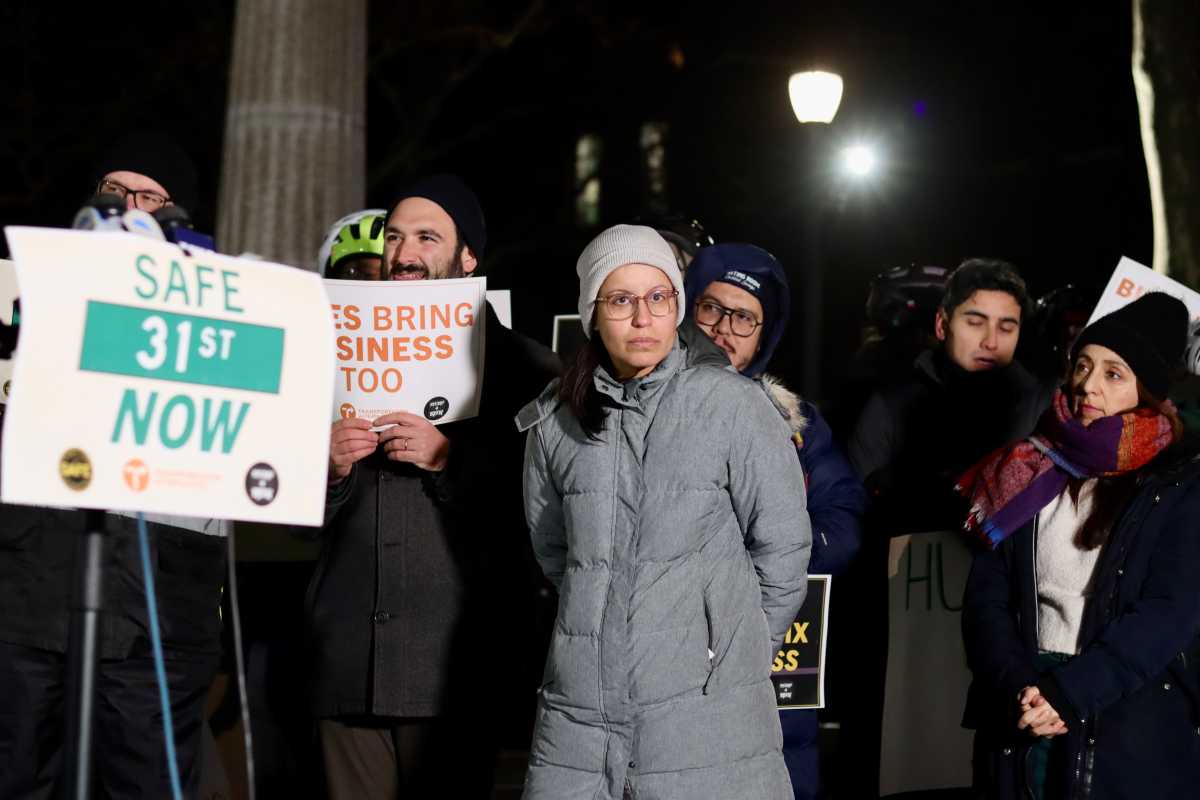
“This research shows that New York City has made significant progress on making our streets safer,” said Ben Furnas, Transportation Alternatives executive director, in a statement.
The Bronx and Queens saw the biggest drops in deaths from the previous year.
Twenty fewer Bronx residents were killed in crashes in 2025 compared to 2024, a 38% decrease. Meanwhile, there were 16 fewer New Yorkers killed on Queens roads, a 22% dip.
Traffic deaths also fell in Brooklyn and Manhattan, but far less dramatically — by 7% and 14% respectively. Staten Island had an 8% increase with one more death than in 2024.
Why were NYC streets safer?
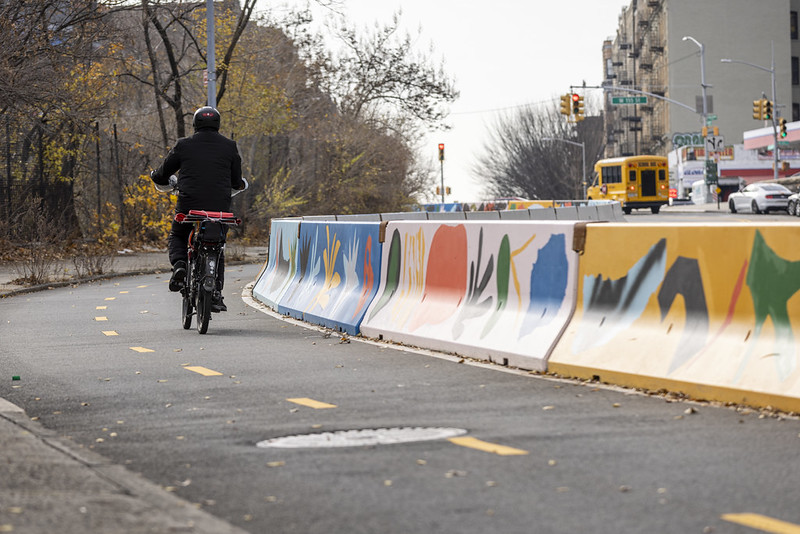
The groups contended that the dip was the result of a raft of street safety measures implemented by the city in recent years. They said those include activating 24/7 speed cameras, a bevy of street redesigns, and over a decade of the city’s overarching Vision Zero program to reduce traffic fatalities.
However, the report found that four New Yorkers on average were killed in traffic crashes each day last year.
The advocates also found that streets where the former Mayor Eric Adams’ administration either altered or completely stalled road-safety redesigns remained dangerous. For instance, the report found, 11 people died on Third Avenue between 15th and 65th Streets in Brooklyn’s Sunset Park neighborhood since the Adams administration in 2024 stalled a project to add protected bike lanes and cut one lane of traffic in both directions on the dangerous roadway.
“Those of us who have lost loved ones in preventable crashes understand the stakes of inaction all too well,” said Sarah Witt, a member of Families for Safe Streets. Witt lost her brother, Kevin Cruickshank, when he was hit and killed by a driver on Canal Street last summer.
“When street redesigns are stalled, New Yorkers get killed,” Witt said. “My brother Kevin should still be with us today.”
Additionally, the groups found 89% of pedestrians killed in traffic crashes last year, died on streets eligible for the city to lower the speed limit to 20 miles per hour under state legislation passed in 2024 known as Sammy’s Law.
The report argues that Mamdani’s administration can quickly take several steps to put a deeper dent in deaths on city roads.
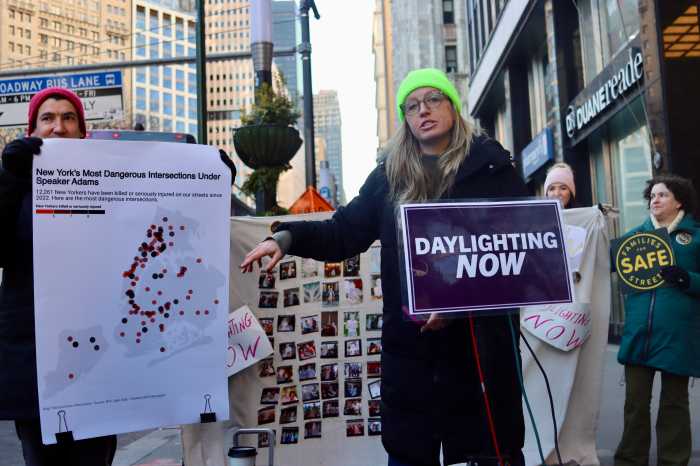
Those include committing to completely street safety projects that Adams’ administration altered or put on ice; lowering the speed limit to 20 mph on the vast majority of city streets; and eliminating parking spots near intersections across the city — a practice known as “universal daylighting.”
“The rollout of 20 mph speed limits and significant street safety redesigns were stalled under the previous administration, and they should move forward immediately,” Furnas said. “To reduce crashes, we also need universal daylighting so pedestrians and drivers can actually see each other at intersections.”