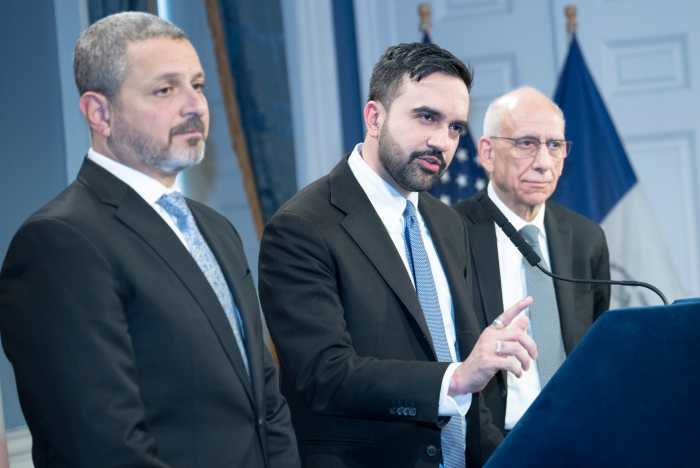



Two Democratic challengers to New York State Comptroller Tom DiNapoli’s reelection bid are calling on him to divest the state’s $290 billion pension fund from Palantir Technologies, escalating pressure on the longtime incumbent over the fund’s exposure to a company whose software underpins federal immigration enforcement.
Raj Goyle, a former Kansas state legislator, and Drew Warshaw, an energy and housing executive, both say that if elected comptroller, they would move to eliminate the fund’s Palantir holdings, arguing that continued investment in Palantir conflicts with New York’s values and its status as a sanctuary state.
Palantir has been providing ICE with data integration and analytics systems for over a decade, including a multimillion-dollar contract to develop an AI-driven enforcement platform that pulls together government records and flags individuals for possible immigration enforcement action. The relationship is one that civil liberties advocates, such as the American Immigration Council, say blurs the line between “tool provider” and “enforcement partner.”
Public filings show that the New York State Common Retirement Fund reported holding approximately 1.08 million shares of Palantir, valued at about $180 million, as of March 31, 2025. By Sept. 30, the fund’s reported holdings had grown to approximately 2.4 million shares, valued at more than $430 million, reflecting both a larger share count and a sharp rise in the company’s stock price.
Goyle has described the increase as a conscious escalation that elevated Palantir into one of the fund’s largest reported positions.
“This wasn’t a rounding error,” Goyle said in an interview with amNY. “Palantir became a top-tier holding while its role in immigration enforcement was widely known.”
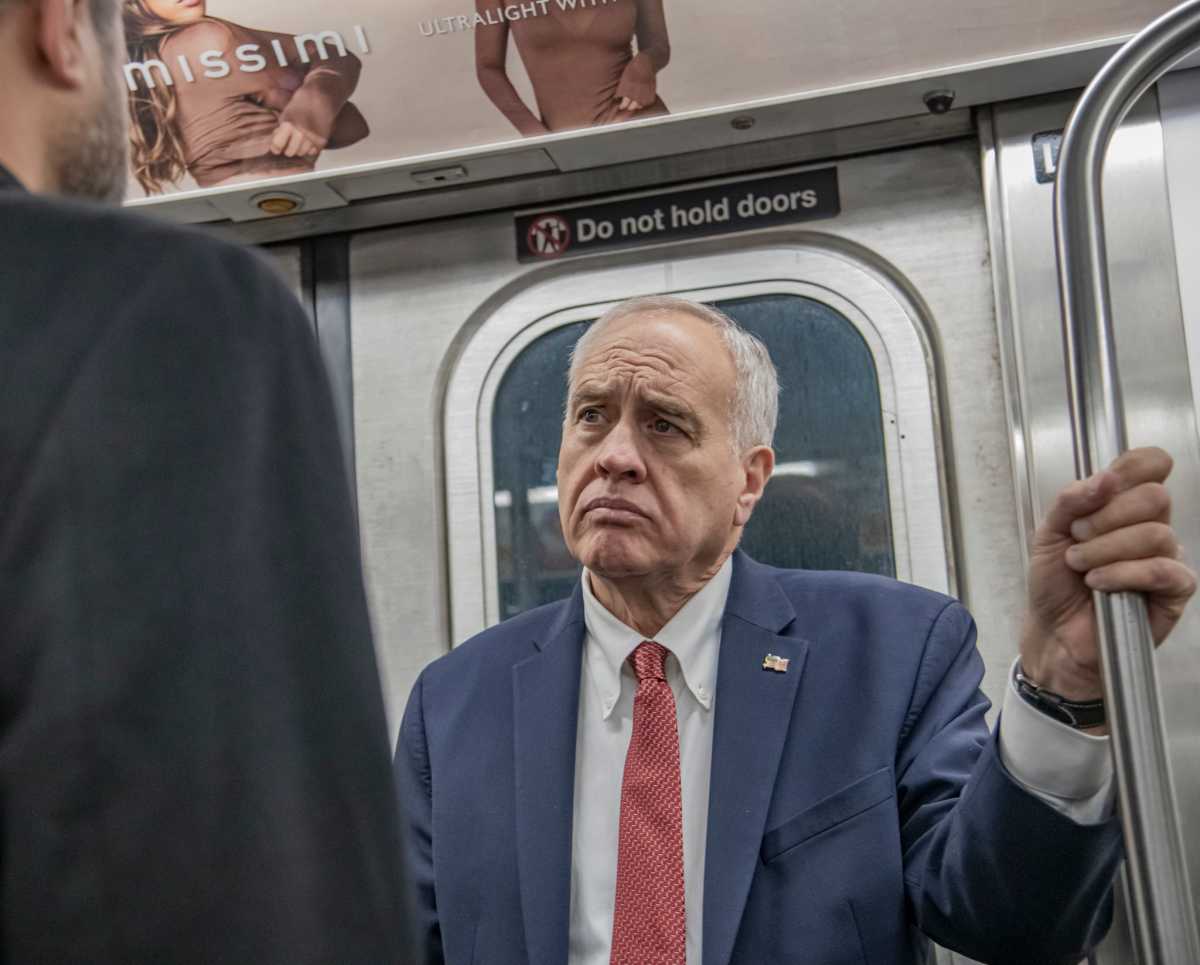
DiNapoli’s office strongly disputes that characterization, saying the holdings are entirely passive, the result of exposure through broad market index funds rather than discretionary stock-picking.
“Let’s be absolutely clear — New York does not fund ICE operations,” a spokesperson for DiNapoli said. “The suggestion that New York is willfully funding these operations is reckless and fundamentally misrepresents how pension investments work.”
Data shows that Palantir is a top-25 individual holding of the pension fund, but the official 13F report filed with the U.S. Securities and Exchange Commission does not indicate whether those shares are held directly or through passive index strategies.
DiNapoli’s spokesperson said that any increase reflects Palantir’s rising market capitalization, not an active decision by the comptroller or his investment staff — a pattern that has appeared in pension funds across the country, like Oregon and NYC, as Palantir’s stock surged beginning in mid-2024.
Engagement vs. divestment
Warshaw, who released a video on X on Wednesday criticizing DiNapoli, rejected the argument that passive index investing limits the comptroller’s options.
In the video, Warshaw accused Palantir of serving as the “technology backbone” of ICE operations under the Trump administration and said DiNapoli was wrongly portraying himself as powerless to act.
“He says it’s in an index fund,” Warshaw said. “So sell the index fund. Build an index that doesn’t include Palantir.”

Warshaw argued that the comptroller has more discretion than he acknowledges, including the ability to use customized indices or exclusionary strategies — tools increasingly used by large institutional investors.
“When I’m comptroller,” Warshaw said, “there will be zero dollars invested in companies enabling these practices.”
DiNapoli’s office says the comptroller has taken an engagement-based approach rather than divestment, pressing Palantir to justify its contracts with ICE and to disclose more information about its political spending.
“Comptroller DiNapoli categorically condemns ICE’s ongoing terror campaign against immigrant communities,” the spokesperson said, adding that the office is “exploring every responsible avenue to ensure Palantir is not supporting ICE’s abusive enforcement practices.”
Goyle and Warshaw both argue that engagement falls short.
“Passive investing isn’t morally neutral,” Goyle said. “If you can engage a company, you can also decide not to invest in it.”
“Hundreds of millions of dollars tied to a company like this demands public explanation,” Goyle said. “Whether through divestment or transparency, doing nothing isn’t acceptable.”
A rarely contested incumbent
Both challengers have tied the Palantir debate to broader critiques of DiNapoli’s management of the pension fund, saying it has underperformed benchmarks and paid excessive Wall Street fees, while routinely claiming he lacks authority — on housing investments, fossil fuel divestment, or Palantir — despite having significant discretion.
The state comptroller’s office disputes claims of underperformance and has long touted the state fund as among the best-funded public pension systems in the country.
The New York State Common Retirement Fund, one of the largest public pension systems in the nation, with roughly $273 billion in assets and more than 1.2 million members, has one of the highest funded ratios among U.S. public plans, with preliminary figures showing it was about 92 % funded as of March 31, 2025, according to an independent fiduciary review.
DiNapoli, who has served as comptroller since 2007, recently secured endorsements from all five Democratic county chairs in New York City, along with dozens of party leaders statewide.
In announcing those endorsements, DiNapoli emphasized his focus on affordability, audits, and pension stability, calling himself “the only candidate in this race prepared to make our home state easier to live in.”