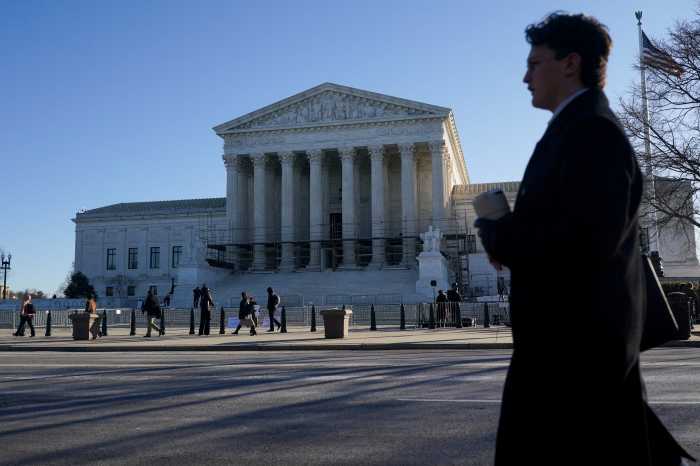




The state’s court system closed out Black History Month last week with a celebration of Frederick Douglass and his wife, Anna Murray Douglass’ lives and their impact on law.
Organized by the Franklin H. Williams Judicial Commission, a group formed to promote racial and ethnic fairness in the state’s courts, a panel consisting of historians and Court of Appeals Associate Judge Shirley Troutman spoke about the importance of bringing Black history to life in court — and what lessons the court can still learn from Douglass’ experience.
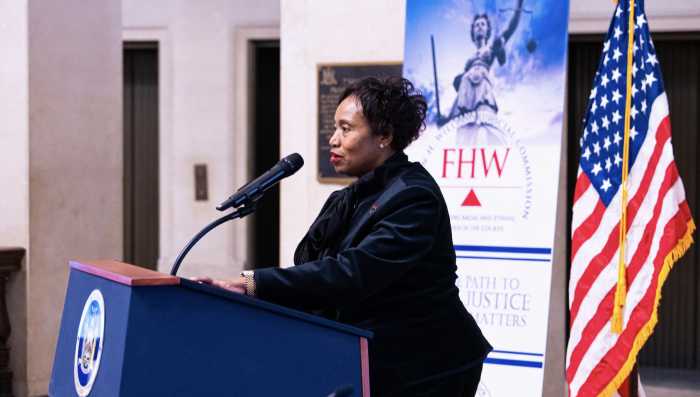
“I submit to you that knowing and sharing our collective Black history is just as imperative today as it was 100 years ago,” Troutman told the audience. “Thus, I charge each of you to be mindful of your individual responsibility to know and share our rich history with others. Remember, we have the collective power to prevent the erasure of Black Americans’ immense contributions to not only this nation but the world.”
Troutman noted she is only the second Black woman to ever serve on the Court of Appeals in its 179 year history, after the late Judge Sheila Abdus-Salaam.
Calling him “a part of living history,” Troutman welcomed Court of Appeals Chief Judge Rowan Wilson, the first Black chief judge in the state, to educate the dozens of judges, attorneys and advocates in the audience on Douglass’ life.
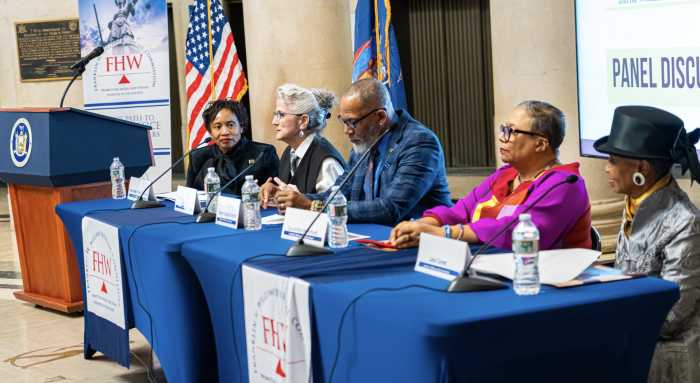
“Programs like today’s are provided because they widen our understanding of the type of people and struggles that pay for the march of progress,” Wilson said. “Douglass was a strong advocate for women’s rights and equal suffrage, believing that freedom and justice should apply to all people. Over the course of his lifetime, Douglass served as a trusted advisor to President Lincoln … and in 1888 he became the first African American to receive his vote to be President of the United States.”
Frederick Douglass’ great-great grandson said it meant a lot to him that the court held the event, and that the Rochester Hall of Justice installed a statue of his great-great grandfather in its entryway.
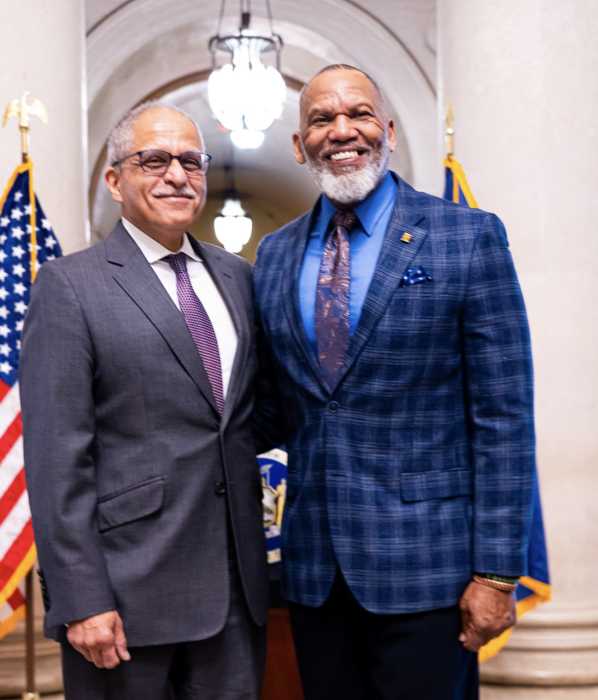
“I think that means a lot to be recognized in a place where justice is served,” Kevin Douglass Greene said . “For Douglass’ name to be seen in natural public places, the public thoroughfares where people don’t even understand who he was, it means people see his name, and sometimes that draws not only inspiration, but also draws inquiry: they might be inspired to learn more.”