

Lower Manhattan has made a very public comeback with the World Trade Center rising like a phoenix, but something else has been happening slowly. The area, long known as the Financial District, also has been in the midst of a commercial and residential renaissance, attracting many other industries as well including but reaching far beyond finance.
The Alliance for Downtown New York (also known as the Downtown Alliance), which often quietly helped lead this renaissance, is celebrating its 30th anniversary as part of a comeback story decades in the making.
High-profile financial companies are still based in Lower Manhattan, but these days so are fintech, fashion such as Hugo Boss and Gucci, and tech businesses like Uber, StubHub, and Spotify as well as Conde Nast, WPP, Wilmer Hale, Droga 5, Vox and HarperCollins. The area has become increasingly diverse in terms of industries, while attracting residents amid new construction and repurposing of buildings.
Offices have been divided into residences, while three movie theaters, performance spaces such as the Perelman Performing Arts Center, and Michelin-starred restaurants now serve residents. Tourism is on the rise and the South Street Seaport has been reimagined.
“It’s a dynamic, diverse, round-the-clock neighborhood. We’re proud of the role we played in shepherding this evolution,” Downtown Alliance President Jessica Lappin said. “And we’re energized and focused on building on this growth.”
Residential renaissance
While government and developers have worked together, the Downtown Alliance has been a partner and sometimes leader since launching in 1995 when Lower Manhattan was widely considered a 9-to-5 business enclave dominated by a few industries.
The group lobbied for and helped get zoning and tax incentives, spearheading a push that led to 70,000 residents (up from 14,000 when the BID started) and more than 40 hotels. About 20 million square feet of residential space has been added in 25 years, not simply building new, but converting office space.
“The BID makes an impact,” Lappin added. “The Alliance was a pioneer in the 1990s with the concept that you could repurpose offices and create housing. That was a radical idea at the time.”
She talked about a transformation from a business community “to a full 24/7 live, work, play environment.”
The BID picture
While most visitors won’t know it, the Alliance has been a big force behind the scenes as well as on the streets with employees in red uniforms.
“Financial services were 66 percent of tenants and are now closer to a third,” Lappin said. “We became a hot neighborhood for tech, fashion, advertising and architecture. It’s a wide range of industries.”
While the City is known as the Big Apple, it’s also the BID apple in many ways with the Alliance as the biggest in terms of budget at $23 million.
There are 77 BIDs city-wide or nonprofits where local businesses pay taxes for additional services such as sanitation, safety and things such as planting and additional benches. You’ll find BIDS in many city neighborhoods with a big commercial presence.
BIDs serve Bryant Park, Times Square, Grand Central, the Garment District, Lower East Side, SoHo, Meat Packing District, East Midtown, Columbus Avenue, Lincoln Square, Fifth Avenue BID, 125th Street, and more.
The BID difference
The Downtown Alliance spends close to 60% of its budget on sanitation and public safety, including a 60-person sanitation team handling 400 public trash and recycling receptacles, and 50 public safety officers patrolling streets 24 hours daily.
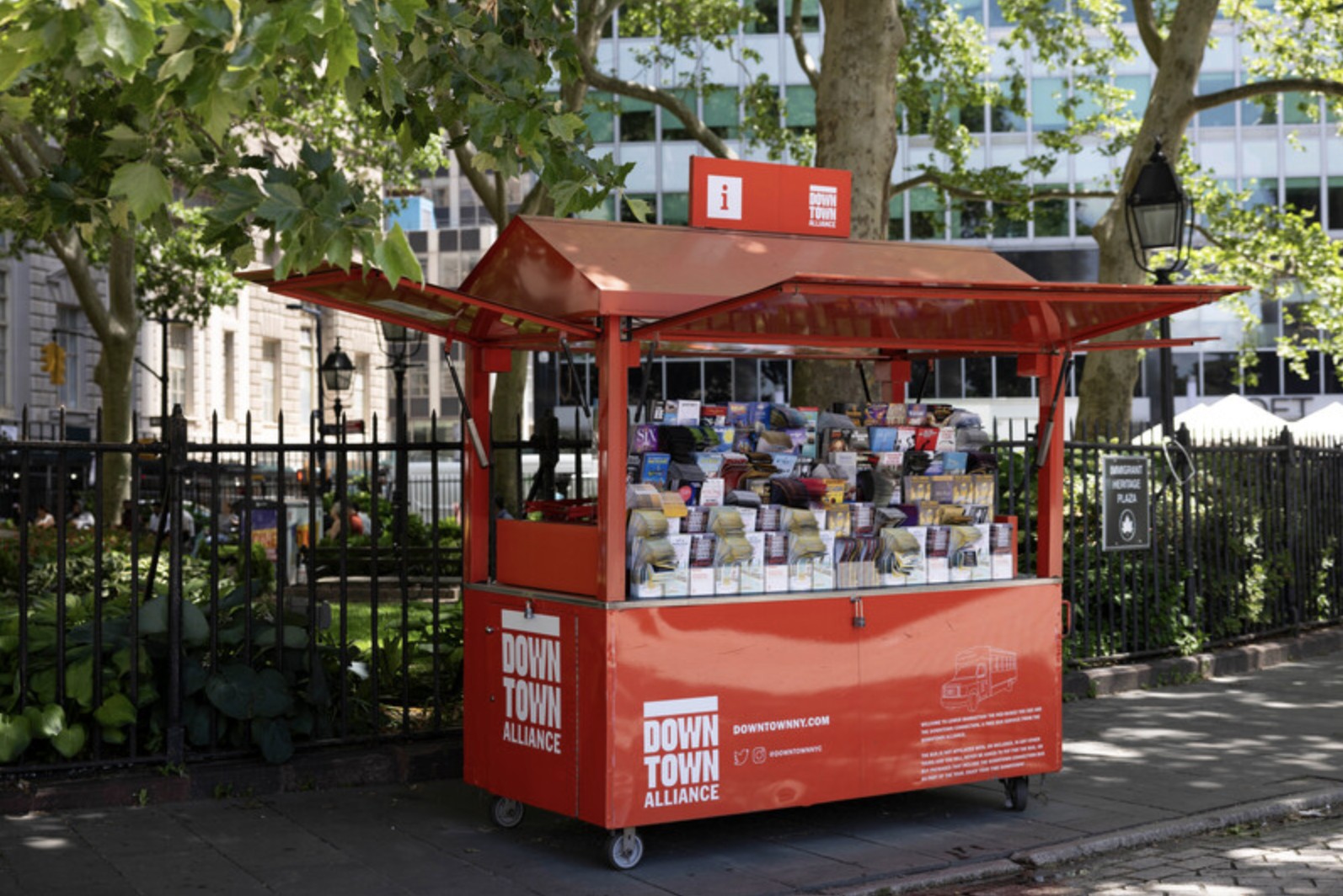
They also run a free bus service in partnership with the Battery Park City Authority, dubbed Downtown Connection, around the perimeter of Lower Manhattan as part of building a better Downtown.
“When the BID opened, the neighborhood was on its heels. It had the highest commercial vacancy rate since World War II,” Lappin said. “It was a ghost town at night with boarded up shops.”
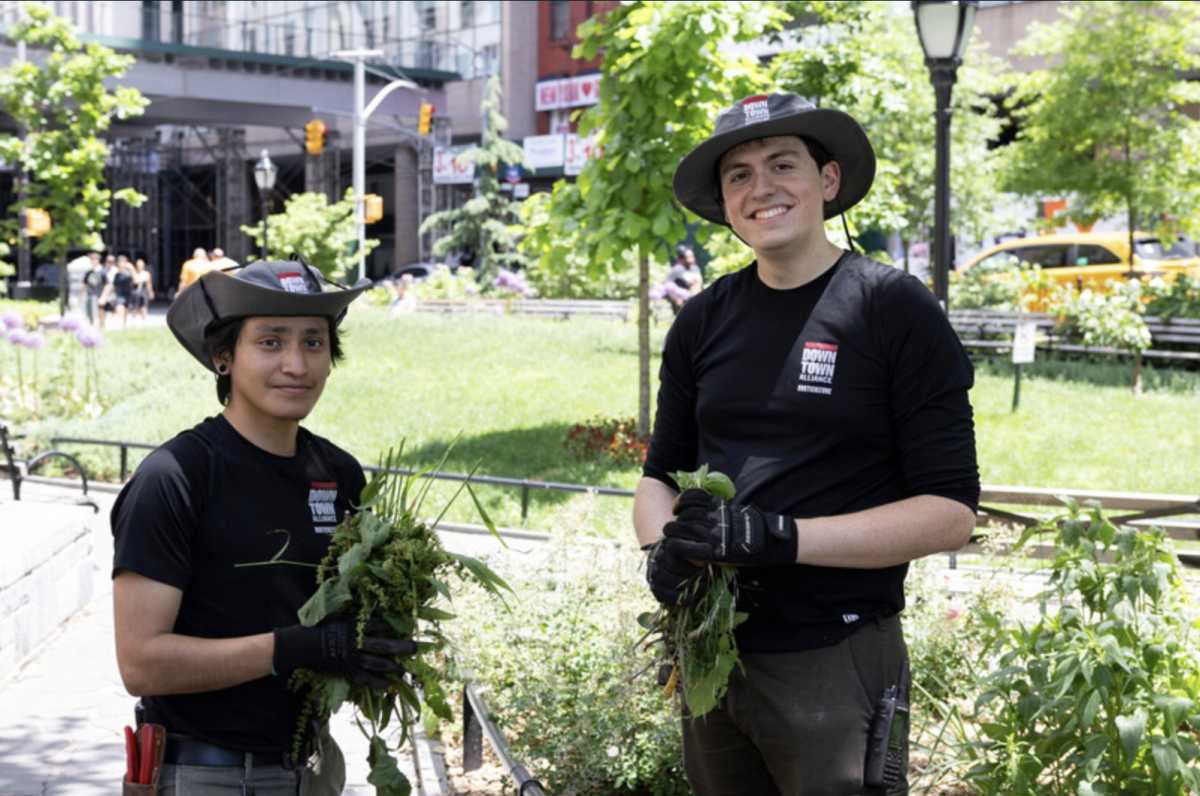
The Alliance, serving roughly from City Hall to the Battery, from the East River to West Street, lobbied for zoning changes and began providing supplemental services, removing graffiti, maintaining planters and public spaces, sweeping streets, helping remove snow, and power washing.
Green way
The Alliance provides about 7 million square feet of free Wi-FI and owns and empties big belly garbage cans, putting the trash in a place for the City to collect.
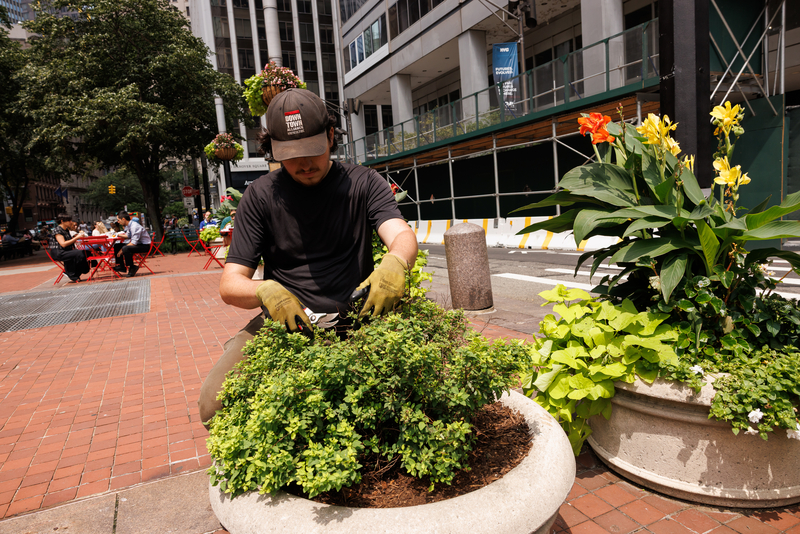
“We don’t just clean the neighborhood. We green the neighborhood,” Lappin added. “We have hundreds of planters with flowers and flower baskets hanging form the light poles. We put out tables and chairs for people to sit and eat.”
They help maintain parks such as Bowling Green Park, Liz Berger Park and Manhattan Park, although the Battery Park Conservancy manages its own park. And they put up holiday lights after Thanksgiving as well as holiday baskets filled with flowers.
They also set up and maintain outdoor seating and tables at Water/ Whitehall Plaza, Coenties Slip Plaza, Gouverneur Lane, Albany Plaza and the bump-out on Broad Street by Exchange Place.
And the $20 million Broadway Streetscape Program, which the BID helped obtain and fund, added and replaced fixtures including light posts, pedestrian ramps and more.
Food, Finance, Fashion
While finance, along with some fashion, are here, food also has followed, providing restaurants as choices.
“We have Michelin star restaurants, food carts,” Lappin said, citing Danny Meyer restaurants, Charlie Mitchell at Saga, Gregory Gourdet and Marcus Samuelsson among others. “It has become a dining destination.”
The Alliance also partners with Trinity Church and contracts with the Bowery Residents Committee for homeless outreach, helping to find housing for homeless people in shelters with BRC’s help.
“We placed over 200 homeless individuals into shelters this year through our contracts,” Lappin said, noting BRC placed them in its own and other shelters. Their safety officers also “work hand in hand with the NYPD” on safety.
The Alliance helped react and rebuild as developers returned after 9/11. One World Trade Center opened in 2014 amid work to transform Lower Manhattan into a neighborhood where people do more than work.
Battery Park City is here along with the Fulton Center Transit Hub, the Oculus and various hotels and nightclubs.
“Since Covid, we know the hotels do well in terms of rate s and occupancy rates,” Lappin added. “They exceed other parts of Manhattan often.”
Culture counts
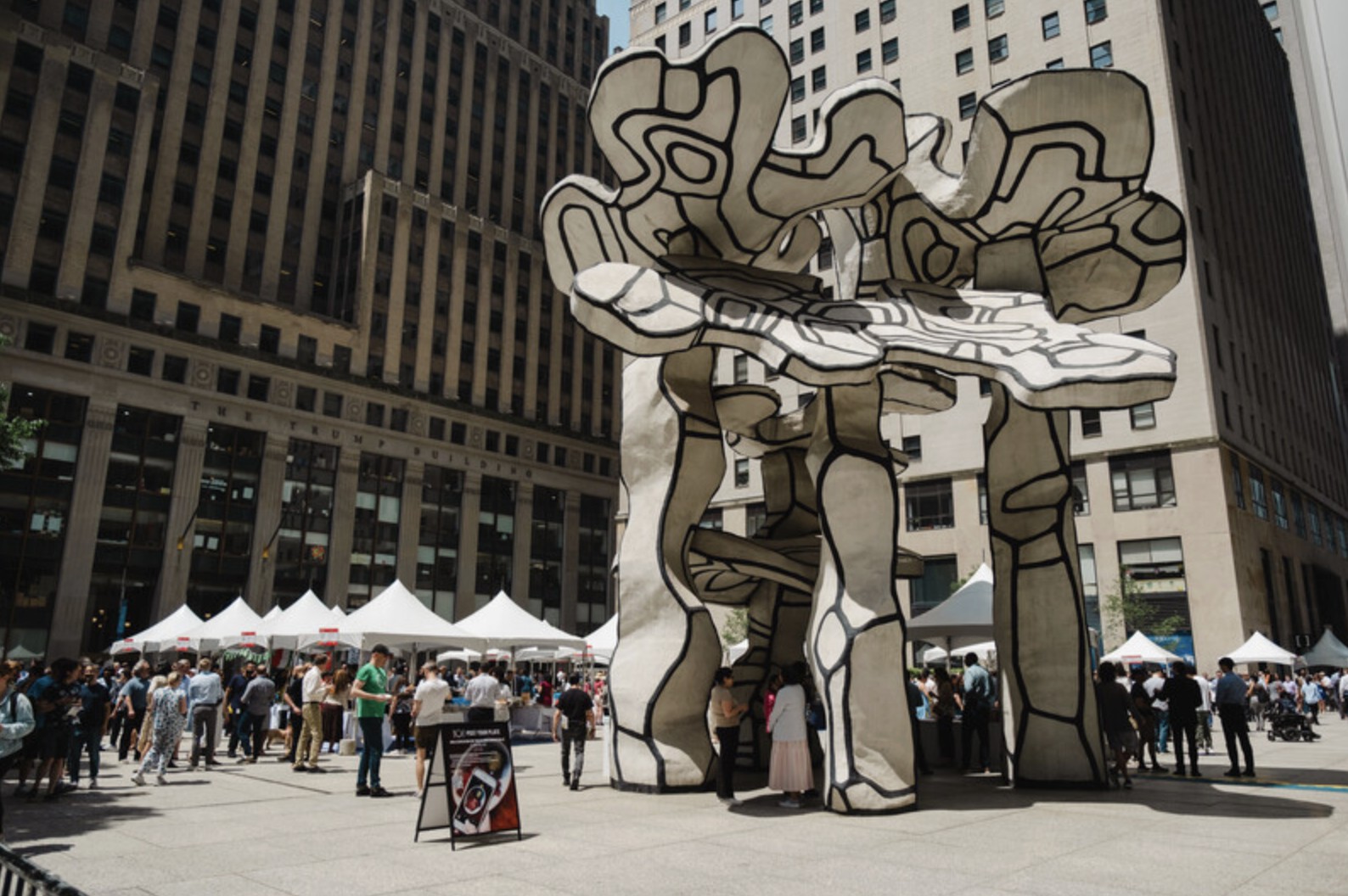
The Alliance leads programs like Dine Around Downtown, a summer concert series, the WITS Travel Creator Summit and LM Live. And the area is slated to participate in America’s 250th anniversary, such as the parade of tall ships.
It’s also across the river from MetLife Stadium where the FIFA World Cup is slated to be played.
New offices go up, while office space conversion continues. Along Water Street, buildings recently converted to residential, adding about 1,200 units. “There’s great demand for apartments,” Lappin said. “Every neighborhood has a character. We evolve. New York is not a static city.”