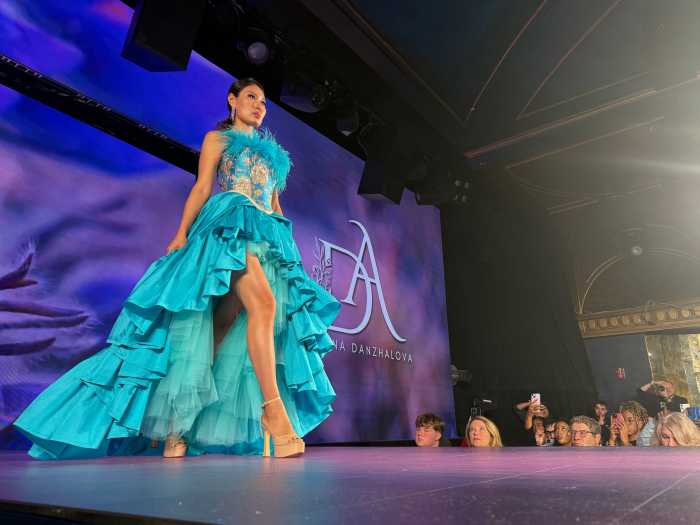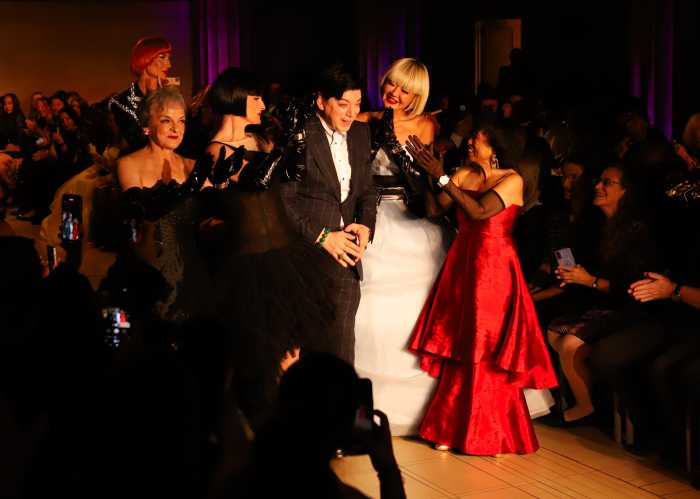



There is nothing polite about witnessing talent emerge in real time. It is electric, destabilizing, and unmistakably alive. During Fashion Week — when spectacle often eclipses substance — Gen Art delivers something far rarer: the experience of watching creative voices take shape with precision, intention, and momentum. Prestige is present, yet pretension never enters the room. The effect is both exhilarating and clarifying — a reminder that fashion’s future is not forecasted; it is formed.
My first encounter with Gen Art carried the unmistakable thrill of discovery. The room vibrated with the energy of designers on the cusp of recognition and artists whose ideas had not yet been filtered by market expectations. Editors leaned forward. Buyers watched with intent. Conversations felt purposeful rather than performative. This was not runway theater. It was cultural metabolism.
An artistic dreamscape
The experience unfolded across multiple layers, transforming the evening into a living environment rather than a linear program. Art, fashion, cocktails, immersive installations, and love walls coexisted in dynamic conversation, creating an art lover’s dreamscape in which creative disciplines dissolved into one another. Guests moved between spaces, encounters, and sensory moments, participating in a continuum of discovery rather than a single spectacle.
Gen Art’s origin story makes that clarity unsurprising. In the mid-1990s, a circle of downtown artists and newly minted professionals began hosting loft gatherings on the Lower East Side, creating a space where emerging work met curious patrons. Heidi Klum danced. Moby took over the DJ booth. Word spread. By 1995, Gen Art formalized its mission: to launch generations of filmmakers, designers, musicians, and artists while cultivating a community invested in creative promise.
Three decades later, that ethos remains intact. Gen Art continues to function as an artist-first platform, nurturing transformative career moments while connecting creators directly to audiences. Its February 2026 Fashion Week program felt less like a schedule and more like a living organism — a love letter to New York’s relentless creative engine.
Between shows, the audience drifted toward the bar, where espresso martinis crowned with smoke bubbles arrived like miniature theatrical events — aromatic, seductive, faintly surreal. The pause allowed conversation to linger and anticipation to build.
Nearby, the work of Anna Zalachkivska — an artist I have wanted to represent for what feels like forever — held the room in quiet suspension. Her paintings vibrate with emotional density and psychological nuance, each surface carrying tension, restraint, and luminous interior depth. Encountering her work within this environment felt both inevitable and electric, a reminder that fashion, art, and cultural authorship are most powerful when allowed to coexist.
A showcase honors Korea’s centuries-old textile heritage
At 8 p.m., The Hanbok & Dangchomoon presentation marked a cultural apex. Designers Jasmine Park and master artisan Kim In-Ja offered a dual showcase honoring Korea’s centuries-old textile heritage while extending its language into contemporary eveningwear. Silk volumes floated with ceremonial grace. Structured forms framed the body rather than constraining it. Color functioned symbolically, restrained yet radiant, steeped in historical intelligence.
Korean fashion at this level of craftsmanship transcends ornament. It is historic, elaborate, and opulent, governed by philosophical clarity. The geometry of the hanbok conveys harmony and hierarchy. Textile layering carries lineage. Proportion communicates dignity. The result was breathtaking — a living archive rendered in motion.
If the hanbok presentation spoke in the language of lineage, the evening’s closing presentation spoke in the language of rupture.
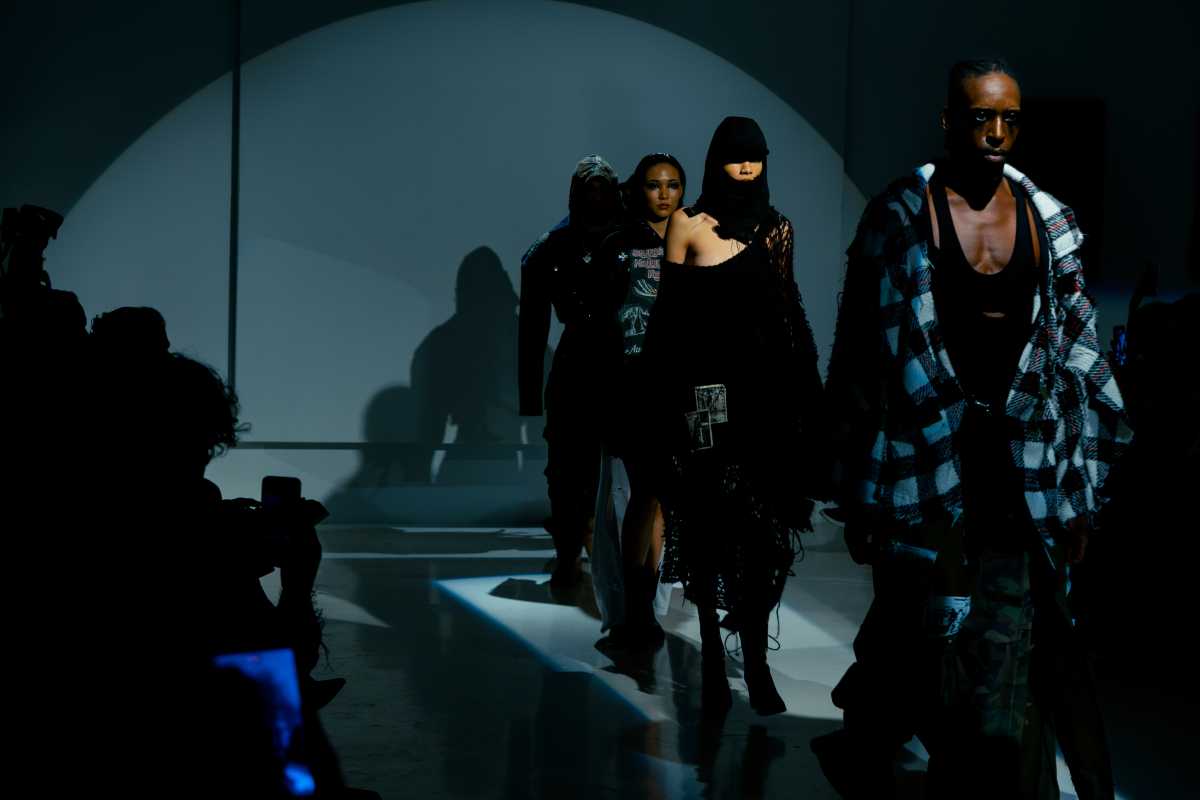
Dust of Gods by Antonio Tadrissi in collaboration with Toronto street artist Diogo Snow delivered a finale that felt urgent, confrontational, and unmistakably contemporary. Tadrissi’s architecturally informed sustainable luxury merged with Snow’s graphic interventions, producing garments that functioned as moving canvases rather than mere attire.
During the presentation, Snow executed a live painting directly onto denim, transforming fabric into surface and surface into statement. Models walked with mouths covered, a gesture evoking censorship, anonymity, and the quiet violence of silencing. The room stilled. Phones lowered. Attention sharpened.
At the conclusion, fortune cookies were distributed throughout the audience. Inside, a message read:
“U R FU*KED.”
The phrase landed somewhere between satire, cultural critique, and downtown wit. It felt irreverent, confrontational, and unexpectedly chic — precisely the kind of provocation New York requires to remain intellectually alive.
Throughout the evening, execution remained flawless. Beautick anchored the beauty direction with polished precision. Models from EMG Models and State Model Management delivered disciplined runway presence. Sybrandt’s sonic direction threaded the program with cohesion, sustaining energy without overwhelming the visual narrative.
What lingered most was not production value, though it was exceptional. What lingered was the sensation of witnessing emergence — the tremor before influence crystallizes, the early language of aesthetic authorship before markets codify its value.
Gen Art understands that artistic ecosystems do not thrive in isolation. They require proximity, curiosity, and community. By widening access this season and connecting designers directly to audiences, the organization reinforces its founding belief that creativity flourishes when distance dissolves.
New York remains the fashion capital of the world not because of legacy houses alone, but because of evenings like this — evenings in which new languages are spoken, new silhouettes emerge, and new cultural authors step forward with clarity and conviction.
Follow @genart for updates, behind-the-scenes access, and surprise announcements.