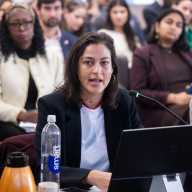



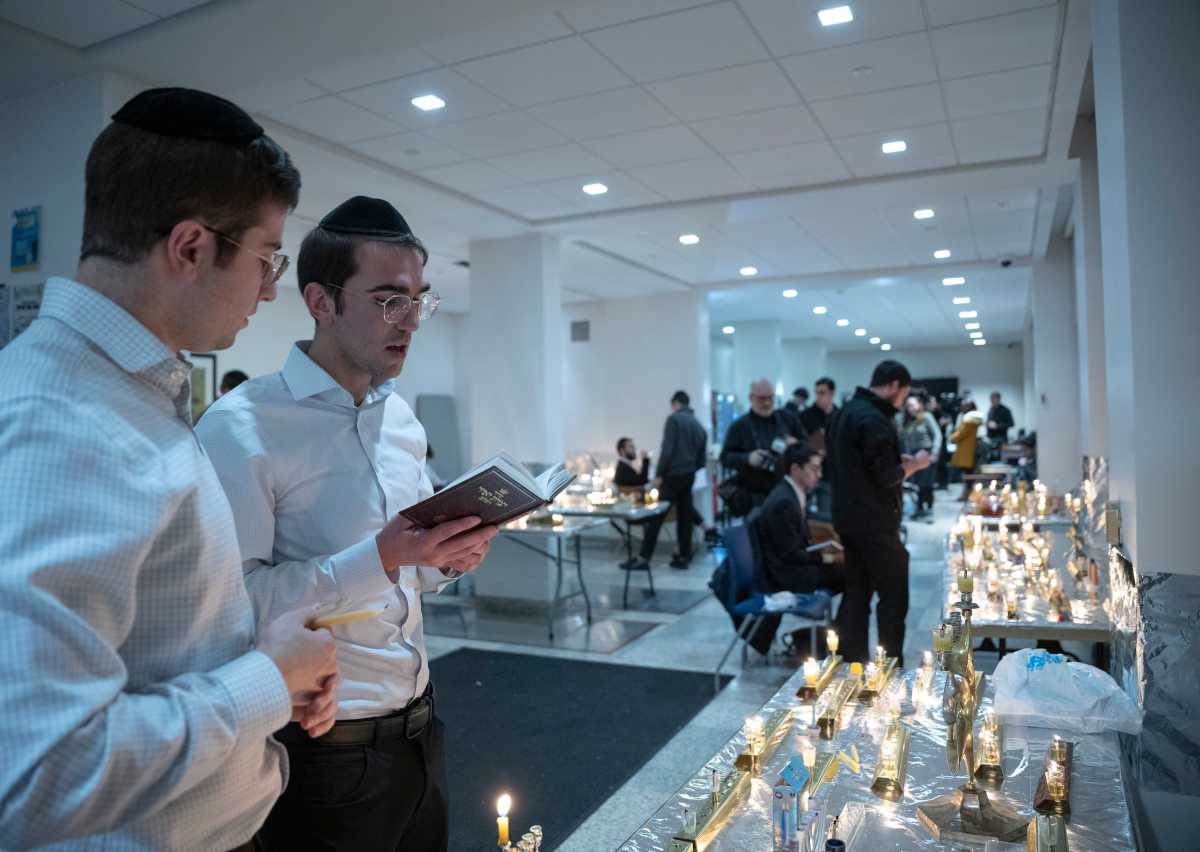
In a show of sorrow, strength and solidarity, Yeshiva University in Washington Heights hosted a vigil Monday night to honor those who died in Australia during a terrorist attack on the first night of Hanukkah.
They joined for a vigil on the second day of Hanukkah, a day after the Bondi Beach terrorist attack in Australia, said prayers, sang songs, held prayer books, linked arms and lit candles on menorahs.
“Hanukkah is not just about one point in history,” Yeshiva University President Rabbi Dr. Ari Berman said of the continuity of the holiday. “It’s about the continuous history of Jewish life.”
An ordinary ritual turned into a sign of resilience, including friends and family of people killed in the Australian attack, who gathered and lit a sea of candles after the hate-inspired attack that spread darkness near the sea.
Terrorists attacked the Chabad of Bondi Jewish Center during a gathering at Bondi Beach on the first evening of Hanukkah on Dec. 14, killing 15 and injuring many more. Among those killed was Rabbi Eli Schlanger, a 41-year-old assistant rabbi at the Chabad of Bondi Jewish center in Australia, who had many ties to New York City.
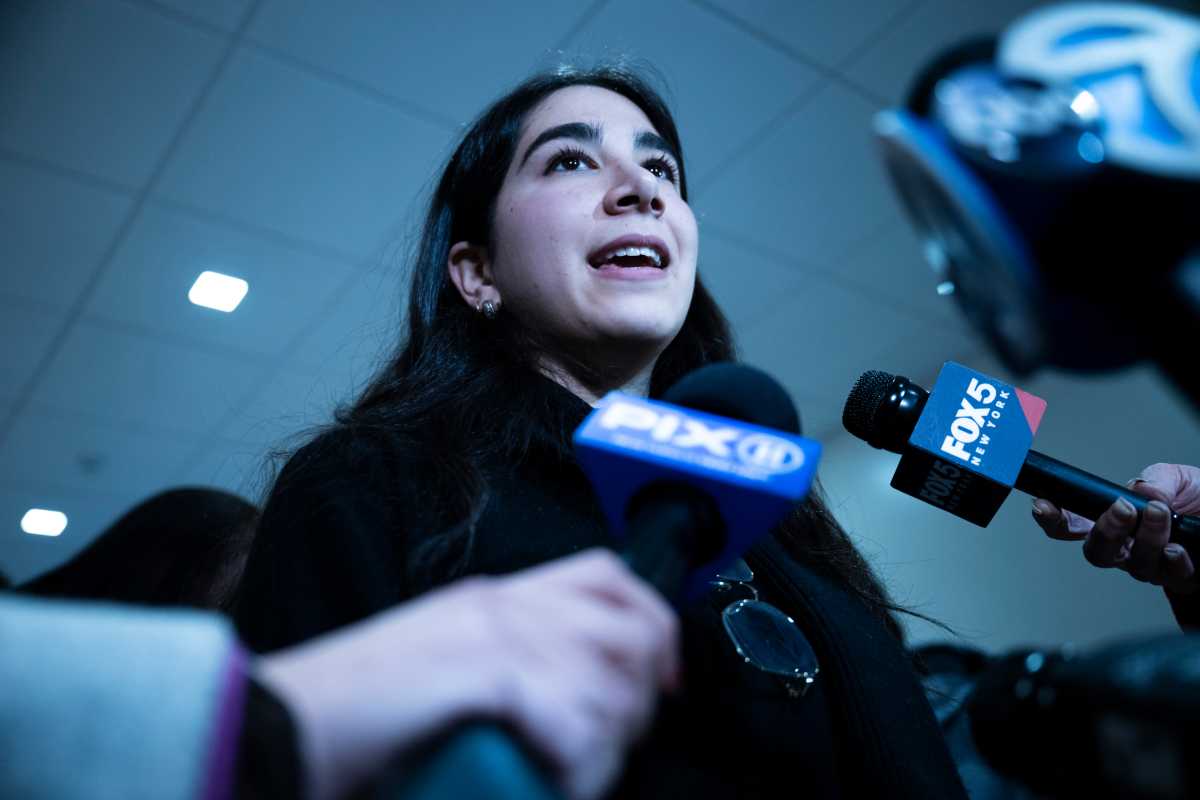
“I woke up to a lot of messages saying, ‘I’m so sorry, I’m so sorry,’” said Rosie Schlanger, a Yeshiva University student and niece of Rabbi Schlanger. “And then I saw his name. It was so hard for me to grasp, because he was so young. … He would want us to take the message of Hanukkah and light up the world.”
Alex Kirievsky, an Australian and Yeshiva University freshman, was awake in the middle of the night when he saw messages rapidly appear on a group chat for his graduating high school class.
“Oct. 7, 2023, was a horrible invasion of Israel. This was so different for me. This was a beach where I go to swim every single day. I live a 20-minute drive from it. I go there very often,” Kirievsky said. “It’s so much more personal when it’s pretty much your backyard.”
Kirievsky soon learned his rugby teammates were running away from bullets, and his doctor, with her husband and two children, was hiding behind trees, when someone died in front of them at what was organized as a celebration that had been dubbed “Hanukkah by the sea.”
“These are people that I personally know,” Kirievsky said. “The worst one. I can’t imagine this just happened. The 10-year-old girl who passed away, Matilda, went to my family’s daycare. She slept in my bedroom. I’d come home from school. She’d be on the couch in my living room.”
Yeshiva University President Berman said hatred is fueling attacks against Jews and that meeting it with hatred only spreads the disease responsible for the horrors.
“There’s a rise in antisemitism across the globe. This needs to be met with a direct, clear attempt at eradicating all hate,” Berman said. “It starts with the Jews. But it never ends with the Jews. This is a threat to the entire society. We need to gather and stop hate wherever it rears its head.”
While hate brought killers to that Australian beach, Berman said he’s seeing strength and solidarity as a response.
“I’ve seen so much hope and light,” he added. “The Hanukkah menorah candles, it’s eight candles. One candle’s not going to be enough to put out the darkness. We need to gather together.”
Where there are horrors, the Yeshiva University president reminded, there often are heroes — such as Ahmed al-Ahmed, 43, who risked his life to rescue others at the attack and disarm one of the two gunmen.
“When you look at the innocent bystander who went in and at the risk of his life saved Jewish celebrants on that beach,” Berman said. “We need to stand together and fight against hate.”
Mordechi Becher, an Australian as well as a rabbi at Yeshiva University, said that, during the holiday itself, the attack could extinguish lives, but not the light that continues on.
“Jewish history is often mixed emotions. We mourn for victims and also celebrate our eternity,” Rabbi Becher said. “When we light these candles and see these candles lit, that should inspire us to take that spark of godliness in every one of us to people we know and don’t know and inspire them.”
Berman looked around the room filled with young men in their twenties, some holding prayer books, standing shoulder to shoulder as they sang.
“You our students are candles. You are our lights. You should be taking the feelings of loss and the feelings of mourning and using that to inspire us,” he said. “That’s what you do. You are the lights. You are the ambassadors. This Hanukkah, which is a moment of resilience, will continue to brighten our flame and grow.”
Australians at the event said it’s important to continue the tradition of this holiday and unite, rather than step back and allow division to triumph.
“I really believe my uncle would want people to celebrate Hanukkah,” Rosie Schlanger said. “This festival is to publicize the miracle that happened, the miracle of Hanukkah. Don’t be afraid to go out. Go out and don’t be afraid.”