


Friday, Feb. 13, marks the 44th day of Zohran Mamdani’s term as mayor. amNewYork is following Mamdani around his first 100 days in office as we closely track his progress on fulfilling campaign promises, appointing key leaders to government posts, and managing the city’s finances. Here’s a summary of what the mayor did.
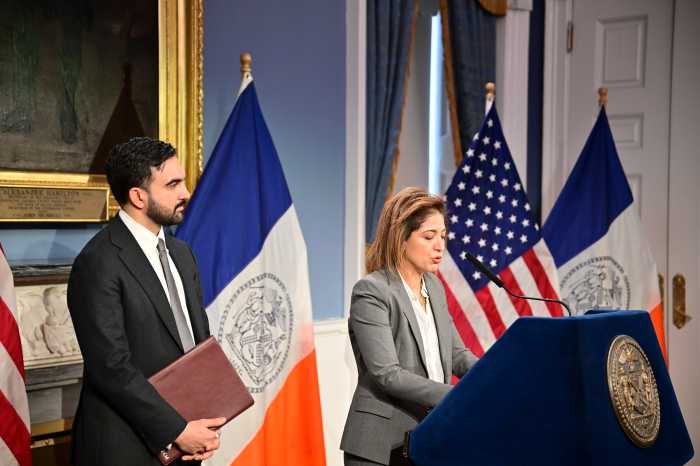
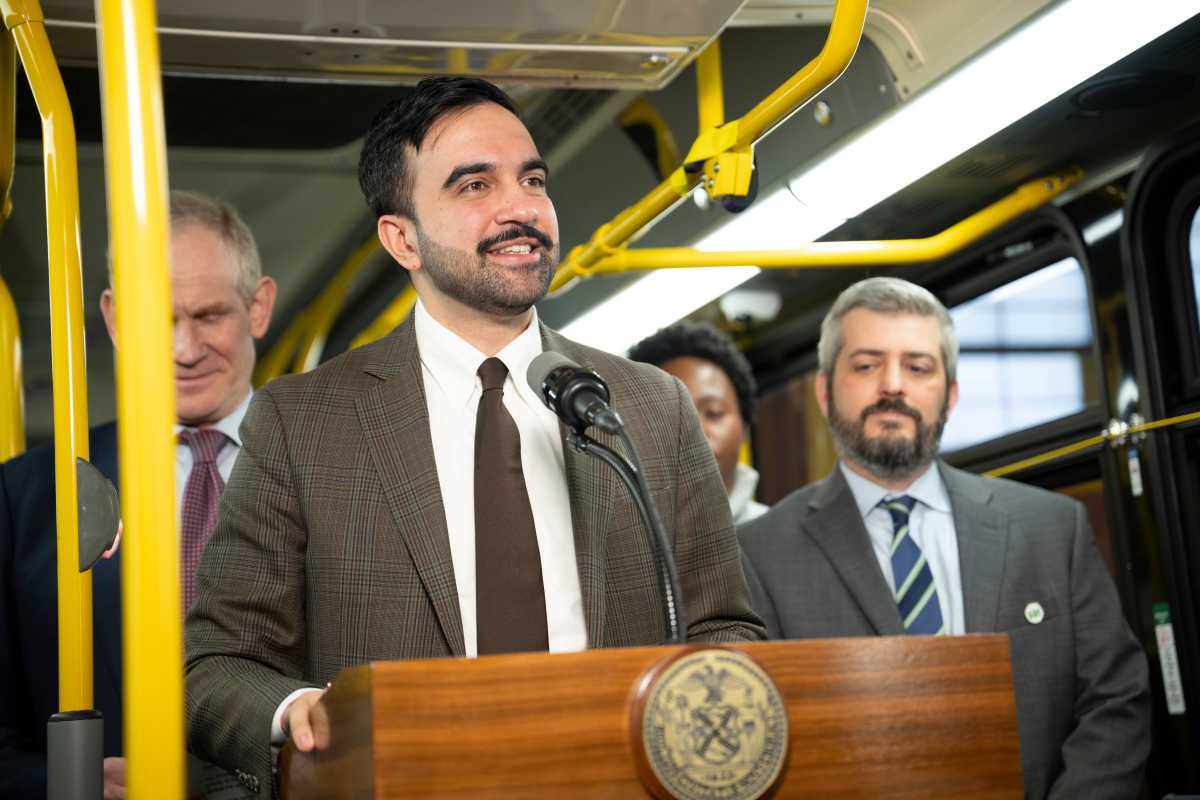
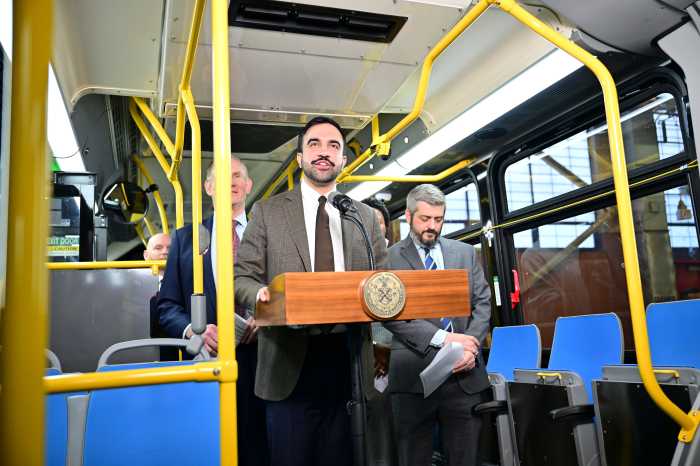
Mayor Zohran Mamdani announced on Friday the restart of four bus and bike lane projects that had been halted under his predecessor.
It’s part of Mamdani’s early push to speed up transit, expand cycling infrastructure, and fulfill a campaign pledge to make buses faster and eventually free.
Speaking at a Bronx bus depot alongside transit officials and advocates, Mamdani said the projects were aimed at giving riders quicker trips and safer streets, particularly in neighborhoods that rely heavily on buses and bicycles.
“We are bringing the streets master plan back to life,” Mamdani said, announcing the resumption of construction on “four critical street redesign projects.”
The plans include new offset bus lanes along Fordham Road, the Bronx’s busiest bus corridor. About 130,000 riders use buses on the route, where speeds can drop to roughly four miles per hour, the mayor said.
To improve travel times, the city will install dedicated lanes set off from the curb, a design intended to reduce conflicts with parked and turning vehicles. Mamdani said the administration is targeting at least a 20% increase in bus speeds on priority corridors.
“Our goal here is outcomes,” he said. “The outcome that we are intending … is a 20% increase in bus speeds.”
He said similar offset bus lanes on Hillside Avenue in Queens increased speeds by up to 28%, and the administration would measure results and make changes if necessary to meet the target.
The Adams administration axed plans to build a busway on Fordham Road following protests from local business owners and local politicians like U.S. Rep. Adriano Espaillat and City Council Member Oswald Feliz.
Transportation Commissioner Mike Flynn said the city would move quickly to complete projects announced Friday that had been previously delayed, saying that work would get underway “when the weather allows.”
“We’ll be acting with urgency to finish these projects that are supported by New Yorkers, backed by data, and are long overdue,” Flynn said, adding that officials would monitor results and “not hesitate to make additional upgrades as needed.”
He added that the city would no longer allow “the safety of New Yorkers” to be treated as “a bargaining chip for back-room deals made by the last administration,” framing the revived street projects as a break from prior political interference.
The mayor also signaled that the administration could consider further measures if the projects fail to deliver the targeted improvements, emphasizing that the 20% speed increase would be the “North Star” for bus-priority efforts.
In Brooklyn, the city will be reviving a long-delayed redesign of Ashland Place, converting the block into a shared street with expanded pedestrian space and a two-way protected bike lane. The project will complete a continuous protected cycling route from Sunset Park to Dumbo, with connections toward Greenpoint and Queens.
The Adams administration removed the Ashland Place block between Hanson Place and Lafayette Avenue from a 2023 protected bike lane plan after Adams’ senior adviser, Ingrid Lewis-Martin, allegedly intervened on behalf of a developer with property on the block.
Officials described the block as the final missing link in a north–south protected route across Brooklyn.
The administration also announced protected bike lanes along Brooklyn and Kingston avenues in central Brooklyn, an area with 10 nearby schools that has seen a high number of traffic injuries. The plan includes a protected loop around a nearby park and additional conventional bike lanes on adjacent streets.
A fourth project will advance a broader bike network across the neighborhoods of Midwood, Flatbush, and East Flatbush. Once completed, officials said, the plan will create a network of 16 protected and conventional bike corridors.
Mamdani said the projects were meant to address long-standing rider complaints about slow buses and unsafe streets, particularly in working-class neighborhoods without subway access.
“For the millions who live in neighborhoods without subway access, buses and bikes are how they get where they need to go,” he said.
Janno Lieber, MTA chair and CEO, said bus service depends on street conditions and praised the city’s decision to prioritize bus lanes.
“The buses can only move as fast as the conditions at the street level allow,” Lieber said. “That’s why today’s announcement is so important.”
He said the MTA would continue discussions with the city about other issues, including the mayor’s proposal for fare-free buses.
Mamdani said any free-bus program would require replacement revenue and would be part of ongoing budget negotiations with state officials.
“We want to ensure we’re actually continuing to fund the critical operations of the lifeblood of this city,” he said. “Today we are unlocking the speed of it, and we’ll continue to look to unlock the affordability of it.”
At the event, Tiffany-Ann Taylor of the Regional Plan Association said the projects were an important step toward improving mobility and safety.
“Today’s announcements are another important step in providing riders more options to get around faster and safer,” she said, adding that prioritizing bus riders early in the administration was “an important step toward transportation equity.”
The mayor said the city would continue community engagement around the projects, including conversations with business groups that have raised concerns about traffic impacts along Fordham Road.
He said the administration had already begun discussions with business improvement districts and would continue outreach as designs move forward.
Flynn said the Bronx corridor carries heavy traffic but that engineers were considering all factors, including access for drivers and businesses.
Budget: Fiscal watchdog says don’t tax the rich, Mr. Mayor.
The Citizens Budget Commission, a nonpartisan nonprofit that examines city and state public policy, penned a letter to Mayor Mamdani on Friday, asking him to turn back on his repeated calls to raise taxes on corporations and the rich in NYC.
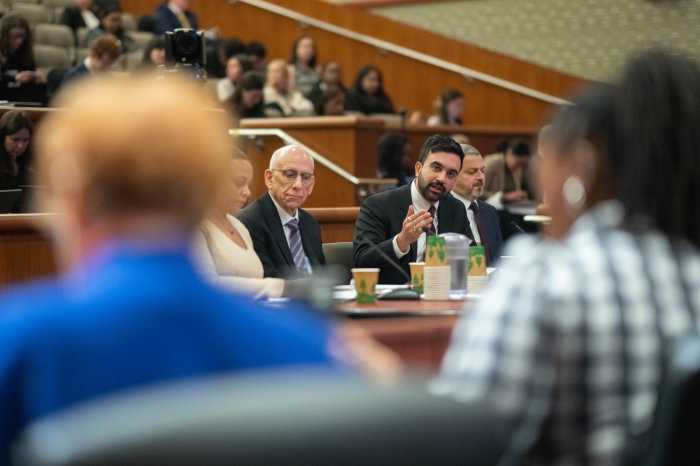
On Wednesday, while testifying before Albany lawmakers, Mamdani repeated his request for a 2% increase in personal income taxes on the most affluent New Yorkers, along with raising the corporate tax to further close the $7 billion fiscal deficit, projected over the next two years.
In the letter, penned by CBC Chair Marissa Shorenstein and President Andrew Rein, the commission said the city’s fiscal challenges stem more from “excessive spending growth rather than insufficient revenues,” and urged the mayor to focus on cutting costs and improving government operations instead of pursuing new taxes.
The group warned that tax increases would “weaken the City’s competitiveness,” noting that New York already has the nation’s highest overall tax burden. It said the city spent $2.3 billion more than it took in over the past three years and that spending growth has outpaced inflation for a decade. Had spending tracked inflation, the letter said, the city would be spending roughly $15 billion less today.
The group praised the mayor’s Executive Order 12, which aims to improve efficiency by designating a senior employee at each city agency as a “Chief Savings Officer,” but said it should be part of a broader, multi-year plan to generate recurring savings through productivity gains, service redesign, and data-driven management.
The commission suggested agencies align staffing with workload, streamline administrative functions, use technology to automate manual processes, and eliminate or redesign programs that haven’t shown results.
The letter also pointed to rising overtime costs as an area for reform and called for measures such as improved management, civilianization, and the adoption of new technologies. It urged the Mamdani administration to adopt clearer performance metrics and accountability measures, and to work with city employees to modernize job titles, expand operational flexibility, and pursue gain-sharing arrangements tied to productivity improvements.
In addition, the commission encouraged the city to prioritize state-of-good-repair projects and improve capital planning to control debt and maintenance costs over time.
The commission also backed seeking more flexibility from state lawmakers, including relief from the class-size mandate, which it said limits local decision-making and adds costs to the school system.
The letter closed by offering to work with the mayor’s administration on operational reforms to maintain services while improving the city’s long-term fiscal health.
On “Tin Cup Day,” even as several lawmakers questioned the wisdom of raising taxes and Gov. Kathy Hochul repeatedly pushed back on the plan, Mamdani was steadfast in his conviction that a tax hike was the best path forward.
In an apparent cooling off on the push, the New York Times reported Friday that Mamdani told organizers of a Feb. 25 rally calling for higher taxes on the rich that he is unlikely to attend because he “does not want to antagonize Gov. Kathy Hochul.” His working relationship with the Governor has so far been vital to advancing key areas of his agenda, such as universal child care.