


Outgoing City Council Speaker Adrienne Adams will not bring a measure to implement universal “daylighting,” which would eliminate parking near intersections to make them safer, to a vote before the end of the body’s current session.
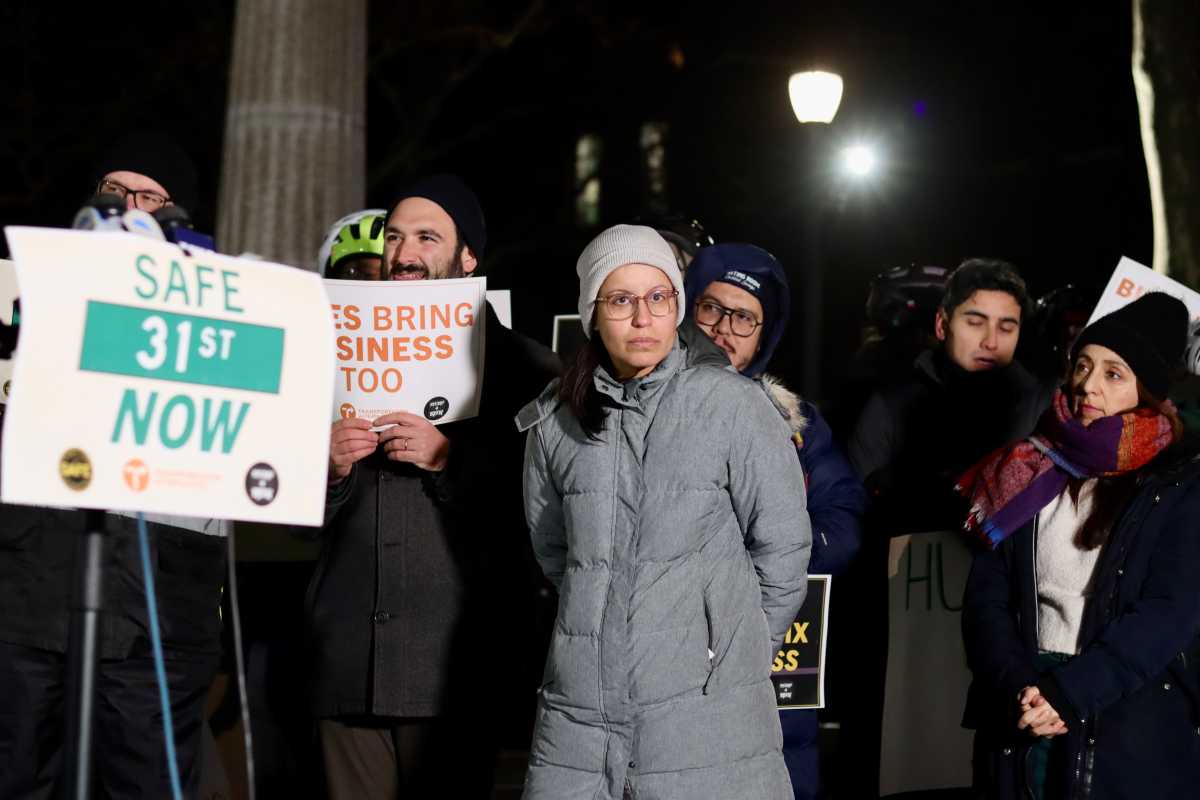
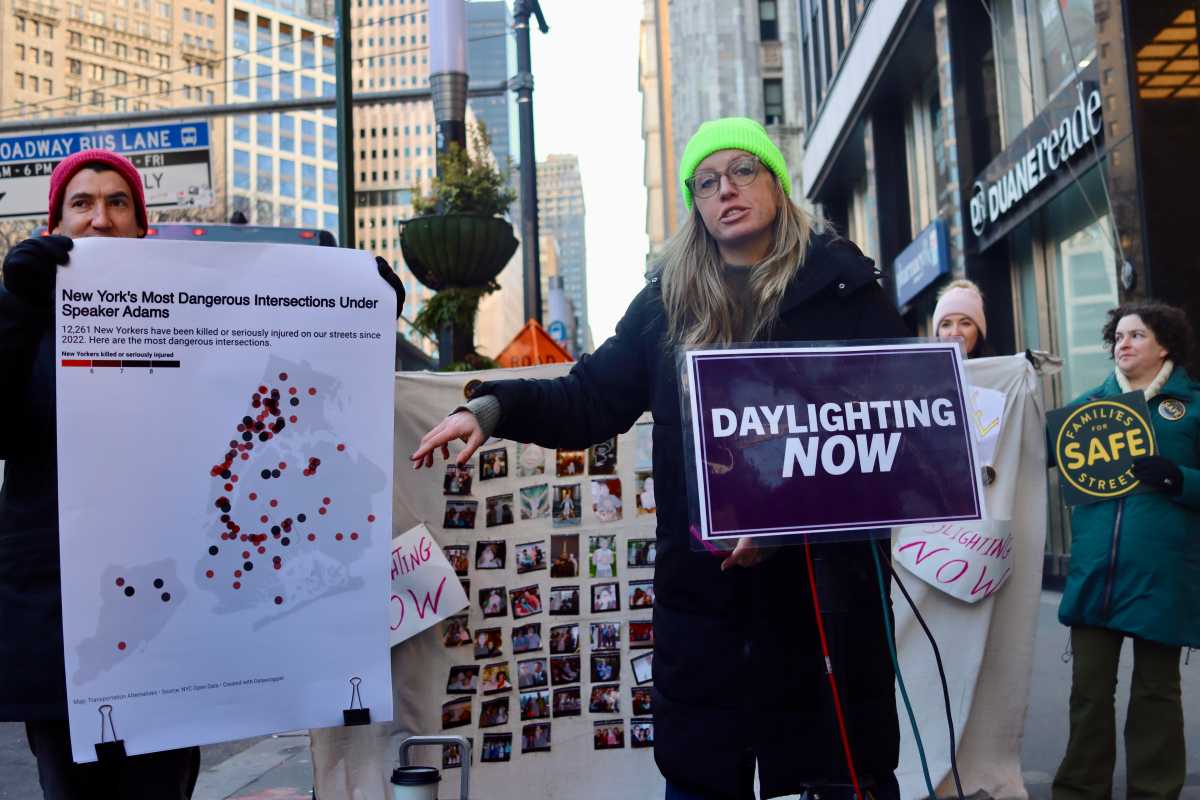
Her decision drew a sharp rebuke from safe streets advocates on Thursday who say the bill’s passage is essential toward increasing street safety for pedestrians and drivers alike.
The speaker’s office confirmed to amNewYork that the legislation will not get a vote during the council’s final meeting of the session on Thursday, Dec. 18. The confirmation came shortly after advocates backing the measure first broke the news earlier on Dec. 11.
The coalition of advocates, including the groups Transportation Alternatives and Families for Safe Streets, pointed the finger squarely at Speaker Adams for seemingly kicking the bill to the curb in a Thursday statement.
“[The] speaker of the City Council has decided to block the universal daylighting bill,” said Ben Furnas, Transportation Alternatives’ executive director.
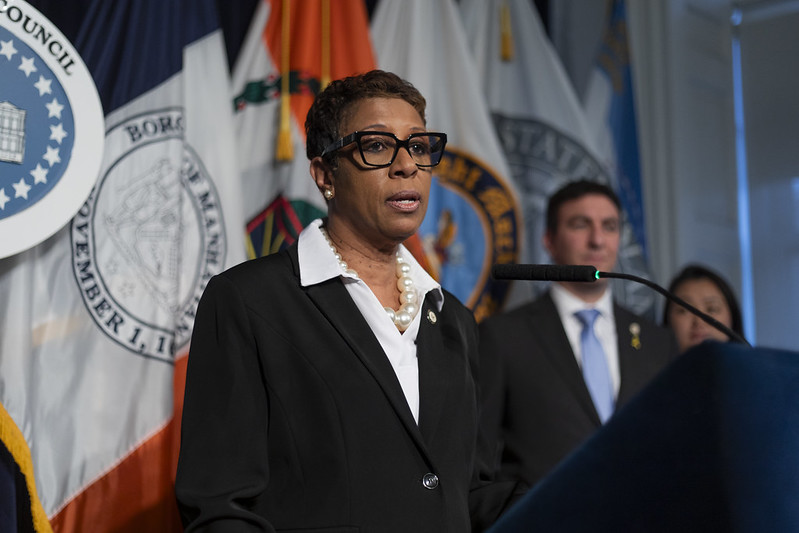
Speaker Adams is term-limited at the end of this year and will likely be replaced by Council Member Julie Menin (D-Manhattan) come January.
The legislation, Intro. 1138, is sponsored by Council Member Julie Won (D-Queens) and has 26 co-sponsors, including Menin. It will need to be reintroduced at the start of the next council session in January.
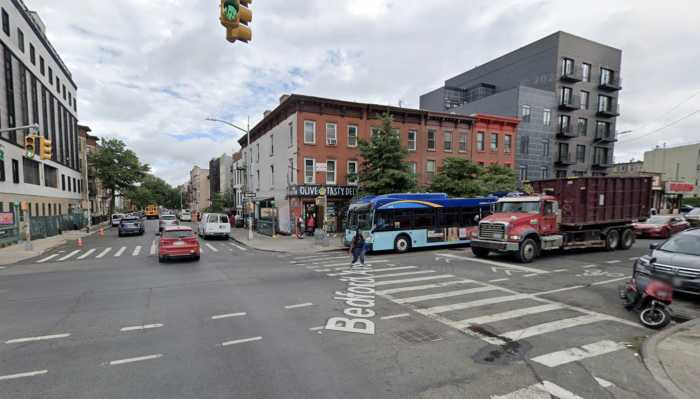
The bill would ban parking or idling within 20 feet of any intersection. Currently, it is legal for drivers to park next to crosswalks. Under the bill, DOT would also be required to install hard barriers at 1,000 intersections annually.
Proponents of daylighting argue that the practice enhances safety at crossings by clearing sightlines for pedestrians, cyclists, and drivers.
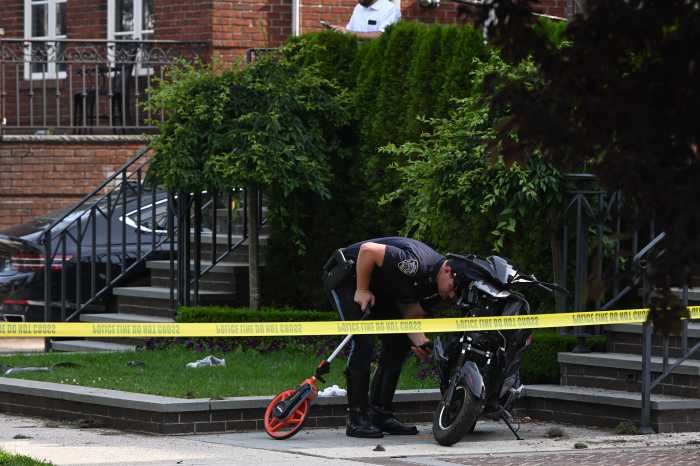
In Furnas’ statement, he invoked the deaths of Dolma Naadhun and Kamari Hughes, both children who were struck and killed by drivers while traversing obstructed intersections as examples of why universal daylighting is needed. Both traffic deaths sparked advocates’ push for the legislation.
“This legislation could prevent crashes like the ones that killed Dolma and Kamari, but instead, the speaker is maintaining a status quo where every year, children die,” Furnas said. “New Yorkers deserve better. On behalf of Dolma, Kamari, and every other child and fellow New Yorker who has been hit and killed in an obstructed intersection, the fight does not end today.”
Speaker’s spokesperson blames ‘stakeholders’
However, council spokesperson Julia Agos, in a statement, said it was actually “stakeholders of this bill” who stood in the way of it being brought to a vote, rather than the speaker.
She argued that an internal council analysis of DOT data on universal daylighting, which has not been publicly released, found it provided no “statistically significant” effect on pedestrian injuries.
“It requires negotiated compromise with all stakeholders to pass a bill that advances sound policy outcomes for the city, but stakeholders of this bill decided to reject that approach, despite data contradicting their claims,” Agos said. “Making our streets safer for New Yorkers requires a nuanced, thoughtful approach to reach an effective solution. Unfortunately, that was missing from discussions on this bill.”
Previously, Streetsblog had reported on the same council data review, a copy of which it had obtained.
But the outlet reported that a summary of the council’s review found “no statistically significant association” specifically between DOT’s data and the agency’s conclusion that daylighting could increase, rather than decrease, crash injuries.
DOT has pointed to its study, which the council found errors with, in its insistence that universal daylighting will not decrease crash injuries. Instead, the agency argues that daylighting should be used in specific cases.