


Monday, Feb. 23, marked the 54th day of Zohran Mamdani’s term as mayor. amNewYork is following Mamdani around his first 100 days in office as we closely track his progress on fulfilling campaign promises, appointing key leaders to government posts, and managing the city’s finances. Here’s a summary of what the mayor did.
Just weeks after Winter Storm Fern and the deadly Arctic cold that claimed at least 15 lives in the city, Mayor Zohran Mamdani faced his second major snowstorm in two months Monday, as blizzard conditions dumped between 16 and 24 inches of snow across New York City and wind gusts reached 60 mph.
Despite the severity, city officials reported no storm-related deaths as of Monday afternoon, a stark contrast to Fern, when Arctic air pushed temperatures in some areas deep below zero, with wind chills down to –30 °F, contributing to several tragic hypothermia-related deaths.
The Office of Chief Medical Examiner completed autopsies for 18 of the at least 19 people who died outdoors between Jan. 24 and Feb. 7, and confirmed to the New York Post that 15 were linked to hypothermia. The OCME did not respond to requests for comment at the time of publication.
“As of now, we are not aware of any deaths related to this blizzard on our city streets or in public areas,” Mayor Mamdani said, noting that the Department of Homeless Services made eight placements on Sunday night into low-barrier shelters as well as warming centers.
“These are in addition to the 85 or so placements that were made the night before,” he added.
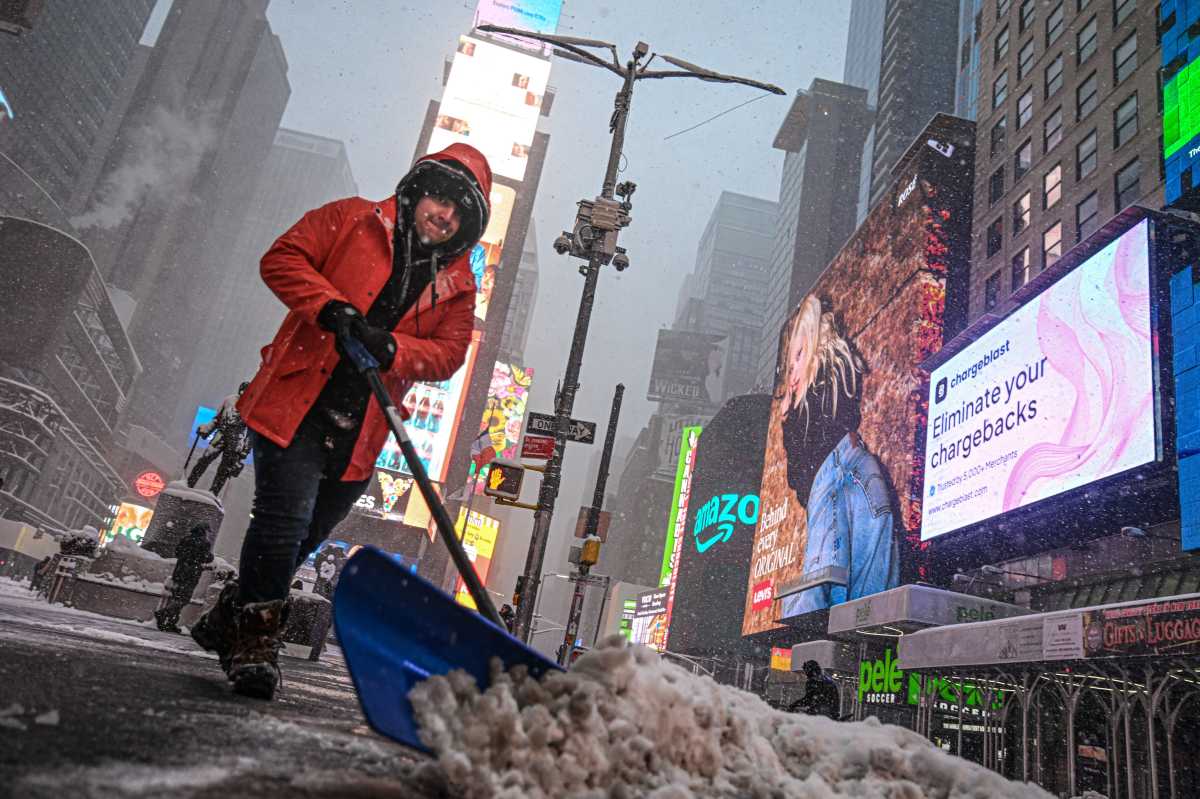
Mamdani emphasized that preparation and coordination have been key. He noted that, judging from current forecasts, the worst had passed, conditions were beginning to moderate, but more snow and high winds were still expected.
Snow was projected to linger through the afternoon, with another 1.5 to 2.5 inches expected by 8 p.m., and wind gusts up to 40 mph were likely into the evening. The city remained in a state of emergency.
“New York City continues to meet the urgency of this historic blizzard, and we will not stop until the storm has passed and our city is fully up and moving again,” Mamdani said, highlighting the city’s ongoing focus on keeping residents safe. Though the travel ban had lifted, he urged New Yorkers to take public transportation if needed, stay indoors when possible, and stay informed through Notify NYC.
In anticipation of the storm, the city deployed 2,600 sanitation workers per 12-hour shift, operating more than 2,200 plows and 700 salt spreaders. The emergency snow shoveler program was expanded to 1,800 workers per shift, focusing on sidewalks, crosswalks, and unsheltered bus stops — doubling the workforce from prior storms.
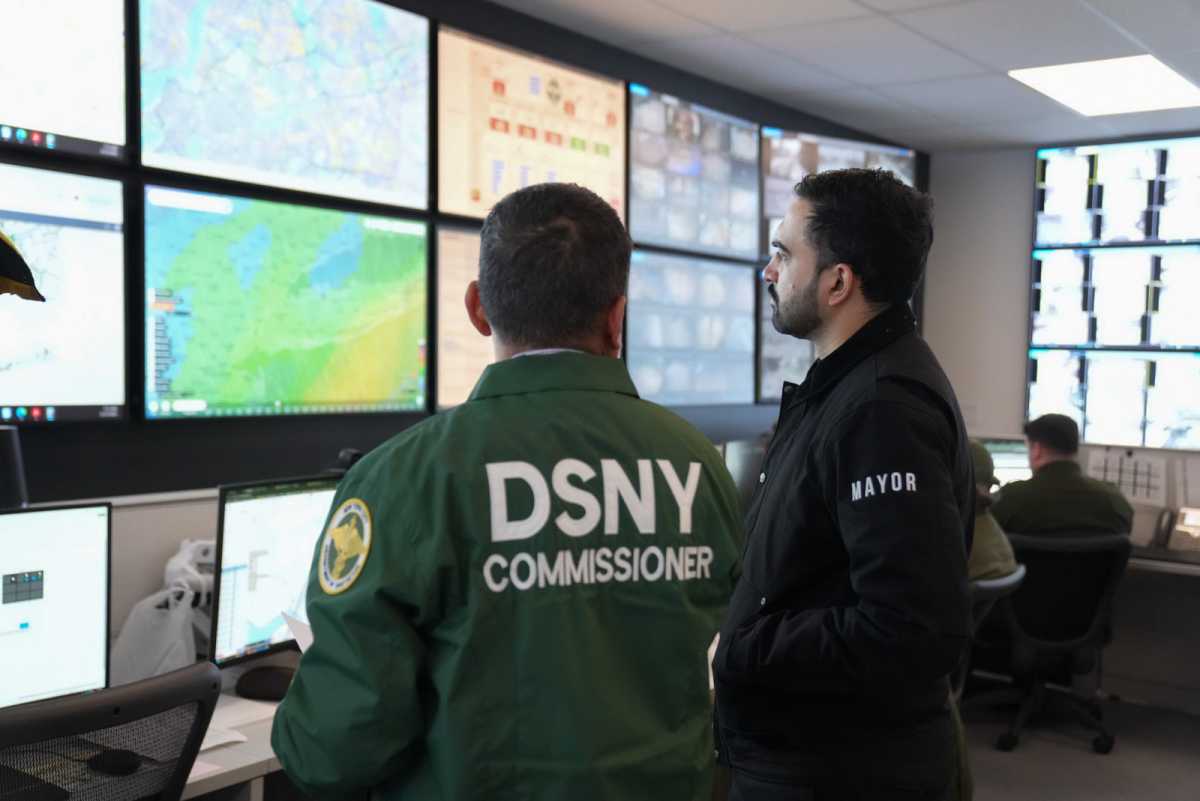
Officials also implemented geo-tagging of bus shelters and crosswalks and are monitoring snow removal in real time through DSNY systems. By 12:30 p.m., the Department of Sanitation had spread roughly 50 million pounds of salt and plowed over 99.5% of city streets at least once.
Even with active snowfall, crews cleared over 1,600 crosswalks, 419 fire hydrants, and almost 900 bus stops overnight, with additional work continuing Monday morning.
Outreach to vulnerable residents has also been a priority. More than 500 outreach workers canvassed neighborhoods to connect unsheltered New Yorkers with warming centers and low-barrier shelters. The city deployed 22 warming buses citywide, with additional spaces at 11 NYC Health + Hospitals facilities and 13 school locations.
The Department of Social Services continues enhanced continuous Code Blue protocols, extended through Wednesday morning. “During a Code Blue, shelters operate under an open-door policy. Outreach teams are connecting unsheltered New Yorkers to safe, warm spaces. During a Code Blue, 311 is routed to 911 so first responders can mobilize quickly to reach the person in need,” the press release states.
DSS also expedited 100 low-barrier stabilization beds to increase shelter options for those resistant to congregate settings, according to Mamdani, who only disclosed that the site is in Upper Manhattan.
During the last storm, the Mamdani administration fast-tracked the opening of another low-barrier shelter in lower Manhattan. It had been delayed by a community lawsuit, largely over the building’s proximity to Peck Slip School on Pearl Street. Attorney Joseph J. Sullivan, representing PeckSlip Advocates for School Safety, told amNewYork at the time that the group had not been formally notified of the opening before Mamdani’s public announcement.
Meanwhile, city schools are set to fully reopen on Tuesday, with over 8,000 DOE facilities staff working to remove snow and ice, check heating systems, and confirm emergency supplies. School buses are prepared to run, ensuring students can travel safely.
“Communications are being made to families, educators, and school communities through emails, SMS messages, social media, and website postings,” the administration’s press release notes.